


Editor's note: It's time to look back at the top Houston innovation news for the first half of March 2025. Hot topics include Tesla's plans for a "megafactory'" in Brookshire, expansion on the horizon for a local startup, and a look at the top tech metros in the South. Read all about it below.
1. Tesla poised to bring ‘megafactory’ to Houston area with 1,500 jobs

The Waller County Commissioners Court approved tax abatements this week for Tesla to develop a "megafactory" in Brookshire. Photo via tesla.com
Tesla is expected to bring a “megafactory” and 1,500 manufacturing jobs to the Houston area.
According to various news reports this week, Tesla intends to spend $200 million on a facility in Brookshire, Texas. The Waller County Commissioners Court approved tax abatements on March 5 for the new plant.
“We are super excited about this opportunity—1,500 advanced manufacturing jobs in the county and in the city," Waller County Precinct 4 Commissioner Justin Beckendorff said during a Commissioners Court meeting. Continue reading.
2. Houston startup Nap Bar pivots with VR and big plans for growth

Khaliah Guillory, founder of Nap Bar, says she hopes to expand to 30 locations in three years. Photo courtesy Khaliah Guillory
Houston’s Khaliah Guillory takes a 30-minute nap every day. She says this is how she’s so productive.
The habit also led to the founding of her white-glove, eco-friendly rest sanctuary business, Nap Bar.
Guillory launched the luxury sleep suites company back in 2019 to offer a unique rest experience with artificial intelligence integration for working professionals, entrepreneurs and travelers who needed a place to rest, recharge and rejuvenate. The company was named a Houston Innovation Awards finalist last year. Continue reading.
3. Houston startup, researchers awarded millions to develop Brain Mesh implant

Rice researchers will collaborate with Houston health tech startup Motif Neurotech to develop Brain Mesh, a distributed network of minimally invasive implants in the skull. Photo via Motif Neurotech
Houston startup Motif Neurotech and several Rice research groups have been selected by the United Kingdom's Advanced Research + Invention Agency (ARIA) to participate in its inaugural Precision Neurotechnologies program. The program aims to develop advanced brain-interfacing technologies for cognitive and psychiatric conditions.
ARIA will invest $84.2 million over four years in projects that “explore and unlock new methods to interface with the human brain at the circuit level,” according to a news release.
Three of the four Rice labs will collaborate with Houston health tech startup Motif Neurotech to develop Brain Mesh, which is a distributed network of minimally invasive implants that can stimulate neural circuits and stream neural data in real time. The project has been awarded approximately $5.9 million. Continue reading.
4. Houston shines among top 10 tech metros in the South, study says

Houston leads the charge for patents in the South. Photo via Getty Images
A study analyzing top U.S. locales for the tech industry ranked Houston the No. 9 best tech hub in the South.
The report by commercial real estate platform CommercialCafe examined the top 20 Southern metros across nine metrics, such as the growth rates of tech establishments and employment, median tech earnings, a quality of life index, and more.
Like other Texas metros, the study attributes Houston's tech powerhouse status to its growing presence of major tech companies. However, Houston leads the nation with the highest number of patents granted between 2020 and 2024. Continue reading.
5. 10 can't-miss Houston business and innovation events for March
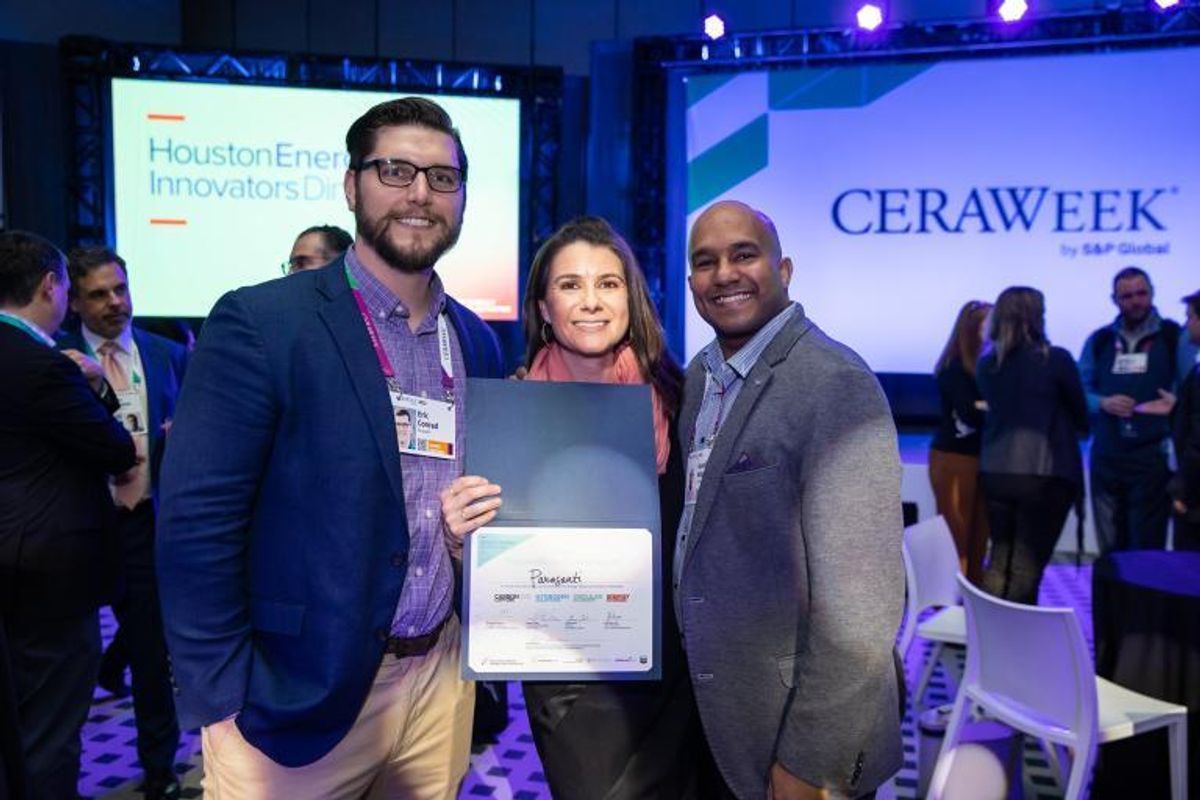
Don't miss these March events — from CERAWeek to the Ion's Mardi Gras block party. Image via houston.org
March is in full swing, and that means the return of some of Houston’s signature innovation events. We've rounded up the business and innovation events you can't miss in March and how to register. Continue reading.