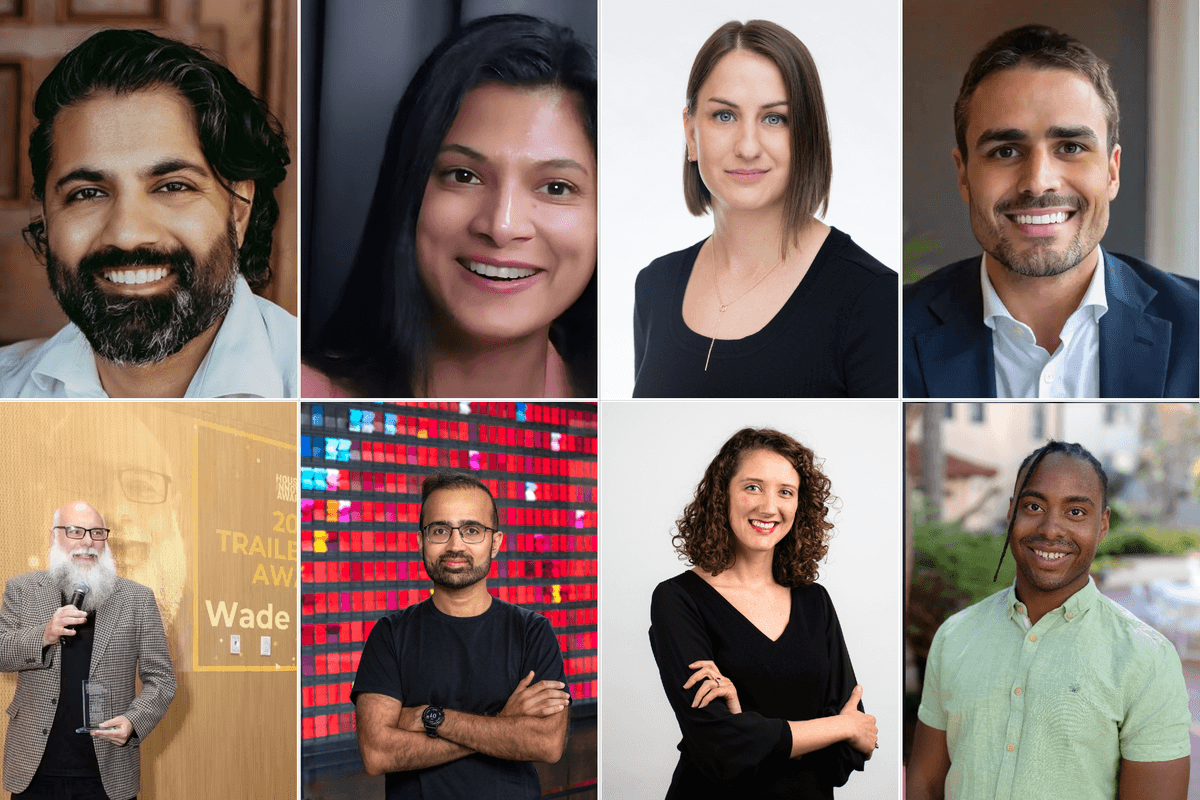
Austin billionaires Tench and Simone Coxe have gifted $100 million toward the planned UT medical center. Courtesy photo.

The University of Texas at Austin’s planned multibillion-dollar medical center, which will include a hospital run by Houston’s University of Texas MD Anderson Cancer Center, just received a $100 million boost from a billionaire husband-and-wife duo.

Tench Coxe, a former venture capitalist who’s a major shareholder in chipmaking giant Nvidia, and Simone Coxe, co-founder and former CEO of the Blanc & Otus PR firm, contributed the $100 million—one of the largest gifts in UT history. The Coxes live in Austin.

“Great medical care changes lives,” says Simone Coxe, “and we want more people to have access to it.”

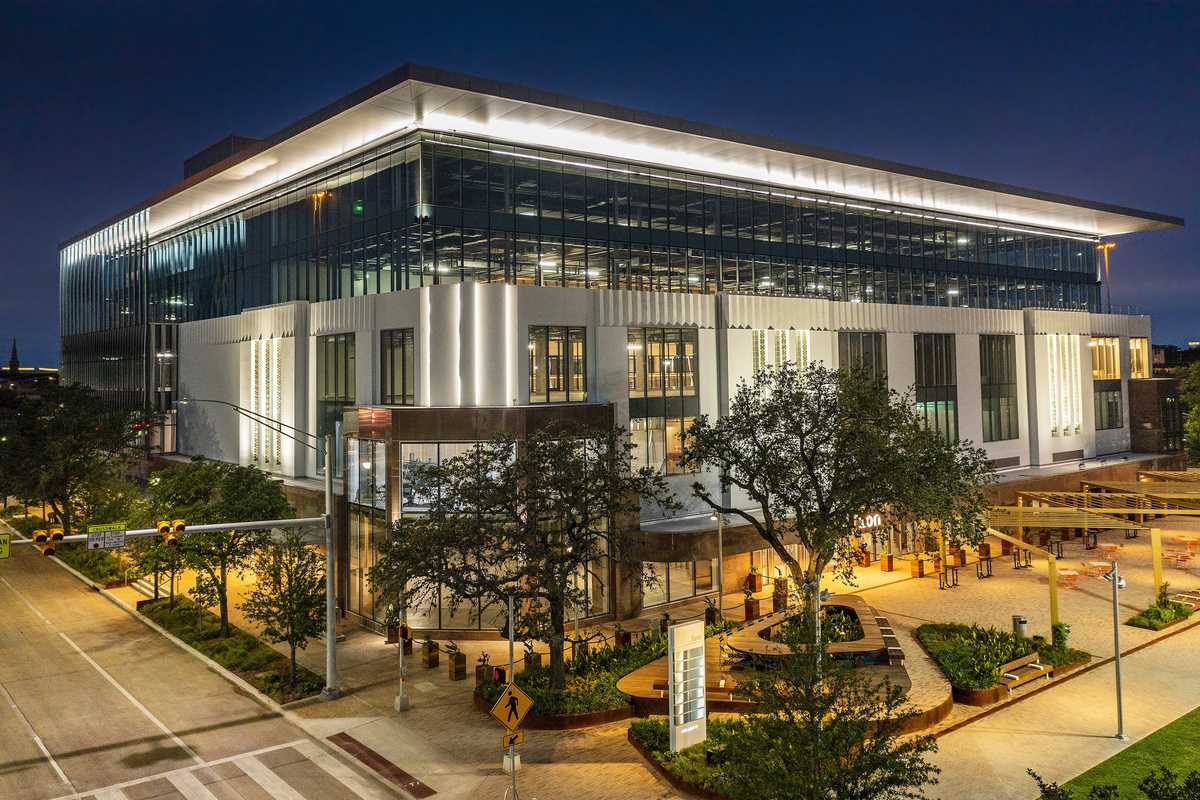
The University of Texas System announced the medical center project in 2023 and cited an estimated price tag of $2.5 billion. UT initially said the medical center would be built on the site of the Frank Erwin Center, a sports and entertainment venue on the UT Austin campus that was demolished in 2024. The 20-acre site, north of downtown and the state Capitol, is near Dell Seton Medical Center, UT Dell Medical School and UT Health Austin.

Now, UT officials are considering a bigger, still-unidentified site near the Domain mixed-use district in North Austin, although they haven’t ruled out the Erwin Center site. The Domain development is near St. David’s North Medical Center.

As originally planned, the medical center would house a cancer center built and operated by MD Anderson and a specialty hospital built and operated by UT Austin. Construction on the two hospitals is scheduled to start this year and be completed in 2030. According to a 2025 bid notice for contractors, each hospital is expected to encompass about 1.5 million square feet, meaning the medical center would span about 3 million square feet.

Features of the MD Anderson hospital will include:

  • Inpatient care
  • Outpatient clinics
  • Surgery suites
  • Radiation, chemotherapy, cell, and proton treatments
  • Diagnostic imaging
  • Clinical drug trials

UT says the new medical center will fuse the university’s academic and research capabilities with the medical and research capabilities of MD Anderson and Dell Medical School.

UT officials say priorities for spending the Coxes’ gift include:

  • Recruiting world-class medical professionals and scientists
  • Supporting construction
  • Investing in technology
  • Expanding community programs that promote healthy living and access to care

Tench says the opportunity to contribute to building an institution from the ground up helped prompt the donation. He and others say that thanks to MD Anderson’s participation, the medical center will bring world-renowned cancer care to the Austin area.

“We have a close friend who had to travel to Houston for care she should have been able to get here at home. … Supporting the vision for the UT medical center is exactly the opportunity Austin needed,” he says.

The rate of patients who leave the Austin area to seek care for serious medical issues runs as high as 25 percent, according to UT.

Ad Placement 300x100
Ad Placement 300x600

CultureMap Emails are Awesome

European spacecraft developer expands to Houston with U.S. business, new lab

houston hq

European aerospace manufacturer The Exploration Company has established its first U.S. entity and named Space City as its headquarters.

The company announced earlier this month that it has launched TEC Federal to support U.S. government customers and agencies, and to scale The Exploration Company's engineering operations in the country.

Mark Kirasich serves as president of TEC Federal. Kirasich most recently served as the senior director of human spaceflight at Blue Origin after a nearly 40-year career at NASA.

The Exploration Company is developing the reusable Nyx space vehicle. Nyx is designed to take off from any heavy launcher in the world. It will then dock at space stations, retrieve up to 3,000 kilograms of cargo, splash down and return the cargo to Earth. The company aims to make Nyx fully reusable for up to 10 missions, making it a more affordable and sustainable option for aerospace missions.

The Exploration Company completed a successful drop test of the spacecraft in May in the Mojave Desert. The company says Nyx is slated to perform its first flight demonstration in 2028.

In addition to launching the Houston business, The Exploration Company also opened its new Rapid Innovation Lab near Houston's NASA Johnson Space Center on Space Park Drive.

The Exploration Company opened its Rapid Innovation Lab earlier this month. Photo via LinkedIn

The Rapid Innovation Lab features a full-scale mockup of the future Nyx crew capsule as well as ongoing development and testing of the Nyx cargo capsule, according to the company.

The Exploration Company says the new lab will allow its engineers, designers, and operators to prototype and test crew interfaces. It will also support partnerships with NASA personnel and astronauts.

“Houston gives us direct access to the people and expertise that have built and operated human spaceflight systems for decades. We’re excited to invest and expand around that— engineers, operators, and astronauts working together and moving quickly towards building a crew capsule.” Hélène Huby, founder and CEO of The Exploration Company, said in a blog post.

According to The Houston Chronicle, The Exploration Company has about 30 employees in the Houston area.

The company was founded in 2021 by Huby, a French rocket scientist, and has raised more than $350 million in venture capital. It operates out of Germany, France, Luxembourg, Spain and Italy, with offices in the U.S. and the United Arab Emirates. It is also developing a reusable, high-thrust rocket engine known as Storm.

UH lands $4M NIH grant to study early signs of autoimmune disease

NIH funding

The University of Houston recently received a $4 million National Institutes of Health grant to support a 10-year longitudinal study to identify the earliest biological markers of autoimmune disease.

Led by Chandra Mohan, the Hugh Roy and Lillie Cranz Cullen Endowed Professor of Biomedical Engineering, the study aims to examine what causes Systemic Autoimmune Rheumatic Diseases (SARDs) and to identify targets for future treatments. The study will be carried out in collaboration with Dr. Karen Costenbader at Harvard Medical School, Boston.

SARDs include conditions like rheumatoid arthritis, systemic lupus erythematosus, Sjögren’s syndrome and systemic sclerosis—all are considered chronic diseases currently without a cure. Autoimmune diseases affect over 30 million people globally, according to UH.

SARDs occur when the body’s immune system attacks healthy, non-threatening tissues and organs. According to UH, in these diseases, the body often attacks nuclear antigens, creating anti-nuclear autoantibodies, which can be early detection signs for SARDs in more than 50 percent of patients, Mohan says.

Researchers will study blood samples and environmental exposure over the 10 years to better understand anti-nuclear autoantibodies.

“Collectively, these studies will help identify the genetic, environmental and cellular factors that are operative at the two steps of SARD development, namely the emergence of anti-nuclear autoantibodies and disease onset,” Mohan said in a news release. “ More importantly, these studies will highlight functional molecular pathways and mechanisms that may be operative at each step."

Mohan predicts that looking at SARDs’ shared characteristics, rather than each disease individually, could help identify more treatment methods.

“Individual SARDs have been examined in silos without an attempt to discern shared underlying features at the molecular level,” he added in the release. “Current understanding of the initial (and likely shared) origins of SARDs is only rudimentary but urgently needed to develop means for prevention and treatment.”

Earlier this year, UH also received an $11 million NIH grant to conduct a first-of-its-kind study of early language development in children ages 18 to 24 months. Read more here.