Thanks to the passage of Proposition 14, Texas now boasts the country’s largest state-funded initiative dedicated to dementia research and prevention. Photo via Unsplash.

Texas voters on Nov. 4 overwhelmingly approved a ballot measure that provides $3 billion in state funding over a 10-year span for the newly established Dementia Prevention and Research Institute of Texas (DPRIT).

Thanks to the passage of Proposition 14, Texas now boasts the country’s largest state-funded initiative dedicated to dementia research and prevention, according to the Alzheimer’s Association. Up to $300 million in grants will be awarded during the 10-year funding period.

“This is a transformative moment for Texas and for the fight against Alzheimer’s and all other dementia,” said Joanne Pike, president and CEO of the Alzheimer’s Association. “Texans have chosen to invest in hope, innovation, and solutions for the millions of families affected by these devastating diseases. With the passage of Proposition 14, Texas is now poised to lead the nation in dementia research and prevention.”

The association says DPRIT will drive scientific breakthroughs, attract top-notch dementia researchers to Texas, and generate thousands of jobs statewide.

An estimated 460,000 Texans are living with dementia, the association says, and more than one million caregivers support them.

DPRIT is modeled after the Cancer Prevention and Research Institute of Texas (CPRIT). Since 2008, the state agency has awarded nearly $4 billion in grants to research organizations for cancer-related academic research, prevention programs, and product development.

An analysis by the McKinsey Health Institute found that investing in brain health initiatives like DPRIT could boost Texas’ GDP by $260 billion. Much of that GDP bump could benefit the Houston area, which is home to dementia-focused organizations such as UTHealth Houston Neurosciences, Baylor College of Medicine’s Center for Alzheimer’s and Neurodegenerative Diseases, the University of Texas Medical Branch at Galveston’s Collaborative Alzheimer’s Disease and Memory Disorders Program, and the Houston Methodist Research Institute’s John M. O’Quinn Foundation Neurodegenerative Disorders Laboratory.

The Greater Houston Partnership says DPRIT holds the potential “to elevate Texas — particularly Houston — as a hub for brain health research.”

State Sen. Joan Huffman, a Houston Republican, is one of DPRIT’s champions. She sponsored legislation this year to create the institute and ask Texas voters to approve the $3 billion in funding.

“By establishing the Dementia Prevention and Research Institute of Texas, we are positioning our state to lead the charge against one of the most devastating health challenges of our time,” Huffman said in May. “With $3 billion in funding over the next decade, we will drive critical research, develop new strategies for prevention and treatment, and support our health care community.”

This month's Brain Capital event aimed to position Houston and Texas as global leaders in the brain economy space. Photo via Getty Images

Texas leaders position state to become next global hub for brain health

event recap

Brain Capital: The New Competitive Edge in a Shifting Economy, a two-day meeting held at the TMC3 Collaborative Building on May 21-22, brought together global business and policy leaders to advance brain health initiatives. The event concluded with the announcement of Texas-focused strategies that will be presented at the G7 Summit in Calgary this June, aiming to position the state as a leading hub for brain health research.

According to an analysis by the McKinsey Health Institute, investing in brain health interventions has the potential to generate a $260 billion boost to Texas’ GDP. Brain health conditions are responsible for more than $1 trillion in lost productivity globally, and the costs are expected to increase to nearly $16 trillion by 2030, according to organizers of the event.

The Texas Legislature recently passed legislation to establish the Dementia Prevention Research Institute of Texas (DPRIT), which includes a $3 billion investment over 10 years. Leaders at the Brain Capital event announced the launch of an advocacy campaign to foster support for DPRIT, which will appear as a November 2025 ballot measure.

“Our work to deliver better brain health to Texas and the world is only just beginning,” Dr. Jochen Reiser, president of The University of Texas Medical Branch (UTMB) and CEO of the UTMB Health System, said in a news release. “Investing in brain capital means protecting our cognitive health, boosting economic growth and securing a future-ready workforce – goals that we believe Texans will rally behind.”

Additionally, the Center for Houston’s Future also announced its goal to make the brain economy a key part of its new plan for the Houston region, called Vision 2050. The Center for Houston’s Future’s goal is to position Houston to become the global leader in the brain economy space, which will serve as a blueprint for other cities

“Houston has a clear track record leading the transition of industry sectors,” David Gow, CEO of the Center for Houston’s Future, said in a news release. “By launching a focused Brain Economy transition plan, Houston can integrate neuroscience, prevention, workforce resilience and cognitive innovation across sectors – preparing businesses and communities for an AI-driven future. Houston has the talent, infrastructure and vision to lead the nation in the next great economic transformation.”

Gow is the founder and chairman of Gow Media, InnovationMap's parent company.

Speakers at the event included executives from Shell Oil Co., scientists from Johns Hopkins Bloomberg School of Public Health, professors from Rice University, representatives from D.C.-based UsAgainstAlzheimer’s, and others. Learn more here.

Ad Placement 300x100
Ad Placement 300x600

CultureMap Emails are Awesome

Tesla no longer world's biggest EV maker as sales fall for second year

Tesla Talk

Tesla lost its crown as the world’s bestselling electric vehicle maker as a customer revolt over Elon Musk’s right-wing politics, expiring U.S. tax breaks for buyers and stiff overseas competition pushed sales down for a second year in a row.

Tesla said that it delivered 1.64 million vehicles in 2025, down 9% from a year earlier.

Chinese rival BYD, which sold 2.26 million vehicles last year, is now the biggest EV maker.

It's a stunning reversal for a car company whose rise once seemed unstoppable as it overtook traditional automakers with far more resources and helped make Musk the world's richest man. The sales drop came despite President Donald Trump's marketing effort early last year when he called a press conference to praise Musk as a “patriot” in front of Teslas lined up on the White House driveway, then announced he would be buying one, bucking presidential precedent to not endorse private company products.

For the fourth quarter, Tesla sales totaled 418,227, falling short of even the much reduced 440,000 target that analysts recently polled by FactSet had expected. Sales were hit hard by the expiration of a $7,500 tax credit for electric vehicle purchases that was phased out by the Trump administration at the end of September.

Tesla stock fell 2.6% to $438.07 on Friday.

Even with multiple issues buffeting the company, investors are betting that Tesla CEO Musk can deliver on his ambitions to make Tesla a leader in robotaxi services and get consumers to embrace humanoid robots that can perform basic tasks in homes and offices. Reflecting that optimism, the stock finished 2025 with a gain of approximately 11%.

The latest quarter was the first with sales of stripped-down versions of the Model Y and Model 3 that Musk unveiled in early October as part of an effort to revive sales. The new Model Y costs just under $40,000 while customers can buy the cheaper Model 3 for under $37,000. Those versions are expected to help Tesla compete with Chinese models in Europe and Asia.

For fourth-quarter earnings coming out in late January, analysts are expecting the company to post a 3% drop in sales and a nearly 40% drop in earnings per share, according to FactSet. Analysts expect the downward trend in sales and profits to eventually reverse itself as 2026 rolls along.

Musk said earlier last year that a “major rebound” in sales was underway, but investors were unruffled when that didn't pan out, choosing instead to focus on Musk's pivot to different parts of business. He has has been saying the future of the company lies with its driverless robotaxis service, its energy storage business and building robots for the home and factory — and much less with car sales.

Tesla started rolling out its robotaxi service in Austin in June, first with safety monitors in the cars to take over in case of trouble, then testing without them. The company hopes to roll out the service in several cities this year.

To do that successfully, it needs to take on rival Waymo, which has been operating autonomous taxis for years and has far more customers. It also will also have to contend with regulatory challenges. The company is under several federal safety investigations and other probes. In California, Tesla is at risk of temporarily losing its license to sell cars in the state after a judge there ruled it had misled customers about their safety.

“Regulatory is going to be a big issue,” said Wedbush Securities analyst Dan Ives, a well-known bull on the stock. “We're dealing with people's lives.”

Still, Ives said he expects Tesla's autonomous offerings will soon overcome any setbacks.

Musk has said he hopes software updates to his cars will enable hundreds of thousands of Tesla vehicles to operate autonomously with zero human intervention by the end of this year. The company is also planning to begin production of its AI-powered Cybercab with no steering wheel or pedals in 2026.

To keep Musk focused on the company, Tesla’s directors awarded Musk a potentially enormous new pay package that shareholders backed at the annual meeting in November.

Musk scored another huge windfall two weeks ago when the Delaware Supreme Court reversed a decision that deprived him of a $55 billion pay package that Tesla doled out in 2018.

Musk could become the world's first trillionaire later this year when he sells shares of his rocket company SpaceX to the public for the first time in what analysts expect would be a blockbuster initial public offering.

8+ can't-miss Houston business and innovation events in January

where to be

Editor's note: Kick off 2026 by hearing insightful talks and making meaningful connections in Houston's innovation scene. From networking workshops to presentations from major industry leaders, here's what not to miss and how to register. Please note: this article may be updated to include additional event listings.

Jan. 13 – Financing the Future

Hear from James Blake, head of capital markets at Fervo Energy, in this informative talk. Blake will cover the current investment landscape for geothermal power, how geothermal projects are structured and the role of policy incentives and innovative financing models in moving the industry forward. A small reception follows.

This event is Tuesday, Jan. 13, from 5:30-7:30 p.m. at the Ion. Register here.

Jan. 13 – Your Path to the Boardroom

Visit Sesh Coworking to hear from Keith Dorsey, an executive advisor and author of The Boardroom Journey, as he shares insights and lessons from hundreds of corporate board members and presents an actionable roadmap for women at every stage of their careers. Dorsey will speak on what "optimal diversity” means in the boardroom, how purpose-driven leaders sustain resilience under relentless pressure and why inclusive leadership is non-negotiable for growth and innovation.

This event is Tuesday, Jan. 13, from 6-8 p.m. at Sesh Coworking. Register here.

Jan. 14 — A Conversation with Dr. Wayne J. Riley on Leading Through Healthcare Transformation

Rice Business Partners will host Dr. Wayne J. Riley, president of SUNY Downstate Health Sciences University, for a moderated discussion with Dean Peter Rodriguez. Riley will share insights on leading complex healthcare organizations in an era of unprecedented industry challenges and reflect on his time at the Jones Graduate School of Business.

This event is Wednesday, Jan. 14, from 6:30-8:30 p.m. at McNair Hall on Rice University's campus. Register here.

Jan. 14 — VDW: Igniting Connections for Startup Success

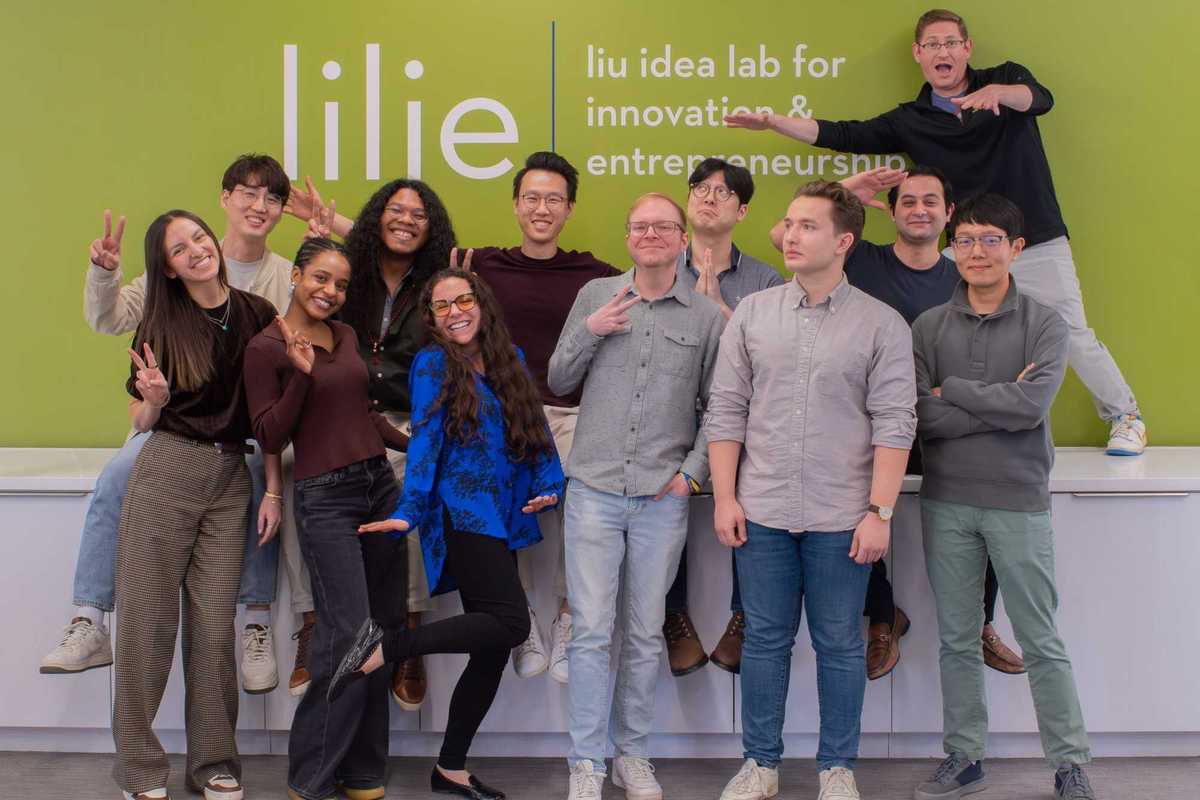
Entrepreneurial communications instructor Diana Massaro will lead Lilie's latest Venture Development Workshop, focused on soft skills like clear communication, active listening and compelling introductions. Attendees will gain a personalized networking game plan and communication tools to turn casual encounters into meaningful relationships to support their ventures or careers.

This event is Wednesday, Jan. 14, from 6-7:30 p.m. at the Liu Idea Lab for Innovation and Entrepreneurship on Rice University's campus. Register here.

Jan. 21 — Upstream: Digital Tech Meetup

This month's Upstream: Digital Tech Meetup will explore how AI and real-time monitoring are being applied in safety-critical offshore environments, what’s working today, where the biggest gaps remain going into 2026 and how operators and service companies are approaching adoption. Expect to hear from leaders at NOV, Incom Solutions, Timbergrove and others.

This event is Wednesday, Jan. 21, from 8:30-10:30 a.m. at the Ion. Find more information here.

Jan. 22 — HEAD AND HEART: Leading Technology with Humanity While Everything Changes

Hear from Chris Hyams, former CEO of Indeed, at the latest installment of Rice's Master of Engineering Management & Leadership Seminar Series. Hyams will present on the intersection of technology, humanity and change—and how AI is reshaping all three.

This event is Thursday, Jan. 22, at 6 p.m. at Duncan Hall on Rice University's campus. Find more information here.

Jan. 22 – NASA Tech Talk

This month's NASA Tech Talks will feature a special delegation from the UK Science and Technology Network. Expect to hear from a panel of UK space experts, followed by a fireside chat featuring David Alexander, head of the Rice Space Institute, and Meganne Christian, ESA reserve astronaut and senior exploration manager.

This event is Thursday, Jan. 22, from 6-7 p.m. at the Ion. Find more information here.

Jan. 29 – Ignition Hub Startup Career Fair

Lilie will host the Ignition Hub Startup Career Fair this month in partnership with Rice University’s Center for Career Development and Career Development Office. The fair will bring together some of the most innovative, high-growth companies to offer Rice students exciting opportunities. Startups can apply to be considered for the fair. The event is open to Rice University undergraduate, graduate, MBA, and PhD students.

This event is Thursday, Jan. 29, at Grand Hall on Rice University's campus. Find more information here.

Jan. 29 – Health Policy Symposium: Value-Based Care & the Health Care Workforce

The Humana Integrated Health Systems Science Institute at the University of Houston will host its latest Health Policy Symposium this month, focused on the evolving landscape of value-based care and the importance of preparing and strengthening the health care workforce. Hear keynote addresses from leaders at Humana, UH, the American Medical Association and Houston Health Department.

This event is Thursday, Jan. 29, from 11:30 a.m.-1:30 p.m. at the Tilman J. Fertitta Family College of Medicine on Rice University's campus. Find more information here.

Jan. 30 — GHP Annual Meeting

The Greater Houston Partnership's premier event will highlight the region’s progress, honor visionary leadership and set the tone for the year ahead. Hear reflections from outgoing board chair, Gretchen Watkins (former -president of Shell USA); welcome incoming board chair, Armando Perez (EVP of H-E-B Houston); and more

This event is Friday, Jan. 30, from 11:30 a.m.-1:30 p.m. at Hilton Americas. Find more information here.

CPRIT CEO: Houston’s $2B in funding is transforming cancer research and prevention

fighting cancer

With its plethora of prestigious health care organizations like the University of Texas MD Anderson Cancer Center, UTHealth Houston, and the Baylor College of Medicine, Houston sits at the heart of cancer research and prevention in Texas.

Of course, it takes piles of cash to support Houston’s status as the state’s hub for cancer research and prevention. Much of that money comes from the Cancer Prevention and Research Institute of Texas (CPRIT).

Data supplied by CPRIT shows organizations in Harris County gained $2.3 billion in institute funding from 2009 through 2025, or nearly $145 million per year. That represents almost 60 percent of the roughly $4 billion that CPRIT has granted to Texas institutions over a 16-year period.

“The life sciences ecosystem that has developed and changed in Houston is phenomenal,” Kristen Doyle, who became the agency’s CEO in July 2024, tells InnovationMap. “In the next decade, we will look back and see a great transformation.”

That ecosystem includes more than 1,100 life sciences and biotech companies, according to the Greater Houston Partnership.

Houston plays critical role in clinical trials

Texas voters approved the creation of CPRIT in 2007. Twelve years later, voters agreed to earmark an extra $3 billion for CPRIT, bringing the state agency’s total investment in cancer research and prevention to $6 billion.

To date, CPRIT money has gone toward recruiting 344 cancer researchers to Texas (mainly to Houston) and has supported cancer prevention services for millions of Texans in the state’s 254 counties. CPRIT funding has also helped establish, expand, or relocate 25 cancer-focused companies. In Houston, MD Anderson ranks as the No. 1 recipient of CPRIT funding.

Regarding cancer research, Doyle says Houston plays a critical role in clinical trials.

“[Clinical trials are] something that CPRIT has focused on more and more. Brilliant discoveries are crucial to this whole equation of solving the cancer problem,” Doyle says. “But if those brilliant ideas stay in the labs, then we’ve all failed.”

Researchers conduct more clinical trials in Houston than anywhere else in the U.S., the Greater Houston Partnership says.

Doyle, a 20-year survivor of leukemia, notes that a minority of eligible patients participate in clinical trials for cancer treatments, “and that’s one of the reasons that it takes so long to get a promising drug to market.”

An estimated 7 percent of cancer patients sign up for clinical trials, according to a study published in 2024 in the Journal of Clinical Oncology.

MD Anderson takes on cancer prevention

Doyle also notes that Houston is leading the charge in cancer prevention.

“We get some national recognition for programs that have been developed in Houston that then can be replicated in other parts of the country,” she says.

Much of the work in Houston focusing on cancer prevention takes place at MD Anderson. The hospital reports that it has received more than $725 million from the CPRIT since 2007, representing approximately 18 percent of CPRIT’s total awards.

“These efforts can have profound impact on the lives of patients and their families, and this funding ensures our exemplary clinicians and scientists can continue working together to drive breakthroughs that advance our mission to end cancer,” Dr. Giulio Draetta, chief scientific officer at MD Anderson, said in a November news release, following the most recent CPRIT award for the hospital totaling more than $29 million.

CPRIT funding for Houston institutions supplements the more than $4.5 billion in federal funding for health and life sciences research and innovations that the Houston area received from 2020 to 2024, according to the Greater Houston Partnership.

“We are curing cancer every single day,” Doyle says of CPRIT. “Every step that we are taking — whether that’s funding great ideas or funding the clinical trials that are bringing promising drugs to Texas and to the world — we are making a difference.”