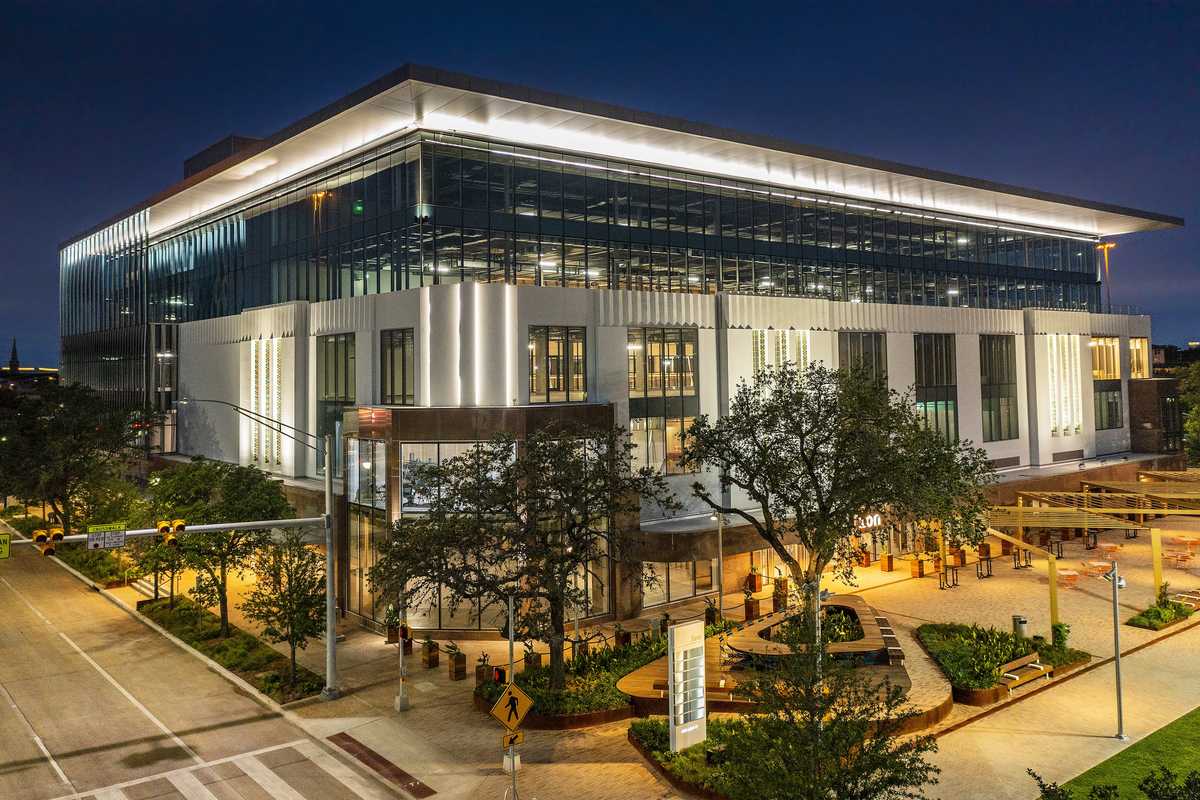

Another Tesla manufacturing hub could be coming to Texas. Photo by John Egan

Electric vehicle and clean energy company Tesla is considering building a new $10.1 billion solar cell manufacturing facility in Fort Bend County, according to documents filed with the Texas Comptroller’s Office.

If approved, the plant, called Project Sun City, would be located on a 3,050-acre site off FM 762 and FM 1994 in Richmond, Texas. Tesla aims to finish construction in 2028, with the plant being operational by early 2029.

The plant will manufacture photovoltaic (PV) solar cells and modules that can convert sunlight into electricity. PV Magazine reports that the facility is "the largest single manufacturing investment Tesla has proposed on paper."

Advisory and consulting firm Kroll submitted the documents to the Texas Comptroller of Public Accounts and noted if an agreement regarding tax incentives isn't reached, the project will exit Texas.

Tesla has requested credits under the Jobs, Energy, Technology, and Innovation (JETI) Act. The incentive program aims to attract large, capital-intensive economic development projects by lowering the property taxes an entity must pay over 10 years if it meets requirements related to job creation and investment. For example, pharmaceutical giant Bristol Myers Squibb Co. recently announced that its forthcoming $2.3 billion Houston-area manufacturing site is a qualified project under the JETI program.

Kroll predicts that the facility would create 9,712 new full-time jobs, over 1,100 construction jobs and billions of dollars in future property tax revenue, the documents show. Additionally, it says the project will spur $1.1 billion in local business expenditures and that Texas would increase its GDP by approximately $107 billion as a result of the project activities.

Tesla opened its $200 million Megafactory in Brookshire, Texas, last year. The company is continuing its goal to deploy 100 gigawatts of solar manufacturing in the U.S before the end of 2028. According to the U.S. Energy Information Administration, 100 gigawatts is equal to about 8 percent of the country's power grid capacity.

---

This article originally appeared on EnergyCapitalHTX.com.
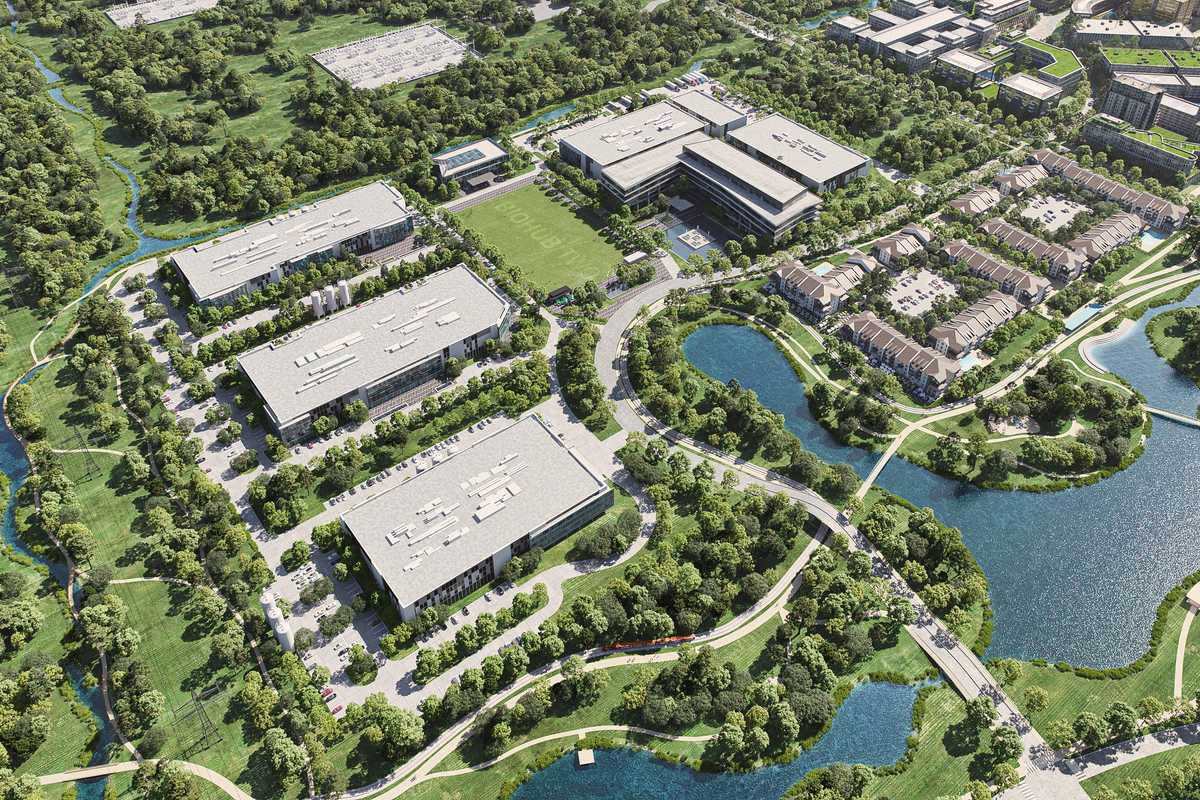
Eli Lilly is looking to build an active pharmaceutical ingredient manufacturing facility at Generation Park. Rendering courtesy of McCord

Pharmaceutical giant looks to bring $5.9 billion facility to Houston

in the works

Pharmaceutical company Eli Lilly and Company is looking to build a $5.9 billion active pharmaceutical ingredient (API) manufacturing facility in Houston, according to a recent filing with the state of Texas.

The proposal states that the project plans to employ 604 full-time direct employees at the site upon ramp-up completion. These would include operations technicians, production specialists, maintenance support, quality control/assurance, engineering, administration, and management. Construction is projected to begin in 2026, with a completion target of 2030 and commercial operations beginning in 2031.

If completed, Lilly would purchase 236 acres at Houston’s Generation Park from McCord Development, the commercial development’s owner. The purchase would include multiple buildings, outdoor facilities, infrastructure buildout, and equipment installation.

This proposed Texas plant would be part of Lilly’s $27 billion effort to expand its U.S. production capacity, which was announced in February and includes construction on four new facilities in America. Lilly has previously referred to the plants as “mega sites.”

"This represents the largest pharmaceutical expansion investment in U.S. history," Lilly CEO David Ricks said during the February news conference.

The company has applied for school tax abatements under the new Texas Jobs, Energy, Technology, and Innovation program, according to reports from the Houston Business Journal. This incentive program allows school districts to limit the taxable value of a property for a portion of school taxes, which could save companies millions of dollars on a large portion of property tax bills. It also gives a 10-year tax cut for new manufacturing and development facilities, as long as there is localized job creation.

Ad Placement 300x100
Ad Placement 300x600

CultureMap Emails are Awesome

UH expands Medical Center footprint with $77M research facility

breaking ground

The University of Houston broke ground on a brand new $77.5 million Medical Research Bacility last week that will host clinical trials and a virtual reality behavioral health suite among other laboratories. Designed by SmithGroup, it will be the second building on the UH Medical Center campus after the Fertitta College of Medicine opened in 2022.

“The Medical Research Building was designed to foster collaboration and discovery while creating a welcoming environment for students, researchers and the community,” Kalman Nagy, higher education studio design leader for SmithGroup, said in a news release. “As the second building on the University of Houston’s medical campus, we wanted to create a strong connection to the College of Medicine and the surrounding woodlands, with outdoor terraces, shared learning spaces and natural views that inspire interaction and innovation.”

Located just behind the Fertitta building at 5150 Medical Service Drive, the 57,000-square-foot building will house wet laboratories, computational research spaces and specialized facilities for clinical research. The virtual reality behavioral health suite will use immersive technology to deliver care through manufactured audio and visual environments. It’s part of the college’s vision for developing new medical advancements in the heart of Houston’s medical community. The groundbreaking comes on the heels of the launch of the university's cross-disciplinary academic venture, UH Health, this summer.

“This groundbreaking marks an important next step in the growth of the Fertitta College of Medicine and UH Health,” Dr. Jonathan McCullers, vice president for health affairs at UH, added in the release. “We are building the research capacity to match our ambitions—bringing together scientists, physicians and experts from across the University to accelerate discovery and turn promising ideas into solutions that improve people’s lives.”

UH’s journey to establish a significant presence alongside the University of Texas and Baylor in the Medical Center started in 2009 when it became an official full institutional member. The university launched its plans for the Fertitta building in 2013, and is pursuing Health Science Center designation from the Texas Legislature in the next year’s session.

“The research that will take place here will directly benefit our community,” UH President Renu Khator added. “Diseases do not recognize disciplinary silos, and neither should our research. This building will bring together experts from across UH to break down those barriers, work across disciplines and tackle some of our most complex health challenges.”

The building is slated to open in 2028.

5 female-founded Houston startups shine as Innovation Awards finalists

meet the finalists

Houston is home to many standout female founders, making inroads and breakthroughs in every industry.

As part of the 2026 Houston Innovation Awards, our Female-founded Business category honors women-led startups that are shaping Houston innovation.

Five female-founded businesses have been named finalists for the 2026 award. This year's finalists, selected by our esteemed panel of judges, range from an AI startup for C-Suite execs to a company developing semi-autonomous crawler robots for corrosion detection.

Read more about these innovative startups and the visionary female founders behind them below. The 2026 winners will be announced on InnovationMap.com in mid-November.

Adair

Artificial intelligence startup Adair uses computational linguistics and behavioral economics to measure, model and quantify the impact of spoken and written language on firm valuation and stock prices. The company works with C-Suite executives of public companies on high-stakes communications before they go live.

The company was founded last year by CEO Kathleen Perley, CPO Alex Duong and CTO Anthony Grivet. It raised $5.6 million earlier this year, according to its application.

ARIX Technologies

Energytech startup ARIX Technologies has developed a semiautonomous VENUS crawler robot to detect corrosion under insulation before it becomes a failure. The robots climb insulated piping in refineries, chemical plants and energy facilities to capture inspection data without removing insulation or building scaffolding. ARIX's inspection portal then turns information from the inspection into data a company can act on.

ARIX was founded in 2017 by Dianna Liu, who serves as director, and Head of Product Petter Wehlin. Craig Malloy serves as CEO. The company has raised more than $22 million in seed funding and a Series A round, according to its application.

Bairitone Health

Healthtech startup Bairitone Health is bringing anatomy imaging for sleep apnea to the home environment. The company's platform maps users' anatomy during natural sleep using a facial patch to determine the root cause of airway obstruction. It then offers effective therapies for each patient.

The company was founded in 2022 in the Texas Medical Center's Biodesign program by CEO Meagan Pitcher, CTO Onur Kilic and chief medical officer Britt Cross. It was a member of Activate Houston's inaugural cohort and has participated in numerous accelerators and incubators. The company raised an oversubscribed seed round for $2.4 million earlier this year and received Breakthrough Device Designation from the Food and Drug Administration in April.

FlowCellutions

Energytech startup FlowCellutions is developing a chemistry-agnostic diagnostics platform for flow and metal-air batteries supporting data centers and critical infrastructure. The platform is designed to help reduce operating costs, prevent failures and costly downtime, and extend battery lifetime from approximately seven years to more than 30 years. It has deployed four paid pilots and plans to take insights from the programs to develop its next-gen sensor platform technology.

CEO Becca Segel founded the company in 2022. It is a member of Greentown Labs, and Segel was a 2025 Activate Fellow. The company has raised over $2 million in non-dilutive funding and received a $1.5 million NSF SBIR Fast-Track award earlier this year.

ParaDocs Health

Healthtech startup ParaDocs Health is developing a clinical intelligence platform that helps doctors and care teams streamline administrative tasks and make better use of patient records. Its technology organizes fragmented clinical data into actionable insights, helping care teams identify gaps in care, assess patient risks and simplify documentation and reimbursement.

ParaDocs was founded in 2022 by CEO Dr. Dhini Nasution and CTO Dr. Omar Mohtar. The company participated in the TMCi Biodesign Program and raised a preseed round last year, according to its application.