Astroport has completed a successful test of its lunar excavator. Photo via Pexels.

Lunar exploration and development are currently hampered by the fact that the moon is largely devoid of necessary infrastructure, like spaceports. Such amenities need to be constructed remotely by autonomous vehicles, and making effective devices that can survive the harsh lunar surface long enough to complete construction projects is daunting.

Enter San Antonio-based Astroport Space Technologies. Founded in San Antonio in 2020, the company has become a major part of building plans beyond Earth, via its prototype excavator, and in early February, it completed an important field test of its new lunar excavator.

The new excavator is designed to function with California-based Astrolab's Flexible Logistics and Exploration (FLEX) rover, a highly modular vehicle that will perform a variety of functions on the surface of the moon.

In a recent demo, the Astroport prototype excavator successfully integrated with FLEX and proceeded to dig in a simulated lunar surface. The excavator collected an average of 207 lbs (94kg) of regolith (lunar surface dust) in just 3.5 minutes. It will need that speed to move the estimated 3,723 tons (3,378 tonnes) of regolith needed for a lunar spaceport.

After the successful test, both Astroport and Astrolab expressed confidence that the excavator was ready for deployment. "Leading with this successful excavator demo proves that our technology is no longer theoretical—it is operational," said Sam Ximenes, CEO of Astroport.

"This is the first of many implements in development that will turn Astrolab's FLEX rover into the 'Swiss Army Knife' of lunar construction. To meet the infrastructure needs of the emerging lunar economy, we must build the 'Port' before the 'Ship' arrives. By leveraging the FLEX platform, we are providing the Space Force, NASA, and commercial partners with a 'Shovel-Ready' construction capability to secure the lunar high ground."

"We are excited to provide the mobility backbone for Astroport's groundbreaking construction technology," said Jaret Matthews, CEO of Astrolab, in a release. "Astrolab is dedicated to establishing a viable lunar ecosystem. By combining our FLEX rover's versatility with Astroport's civil engineering expertise, we are delivering the essential capabilities required for a sustainable lunar economy."

---

This article originally appeared on CultureMap.com.

We're recapping the biggest Houston space tech news of the year. Photo courtesy NASA.

Top Houston space news of 2025 soars with NASA deals, lunar missions

Year in Review

Editor's note: As 2025 comes to a close, we're looking back at the stories that defined Houston innovation this year. The space tech sector soared with companies landing huge NASA contracts and furthering their lunar missions. Here are the 10 biggest Houston space tech stories of the year:

Houston native picked for 2025 class of NASA astronaut candidates

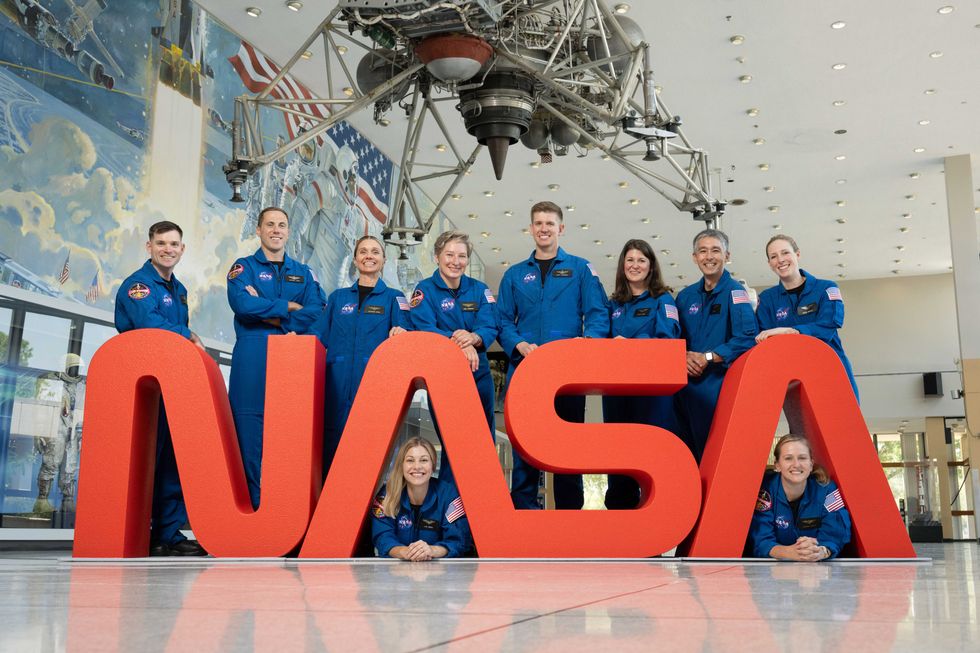
Houston native Anna Menon, posing below the first A in “NASA,” is one of 10 new NASA astronaut candidates. Photo courtesy NASA.

NASA has selected 10 new astronaut candidates, including one whose hometown is Houston, for its 2025 training class. The candidates will undergo nearly two years of training before they can assume flight assignments.

Intuitive Machines lands $9.8M to complete orbital transfer vehicle

Intuitive Machines expects to begin manufacturing and flight integration on its orbital transfer vehicle as soon as 2026. Photo courtesy Intuitive Machines.

Houston-based Intuitive Machines, which rang the NASDAQ opening bell July 31, secured a $9.8 million Phase Two government contract for its orbital transfer vehicle. The contract will push the project through its Critical Design Review phase, which is the final engineering milestone before manufacturing can begin.

Houston tech company tapped by NASA for near space initiative

Intuitive Machines is among four companies awarded contracts for NASA’s Near Space Network. Photo via intuitivemachines.com

In January, Intuitive Machines nailed down a NASA deal to expand the agency’s communications network for spacecraft. Additionally, NASA completed the first round of “human in the loop” testing for Intuitive Machines’ Moon RACER lunar terrain vehicle at the agency’s Johnson Space Center. RACER (Reusable Autonomous Crewed Exploration Rover) is one of three commercially developed unpressurized lunar terrain vehicles being considered for NASA’s Artemis lunar initiative.

Texas Space Commission doles out $5.8 million to Houston companies

Axiom Space and FluxWorks are the latest Houston-area companies to receive funding from the Texas Space Commission. Photo via Getty Images.

Two Houston-area companies landed more than $5.8 million in funding from the Texas Space Commission. The commission granted up to $5.5 million to Houston-based Axiom Space and up to $347,196 to Conroe-based FluxWorks in June 2025. The two-year-old commission previously awarded $95.3 million to 14 projects. A little over $34 million remains in the commission-managed Space Exploration and Aeronautics Research Fund.

Houston company awarded $2.5B NASA contract to support astronaut health and space missions

NASA has awarded KBR a five-year, $2.5 billion Human Health and Performance Contract. Photo courtesy NASA.

Houston-based technology and energy solution company KBR was awarded a $2.5 billion NASA contract to support astronaut health and reduce risks during spaceflight missions. Under the terms of the Human Health and Performance Contract 2, KBR will provide support services for several programs, including the Human Research Program, International Space Station Program, Commercial Crew Program, Artemis campaign and others. This will include ensuring crew health, safety, and performance; occupational health services and risk mitigation research for future flights.

Houston engineering firm lands $400M NASA contract

Bastion Technologies has been tapped to provide safety and mission services for NASA's Marshall Space Flight Center in Alabama. Photo via nasa.gov.

NASA granted Houston-based Bastion Technologies Inc. the Safety and Mission Assurance II (SMAS II) award with a maximum potential value of $400 million. The award stipulates that the engineering and technical services company provide safety and mission services for the agency’s Marshall Space Flight Center in Huntsville, Alabama.

Houston startups win NASA funding for space tech projects

Houston startups were recently named among the nearly 300 recipients that received a portion of $44.85 million from NASA to develop space technology. Photo via NASA/Ben Smegelsky

Three Houston startups were granted awards from NASA in July 2025 to develop new technologies for the space agency. The companies were among nearly 300 recipients that received a total agency investment of $44.85 million through the Small Business Innovation Research (SBIR) and Small Business Technology Transfer (STTR) Phase I grant programs.

Texas Republicans are pushing to move NASA headquarters to Houston

Here's why Texas Republicans think NASA's headquarters should move to Texas in 2028. File photo.

Two federal lawmakers from Texas spearheaded a campaign to relocate NASA’s headquarters from Washington, D.C., to the Johnson Space Center in Houston’s Clear Lake area. Houston faces competition on this front, though, as lawmakers from two other states are also vying for this NASA prize. With NASA’s headquarters lease in D.C. set to end in 2028, U.S. Sen. Ted Cruz, a Texas Republican, and U.S. Rep. Brian Babin, a Republican whose congressional district includes the Johnson Space Center, wrote a letter to President Trump touting the Houston area as a prime location for NASA’s headquarters.

Intuitive Machines to acquire NASA-certified deep space navigation company

Intuitive Machines will acquire Kinetx, which marks its entry into the precision navigation and flight dynamics segment of deep space operations. Photo via Getty Images.

In August 2025, Intuitive Machines agreed to buy Tempe, Arizona-based aerospace company KinetX for an undisclosed amount. The deal is expected to close by the end of this year. KinetX specializes in deep space navigation, systems engineering, ground software and constellation mission design. It’s the only company certified by NASA for deep space navigation. KinetX’s navigation software has supported both of Intuitive Machines’ lunar missions.

Axiom Space launches semiconductor and astronaut training initiatives

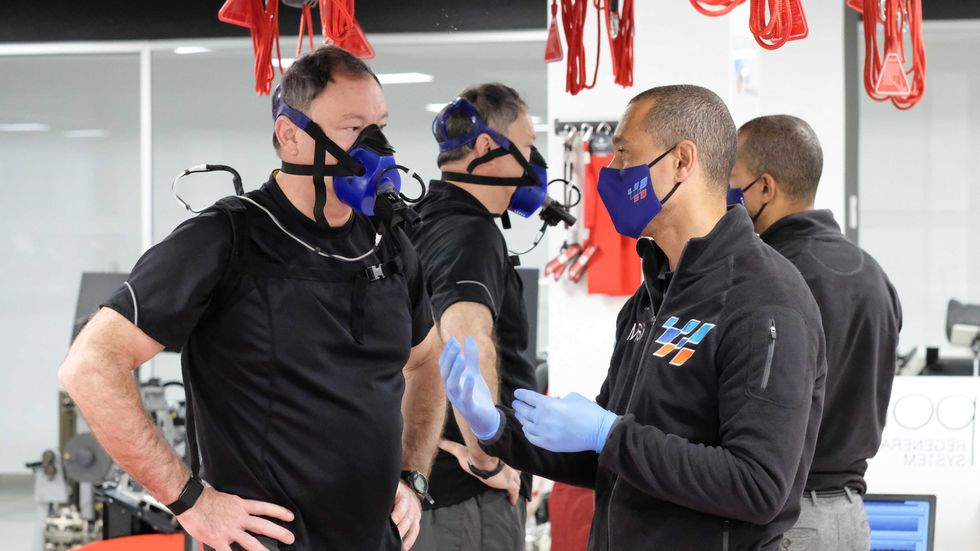
Axiom Space chief astronaut Michael López-Alegría (left) trains with Axiom’s new “Project Astronaut,” Emiliano Ventura. Photo courtesy of Axiom Space.

In fall 2025, Axiom Space, a Houston-based commercial spaceflight and space infrastructure company, launched initiatives in two very different spheres — semiconductors and astronaut training.

Intuitive Machines will acquire Kinetx, which marks its entry into the precision navigation and flight dynamics segment of deep space operations. Photo via Getty Images.

Intuitive Machines to acquire NASA-certified deep space navigation company

space deal

Houston-based space technology, infrastructure and services company Intuitive Machines has agreed to buy Tempe, Arizona-based aerospace company KinetX for an undisclosed amount.

The deal is expected to close by the end of this year, according to a release from the company.

KinetX specializes in deep space navigation, systems engineering, ground software and constellation mission design. It’s the only company certified by NASA for deep space navigation. KinetX’s navigation software has supported both of Intuitive Machines’ lunar missions.

Intuitive Machines says the acquisition marks its entry into the precision navigation and flight dynamics segment of deep space operations.

“We know our objective, becoming an indispensable infrastructure services layer for space exploration, and achieving it requires intelligent systems and exceptional talent,” Intuitive Machines CEO Steve Altemus said in the release. “Bringing KinetX in-house gives us both: flight-proven deep space navigation expertise and the proprietary software behind some of the most ambitious missions in the solar system.”

KinetX has supported deep space missions for more than 30 years, CEO Christopher Bryan said.

“Joining Intuitive Machines gives our team a broader operational canvas and shared commitment to precision, autonomy, and engineering excellence,” Bryan said in the release. “We’re excited to help shape the next generation of space infrastructure with a partner that understands the demands of real flight, and values the people and tools required to meet them.”

Intuitive Machines has been making headlines in recent weeks. The company announced July 30 that it had secured a $9.8 million Phase Two government contract for its orbital transfer vehicle. Also last month, the City of Houston agreed to add three acres of commercial space for Intuitive Machines at the Houston Spaceport at Ellington Airport. Read more here.

Intuitive Machines expects to begin manufacturing and flight integration on its orbital transfer vehicle as soon as 2026. Photo courtesy Intuitive Machines.

Intuitive Machines lands $9.8M to complete orbital transfer vehicle

space funding

Houston-based Intuitive Machines, which rang the NASDAQ opening bell July 31, has secured a $9.8 million Phase Two government contract for its orbital transfer vehicle.

The contract will push the project through its Critical Design Review phase, which is the final engineering milestone before manufacturing can begin, according to a news release from the company.

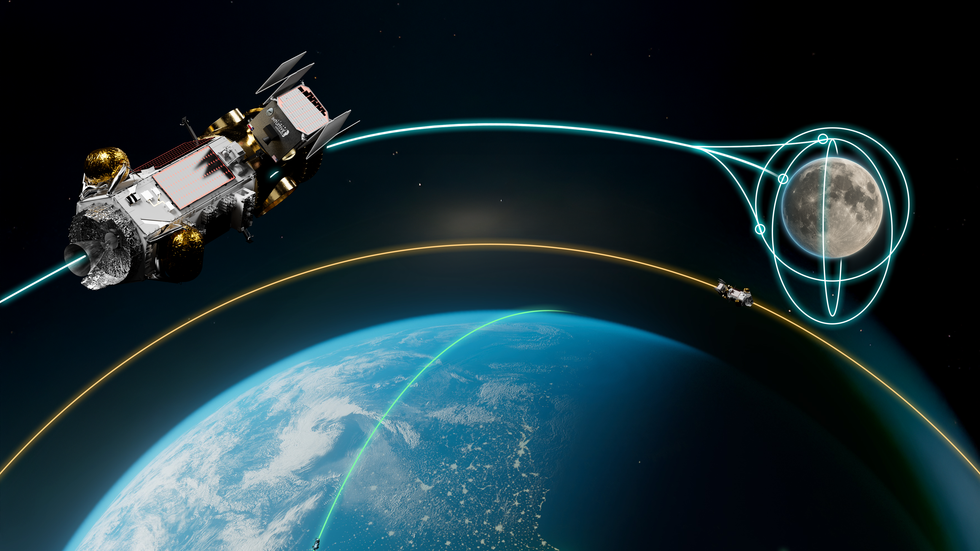
Intuitive Machine's orbital transfer vehicle (OTV) is designed to transfer payloads between Earth's orbit and the Moon and is built around the company's Nova-C lander, which has been a part of two successful lunar missions.

“Our OTV is a direct evolution of our lunar surface delivery missions—positioning us to expand into the rapidly growing market for in-space logistics,” Steve Altemus, Intuitive Machines CEO, said in the release. “We’re leveraging our flight-proven technology to operate a mission-ready service that delivers customer payloads across orbits—from Earth to the Moon and beyond.”

The company says the fast, flexible vehicle could be used for orbital servicing, logistics and communications in medium earth orbit, low lunar orbit and a variety of other destinations.

Intuitive Machines expects to begin manufacturing and flight integration as soon as 2026, once the design review is completed.

The non-NASA contract is for an undisclosed government customer, which Intuitive Machines says reinforces its "strategic move to diversify its customer base and deliver orbital capabilities that span commercial, civil, and national security space operations."

The company has received millions from NASA for its lunar rover, lunar lander, science and technology payloads, and communications and navigation services over the years. It also recently landed up to $10 million to help develop an Earth re-entry vehicle and in-space biomanufacturing lab from Texas's Space Exploration and Research Fund.

Earlier this month, the City of Houston agreed to add three acres of commercial space for Intuitive Machines at the Houston Spaceport at Ellington Airport. Read more here.

Ad Placement 300x100
Ad Placement 300x600

CultureMap Emails are Awesome

Axiom Space wins NASA contract for fifth private mission, lands $350M in financing

ready for takeoff

Editor's note: This story has been updated to include information about Axiom's recent funding.

Axiom Space, a Houston-based space infrastructure company that’s developing the first commercial space station, has forged a deal with NASA to carry out the fifth civilian-staffed mission to the International Space Station.

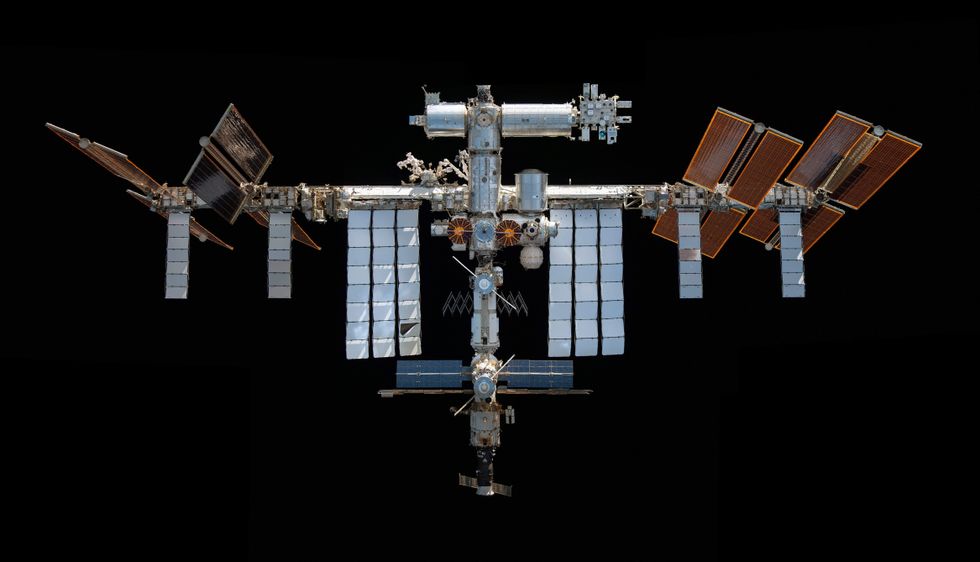
Axiom Mission 5 is scheduled to launch in January 2027, at the earliest, from NASA’s Kennedy Space Center in Florida. The crew of non-government astronauts is expected to spend up to 14 days docked at the International Space Station (ISS). Various science and research activities will take place during the mission.

The crew for the upcoming mission hasn’t been announced. Previous Axiom missions were commanded by retired NASA astronauts Michael López-Alegría, the company’s chief astronaut, and Peggy Whitson, the company’s vice president of human spaceflight.

“All four previous [Axiom] missions have expanded the global community of space explorers, diversifying scientific investigations in microgravity, and providing significant insight that is benefiting the development of our next-generation space station, Axiom Station,” Jonathan Cirtain, president and CEO of Axiom, said in a news release.

As part of Axiom’s new contract with NASA, Voyager Technologies will provide payload services for Axiom’s fifth mission. Voyager, a defense, national security, and space technology company, recently announced a four-year, $24.5 million contract with NASA’s Johnson Space Center in Houston to provide mission management services for the ISS.

Axiom also announced today, Feb. 12, that it has secured $350 million in a financing round led by Type One Ventures and Qatar Investment Authority.

The company shared in a news release that the funding will support the continued development of its commercial space station, known as Axiom Station, and the production of its Axiom Extravehicular Mobility Unit (AxEMU) under its NASA spacesuit contract.

NASA awarded Axiom a contract in January 2020 to create Axiom Station. The project is currently underway.

"Axiom Space isn’t just building hardware, it’s building the backbone of humanity’s next era in orbit," Tarek Waked, Founding General Partner at Type One Ventures, said in a news release. "Their rare combination of execution, government trust, and global partnerships positions them as the clear successor-architect for life after the ISS. This is how the United States continues to lead in space.”

Houston edtech company closes oversubscribed $3M seed round

fresh funding

Houston-based edtech company TrueLeap Inc. closed an oversubscribed seed round last month.

The $3.3 million round was led by Joe Swinbank Family Limited Partnership, a venture capital firm based in Houston. Gamper Ventures, another Houston firm, also participated with additional strategic partners.

TrueLeap reports that the funding will support the large-scale rollout of its "edge AI, integrated learning systems and last-mile broadband across underserved communities."

“The last mile is where most digital transformation efforts break down,” Sandip Bordoloi, CEO and president of TrueLeap, said in a news release. “TrueLeap was built to operate where bandwidth is limited, power is unreliable, and institutions need real systems—not pilots. This round allows us to scale infrastructure that actually works on the ground.”

True Leap works to address the digital divide in education through its AI-powered education, workforce systems and digital services that are designed for underserved and low-connectivity communities.

The company has created infrastructure in Africa, India and rural America. Just this week, it announced an agreement with the City of Kinshasa in the Democratic Republic of Congo to deploy a digital twin platform for its public education system that will allow provincial leaders to manage enrollment, staffing, infrastructure and performance with live data.

“What sets TrueLeap apart is their infrastructure mindset,” Joe Swinbank, General Partner at Joe Swinbank Family Limited Partnership, added in the news release. “They are building the physical and digital rails that allow entire ecosystems to function. The convergence of edge compute, connectivity, and services makes this a compelling global infrastructure opportunity.”

TrueLeap was founded by Bordoloi and Sunny Zhang and developed out of Born Global Ventures, a Houston venture studio focused on advancing immigrant-founded technology. It closed an oversubscribed pre-seed in 2024.

Houston biotech co. raises $11M to advance ALS drug development

drug money

Houston-based clinical-stage biotechnology company Coya Therapeutics (NASDAQ: COYA) has raised $11.1 million in a private investment round.

India-based pharmaceuticals company Dr. Reddy’s Laboratories Inc. led the round with a $10 million investment, according to a news release. New York-based investment firm Greenlight Capital, Coya’s largest institutional shareholder, contributed $1.1 million.

The funding was raised through a definitive securities purchase agreement for the purchase and sale of more than 2.5 million shares of Coya's common stock in a private placement at $4.40 per share.

Coya reports that it plans to use the proceeds to scale up manufacturing of low-dose interleukin-2 (IL-2), which is a component of its COYA 302 and will support the commercial readiness of the drug. COYA 302 enhances anti-inflammatory T cell function and suppresses harmful immune activity for treatment of Amyotrophic Lateral Sclerosis (ALS), Frontotemporal Dementia (FTD), Parkinson’s disease and Alzheimer’s disease.

The company received FDA acceptance for its investigational new drug application for COYA 302 for treating ALS and FTD this summer. Its ALSTARS Phase 2 clinical trial for ALS treatment launched this fall in the U.S. and Canada and has begun enrolling and dosing patients. Coya CEO Arun Swaminathan said in a letter to investors that the company also plans to advance its clinical programs for the drug for FTD therapy in 2026.

Coya was founded in 2021. The company merged with Nicoya Health Inc. in 2020 and raised $10 million in its series A the same year. It closed its IPO in January 2023 for more than $15 million. Its therapeutics uses innovative work from Houston Methodist's Dr. Stanley H. Appel.