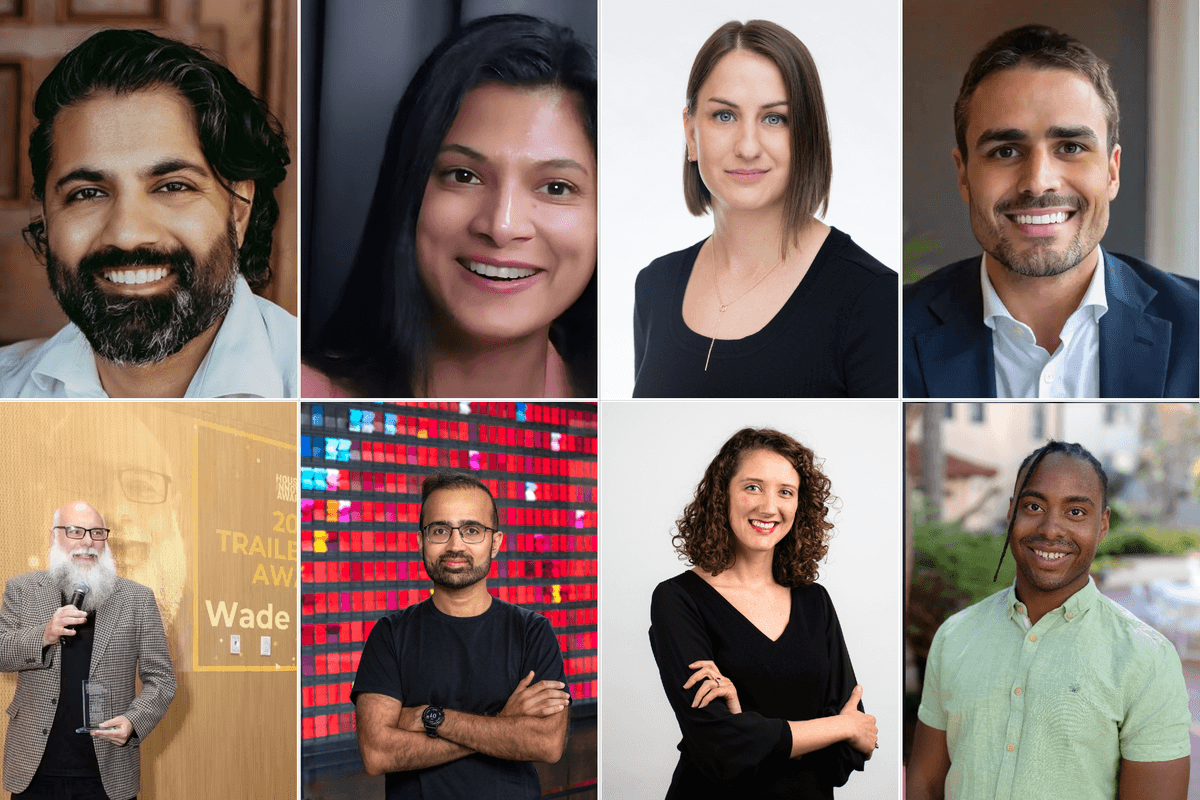
The 17 finalists are competing for Ernst & Young’s Entrepreneur Of The Year 2024 Gulf South Award. Photo via Getty Images

Entrepreneurs from the Houston area have been named finalists for one of the region’s most prestigious business awards.

The 17 finalists are competing for Ernst & Young’s Entrepreneur Of The Year 2024 Gulf South Award. The Gulf South region includes parts of Texas, along with Louisiana and Mississippi.

An independent panel of judges selected the 48 finalists. Contenders were evaluated based on their demonstration of building long-term value through factors such as entrepreneurial spirit, purpose, growth, and impact.

The Houston-area finalists are:

  • Shannon Payne, Allied Fire Protection, Pearland
  • Jay McEntire IV, Arva Intelligence, Houston
  • Andrew Levy, Avelo Airlines, Houston
  • Derek Maetzold, Castle Biosciences, Friendswood
  • Scott Aronstein, Connectivity Source, Houston
  • Joshua Weisman, Construction Concepts, Houston
  • Feras Moussa and Ben Suttles, Disrupt Equity, Houston
  • John Poindexter, J.B. Poindexter, Houston
  • James Ross, LJA Engineering, Houston
  • Asher Kazmann, Locke Solutions, Houston
  • Chad Millis, Millis, Missouri City
  • Mike Francis, NanoTech Materials, Houston
  • Stuart Hinchen and Peter Jenkins, Quva Pharma, Sugar Land
  • Trevor Best and Suman Khatiwada, Syzygy Plasmonics, Houston
  • Hal Brumfield, Tachus Fiber Internet, The Woodlands
  • Jared Boudreaux, Vector Controls and Automation Group, Pearland
  • Ting Qiao, Wan Bridge, Houston

“The finalists of this year are audacious entrepreneurs who are making a significant impact in their respective industries and communities,” says Anna Horndahl, an EY partner and co-director of the EOY Gulf South Program.

“These pioneers, chosen by an independent panel of judges, showcase relentless commitment to their businesses, customers and communities. We are thrilled to acknowledge their accomplishments,” adds Travis Garms, an EY partner and co-director of the EOY Gulf South Program.

Ad Placement 300x100
Ad Placement 300x600

CultureMap Emails are Awesome

Baylor scientist lands $2M grant to explore links between viruses and Alzheimer’s

Alzheimer’s research

A Baylor College of Medicine scientist will begin exploring the possible link between Alzheimer’s disease and viral infections thanks to a $2 million grant awarded in March.

Dr. Ryan S. Dhindsa is an assistant professor of pathology & immunology at Baylor and a principal investigator at Texas Children’s Duncan Neurological Research Institute (Duncan NRI). He hypothesizes that Alzheimer’s may have some link to previous viral infections contracted by the patient. To study this intriguing possibility, the American Brain Foundation has gifted him the Cure One, Cure Many award in neuroinflammation.

“It is an honor to receive this support from the Cure One, Cure Many Award. Viral infections are emerging as a major, underappreciated driver of Alzheimer's disease, and this award will allow our team to conduct the most comprehensive screen of viral exposures and host genetics in Alzheimer's to date, spanning over a million individuals,” Dhindsa said in a news release. “Our goal is to identify which viruses matter most, why some people are more vulnerable than others, and ultimately move the field closer to new therapeutic strategies for patients.”

Roughly 150 million people worldwide will suffer from Alzheimer’s by 2050, making it the most common cause of dementia in the world. Despite this, scientists are still at a loss as to what exactly causes it.

Dhindsa’s research is part of a new range of theories that certain viral infections may trigger Alzheimer’s. His team will take a two-fold approach. First, they will analyze the medical records of more than a million individuals looking for patterns. Second, they will analyze viral DNA in stem cell-derived brain cells to see how the infections could contribute to neurological decay. The scale of the genomic data gathering is unprecedented and may highlight a link that traditional studies have missed.

Also joining the project are Dr. Caleb Lareau of Memorial Sloan Kettering Cancer Center and Dr. Artem Babaian of the University of Toronto. Should a link be found, it would open the door to using anti-virals to prevent or treat Alzheimer’s.

Tesla Robotaxi service officially launches in Houston and Dallas

Future of the Roads

Tesla’s Robotaxi service has taken to the streets of Houston. In a brief statement Saturday, April 18 on its X social media account, Tesla Robotaxi says the autonomous rideshare service just launched in Texas’ two biggest metro areas — Houston and Dallas.

“Try Tesla Robotaxi in Dallas & Houston!” Tesla CEO Elon Musk says in a reposting on X of the Robotaxi announcement.

One of Robotaxi’s competitors, Alphabet-owned Waymo, beat the Tesla service to the Dallas, Houston, and Austin markets. Another competitor, Amazon-owned Zoox, has Dallas flagged for its autonomous rideshare service.

Robotaxi previously kicked off in Austin, where Tesla is based and manufactures electric vehicles, and the San Francisco Bay Area. Nearly 50 Robotaxis operate in Austin, where the service’s inaugural rides happened last year, and more than 500 in the San Francisco area.

Of the three rides logged in a 31-square-mile area in Dallas as of Monday morning, the average fare was $7.96 and the average trip was 3.5 miles, according to an online tracker of autonomous rideshare services. The tracker showed only one Robotaxi was on the roads in Dallas.

As of Monday morning, a 25-square-mile area in Houston had two Robotaxis on the road, according to the online tracker. The average fare for five recorded rides was $11.34 and the average trip was six miles.

“We want Robotaxi pricing to be simple and easy for you to understand,” according to the Robotaxi website. “Initially, as part of our introductory program, we will charge a simple, affordable rate plus applicable taxes and fees for all rides within the available service area.”

The tracker shows the Robotaxi in Dallas did not have a human aboard to monitor each trip, and only one of Houston’s two Robotaxis did not have a human monitor in the driver’s seat.

For now, all passengers ride in Tesla Model Y cars. Robotaxi operates from 6 am-2 am daily.

To use the service, you first must download the Robotaxi app, which works only on iPhones.

Robotaxi lets you stream music and adjust climate settings and seat positioning from the Robotaxi app or the vehicle’s touchscreen. Climate and media settings are stored in your Robotaxi profile and automatically transfer from one vehicle to another. If you own a Tesla, certain profile settings and media preferences are available in your own car as well as in a Robotaxi.

In January at the World Economic Forum in Davos, Switzerland, Musk said a “widespread” network of driverless rideshare vehicles would be operating in the U.S. by the end of this year, CNBC reported.

---

This article originally appeared on CultureMap.com.

Houston VC funding surged nearly 50% in Q1 2026, report says

VC victories

First-quarter venture capital funding for Houston-area startups climbed nearly 50 percent compared to the same time last year, according to the PitchBook-NVCA Venture Monitor.

In Q1 2026, Houston-area startups raised $532.3 million, a 49 percent jump from $320.2 million in Q1 2025, according to the PitchBook-NVCA Venture Monitor.

However, the Q1 total fell 23 percent from the $671.05 million raised in Q4 2025.

Among the first-quarter funding highlights in Houston were:

  • Utility Global, which focuses on industrial decarbonization, announced a first close of $100 million for its Series D round.
  • Sage Geosystems raised a $97 million Series B round to support its geothermal energy storage technology.

Those funding rounds underscore Houston’s evolution as a magnet for VC in the energy sector.

“Today, the energy sector is increasingly extending into the startup economy as venture capital flows into companies developing the technologies that will shape the future of global energy,” the Greater Houston Partnership says.

The energy industry accounted for nearly 40 percent of Houston-area VC funding last year, according to market research and lead generation service Growth List.

Adding to Houston’s stature in VC for energy startups are investors like Chevron Technology Ventures, the investment arm of Houston-based oil and gas giant Chevron; Goose Capital; Mercury Fund; and Quantum Energy Partners.