Flourishing Nexus recently won runner up in the innovation category of the city's Liftoff Houston competition. Photo courtesy of the City of Houston

Connecting medical professionals is about to get easier thanks to a new Houston company, Flourishing Nexus.

Next month, their digital platform, The Nexus, will debut to in a soft launch to a curated group of TMC employees.

“Think of it as a combination of existing platforms like LinkedIn, providing professional networking; Khan Academy, which provides excellent training and education; and a collaborative workspace like Google Workspace or Microsoft Teams, all enhanced by AI,” says Diane Nguyen.

Nguyen is a pharmacist by training, while her co-founder, Satid Thammasitboon, is an MD and master in health professions education.

The pair began working together in the health professions education space three years ago, but only established Flourishing Nexus in July of 2023. The company’s moniker refers to the concept of human flourishing.

“Our mission would be to promote human flourishing among health professionals,” says Thammasitboon.

The concept of human flourishing traces back at least to Aristotle, but The Nexus’ understanding of it is based on psychologist and educator Martin Seligman’s PERMA theory. The mnemonic stands for Positive Emotion, Engagement, Relationships, Meaning, and Accomplishment.

“We endeavor to bring these concepts of PERMA and human flourishing into the health professions space,” says Nguyen.

“Often our healthcare organizations or industries, when they hear health professionals are having issues with burnout, the response or reaction would be to increase incentive, financial support, or professional development to enhance resilience,” adds Thammasitboon. “We search for meaning we want to make a difference in the life of another rather than ‘everything is all about money.’”

Both professionals have globe-spanning careers. Thailand native Thammasitboon says that his endeavors have taken him across Europe, Southeast Asia, and East Asia, while Nguyen’s work has focused her attention on South America, sub-Saharan Africa, and Eastern Europe.

“I realized that the key to providing better outcomes and health care for the patients was really dependent on the continuing education and training of the staff,” Nguyen says.

Those experiences proved to be the roots from which The Nexus grew.

But the team’s colleagues abroad won’t be among the first The Nexus users. That distinction will belong to Houston’s rich community of medical pros. And when the platform soft launches in January, it will be with two awards already under its belt.

The Liftoff Houston Startup Business Plan competition took place last month. Nine finalists, mostly entrepreneurs from underrepresented backgrounds, were selected from among 100 applicants to compete in Liftoff’s Pitch Day. Not only was The Nexus among those competitors, it raked in a runner-up prize, as well as fan favorite in the innovation category.

Nguyen, who did the pitching, says that Liftoff helped Flourishing Nexus tremendously with both its preparation workshops and feedback from the judges.

“Sometimes you think you have a great idea but it’s not until you critically think about your own plan, analyze your plan, and prepare to pitch it that you really learn about it. This preparation helped us and strengthened our mission. Our business plan is much better,” says Thammasitboon.

Next up? Launching and growing The Nexus’ community. Nguyen also says they plan to participate in more competitions, including possibly Houston Community College’s Business Plan Competition. It’s one more way of bringing the abstract concept of human flourishing to a flesh and blood audience.
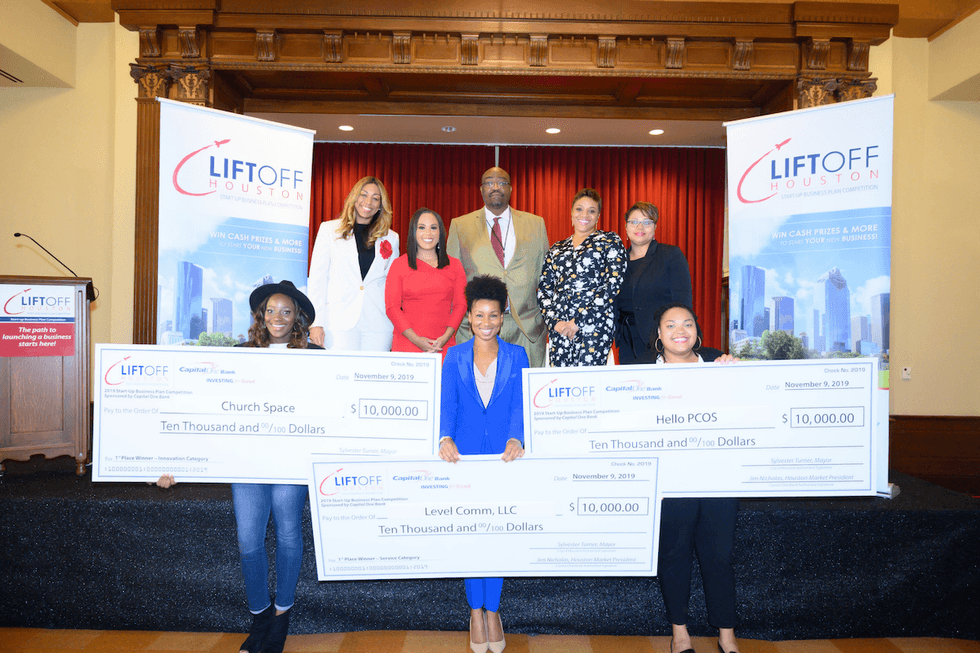
Liftoff Houston took place for the 11th year this past weekend. Here's who won prizes. Photo courtesy of the city of Houston

Houston entrepreneurs awarded over $30,000 at annual competition

biz plan

An annual pitch competition put on by the city of Houston named its big winners for this year.

The 11th annual Liftoff Houston Startup Business Plan Competition announced its three winners — and each will receive $10,000 in startup money. The winners are:

  • Teria Johnson's e-commerce sweet and savory pies company, Charleston Kitchen
  • Zoey Barker and Mohammadmehdi Mortazavi’s ExoBraced’s ExoBak, a light-weight exoskeleton to help with back pain and prevent injuries from manual workers
  • Giovanni Garza’s Classic Borrego Retail, which offers high-end cowboy boots.

There were nine finalists that were selected from over 100 applicants and competed in Liftoff’s Pitch Day on November 18, where they were ranked on service, product, and innovation after pitching their businesses to a panel of expert judges.

In the event’s 11 years, 33 winners started businesses in the fields of merchandise/retail, software,education, hardware, hospitality, health and wellness, finance, technology,consulting, and logistics. The yearly event is sponsored by Capital One Bank and administered by the Houston Public Library and the Office of Business Opportunity. Liftoff Houston’s results have reflected the diversity of the city.

“The program is especially significant as data collected from recent competitions shows Liftoff Houston made an impact on populations that have been historically marginalized,” says Mayor Sylvester Turner in a news release. “More than 90 percent of participants identified as people of color, more than 70 percent were female, 44 percent had no college degree, and 54 percent earned less than $50,000 a year.”

Runners received $500 each. They are:

  • Francesca Bonaduc’e De Nigris: Intrecci by Francesca collaborates with artisans around the world, to deliver one-of-a-kind handmade rugs.
  • Diana Tudela and Hailee Trombley’s The Goodest Goodbye: a pet aftercare company that uses cutting-edge technology and environmentally conscious efforts.
  • Diane Nguyen’s Flourishing Nexus LLC: a virtual platform that unites health professionals worldwide.

Liftoff Houston – and our finalists – have also made it this far because of our workshop partners, all who have given us the invaluable gift of their time,” says OBO Director Marsha Murray in a news release. “The business, financial, legal and marketing education they have provided has allowed our participants to plan a roadmap to their success, including the creation of viable business plans.”

Small businesses in Houston can apply for the annual Liftoff Houston competition. Photo via liftoffhouston.smapply.org

City of Houston opens applications for 2023 business competition

apply now

The City of Houston opened applications for its annual Liftoff Houston Startup Business Plan Competition, which helps local founders bring their months-old companies to new heights.

Now in its 11th year, the competition and educational program awards $10,000 in seed money to three founders after completing a four-month-long workshop series that culminates in a Pitch Day. Winners are named in three categories: Innovation, Product and Service.

Applications must be received by 4 p.m. on Friday, August 4. And Pitch Day will be held on November 18. To be eligible for the competition, applicants must live in Houston and operate their businesses here. Businesses must have only been in operation for less than a year and show verifiable revenue that does not exceed $10,000. Founders who do not meet these criteria are eligible for Liftoff's Educational Pathway track that does not include the competition portion of the program.

“For 11 years, Liftoff Houston has empowered participants to achieve financial mobility through entrepreneurship,” Mayor Sylvester Turner said in a statement. “These participants have become key drivers to the success of Houston’s economy, and they have contributed to our communities by creating jobs and by providing much needed goods and services.”

Liftoff Houston is sponsored by Capital One Bank and administered by the Houston Public Library and the City's Office of Business Opportunity. According to a statement, the program has helped serve historically marginalized populations in Houston. In last year's cohort, 95 of participants identified as people of color, 77 percent were female, 44 percent had no college degree and 54 percent made less than $50,000.

Last year's winners in the Innovation, Product and Service were:

  • Innovation: Aditya Aggarwal, founder of Maritime XR, which aims to supplement conventional maritime training with virtual reality simulations.
  • Product: Hannah Le, founder of RE.STATEMENT, a marketplace for designers to upcycle old fashion into wearable art
  • Service: Natasha Roberts, founder of ActIVate Drip Spa, which provides medical-grade IV drips that help eliminate toxins and aid hydration and recovery

"I wanted to see how far I could go," Le told Innovation Map earlier this year. "I had pitched before, but this was the first time that I was onstage and I just felt like I belonged there."

Le shared more about the founding of RE.STATEMENT and how Liftoff Houston impacted her business in an episode of the Houston Innovators Podcast


Hannah Le founded RE.STATEMENT to provide a much-needed platform for sustainable fashion finds. Photo courtesy of RE.STATEMENT

This Houston entrepreneur is enabling fashion upcycling for more sustainable style

houston innovators podcast episode 170

When shopping online one day, Hannah Le saw a need for a platform that allowed transactions between upcycling fashion designers and shoppers looking for unique, sustainable pieces.

Le created RE.STATEMENT, an online shopping marketplace for upcycled clothing. Before RE.STATEMENT, designers were limited to Etsy, which is focused on handmade pieces, or Poshmark and Depop, which are dedicated to thrift finds. Upcycle fashion designers didn't have their own, unique platform to sell on — and, likewise, shoppers were scattered across sites too.

"These marketplaces are really good for what they do," Le says on this week's episode of the Houston Innovators Podcast, "but, whenever I think of someone looking for something unique and sustainable, it's hard for me to imagine finding that on these marketplaces."

The platform soft launched in December with 25 upcycling designers and over 1,200 buyers that had been on the company's waitlist for almost nine months. Now that the site is live, Le hopes to give both buyers and sellers quick access to transactions.

"Most designers give up if they haven't sold an item within three months," Le explains. "That's something RE.STATEMENT has dedicated its business model to — making sure that items sell faster and at a higher value than any other marketplace."

Le says that she started with buyers to see what exactly they were looking for, then she searched and found the designers looking to sell their pieces, and the current platform is dynamic and flexible to the needs of users within her community.

"Even today, it changes every single day depending on how users are interacting with the website and what sellers are saying that they need — really communicating with buyers and sellers is how the marketplace is evolving," she says.

RE.STATEMENT's ability to quickly evolve has been due to its early stage, Le explains on the show. She's not yet taken on institutional funding or hired anyone else other than tech support. She says this allows her to quickly make changes or try out new things for users.

"For me, there are still so many things I want to prove to myself before I bring others involved," she says. "To start, it's coming up with new opportunities for buyers to interact with the website so that we can keep learning from them."

Le has already proven some success to herself. Last year, she took home one of three prizes offered at the city's Liftoff Houston competition. The contest, which gives Houston entrepreneurs pitch practice and mentorship, awarded RE.STATEMENT $10,000 for winning in the product category.

"I wanted to see how far I could go," Le says of the competition where she got to introduce her business to Mayor Sylvester Turner and a whole new audience of people. "I had pitched before, but this was the first time that I was onstage and I just felt like I belonged there."

Le shares more about her vision for RE.STATEMENT and the integral role Houston plays in her success on the show.


Three Houston entrepreneurs walked away from this year's Liftoff Houston with $10,000 in prize money. Photo courtesy of the city of Houston

City of Houston names 3 companies ready for liftoff

ready to grow

Three local entrepreneurs have received a big lift from the City of Houston’s 2022 edition of the Liftoff Houston startup business plan competition. Each entrepreneur received a $10,000 cash prize.

Natasha Roberts won in the service category. She is the founder of ActIVate Drip Spa, which provides medical-grade IV drips that help eliminate toxins and aid hydration and recovery.

Hannah Le prevailed in the product category. Her startup, RE.STATEMENT, runs a marketplace for designers to upcycle old fashion into wearable art.

Aditya Aggarwal claimed victory in the innovation category. Her business, Maritime XR, aims to supplement conventional maritime training with virtual reality simulations.

“Liftoff Houston goes beyond the $10,000 grand prize that is awarded in each category. This program is also about business education, mentorship and networking — all of which are foundations of creating a successful business,” Houston Mayor Sylvester Turner says in a news release.

All of the entrepreneurs who competed in Liftoff Houston attended nearly four months of workshops and met with business and financial mentors. Representatives of Capital One Bank and SCORE Houston their business plans. To devise their business plans, the entrepreneurs relied on free resources from the Houston Public Library and the city’s Office of Business Opportunity.

The winners were announced November 5. This year’s nine finalists were chosen from more than 160 applicants.

The other finalists in the service category were:

  • Charmeyce Buck and Frerika Varlack of Ignite Diagnostic Solutions, a professional analytical laboratory.
  • Kimberly Evans of the Coterie Wine Bar & Social Club, whose customers come from underserved communities.

The other finalists in the product category were:

  • Suzanne Knobel of Bennie’s Old-Fashioned Ketchup, which produces small-batch ketchup made with fresh tomatoes.
  • Stefanie Jones of Yvonne Beauty, a beauty retailer whose clients are Black women.

The other finalists in the innovation category were:

  • Sean Carroll of Buffalo Seaweed, the first algae farm in Texas.
  • Terri Nguyen of SHI Educational Properties, which builds affordable modular homes.
Here's your latest roundup of Houston startup and innovation news you may have missed. Photo via Getty Images

Houston startup raises $25M, biz plan competition opens apps, and more local innovation news

Short stories

We're on the other side of the hill that is Houston's summer, but the Bayou City's still hot in terms of innovation news, and there might be some headlines you may have missed.

In this roundup of short stories within Houston startups and tech, a Houston venture capital fund has made its latest investment, a hydrogen startup has raised fresh funding, accelerators open apps, and more.

Houston hydrogen startup closes $25M series B

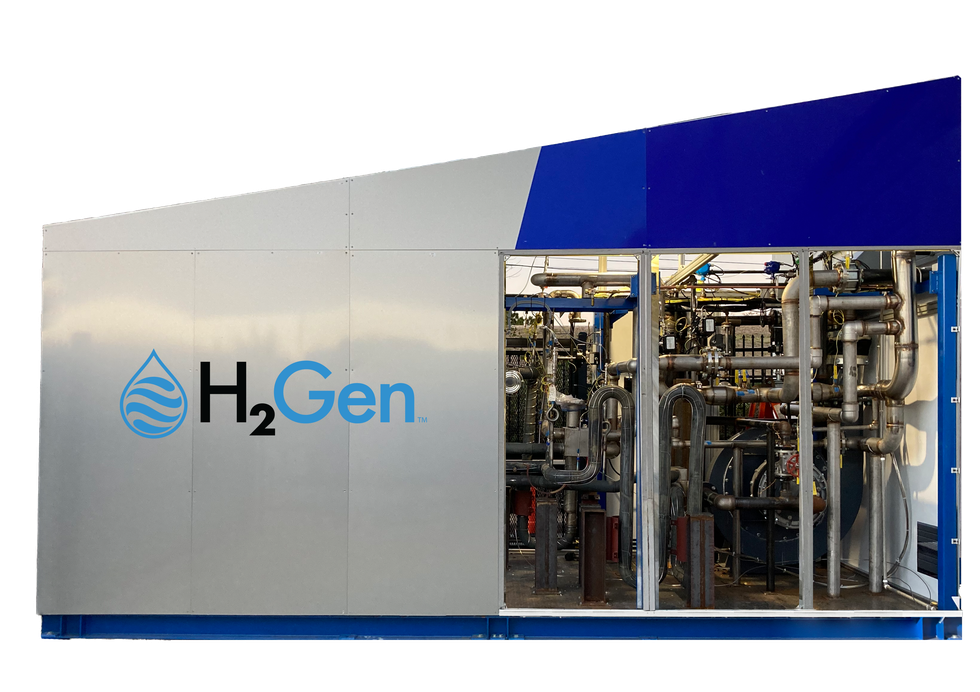
This hydrogen company has fresh funding. Photo via utility.global

Utility Global, a Houston-based sustainable hydrogen company, has closed its series B round of funding to the tune of $25 million, Axios reports.

Houston-based private equity firm Ara Partners led the round. Other participating investors included: Samsung Ventures, NOVA, and Aramco.

Utility Global, founded in 2018, has developed a clean hydrogen solution. The proprietary tech — called the eXERO Technology Platform — includes a zero electricity process that converts sustainable waste streams into high-purity hydrogen. Additionally, the company developed its H2Gen Product Line that delivers customers reliable, low carbon, and high purity hydrogen, which offers unparalleled feedstock flexibility and highly competitive economics.

"Leveraging our industry-first eXERO™ Process, Utility Global is expanding into numerous industrial sectors," reads the company's website. "Whether it's next-gen fueling, green chemicals, or sustainable steel, Utility Global's products can meet your needs. Our ultra-high-purity hydrogen is also ideal for the electronics, food, and glass industries. In the steel industry, our waste-to-hydrogen offering converts waste-gases into pure hydrogen, enabling decarbonization of the steel making process.

Houston female-focused VC fund leads round of fintech company

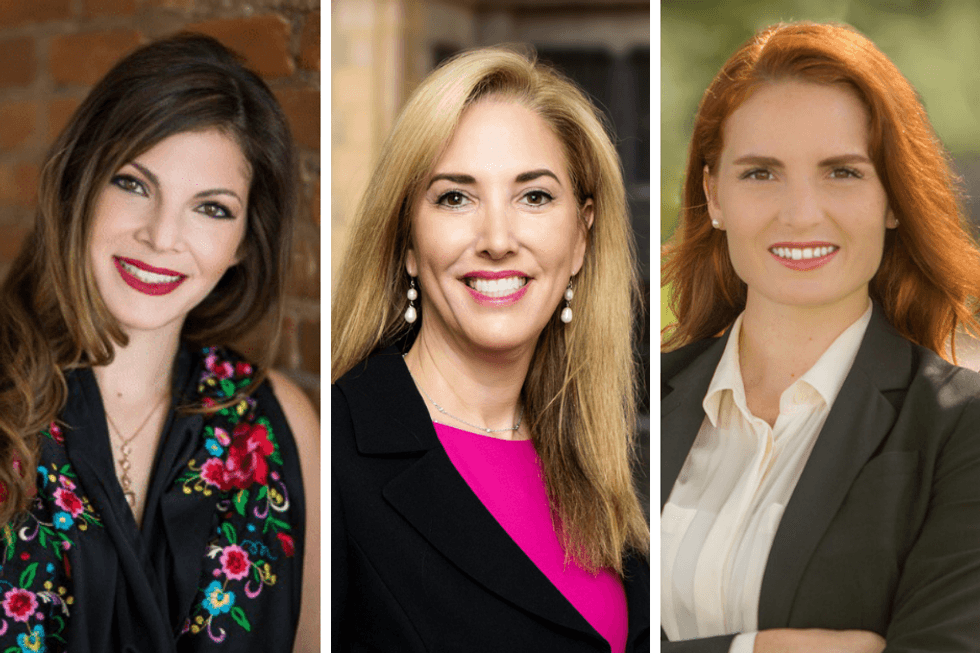
The Artemis Fund — led by Diana Murakhovskaya, Leslie Goldman, and Stephanie Campbell — has announced its latest investment. Courtesy photos

Houston-based Artemis Fund — a women-led, female-focused venture capital fund, has released information on its latest investment. The firm announced it has led the seed funding round for Los Angeles-based Payverse, a payment processor focusing on enabling global commerce via emerging technologies.

The round also saw participation from Alpha Ascent Ventures, Frank Mastrangelo, Mary Wieler, and Jonathan Palmer. Hunton Andrews Kurth LLP represented Artemis in the deal.

“The Artemis Fund invests in phenomenal female talent modernizing and diversifying wealth. Payverse is poised to transform the payments industry by making it easier and more cost-effective for businesses and consumers to transact globally," says Stephanie Campbell, general partner at The Artemis Fund, in a news release. "We are proud to lead the company’s seed round which includes other top FinTech experts and industry leaders."

Houston public service professional accelerator opens applications for its second cohort

HTXelerator is gearing up for its second cohort. Photo via HoustonTX.gov

With its mission to identify and prepare future-focused leaders for public service, specifically boards, commissions, and city council, HTXelerator, a nonprofit that launched last fall, has opened applications for the second cohort. The three-month program trains class members on the nuts and bolts of city government and ends with a competition known as The Pitch, which enables each participant to put forward a policy platform for a hypothetical race.

“The Houston region continues to grow and subsequently so does the need for public leadership to reflect the city’s dynamic diversity," says Renee Cross, senior director at the University of Houston's Hobby School of Public Affairs, in a news release. "HTXelerator will allow people with an interest in public service to learn from experts in government, non-profit organizations, academia and the private sector. Whether pursuing a leadership position or running for office, HTXelerator graduates will be ahead of the game.”

Applications are due by August 22, and the cohort members will be announced by August 29. There is no fee to apply, but the program costs $250 per participant. Scholarships are available for those that need assistance. The program kicks off with a weekend retreat September 10 and 11 and ends with The Pitch competition on December 7.

Houston startup partners with pet tech giant

Wag, Robinhood, and DonateStock have teamed up on a new initiative. Photo by Jason Briscoe on Unsplash

Houston-based DonateStock, a fintech platform that easily enables stock-based donations, has been adopted by Wag, a mobile-first marketplace for pet services. The company, which also struck a deal with Robinhood. Through these partnerships, the company has launched its Wag! Community Shares Program, a new method of charitable giving for the community of pet caregivers and for domestic pet nonprofit organizations, according to a news release.

Through its SPAC, CHW Acquisition Corp., Wag! will reserve up to 300,000 shares of common stock for the program, to be arranged through and administered by Robinhood. The company goes into more details — including information on how to participate — in the release.

“We are excited to play a key role in this ground-breaking initiative to use common stock to support domestic pet nonprofits at scale,” says Steve Latham, CEO and co-founder of DonateStock, in the release. “Our mission is to democratize charitable stock gifting. By allocating stock to more than 500 pet nonprofits, Wag! is expanding the definition of what that means.”

Annual business competition lifts off

Houston business competition opens applications

Small businesses in Houston can apply for the annual Liftoff Houston competition. Photo via liftoffhouston.smapply.org

The city of Houston's annual business plan competition has kicked off. Liftoff Houston is an entrepreneurial initiative aimed at empowering Houston entrepreneurs mentorship and business support and education.The program's sponsor, Capital One Bank, provides cash prizes totaling $30,000.

To be eligible for the startup program, the applicant:

  • Must be in the start-up phase of your business, which means you either must have a business idea or have a business in operation for less than one year
  • Must have revenue of less than $10,000
  • Must live within the city of Houston limits. Also, if you have a business location, it must be within the city of Houston limits.

Participants can also apply for the 2022 Liftoff Houston Educational Pathway. There are no eligibility requirements for that program, which will support small businesses and provide access to workshops and the final competition event.

There will be three award categories: product, service, and innovation.

  • $10,000 – Awarded for top “Product” Based Business Plan (Retail, resale, merchandise, etc.)
  • $10,000 – Awarded for top “Service” Based Business Plan (Food, labor, consulting, etc.)
  • $10,000 – Awarded for top “Innovation” Based Business Plan (Software, Hardware, inventions, new market businesses, etc.)

The competition will open applications online on July 27 and close August 19. The full schedule is online.

Ad Placement 300x100
Ad Placement 300x600

CultureMap Emails are Awesome

Houston-based Fervo Energy bumps up IPO target to $1.82 billion

IPO update

Houston-based geothermal power company Fervo Energy is now eyeing an IPO that would raise $1.75 billion to $1.82 billion, up from the previous target of $1.33 billion.

In paperwork filed Monday, May 11 with the U.S. Securities and Exchange Commission, Fervo says it plans to sell 70 million shares of Class A common stock at $25 to $26 per share.

In addition, Fervo expects to grant underwriters 30-day options to buy up to 8.33 million additional shares of Class A common stock. This could raise nearly $200 million.

When it announced the IPO on May 4, Fervo aimed to sell 55.56 million shares at $21 to $24 per share, which would have raised $1.17 billion to $1.33 billion. The initial valuation target was $6.5 billion.

A date for the IPO hasn’t been scheduled. Fervo’s stock will be listed on Nasdaq under the ticker symbol FRVO.

Fervo, founded in 2017, has attracted about $1.5 billion in funding from investors such as Bill Gates-founded Breakthrough Energy Ventures, Google, Mitsubishi Heavy Industries, Devon Energy (which is moving its headquarters to Houston), Tesla co-founder JB Straubel, CalSTRS, Liberty Mutual Investments, AllianceBernstein, JPMorgan, Bank of America and Sumitomo Mitsui Trust Bank.

Fervo’s marquee project is Cape Station in Beaver County, Utah, the world’s largest EGS (enhanced geothermal system) project. The first phase will deliver 100 megawatts of baseload clean power, with the second phase adding another 400 megawatts. The site can accommodate 2 gigawatts of geothermal energy. Fervo holds more than 595,000 leased acres for potential expansion.

Cape Station has secured power purchase agreements for the entire 500-megawatt capacity. Customers include Houston-based Shell Energy North America and Southern California Edison.

---

This article originally appeared on our sister site, EnergyCapitalHTX.com.

Texas university's new flight academy opens at Houston Spaceport

cleared for takeoff

The vehicles may not have “student driver” stickers on them, but Texas Southern University has moved a dozen planes into its new training facility at the Houston Spaceport, opening the way for student flyers to use the facility.

TSU previously reached a deal with Houston Airports and the City of Houston in 2023 to house its prospective Flight Academy at Ellington Field. At the time, TSU had a small fleet of nine planes for student use, but a $5.5 million investment from the city greatly expanded the space available.

The Flight Academy includes a 20,000-square-foot hangar that serves as a TSU satellite campus. The school now has a fleet of 12 Cirrus SR20 aircraft that were acquired last year through state and alumni funding. An additional 4,500 square feet is used as classroom and office space. An 8,000-gallon fuel tank will support flight training operations.

TSU first launched its Aviation Science Management program in 1986 and added a professional pilot program in 2016. The school is now part of the United Airlines pipeline program and has also forged relationships with Delta and Southwest.

“I want to commend Texas Southern University and Houston Airports for their leadership and partnership in advancing aviation education right here in our city,” Houston City Councilwoman Dr. Carolyn Evans-Shabazz in a press release.

“It connects our students to high-paying, high-demand careers in aviation and aerospace. This is how we grow a city in the right way—by investing in workforce development, aligning education with industry and making sure our residents are prepared to lead in the industries of tomorrow. Houston is already a global leader in aerospace and projects like this strengthen that position even further, especially here at Ellington, where innovation and opportunity continue to take flight.”

The City of Houston signed an agreement to continue funding the academy for five years.

Amazon launches ultrafast, 30-minute delivery service across Houston

Amazon Now

More than 20 years after it redefined fast shipping, Amazon is preparing to raise the bar on consumer expectations again by offering to fulfill customers' most urgent product needs in Houston and other parts of the world in a half-hour or less for an extra fee.

The company, which revolutionized online shopping in 2005 with two-day deliveries for Prime members, is rapidly opening small order-processing hubs in dozens of U.S. and foreign cities to cater to shoppers who can't or don't want to wait for cough medicine to relieve flu symptoms or tomatoes for tonight's dinner salad.

The ultrafast service, called Amazon Now, first launched in India last June. Amazon says 30-minute deliveries now are also available in urban areas of the United States, Brazil, Mexico, Japan, the United Arab Emirates, the United Kingdom.

The mini-warehouses devoted to Amazon Now are about the size of a CVS drugstore. They stock about 3,500 products for expedited delivery, including beer, diapers, pet food, meat, nonprescription medications, playing cards and cellphone charging cables.

“We know that customers love speed and always have,” Beryl Tomay, Amazon’s head of transportation, told The Associated Press on Monday. “What we see customers doing, when we offer faster speeds, are they purchase more from Amazon. And Amazon becomes more top of mind for that or other types of items as well.”

In the U.S., the company first tested Amazon Now in Seattle, the home of its headquarters, and in Philadelphia. Most residents of the Dallas-Fort Worth area and Atlanta now have access as well. The service is also live in Dallas-Fort Worth, Denver, Minneapolis, Phoenix, Oklahoma City, Orlando, and dozens of other cities, Amazon said, with New York City and others expected by year-end.

The service charges for Amazon Now start at $3.99 for Prime members, who pay an annual fee of $139, and $13.99 for non-members. A $1.99 small basket fee applies to orders under $15, Amazon said.

The company's bet on a need for speed also comes as some consumers are rebelling against rushed deliveries as they weigh the potential impact on the environment and the workers tasked with preparing orders at a rapid rate.

Amazon’s approach
A relentless focus on speed helped Amazon build a logistics and e-commerce empire. After it made two days the new delivery time normal, Amazon moved into one-day and same-day deliveries for its Prime members. This spring, the company began making 90,000 products available in one hour or three hours at an extra cost.

The scaled down and sped up microhubs that are designed to handle 30-minute orders represent another step in Amazon's pursuit.

Only a handful of people prepare orders from aisles of shelves in the 5,000- to 10,000-square-foot facilities, unlike the sprawling fulfillment centers storing millions of items where Amazon employs a mix of human workers and robotics to pick and pack orders.

Amazon tailors the product inventory to each location and uses artificial intelligence and other technology to analyze what customers buy, as well as when and how often. The most popular U.S. purchases so far include soap, toothpaste, mouthwash, toilet plungers, bananas, limes and wireless earbuds, Amazon said.

The competition
Amazon’s attempt to up the instant gratification ante provides direct competition to on-demand food delivery platforms like Instacart, Uber Eats, DoorDash and Grubhub, which don't have the scale of the e-commerce titan, according to independent retail analyst Bruce Winder.

“What Amazon brings is their prowess in supply chain,” Winder said.

These smaller companies said they don't see Amazon as a threat, though, citing the hundreds of thousands of items they are able to deliver to users' doorsteps by partnering with various merchants and restaurants.

“DoorDash has a mission to empower grocers and retailers and augment their existing footprint, not to replace them,” DoorDash spokesperson Ali Musa said in an emailed statement. “We win only when they win, which is how we can offer over half a million grocery and retail items in under an hour across the country.”

Amazon also is in a race with Walmart to become the retailer that reliably gets orders to online shoppers in under an hour.

For an additional $10 on top of standard delivery charges, shoppers can place Walmart Express Delivery orders from among more than 100,000 products that are guaranteed to arrive in an hour. Many customers, however, are receiving the items under 30 minutes, Walmart CEO John Furner told analysts in February.

Domino's cautionary tale
Companies have promised deliveries in 30 minutes or less before, but the landscape also is littered with failed attempts to break the speed barrier.

The COVID-19 pandemic produced a flurry of companies that promised 10- to 15-minute grocery deliveries from microwarehouses in dense neighborhoods, according to Sucharita Kodali, an analyst at market research firm Forrester Research.

But soaring operating costs, low customer loyalty and the drying up of investor money ultimately caused most to fail before the pandemic was over, analysts said.

Domino’s in 1984 pushed a guarantee that customers would receive their pizzas for free if they weren't delivered in under a half-hour. The company amended the “30 minutes or it’s free” policy after two years, providing only a $3 discount for late deliveries.

The promotion helped Domino’s win market share, but it ended up tarnishing the company's reputation. It dropped the guarantee in December 1993 after a string of crashes and lawsuits involving drivers racing to meet the deadline.

Brad Jashinsky, a retail analyst at information technology research and consulting firm Gartner, said he thinks Amazon should take the pizza chain's experience as a cautionary tale.

“You get in trouble when you start overpromising something like that,” he said.

Amazon won't be making any time guarantees and instead plans to keep customers who chose the 30-minute delivery option updated on the progress of their orders, Tomay said.

“There's no rushing either in our building workers or the gig workers,” she said.

Taking it slow
Kodali thinks Amazon will need a lot of people placing orders around the same time from the same or adjacent apartment buildings for the 30-minute service to be cost-effective.

Consumers may appreciate rapid receipt of products like toilet paper and batteries, but retailers and logistics experts said they also see some online shoppers, especially members of Generation Z, choosing no-rush shipping for products they don't need in a hurry.

Amazon for several years has invited customers to skip one- or two-day delivery and to receive their orders on the same day in as few parcels as possible. Consolidating orders into fewer packages by electing to have them delivered at the same time cuts down on boxes, shipping envelopes and fuel use, analysts said.

“The millennials who came to age in an era that was on fast delivery came to expect it de facto, whereas ... Gen Z is more accepting of a slower speed than previous generations before them,” said Darby Meegan, a general manager at Flexport, a supply chain and logistics company that fulfills orders for thousands of online merchants.

Still, Amazon executives have cited positive early results for Amazon Now in India, where they said Prime members tripled their requests for 30-minute deliveries once they started using the service.

Amazon Now also is attracting more repeat American customers, Tomay said.

“It’s in early days and time will tell,” she said. “I think that it will be interesting to see how it evolves.”