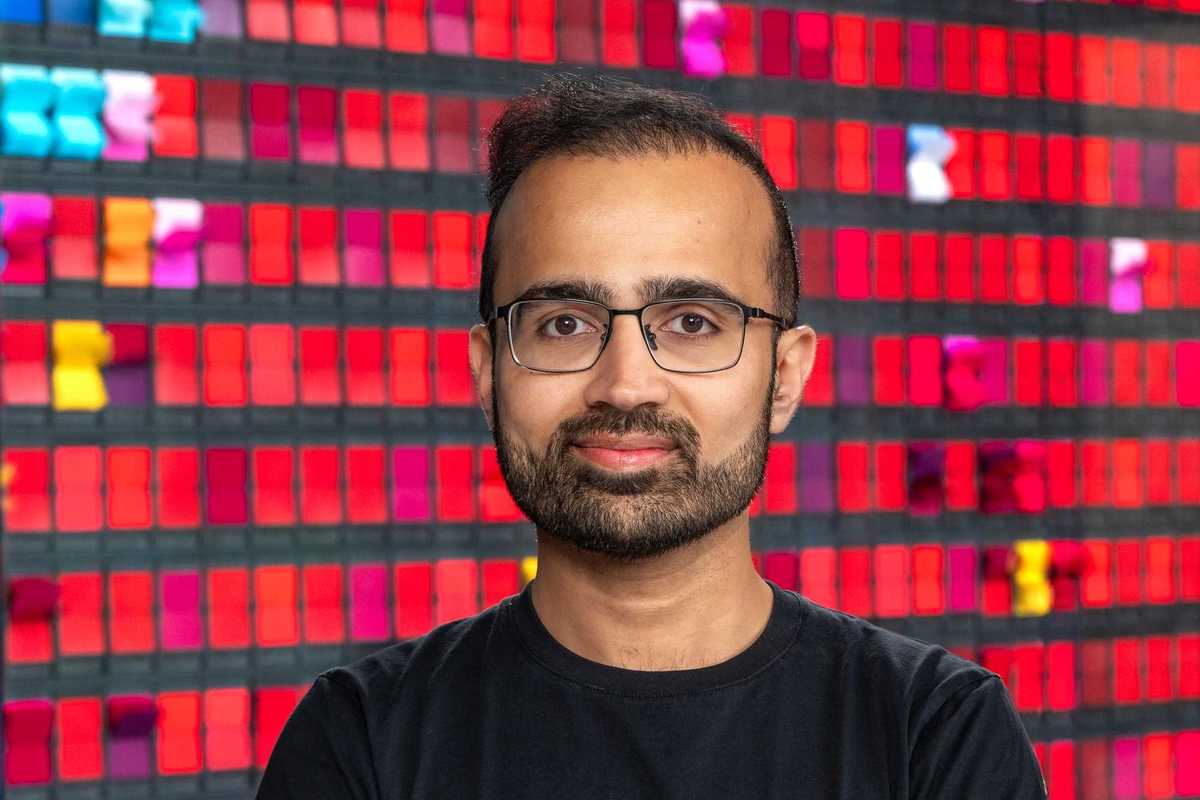
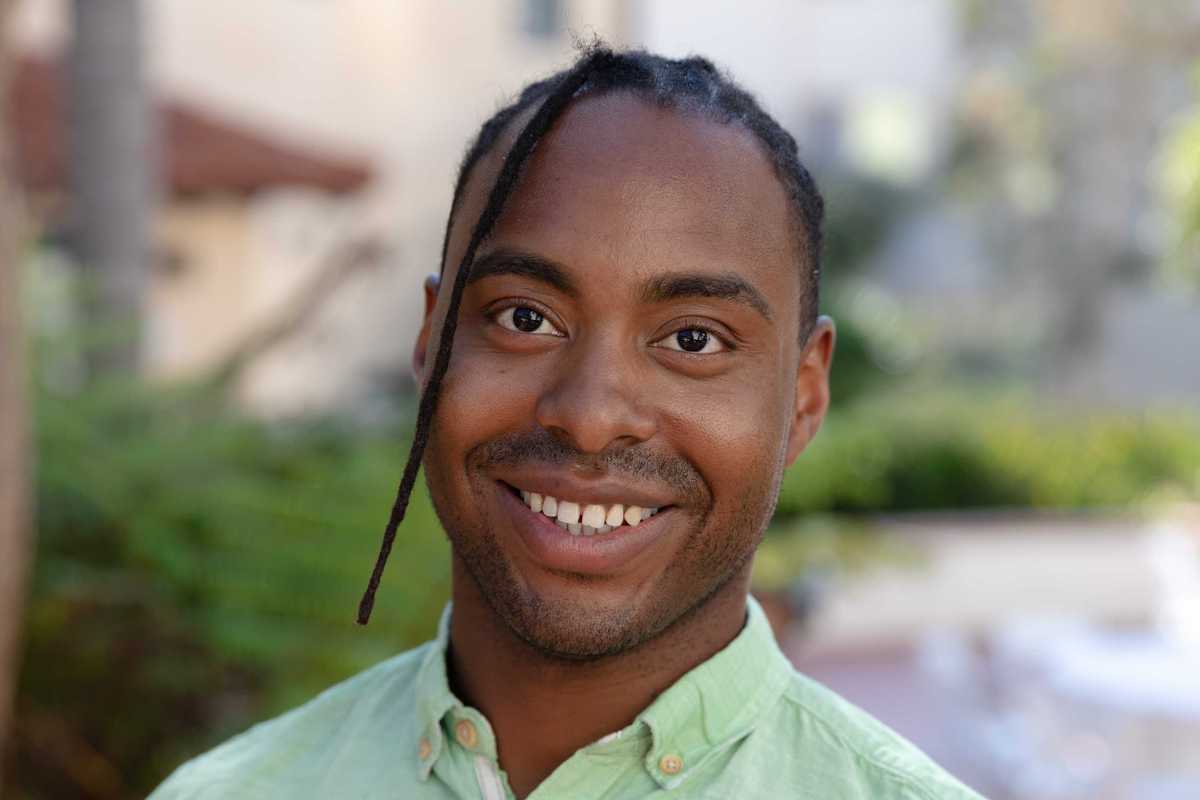
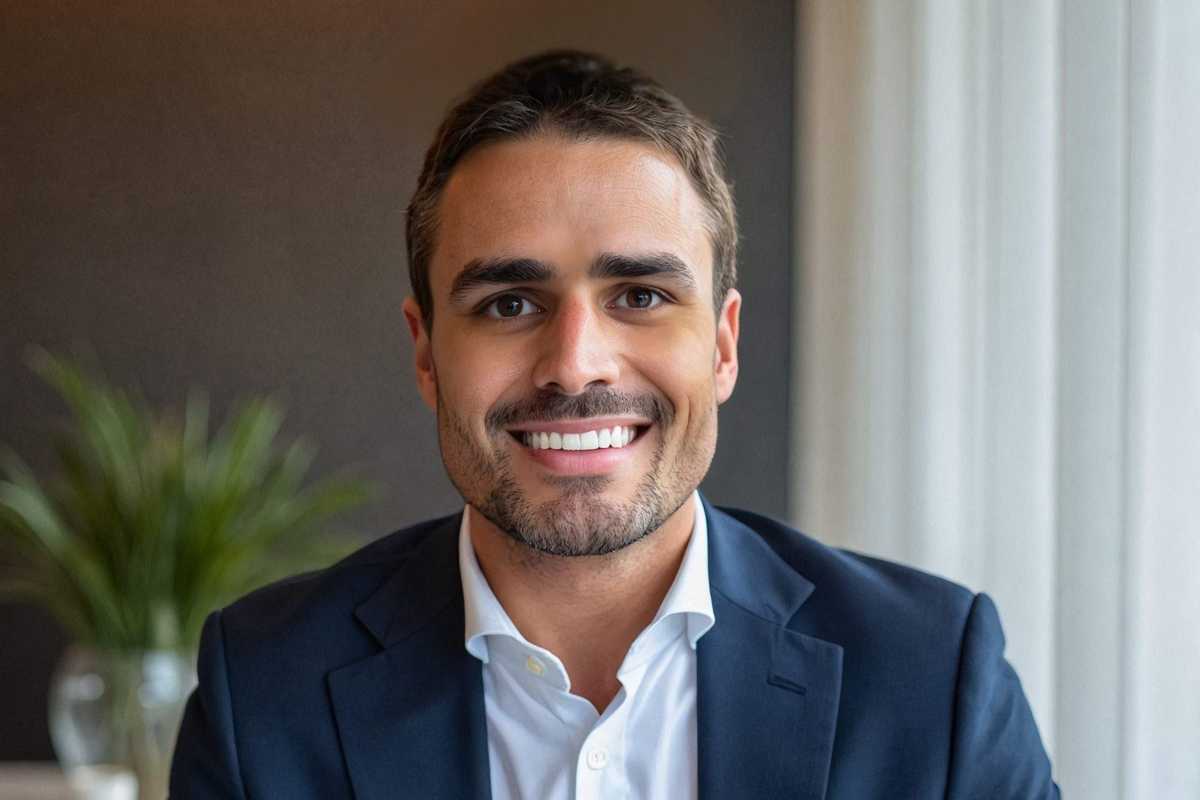
The University of Houston has more faculty named to this year’s senior member class of the National Academy of Inventors than any other Texas institution. Photos courtesy UH.

The University of Houston is now home to seven new senior members of the National Academy of Inventors.

The distinction honors active faculty, scientists and administrators from NAI member institutions that have demonstrated innovation and produced technologies that have “brought, or aspire to bring, real impact on the welfare of society,” according to the NAI. The members have also succeeded in patents, licensing and commercialization, and educating and mentoring.

According to UH, its seven new members represent the largest group from any single Texas institution this year, bringing the university's total senior member count to 46.

UH faculty also represented three of Houston's four new senior members in 2025. Six Houstonians were also named to the NIA's class of fellows late last year.

“This recognition affirms what we see every day at the University of Houston—bold, collaborative innovation focused on improving lives," Ramanan Krishnamoorti, vice president of energy at UH, said in a news release. "Having seven faculty members named Senior Members reflects our momentum and a culture where discovery moves beyond the lab into solutions that strengthen communities and drive economic growth.”

UH’s new senior members include:

  • Haleh Ardebili, endowed professor of mechanical and aerospace engineering and assistant vice president for Entrepreneurship and Startup Ecosystem. Ardebili develops flexible lithium batteries and holds four patents
  • Vemuri Balakotaiah, distinguished university chair and professor of chemical and biomolecular engineering. Balakotaiah holds is patents, with five pending, and develops mathematical models for the clean energy research.
  • Jakoah Brgoch, professor of chemistry. Brgoch develops next-generation inorganic materials and holds four patents.
  • Jose L. Contreras-Vidal, distinguished professor in electrical and computer engineering and director of UH’s NSF neurotechnology research center. Conreras-Vidal develops brain-machine interface technologies. He holds five patents, with two technologies advancing through clinical trials.
  • Preethi Gunaratne, professor in the department of biology and biochemistry and director of the UH Sequencing Core in UH’s College of Natural Sciences and Mathematics. Gunaratne holds five patents in biology and energy technologies and has made significant large-scale genome discoveries.
  • Jae-Hyun Ryou, professor of mechanical and aerospace engineering. Ryou holds 13 patents and has develops innovative semiconductor materials and devices for flexible electronics.
  • Yingcai Zheng, professor in applied geophysics and director of the UH Rock Physics Lab. Zheng's work focuses on energy production, geothermal development and carbon management strategies. He holds two patents.

Other Texas institutions also had strong showings this year. Additional new Texas senior members from NAI institutions include:

Texas A&M University

  • Guillermo Aguilar
  • Stavros Kalafatis
  • Narendra Kumar
  • Heng Pan
  • Xingyong Song
  • Yubin Zhou

Texas State University

  • Bahram Asiabanpour
  • Martin Burtscher
  • Nihal Dharmasiri
  • Alexander Kornienko
  • Ted Lehr
  • Christopher Rhodes

The University of Texas at Arlington

  • Brian H. Dennis
  • Nicholas Gans
  • Frederick M. MacDonnell
  • Charles Philip Shelor
  • Liping Tang

The University of Texas at San Antonio

  • Robert De Lorenzo
  • Marc Feldman
  • Daohong Zhou

The University of Texas at El Paso

  • XiuJun Li
  • Yirong Lin
  • David Roberson

Texas Tech University Health Sciences Center

  • Thomas John Abbruscato
  • Annette Louise Sobel
  • Sanjay K. Srivastava

Texas Tech University

  • Gerardo Games
  • Dy Dinh Le

Baylor University

  • David Jack

The University of Texas Rio Grande Valley

  • Upal Roy

This year's class is the largest since the NAI launched its senior member recognition program in 2018. The new senior members come from 82 NAI institutions ad hoe more than over 2,000 U.S. patents. Accoring to the NAI, it has 945 senior members who hold more than 11,000 U.S. patents today.

“This year’s senior member class is a truly impressive cohort. These innovators come from a variety of fields and disciplines, translating their technologies into tangible impact,” Paul R. Sanberg, president of NAI, added in a news release. “I commend them on their incredible pursuits and I’m honored to welcome them to the Academy.”

The Senior Member Induction Ceremony will honor the 2026 class at NAI’s Annual Conference June 1-4 in Los Angeles.

Ad Placement 300x100
Ad Placement 300x600

CultureMap Emails are Awesome

Texas lands at No. 13 in WalletHub innovation study

innovative states

During a SXSW reception March 12 at the Governor’s Mansion in Austin, Gov. Greg Abbott hailed Texas as the No. 1 state for innovation. Personal finance website WalletHub doesn’t see it that way, though.

A new study from WalletHub assigns Texas a No. 13 ranking for innovation among the states and the District of Columbia. D.C. comes out on top, followed by Massachusetts, California, Colorado and Washington. Mississippi appears at the bottom of the list.

Texas earns an innovation score of 49.56, compared with 69.13 for top-ranked D.C. In two broad categories, Texas ranks 12th for human capital and 13th for innovation environment.

To identify the top places for innovation, WalletHub evaluated the 50 states and D.C. by reviewing 25 key indicators of innovation friendliness. The indicators include:

  • Share of STEM professionals.
  • Forecast for Share of STEM professionals
  • Forecast for STEM jobs
  • Eighth-grade math and science performance
  • Concentration of tech companies
  • R&D spending per capita
  • Share of science and engineering graduates age 25 and over
  • Average internet speed
  • Venture capital funding per capita

“The most innovative states are especially attractive to people who have majored in science, technology, engineering and math, or STEM, as they offer abundant career opportunities and investment dollars, both for jobs at existing companies and for startups,” WalletHub analyst Chip Lupo said in the report.

“These states also instill young students with the skills they need to succeed in the current workforce, skills which are useful whether or not they pursue a STEM career,” he added.

Texas zeroes in on semiconductor industry

On the innovation front, Abbott and other state leaders have focused intently on growing the state’s semiconductor industry, which generates roughly $30 billion to $60 billion in economic activity per year. Texas ranks among the top states for semiconductor manufacturing, with major operations in North Texas and Central Texas.

To bolster the industry, Abbott signed the Texas CHIPS Act into law in 2023. The law established the Texas Semiconductor Innovation Fund, which issues grants for semiconductor research, design and manufacturing, and the Texas Semiconductor Innovation Consortium, which advises the governor and state legislators on matters related to the semiconductor sector.

Among the consortium’s appointed representatives are:

  • Joe Elabd, vice chancellor for research at the Texas A&M University System
  • David Staack, deputy vice chancellor for research at the Texas A&M University System
  • Ramanan Krishnamoorti, vice president for energy and innovation at the University of Houston
  • Magesh Rajan, vice president for research and innovation at Prairie View A&M University

Semiconductor companies with a presence in the Houston area include chip manufacturer NVIDIA, which is building an AI supercomputer factory in Houston; Labtopia, a tech staffing firm that does business in the semiconductor sector; Microchip USA, a distributor of semiconductors and other electronic components that opened an office in Kingwood last year; and Infineon Technologies, which designs, develops, and manufactures semiconductors.

The Greater Houston Partnership touts the Houston area’s track record as an innovation hub.

“As a home to world-changing innovations and a talented labor pool, Houston has been an attractive region for innovation and startups across all key industries for years,” the partnership says, “and as a major player as a center of activity for the next generation of innovators and entrepreneurs.”

Houston fuels energy innovation

As for energy innovation in the Houston area, Abbott last month announced a 455-megawatt, $617 million natural gas plant that Houston-based NRG Energy is building at its Greens Bayou facility in north Harris County is now a designated project under the Texas Jobs, Energy, Technology, and Innovation (JETI) program. JETI offers economic incentives for qualifying projects.

The NRG plant is expected to begin generating power for the Electric Reliability Council of Texas (ERCOT) in 2028.

Other energy innovators in the Houston area include Chevron, ExxonMobil, Occidental’s 1PointFive subsidiary, Schneider Electric, Shell, AB Energy USA, Fervo Energy, Solugen and Syzygy Plasmonics.

One promising area for energy innovation in Houston is carbon capture, utilization, and sequestration (CCUS). A new study from the Houston Energy Transition Initiative (HETI) and Deloitte Consulting says the Houston area is positioned to take a leading role in the development of CCUS, thanks to the region’s chemical and refining industries, energy infrastructure, energy-heavy workforce and access to global markets.

“With supportive policy, continued innovation, and strong industry partnerships, we can accelerate [CCUS] deployment, create new low-carbon value chains, and ensure Houston remains at the forefront of the global energy transition,” said Jane Stricker, HETI’s executive director and senior vice president of energy transition.

Uber rolls out women-only ride preferences to Houston users

Women Preferences

Houston women riders and drivers can now be matched to other women on the Uber app. The ride-hailing giant has expanded its pilot program nationwide in response to customer safety concerns.

“When women riders and drivers told us they wanted more control over how they ride and earn, we listened,” wrote Uber in a blog post announcing the move. “That feedback led to Women Preferences, features designed to give women the choice to ride with other women. Since our first pilots last summer, we’ve heard just how much that choice matters — from feeling more comfortable in the back seat to more confident behind the wheel.”

According to Uber, passengers can request to be matched with a woman driver by requesting an on-demand ride, scheduling a trip in advance, or setting a preference within the ride app. If wait times are longer than anticipated, the rider can opt to be paired with a driver of any sex.

Uber says it began offering the rides in 2019, after women in Saudi Arabia gained the right to drive. Since then, it has rolled out the program in Europe, Latin America, Australia, and Africa — although in some countries, only drivers can make the match.

The move forward on Women Preferences comes despite a pair of lawsuits aimed at Uber and its main competitor, Lyft. According to Time reporting, the plaintiff’s lawyers argue that women-only rides unfairly limit the volume of rides for male drivers and reinforce gender stereotypes about men.

Lyft rolled out its similar program, Women + Connect, in 2023. The initiative is slightly more expansive than Uber’s preferences, allowing both women and nonbinary people to participate.

---

This article originally appeared on CultureMap.com.

6 Houston entrepreneurs land on coveted Inc. Female Founders 500 list

the future is female

Six Houston female entrepreneurs and innovators were named to the 2026 Female Founders 500 list.

The annual list compiled by Inc. Magazine recognizes female founders based in the U.S. who have built businesses that have moved their industries forward. The group collectively generated approximately $12.3 billion in 2025 revenue and $12.2 billion in funding to date, according to Inc. Five Houstonians were named to the list last year.

"Each year, we are increasingly amazed by the extraordinary leaders on our Inc. Female Founders 500 list," Bonny Ghosh, editorial director at Inc., said in a news release. "The honorees on this year's list include innovators in AI, beauty and wellness trendsetters winning devoted fans, and nonprofit leaders making a real impact in their communities. Together, they're showing all of us what trailblazing female leadership looks like."

The Houston founders are:

  • Sassie Duggleby, CEO and co-founder of Houston space tech and engine company Venus Aerospace. Duggleby also serves on the Texas Space Commission board of directors.
  • Stephanie Murphy, CEO and executive chairman of Aegis Aerospace, which provides space services, spaceflight product development, and engineering services. Murphy also serves as chair of the Texas Aerospace Research and Space Economy Consortium Executive Committee.
  • Laureen Meroueh, CEO and founder of Hertha Metals, which has developed a cost-effective and energy-efficient process that converts low-grade iron ore of any format directly into molten steel or high-purity iron in a single step.
  • LaToshia Norwood, managing partner of L'Renee & Associates (LRA), a full-service project management consulting firm.
  • Lauren Rottet, president and founding principal of Rottet Studio, an international architecture and design firm focused on corporate, lifestyle and hospitality projects
  • Nina Magon, founder and CEO of Nina Magon Studio / Nina Magon Consumer Products, a residential and commercial interior design company. She also co-founded KA Residences earlier this year.

"Grateful to be recognized again on the Inc. Female Founders 500," Duggleby said in a LinkedIn post. "The best part of building Venus Aerospace has been working with an incredible team pushing the boundaries of flight—and helping bring more women into aerospace along the way.

Meroueh, whose company emerged from stealth last year, voiced a similar push for bringing more women into the fold.

"We've seen a 7x jump in female-led IPOs over the last decade, from just two in 2014 (less than 1% of all IPOs) to 14 in 2024 (nearly 9% of all IPOs). Progress is happening," Meroueh shared in a LinkedIn post. "Yet, less than 1% of venture funding in hard tech goes to female-founded companies. But as my friend Ana Kraft says, the right man for the job may be a woman."

Twenty-nine Texas female founders made this list, including Amber Venz Box, founder of the Dallas-based LTK shopping platform, and Cheryl Sew Hoy, CEO and founder of Austin-based Tiny Health, a fast-growing at-home microbiome health platform. See the full list of winners here.