
The fund will invest up to $500,000 per Rice-affiliated company. Photo courtesy of Rice University

Rice University has launched its new One Giant Leap Ventures Fund I, which will invest in the university’s spinouts and alumni-founded startups.

The early-stage institutional venture fund will function with a hybrid structure that allows for participation from traditional equity investors and philanthropic investors. According to the university, the fund will invest up to $500,000 per Rice-affiliated company.

To be considered eligible for funds, companies must use intellectual property licensed by the university or be led or founded by alumni.

One Giant Leap will draw on support and mentorship from Rice’s pool of 60,000 alumni and aims to create educational opportunities within the investment phases, work with graduate and undergraduate venture students, explore the scaling and commercialization of their ideas, and help investigate all the facets of venture capital.

“Rice alumni bring an extraordinary depth of experience as entrepreneurs, investors and industry leaders, and One Giant Leap creates new ways to put that expertise to work for the next generation of Rice innovators,” Stephen Bayer, vice president for development and alumni relations, said in a news release. “It strengthens the connection between our alumni and the university while giving them meaningful opportunities to mentor, advise and support Rice-affiliated companies as they grow.”

The fund held its first close in August and made its first investment into Rice brain health spinout Motif Neurotech. Led by Rice faculty member Jacob Robinson, Motif is working to commercialize a minimally invasive neurostimulator that targets treatment-resistant depression. In May, the FDA approved the company to move forward with its first clinical trial.

“Research produces breakthrough technologies and our academic environment forms outstanding entrepreneurs,” said Adrian Trömel, the fund’s managing director, a Rice alumnus and a startup founder who also serves as Rice’s interim chief innovation officer.

One Giant Leap joins the already long list of Rice-led programs that foster innovation, including the Liu Idea Labs for Innovation and Entrepreneurship’s Innovation Fellows and Summer Venture Studio, the Rice Alliance’s Business Plan Competition, the Ion District, Woodside Rice Decarbonization Accelerator, Rice Nexus, the Biotech Launchpad and RBL Ventures and its upcoming 200,000 square-foot research lab the Arc.

“With One Giant Leap, I am excited that we are creating a unique structure that brings together traditional investment and philanthropic participation to invest in and help catalyze our startups, engage the deep expertise within the Rice ecosystem and transform those strengths into real-world impact,” Trömel added in the release.

Ad Placement 300x100
Ad Placement 300x600

CultureMap Emails are Awesome

Meta selects UTHealth for AI-powered medicine partnership

medical innovation

UTHealth Houston is one of five universities partnering with Meta to utilize AI models on various medical research capacities. Meta announced the partnership late last month.

“Through our collaboration with Meta, we aim to bring next-generation open-weight AI models into healthcare to accelerate scientific discovery and improve lives,” Xiaoqian Jiang, associate vice president for medical AI, chair of the Department of Health Data Science and Artificial Intelligence at McWilliams School of Biomedical Informatics at UTHealth Houston, said in a Meta news blog.

“Our goal is to make the benefits of AI more widely accessible, advancing research and care with rigorous privacy protection,” he added.

The partnership also comes with $250,000 for research funding from Meta. The other four universities in the partnership include Caltech, Ohio State University, Louisiana State University and Indiana University.

As the debate over widespread implementation of AI rages, one area where it has proved useful is in medical research. AI can be extremely useful in summarizing data from recent findings; analyzing large sets of patient or genetic information; and accelerating hypothetical models. With rigorous oversight and careful curation, AI models can significantly speed up medical research.

That’s where Meta's open-weight models like Muse Glimmer and Muse Spark come in. Jiang will be using Muse Glimmer for drug discovery and bioinformatics research, relying on Glimmer’s autonomous, multi-step agentic workflow paradigms to evaluate efficiency and accuracy across healthcare systems.

A major problem in modern healthcare is that patient data is often spread across multiple systems in different formats. Glimmer can streamline this, with Jiang focusing particularly on glioblastoma patients.

Glioblastoma is an aggressive form of brain tumor that has roughly a 10 percent survival rate over five years. Because it expands microscopically through the brain in fast-growing branches, tumors can spread quickly and require whole teams to treat. Analyzing data across providers and testing facilities in a rapid, concise way is essential to research and can be made far easier with AI modeling.

Projects from other selected universities focus on using AI for disease detection, improving surgical outcomes and making healthcare more accessible. Read about them here.

MD Anderson receives $10M gift to launch pancreatic cancer program

med funding

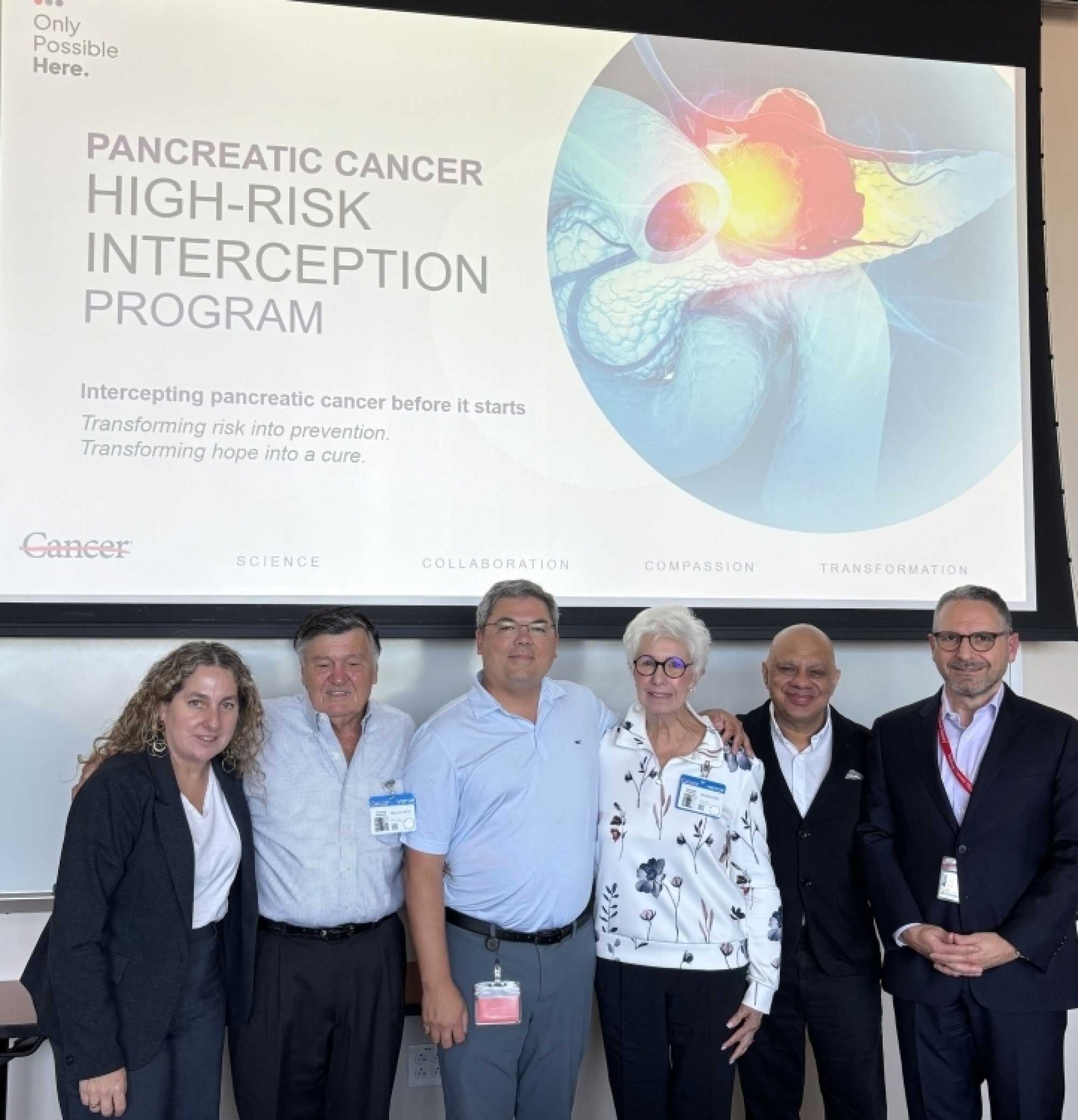
The University of Texas MD Anderson Cancer Center will be getting a significant boost in the fight against pancreatic cancer thanks to a recent gift from longtime supporters Zelma and William Reid. The medical system announced this month that a $10 million donation would help it establish a new Pancreatic Cancer High-Risk Interception Program.

“Philanthropic investments like this create opportunities to accelerate discoveries and pursue bold approaches to some of the most challenging cancers we face,” said Dr. Jeffrey E. Lee, president ad interim of UT MD Anderson, said in a news release. “We are deeply grateful to Zelma and Bill Reid for their generosity and enduring commitment. Their support will help advance innovative research aimed at intercepting pancreatic cancer earlier, when we have the greatest opportunity to improve outcomes for patients.”

Pancreatic cancer is one of the most deadly types of cancer. Despite being relatively rare, it ranks third in total deaths from cancer in the United States. Less than 10 percent of patients diagnosed with pancreatic cancer are still alive five years later.

Dr. Florencia McAllister, William Reid, Dr. Michael P. Kim, Zelma Reid, Dr. Manoop S. Bhutani, and Dr. Matthew H.G. Katz. Photo courtesy MD Anderson

The problem is often detection. The pancreas is located deep in the upper abdomen among many other organs, which can make spotting tumors difficult. Some blood tests can indicate pancreatic cancer, but it is usually not diagnosed until it spreads.

The new Pancreatic Cancer High-Risk Interception Program hopes to assemble new diagnostic techniques and patient screening tools to increase early detection. MD Anderson’s Dr. Michael P. Kim, associate professor of surgical oncology; Dr. Manoop S. Bhutani, professor of gastroenterology and hepatology; and Dr. Florencia McAllister, professor of gastrointestinal medical oncology and genetics, will lead the new program.

The team will rely on advanced imaging, molecular diagnostics, AI-driven assessment, and DNA testing to both create an at-risk patient population profile and hopefully help detect the cancer in its earliest stages. For instance, some of these tools will be able to monitor pancreatic cysts without invasive surgery.

“The ultimate goal is to intercept pancreatic cancer development or to initiate treatment earlier in the disease process, when patients have the best chance for successful outcomes,” Kim added in the release. “This gift will allow us to expand our research efforts, strengthen collaborations across disciplines and accelerate promising strategies to identify and intercept pancreatic cancer before it becomes life-threatening. We are incredibly thankful to the Reids for making this work possible.”

Axiom Space inks partnership to grow semiconductor crystals in orbit

space deal

Down in Webster, Texas, and high above the Earth, Axiom Space and Kansas-based Nitride Global Inc. will grow the next generation of semiconductor crystals in microgravity thanks to a new memorandum of understanding (MOU) signed earlier this month.

“Signing this MOU with Nitride Global reflects the growing commercial interest in producing advanced semiconductor materials in space,” Lucie Low, chief science officer for Axiom Space, said in a news release. “Their leadership in aluminium nitride (AlN) crystal growth and advanced packaging technologies, combined with Axiom Space’s capabilities in orbital infrastructure and mission integration, position us to demonstrate real commercial value in low-Earth orbit (LEO).”

This latest partnership builds on existing collaboration between Axiom and NitrideGlobal and NASA Ames Research Center.

Aluminium nitride crystals are part of the cutting-edge generation of semiconductors essential to emerging high-voltage transistors and also used in various medical technologies. Because of their high thermal stability, they can be used in a variety of environments and applications that have revolutionized everything from electric cars to the grids the cars run on.

However, the crystals are challenging to grow on Earth and face defects and size limitations due to gravity. Growing them in space can enhance their performance, according to NitrideGlobal. Microgravity allows them to grow more uniformly and with fewer defects, potentially resulting in larger, purer and more reliable crystals.

That’s where Axiom Space comes in. The company is developing Axiom Station, a successor to the International Space Station, where new research and manufacturing can be carried out.

“This MOU marks a pivotal milestone in our close partnership with Axiom Space that started as part of the NASA Small Business Innovation Research (SBIR) for AlN growth in space and is now expanding to usher the development of an innovation ecosystem,” Mahyar Khosravi, CEO of Nitride Global Inc., added in the release. “With Axiom Space’s leadership in the in-space manufacturing sector, this partnership will aim to deliver a platform for commercially viable manufacturing of [ultrawide bandgap materials] that will enable the next generation of semiconductor & microelectronics for terrestrial and planetary exploration uses.”