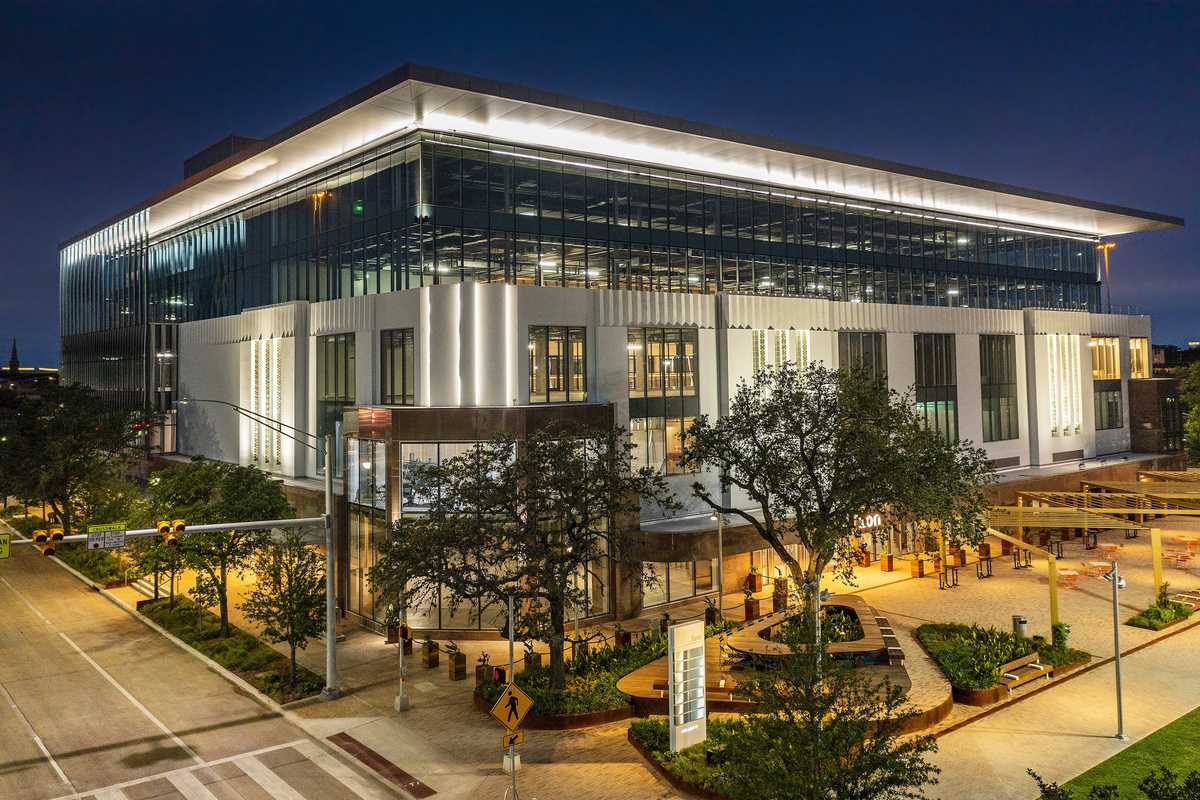
From networking workshops to presentations from major industry leaders, here's what not to miss in January. Photo courtesy the Ion.

Editor's note: Kick off 2026 by hearing insightful talks and making meaningful connections in Houston's innovation scene. From networking workshops to presentations from major industry leaders, here's what not to miss and how to register. Please note: this article may be updated to include additional event listings.

Jan. 13 – Financing the Future

Hear from James Blake, head of capital markets at Fervo Energy, in this informative talk. Blake will cover the current investment landscape for geothermal power, how geothermal projects are structured and the role of policy incentives and innovative financing models in moving the industry forward. A small reception follows.

This event is Tuesday, Jan. 13, from 5:30-7:30 p.m. at the Ion. Register here.

Jan. 13 – Your Path to the Boardroom

Visit Sesh Coworking to hear from Keith Dorsey, an executive advisor and author of The Boardroom Journey, as he shares insights and lessons from hundreds of corporate board members and presents an actionable roadmap for women at every stage of their careers. Dorsey will speak on what "optimal diversity” means in the boardroom, how purpose-driven leaders sustain resilience under relentless pressure and why inclusive leadership is non-negotiable for growth and innovation.

This event is Tuesday, Jan. 13, from 6-8 p.m. at Sesh Coworking. Register here.

Jan. 14 — A Conversation with Dr. Wayne J. Riley on Leading Through Healthcare Transformation

Rice Business Partners will host Dr. Wayne J. Riley, president of SUNY Downstate Health Sciences University, for a moderated discussion with Dean Peter Rodriguez. Riley will share insights on leading complex healthcare organizations in an era of unprecedented industry challenges and reflect on his time at the Jones Graduate School of Business.

This event is Wednesday, Jan. 14, from 6:30-8:30 p.m. at McNair Hall on Rice University's campus. Register here.

Jan. 14 — VDW: Igniting Connections for Startup Success

Entrepreneurial communications instructor Diana Massaro will lead Lilie's latest Venture Development Workshop, focused on soft skills like clear communication, active listening and compelling introductions. Attendees will gain a personalized networking game plan and communication tools to turn casual encounters into meaningful relationships to support their ventures or careers.

This event is Wednesday, Jan. 14, from 6-7:30 p.m. at the Liu Idea Lab for Innovation and Entrepreneurship on Rice University's campus. Register here.

Jan. 21 — Upstream: Digital Tech Meetup

This month's Upstream: Digital Tech Meetup will explore how AI and real-time monitoring are being applied in safety-critical offshore environments, what’s working today, where the biggest gaps remain going into 2026 and how operators and service companies are approaching adoption. Expect to hear from leaders at NOV, Incom Solutions, Timbergrove and others.

This event is Wednesday, Jan. 21, from 8:30-10:30 a.m. at the Ion. Find more information here.

Jan. 22 — HEAD AND HEART: Leading Technology with Humanity While Everything Changes

Hear from Chris Hyams, former CEO of Indeed, at the latest installment of Rice's Master of Engineering Management & Leadership Seminar Series. Hyams will present on the intersection of technology, humanity and change—and how AI is reshaping all three.

This event is Thursday, Jan. 22, at 6 p.m. at Duncan Hall on Rice University's campus. Find more information here.

Jan. 22 – NASA Tech Talk

This month's NASA Tech Talks will feature a special delegation from the UK Science and Technology Network. Expect to hear from a panel of UK space experts, followed by a fireside chat featuring David Alexander, head of the Rice Space Institute, and Meganne Christian, ESA reserve astronaut and senior exploration manager.

This event is Thursday, Jan. 22, from 6-7 p.m. at the Ion. Find more information here.

Jan. 29 – Ignition Hub Startup Career Fair

Lilie will host the Ignition Hub Startup Career Fair this month in partnership with Rice University’s Center for Career Development and Career Development Office. The fair will bring together some of the most innovative, high-growth companies to offer Rice students exciting opportunities. Startups can apply to be considered for the fair. The event is open to Rice University undergraduate, graduate, MBA, and PhD students.

This event is Thursday, Jan. 29, at Grand Hall on Rice University's campus. Find more information here.

Jan. 29 – The Center for Houston's Future Annual Meeting

Learn about research and conclusions from the Center for Houston's Future's comprehensive strategic vision for the region, known as Vision 2050, at this year's annual meeting. CHF CEO David Gow will also share how Project Metis is taking shape and unveil the organization's strategic priorities for the year ahead. Gow is the founder and chairman of Gow Media, InnovationMap's parent company.

This event is Thursday, Jan. 29, from 5-7:30 p.m. at the Partnership Tower. Register here.

Jan. 29 – Health Policy Symposium: Value-Based Care & the Health Care Workforce

The Humana Integrated Health Systems Science Institute at the University of Houston will host its latest Health Policy Symposium this month, focused on the evolving landscape of value-based care and the importance of preparing and strengthening the health care workforce. Hear keynote addresses from leaders at Humana, UH, the American Medical Association and Houston Health Department.

This event is Thursday, Jan. 29, from 11:30 a.m.-1:30 p.m. at the Tilman J. Fertitta Family College of Medicine on Rice University's campus. Find more information here.

Jan. 30 — GHP Annual Meeting

The Greater Houston Partnership's premier event will highlight the region’s progress, honor visionary leadership and set the tone for the year ahead. Hear reflections from outgoing board chair, Gretchen Watkins (former -president of Shell USA); welcome incoming board chair, Armando Perez (EVP of H-E-B Houston); and more

This event is Friday, Jan. 30, from 11:30 a.m.-1:30 p.m. at Hilton Americas. Find more information here.

Don't miss these July events—from a new biotech summit to the Ion Bike Club. Photo via the Ion.

7 can't miss Houston business and innovation events for July

where to be

Editor's note: While many Houstonians are flocking to vacation destinations, there are still plenty of opportunities to network and learn at tech and business events for those sticking close to home this month. From an inaugural biotech summit to the 12th edition of a local pitch showcase, here are the Houston business and innovation events you can't miss in July and how to register. Please note: this article might be updated to add more events.

July 10 - Out in Tech Mixer 

Out in Tech Houston provides an inclusive networking space for LGBTQ+ people and allies working in tech. Check out this relaxed, social-mixer event, hosted on the second Thursday of every month.

This event is Thursday, July 10, from 7 to 8:30 p.m. at Second Draught. Register here.

July 14 – Latinas in Tech Coworking Day 

Connect with fellow Latinas in the industry at Sesh Coworking. Network or work alongside peers, board members and community leaders in a shared office environment.

This event is Monday, July 14, from 9-11:30 a.m. at Sesh Coworking. Find more information here.

July 17 – UTMB Innovation VentureX Summit

Attend the inaugural UTMB Innovation VentureX Summit, where innovators, entrepreneurs, researchers and investors will dive into the future of biotech. Expect panel discussions, fireside chats, a technology showcase and networking opportunities.

This event is Thursday, July 17, from 7:30 a.m.-4 p.m. at The University of Texas Medical Branch at Galveston. Find more information here.

July 17 – Open Project Night 

Collaborate on solutions for some of Houston’s most pressing issues at this month’s Open Project Night at Impact Hub Houston. Hear from guest speakers and listen to open mic pitches. July’s theme is Decent Work & Economic Growth.

This event is Thursday, July 17, from 5:30-7:30 p.m at Impact Hub Houston. Register here.

July 24 – NASA Tech Talks

Every fourth Thursday of the month, NASA experts, including longtime engineer Montgomery Goforth, present on technology development challenges NASA’s Johnson Space Center and the larger aerospace community are facing and how they can be leveraged by Houston’s innovation community. Stick around after for drinks and networking at Second Draught.

This event is Thursday, July 24, from 6-7 p.m. at the Ion. Register here.

July 30 – Ion Bike Club

Join Bike Houston at the Ion for a 45-minute guided cruise through the Ion District and Midtown. Afterward, enjoy a complimentary beer and network with like-minded riders at Second Draught.

This event is Wednesday, July 30, from 5:30-7:30 p.m. at the Ion. Register here.

July 31 – Bayou Startup Showcase

Hear pitches from startups and small businesses from Rice University’s OwlSpark and the University of Houston’s RED Labs accelerators at the 12th annual Bayou Startup Showcase. Read more about this year’s teams here.

This event is Thursday, July 31, from 3:30-7 p.m. at the Ion. Register here.

Ad Placement 300x100
Ad Placement 300x600

CultureMap Emails are Awesome

Houston startup debuts new drone for first responders

taking flight

Houston-based Paladin Drones has debuted Knighthawk 2.0, its new autonomous, first-responder drone.

The drone aims to strengthen emergency response and protect first responders, the company said in a news release.

“We’re excited to launch Knighthawk 2.0 to help build safer cities and give any city across the world less than a 70-second response time for any emergency,” said Divyaditya Shrivastava, CEO of Paladin.

The Knighthawk 2.0 is built on Paladin’s Drone as a First Responder (DFR) technology. It is equipped with an advanced thermal camera with long-range 5G/LTE connectivity that provides first responders with live, critical aerial awareness before crews reach the ground. The new drone is National Defense Authorization Act-compliant and integrates with Paladin's existing products, Watchtower and Paladin EXT.

Knighthawk 2.0 can log more than 40 minutes of flight time and is faster than its previous model, reaching a reported cruising speed of more than 70 kilometers per hour. It also features more advanced sensors, precision GPS and obstacle avoidance technology, which allows it to operate in a variety of terrains and emergency conditions.

Paladin also announced a partnership with Portuguese drone manufacturer Beyond Vision to integrate its Drone as a First Responder (DFR) technology with Beyond Vision’s NATO-compliant, fully autonomous unmanned aerial systems. Paladin has begun to deploy the Knighthawk 2.0 internationally, including in India and Portugal.

The company raised a $5.2 million seed round in 2024 and another round for an undisclosed amount earlier this year. In 2019, Houston’s Memorial Villages Police Department piloted Paladin’s technology.

According to the company, Paladin wants autonomous drones responding to every 911 call in the U.S. by 2027.

Rice research explores how shopping data could reshape credit scores

houston voices

More than a billion people worldwide can’t access credit cards or loans because they lack a traditional credit score. Without a formal borrowing history, banks often view them as unreliable and risky. To reach these borrowers, lenders have begun experimenting with alternative signals of financial reliability, such as consistent utility or mobile phone payments.

New research from Rice Business builds on that approach. Previous work by assistant professor of marketing Jung Youn Lee showed that everyday data like grocery store receipts can help expand access to credit and support upward mobility. Her latest study extends this insight, using broader consumer spending patterns to explore how alternative credit scores could be created for people with no credit history.

Forthcoming in the Journal of Marketing Research, the study finds that when lenders use data from daily purchases — at grocery, pharmacy, and home improvement stores — credit card approval rates rise. The findings give lenders a powerful new tool to connect the unbanked to credit, laying the foundation for long-term financial security and stronger local economies.

Turning Shopping Habits into Credit Data

To test the impact of retail transaction data on credit card approval rates, the researchers partnered with a Peruvian company that owns both retail businesses and a credit card issuer. In Peru, only 22% of people report borrowing money from a formal financial institution or using a mobile money account.

The team combined three sets of data: credit card applications from the company, loyalty card transactions, and individuals’ credit histories from Peru’s financial regulatory authority. The company’s point-of-sale data included the types of items purchased, how customers paid, and whether they bought sale items.

“The key takeaway is that we can create a new kind of credit score for people who lack traditional credit histories, using their retail shopping behavior to expand access to credit,” Lee says.

The final sample included 46,039 credit card applicants who had received a single credit decision, had no delinquent loans, and made at least one purchase between January 2021 and May 2022. Of these, 62% had a credit history and 38% did not.

Using this data, the researchers built an algorithm that generated credit scores based on retail purchases and predicted repayment behavior in the six months following the application. They then simulated credit card approval decisions.

Retail Scores Boost Approvals, Reduce Defaults

The researchers found that using retail purchase data to build credit scores for people without traditional credit histories significantly increased their chances of approval. Certain shopping behaviors — such as seeking out sale items — were linked to greater reliability as borrowers.

For lenders using a fixed credit score threshold, approval rates rose from 15.5% to 47.8%. Lenders basing decisions on a target loan default rate also saw approvals rise, from 15.6% to 31.3%.

“The key takeaway is that we can create a new kind of credit score for people who lack traditional credit histories, using their retail shopping behavior to expand access to credit,” Lee says. “This approach benefits unbanked applicants regardless of a lender’s specific goals — though the size of the benefit may vary.”

Applicants without credit histories who were approved using the retail-based credit score were also more likely to repay their loans, indicating genuine creditworthiness. Among first-time borrowers, the default rate dropped from 4.74% to 3.31% when lenders incorporated retail data into their decisions and kept approval rates constant.

For applicants with existing credit histories, the opposite was true: approval rates fell slightly, from 87.5% to 84.5%, as the new model more effectively screened out high-risk applicants.

Expanding Access, Managing Risk

The study offers clear takeaways for banks and credit card companies. Lenders who want to approve more applications without taking on too much risk can use parts of the researchers’ model to design their own credit scoring tools based on customers’ shopping habits.

Still, Lee says, the process must be transparent. Consumers should know how their spending data might be used and decide for themselves whether the potential benefits outweigh privacy concerns. That means lenders must clearly communicate how data is collected, stored, and protected—and ensure customers can opt in with informed consent.

Banks should also keep a close eye on first-time borrowers to make sure they’re using credit responsibly. “Proactive customer management is crucial,” Lee says. That might mean starting people off with lower credit limits and raising them gradually as they demonstrate good repayment behavior.

This approach can also discourage people from trying to “game the system” by changing their spending patterns temporarily to boost their retail-based credit score. Lenders can design their models to detect that kind of behavior, too.

The Future of Credit

One risk of using retail data is that lenders might unintentionally reject applicants who would have qualified under traditional criteria — say, because of one unusual purchase. Lee says banks can fine-tune their models to minimize those errors.

She also notes that the same approach could eventually be used for other types of loans, such as mortgages or auto loans. Combined with her earlier research showing that grocery purchase data can predict defaults, the findings strengthen the case that shopping behavior can reliably signal creditworthiness.

“If you tend to buy sale items, you’re more likely to be a good borrower. Or if you often buy healthy food, you’re probably more creditworthy,” Lee explains. “This idea can be applied broadly, but models should still be customized for different situations.”

---

This article originally appeared on Rice Business Wisdom. Written by Deborah Lynn Blumberg

Anderson, Lee, and Yang (2025). “Who Benefits from Alternative Data for Credit Scoring? Evidence from Peru,” Journal of Marketing Research.

XSpace adds 3 Houston partners to fuel national expansion

growth mode

Texas-based XSpace Group has brought onboard three partners from the Houston area to ramp up the company’s national expansion.

The new partners of XSpace, which sells high-end multi-use commercial condos, are KDW, Pyek Financial and Welcome Wilson Jr. Houston-based KDW is a design-build real estate developer, Katy-based Pyek offers fractional CFO services and Wilson is president and CEO of Welcome Group, a Houston real estate development firm.

“KDW has been shaping the commercial [real estate] landscape in Texas for years, and Pyek Financial brings deep expertise in scaling businesses and creating long‑term value,” says Byron Smith, founder of XSpace. “Their commitment to XSpace is a powerful endorsement of our model and momentum. With their resources, we’re accelerating our growth and building the foundation for nationwide expansion.”

The expansion effort will target high-growth markets, potentially including Nashville, Tennessee; Orlando, Florida; and Charlotte and Raleigh, North Carolina.

XSpace launched in Austin with a $20 million, 90,000-square-foot project featuring 106 condos. The company later added locations on Old Katy Road in Houston and at The Woodlands Town Center. A third Houston-area location is coming to the Design District.

XSpace condos range in size from 300 to 3,000 square feet. They can accommodate a variety of uses, such as a luxury-car storage space, a satellite office, or a podcasting studio.

“XSpace has tapped into a fundamental shift in how entrepreneurs and professionals want to use space,” Wilson says. “Houston is one of the best places in the country to innovate and build, and XSpace’s model is perfectly aligned with the needs of this fast‑growing, opportunity‑driven market.”