


These Houston startups raised more than a quarter billion dollars last month alone. Photo courtesy Venus Aerospace

Houston startups carried the fundraising momentum of Q1 and Q2 into July with several significant seed funding, Series A and Series B rounds.

From geothermal leaders to medtech innovators, these six Houston companies raised more than a quarter billion dollars last month alone, according to reporting by InnovationMap and our sister site, EnergyCapitalHTX.com.

Did we miss a funding round? Let us know by emailing innoeditor@innovationmap.com.

Altillion
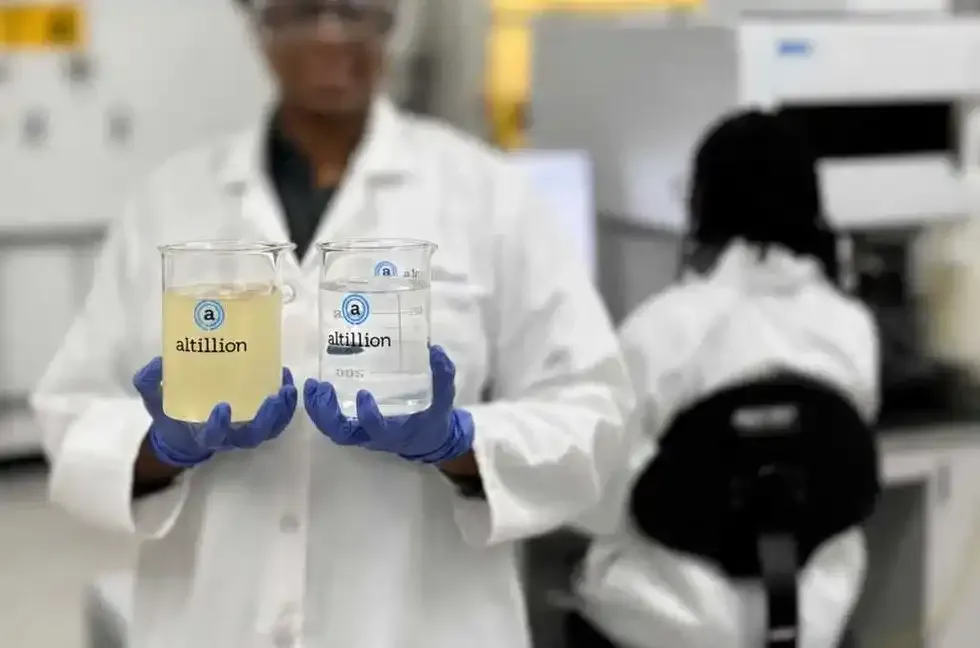
Houston-based startup Altillion has secured $5 million in seed funding to accelerate the commercialization of its proprietary IRIS and ALIX technologies, which convert oilfield-produced water into valuable minerals, the company reported earlier this month.

San Francisco-based EIC Rose Rock and Houston-based Flathead Forge led the round. Altillion says the funding will go toward pilot facilities and commercial deployments as the company looks to scale in the U.S. Continue reading.

Buildforce
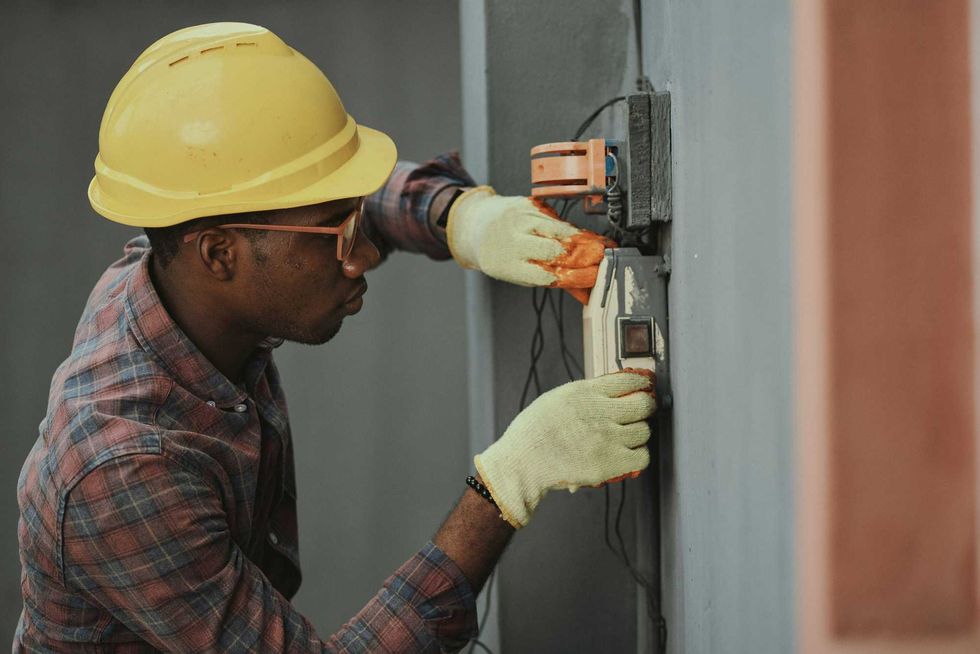
The U.S. is grappling with a current shortage of 50,000 electricians, according to the National Electrical Contractors Association. Photo via Unsplash

Houston-based Buildforce, which provides a tech-enabled staff platform geared toward electricians and electrical contractors, closed a $10 million Series A round led by Houston’s Saepio Capital last month.

Other investors in the round include Blue Heron Capital, Revolution’s Rise of the Rest Seed Fund, S3 Ventures and Chicago Ventures.

Buildforce says the funding will help fuel its national expansion and further development of its technology.

The startup, founded in 2019, connects electricians with electrical contractors for commercial and industrial construction projects. Continue reading.

Hephae Energy Technology Corp.
The company develops ultra-high-temperature tools to withstand the heat of geothermal reservoirs. Photo via hephaeet.com

Houston-area startup Hephae Energy Technology Corp. closed a $17.8 million Series A financing round last month to commercialize its geothermal technology.

The round was co-led by Pennsylvania-based Susquehanna Sustainable Investments, which invests in early-stage climatech companies, and Copenhagen-based Underground Ventures, which focuses on geothermal energy startups. Alfa8, Baruch Future Ventures, Centaurus Capital LP, Elemental Impact, Exa Ventures, Future Ventures, Grantham Foundation for the Protection of the Environment, New System Ventures and True North Institute joined the round, along with existing Houston-based investor Nabors Industries. Hephae reports in a news release that the Series A round brings the company's total capital raised to $24.7 million. Continue reading.

TYBR Health
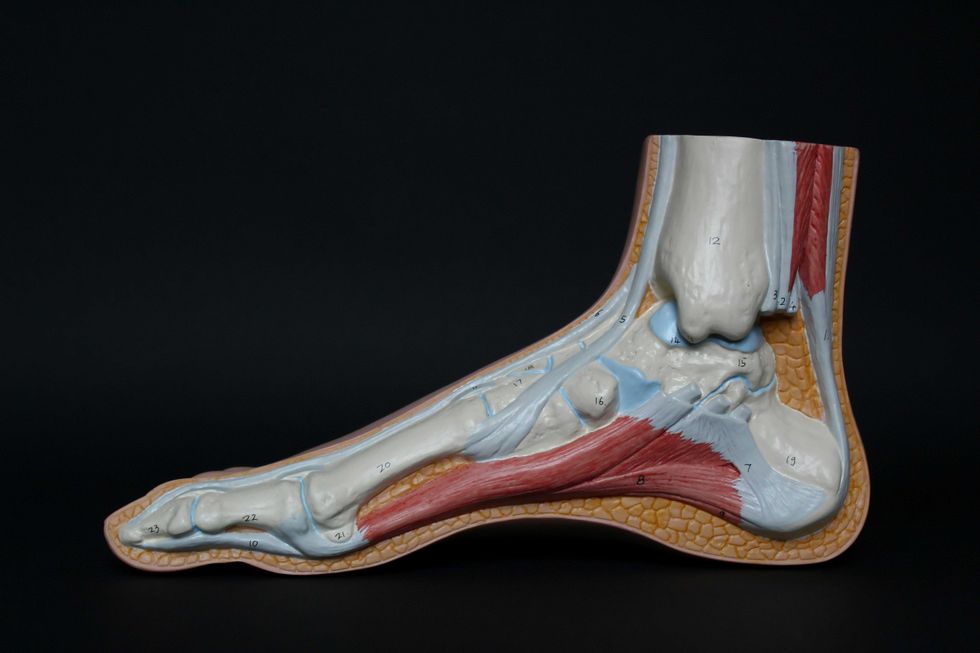
The company's B3 GEL System is designed to protect tendons, ligaments and muscles while they heal from orthopedic surgery. Photo via Unsplash

Houston-based healthtech startup TYBR Health has raised a $30 million Series A round to scale its B3 GEL System, which helps protect tendons from scarring after surgery, the company announced last month.

The round was led by Minneapolis-based Vensana Capital and Cleveland-based Mutual Capital Partners, with participation from Denver-based Neovate Capital Partners and existing investors, according to a news release from the company.

TYBR Health said it plans to use the funding to broaden the B3 GEL System's clinical applications, expand commercialization and conduct studies to evaluate its ability to protect tissue and improve healing outcomes. Continue reading.

Venus Aerospace 
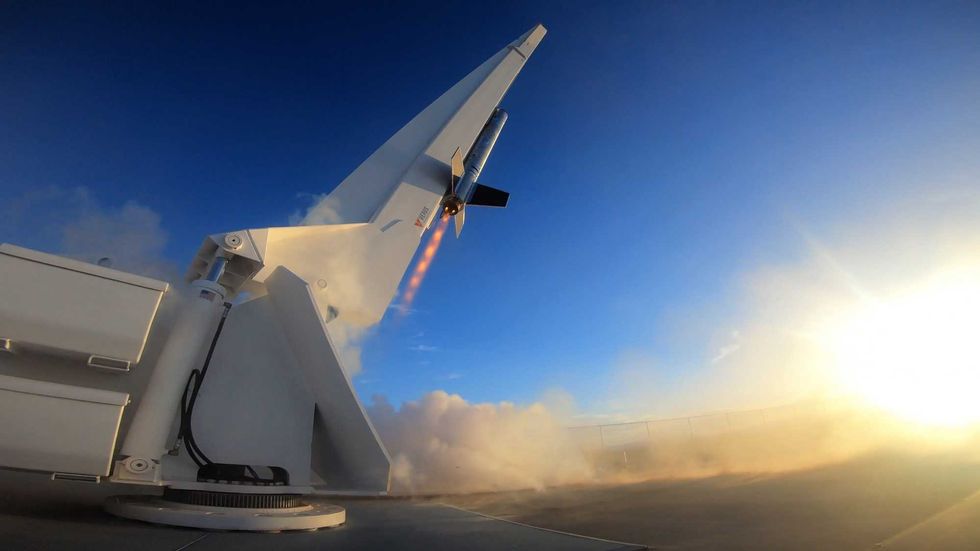
Venus Aerospace has secured funding from Mercury Fund, Lockheed Martin Ventures and others. Photo courtesy Venus Aerospace

Houston-based Venus Aerospace closed a $91 million Series B round last month and plans to scale the production of its hypersonic engine.

The round was led by Houston-based Mercury Fund with participation from Lockheed Martin Ventures, MESH, PEAK6, Draper Associates, Starboard Star Venture Capital, Green Sands Equity and other investors, according to a news release.

The investment comes about a year after Venus completed the first U.S. flight test of its high-thrust rotating detonation rocket engine (RDRE). The engine is expected to enable vehicles to travel four to six times the speed of sound from a conventional runway and is about 15 percent more efficient than traditional alternatives, according to the company. Continue reading.

Quaise Energy
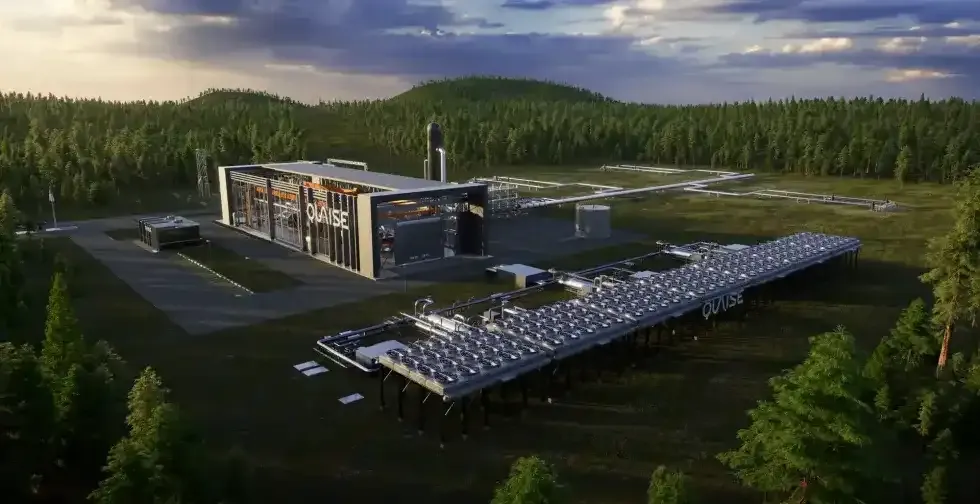
A rendering of a Quaise Energy geothermal plant. Rendering via quaise.com

Houston-based Quaise Energy, a producer of utility-scale geothermal power, closed $134 million in a Series B round last month to advance its “superhot” geothermal power plant.

Climate-focused San Francisco-based investment firm Prelude Ventures led the round, with participation from JERA Co., Japan’s largest power generation company, and Idemitsu Kosan, one of Japan’s largest energy companies. Nearly all existing investors, including cleantech-focused investment firm Safar Partners, participated in the round.

The startup expects more equity and debt deals to close “imminently.” Quaise has raised $230 million since its founding in 2018. Continue reading.

Ad Placement 300x100
Ad Placement 300x600

CultureMap Emails are Awesome

MD Anderson unveils $3.4B expansion with two new Houston cancer care facilities

major expansion

The cutting edge of cancer-fighting technology and science is getting even sharper after MD Anderson announced last week that it will open two new facilities in the Texas Medical Center within the next five years. Inspiration Tower and Prism will expand MD Anderson’s annual patient load in the TMC to 250,000 annually and will incorporate a variety of new techniques.

The $3.4 billion project will add 2 million square feet to MD Anderson's TMC footprint, bringing its total campus size to 22 million square feet by 2032. Located at the corner of Fannin Street and Holcombe Boulevard, the cancer center says the two new facilities will serve as its new "front door" to the TMC.

“Every detail of these buildings, from the technology to the treatment rooms, was designed around our patients who will receive their care in them and our employees who will work in them. The facilities will serve as a physical representation of hope for the patients and their families who will walk through the doors,” Dr. Jeffrey E. Lee, president ad interim of UT MD Anderson, said in a news release. “Inspiration Tower and Prism are the future of cancer care, and we are grateful for the longstanding support and guidance we’ve received from the UT System Board of Regents to bring these projects to life. These facilities are part of the most impactful capital expansion in UT MD Anderson’s history.”

Prism is especially exciting as it will represent fully half of the linear accelerator treatment in the TMC. Linear accelerator is a radiation treatment that uses magnetically charged fields to deliver targeted external radiation therapy, like shooting cancer with a rail gun. The treatment is safer and has fewer side effects than older radiation treatments.

In addition, Prism will contain 12 MRI machines, four CT scanners, two PET-CT units, 18 radiation vaults and seven radiation simulators. Patient comfort has also been put at a premium with multiple gardens and roof overlooks.

“Every patient we treat deserves an environment that reflects the excellence of the care they receive at UT MD Anderson,” Chris McKee, executive vice president and chief strategy officer at UT MD Anderson, added in the release. “Our new facilities will be innovative, agile, adaptable and beautiful, and they will allow us to care for more patients, more effectively – in an environment that enhances healing and well-being. We are building for our future and for every patient who will be counting on us.”

Prism is slated to open in 2030.

Inspiration Tower will have 25 floors of surgical, diagnostic, and treatment services. At 1.4 million square feet, it’s currently expected to be the largest cancer-specific treatment facility in the United States. The tower will be divided into units for specific types of cancer, making it easy to integrate the advancing research being done all over Houston.

Like Prism, Inspiration Tower is specifically designed to offer comfort and reassurance, with more garden space, terraces, and beautiful scenery to ease patient distress. It is expected to open in 2032.

Tesla will pull the plug on Cybertruck production at Texas factory in 2027

Tesla Talk

Tesla’s Cybertruck, the hulking, stainless-steel pickup that inspired devotion and derision with its science-fiction looks, will cease production next year.

CEO Elon Musk announced the model’s demise Friday, November 6, with a curt post on X, his social media site, simply noting production of the vehicle “will be winding down” around the middle of 2027 at its facility outside Austin, Texas. Musk said the move was to allow increased production of its Cybercab robotaxi.

For the Cybertruck, a pet project of Musk who insisted it was Tesla’s best product, it marks an unceremonious end to one of the auto industry’s most ballyhooed debuts.

“Few vehicles in history have generated as much attention,” said Armen Hareyan, whose Torque News site covers autos. “The Cybertruck became a cultural symbol – loved, mocked and impossible to ignore.”

The Cybertruck rolled onto the scene in a dramatic unveiling in 2019, when a Tesla designer hurled a metal ball at the vehicle to demonstrate its supposedly unbreakable glass, only to see it shatter. He repeated the stunt on another window of the truck only to shatter that one, too.

Even as some critics scoffed, Musk was steadfast.

“I just wanted to make a futuristic battle tank — something that looks like it could come out of ‘Blade Runner’ or ‘Aliens’ or something like that but was also highly functional,” he told Automotive News. He called it “a better sports car than a Porsche 911” and “a better truck than an F-150.”

It struck some as the perfect vehicular reflection of the brash, convention-busting Musk.

“A really controversial vehicle unveiled by a controversial individual into a market where none of the electric trucks have been able to really capture demand,” said Spencer Penn, a former Tesla executive who left the company before the Cybertruck’s launch and now heads software developer LightSource.

Penn remembered watching the unveiling and feeling initially revolted by the sight of the Cybertruck, calling its appearance “madness.” But the more he looked at it, the more his opinion changed. He signed up for a pre-sale reservation, though ended up not getting a Cybertruck when Musk’s promises of a price tag under $40,000 went unmet and the first trucks sold for double or more. Penn called the Cybertruck part of Tesla’s adventurous spirit that drives innovation.

“Some of these bets work and some of these bets don’t,” he said.

While the decision to end Cybertruck production may be driven by sales realities, it's also a reflection of Tesla’s shift to autonomous vehicles, on which Musk is betting the company’s future.

Musk once forecast he’d make 250,000 Cybertrucks a year. Kelley Blue Book estimated Tesla sold just 20,237 of the vehicles last year, down about half from the year prior. Sales through the end of September this year were down another 28%, according to Kelley Blue Book.

If the imposing, sharp-angled, dystopian appearance of the Cybertruck weren’t enough to turn many potential buyers away, Musk did so himself by allying with a panoply of right-wing figures, most notably U.S. President Donald Trump. He alienated some customers as his image morphed from eccentric innovator to polarizing force trading his billions for political influence.

Once-passionate Tesla drivers rushed to sell off their cars, or slapped stickers on the bumper declaring, “I bought this before Elon went crazy.” Organizers staged demonstrations outside Tesla showrooms and urged investors to dump shares of the company’s stock. Anger spilled into violence, with Molotov cocktails hurled at Tesla vehicles, charging stations set ablaze, and dealerships covered in graffiti.

Lovers of the Cybertruck became targets, too, subjected to shouts of “Nazi!” and extended middle fingers.

Ross Blankenship is one of them. When he first laid eyes on the Cybertruck, he felt transported to a world from his childhood, when he would play “Halo,” the sci-fi video game. He had to have it.

“I had that sort of child in me wanting to be part of something cool that would change the future of automotive,” Blankenship said in a call from his Cybertruck as he drove through Sunnyside, Colorado. Even as Blankenship found he agreed with Musk on politics, he hated seeing a vehicle he loved turned into a political symbol. “I never bought it for any other reason than the fascination with the future technology of trucks … so that was a little heartbreaking.”

He would buy another Cybertruck again in a heartbeat, calling its end “a sad moment.”

UTHealth Houston officially opens new tower in TMC's Helix Park

open for innovation

UTHealth Houston School of Public Health recently opened its new state-of-the-art tower in the Texas Medical Center’s Helix Park.

The 350,000-square-foot, 10-story campus at 1930 Old Spanish Trail was celebrated with an official ribbon-cutting ceremony on Oct. 28. The $229 million project will consolidate all UTHealth Houston School of Public Health operations into one facility. It will also connect students who are at the Austin, Brownsville, Dallas, El Paso and San Antonio campuses with peers and faculty through digital and distance learning.

Disciplines taught in the new tower will include epidemiology, genetics, nutrition, health policy, data science and health promotion, UTHealth shared when the building first broke ground in 2023.

Architects Kirksey Architecture and Smith Group designed the building, and Vaughn Construction served as general contractor. The facility features labs for studying human disease, classrooms and spaces to support interdisciplinary and community-based research, a broadcast studio and a teaching kitchen. A skybridge over Old Spanish Trail connects the new tower with a plaza that's shared with MD Anderson.

“This new facility reflects the kind of forward-looking investment that will serve Texans for generations,” Janiece Longoria, vice chairman of the UT System Board of Regents, said in a news release. “By creating an environment where talented people can learn, collaborate, and pursue new ideas, UTHealth Houston is building capacity to meet the challenges of tomorrow while strengthening its impact across our state.”

UTHealth says the system aims for the new campus to expand on collaborative research efforts and continue graduate education, as enrollment at the School of Public Health has increased by 27 percent over the last five years.

“This new building, with its state-of-the-art education technology and learning environment, will strengthen and advance the school’s mission to educate and train the next generation of experts who will advance scientific discovery, shape evidence-based health policy, and lead innovative solutions to the complex health challenges in communities throughout Texas and across the nation,” Kevin Morano, senior vice president, provost and chief academic officer of UTHealth Houston, added in a news release.

Attending the ceremony were Dr. Melina R. Kibbe, UTHealth Houston president and Alkek Williams Distinguished Chair; Eric Boerwinkle, dean, M. David Low Chair in Public Health and Kozmetsky Family Chair in Human Genetics at the School of Public Health; Texas State Representative Lauren Ashley Simmons, Texas House District 146; representatives of the offices of Senator John Cornyn and Harris County Commissioner Rodney Ellis; and Dr. Theresa Tran, director of the Houston Health Department.

"This building represents far more than a home for our school,” Boerwinkle added in the release. “It represents the people who make our mission possible: the faculty, staff, and students who fill each laboratory and classroom with curiosity, discovery, and purpose to improve the population’s quality of life.”