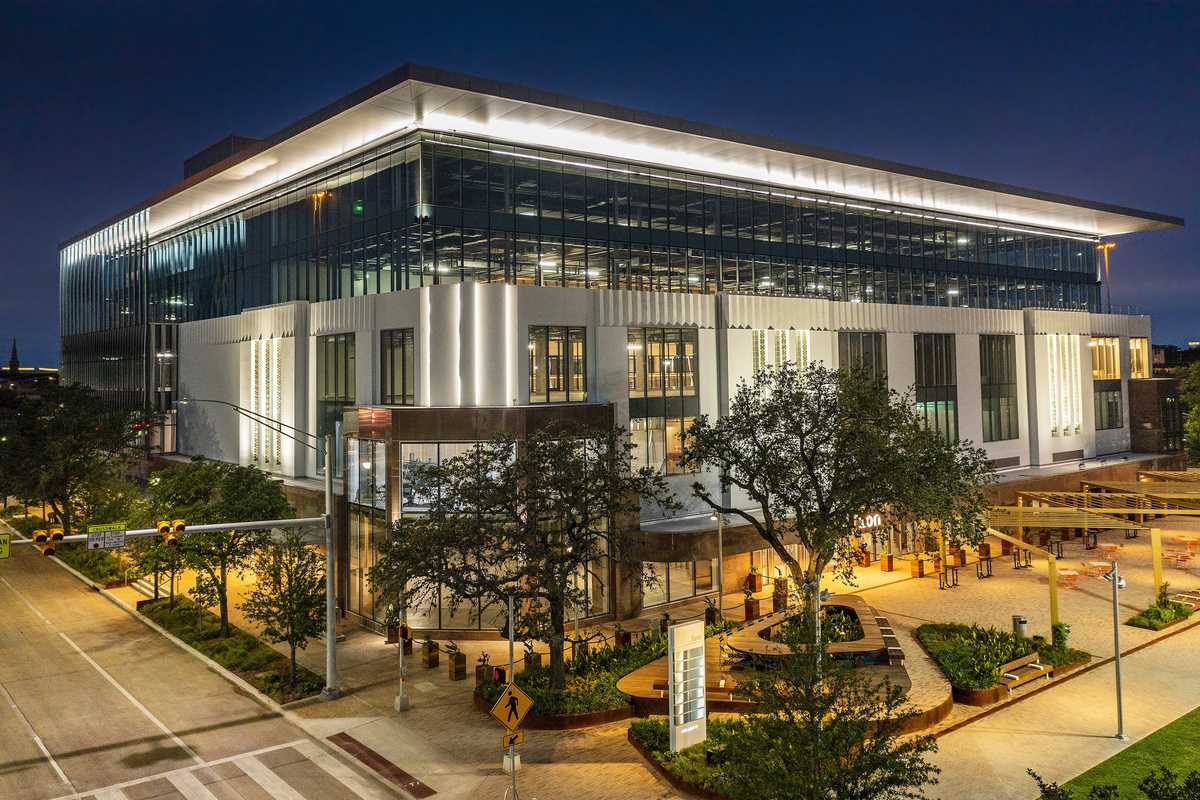
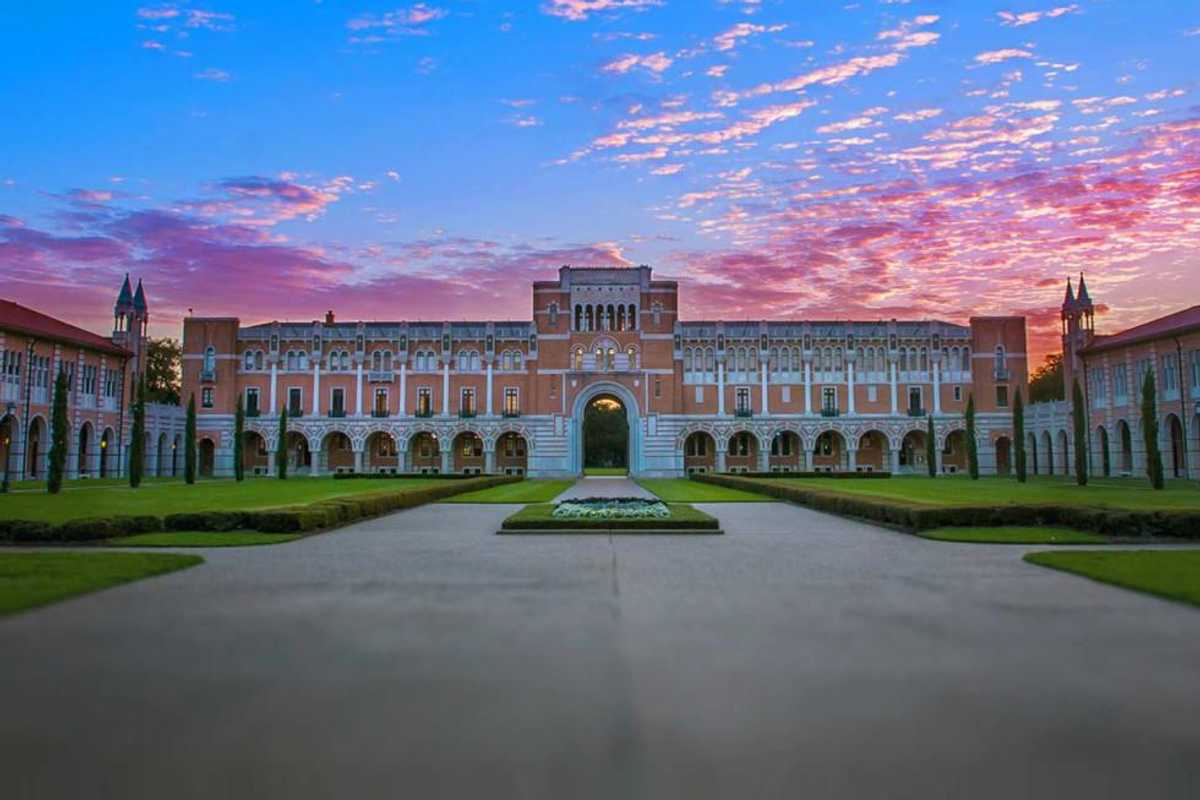
Don't miss these May events — from an investor activation series to a crawfish cook-off. Photo courtesy Greentown Labs.

There's a lot to learn this month at events around Houston. Hear from AI and energy experts or gain insights into how to tap into funding at informative panels or sessions.

Here are the Houston business and innovation events you can't miss in May and how to register. Please note: This article might be updated to add more events.

May 1 - Ion Block Party + 3rd Annual Crawfish Cookoff

Head to this special edition Block Party, featuring a crawfish cook-off competition among the Ion’s businesses. Competing teams include Ion/Rice Alliance, Transwestern, Black at Microsoft, United Protective Services, Nexus, PersonaAI, South Main Baptist, Late August, Lymbar and LickleLab/Sports Monkey.

This event is Thursday, May 1, from 4-7 p.m. at the Ion. Register here.

May 5 - Fireside Chat and Book Launch: ‘AI Made Simple: Results Made Real.’

Learn more about how AI is reshaping business and what leadership in the AI era looks like at the launch of Kathleen Perley’s book, AI Made Simple: Results Made Real, hosted by Rice Business Executive Education. Perley is founder and CEO of DemystifAI and an instructor and advisor at Rice University. She will sit down with Marie Myers, CFO of Hewlett Packard Enterprise, for a discussion and will be signing copies of her book after the fireside chat.

This event is Monday, May 5, from 5:30-7:30 p.m. at the Ion. Register here.

May 6 - Houston’s AI-Driven Data Center Boom: Investment, Innovation, and Policy

In light of Houston’s growing influence as a data center hub, the Greater Houston Partnership will present an informative panel focused on the investment landscape, technological advancements, and policy considerations shaping the future of AI-driven data centers in Houston. Panelists include leaders from Moelis, Quanta, and the Houston Northwest Chamber of Commerce.

This event is Tuesday, May 6, from 11:30 a.m.-1 p.m. at Partnership Tower. Register or become a member here.

May 6 - Doing Business with the Federal Government - The Woodlands

The SBA Houston District Office, in collaboration with Sam Houston State University SBDC, will host an informative session to share insights on how small business owners can work with the U.S. government. Topics include how the government buys goods and services, the SBA’s role in government contracting, federal government contracting programs, the advantages of small business set-asides, marketing your business, identifying federal opportunities and more.

This event is Tuesday, May 6, from 10-11:30 a.m. at Sam Houston State University - The Woodlands Center. Register here.

May 8 - Industrious Launch Party

Attend the opening of Industrious’ new coworking space at the Ion. Anteendees can tour the new space, meet the team, enjoy a silent disco and network. Light bites will be provided by Late August, Lymbar, and Stuff’d.

This event is Thursday, May 8, from 5-8 p.m. at the Ion. Register here

May 12 - Headshot Happy Hour 

Hosted by Natalie Presnediue, Headshot Happy Hour caters to entrepreneurs, business owners, creatives and professionals who want to enhance or update their online presence. Each session includes a 15- to 20-minute mini shoot and three professionally retouched images. Light refreshments will be served.

This event is Monday, May 12, at the Ion. Learn more here.

May 12-14 - Greentown Labs’ Investor Activation Series

Greentown Labs will host a three-day series for investors interested in climatetech, centered around the incubator’s invitation-only Manufacturing Sector Pitch Day. Panels throughout the event will focus on early-stage investment, emerging opportunities, and tools for investors, presented by organizations like Houston Angel Network and New Climate Ventures.

This event begins Monday, May 12, at Greentown Labs. Register here.

May 13 - Women in Venture Investing: Expanding Influence and Building Wealth

Houston Angel Network will host a luncheon focused on how women can enter and thrive in the venture capital space. Anthea Zhang, professor of strategic management at Rice University, will present the keynote address along with a panel featuring leaders from Hunton, JP Morgan Private Bank, HRSS CPAs, Weathergage Capital, and Houston Angel Network.

This event is Tuesday, May 13, from 11 a.m.-1:30 p.m. at the Junior Leauge of Houston. Get tickers here.

May 21-22 - Brain Capital: The New Competitive Advantage in a Shifting Economy

Tap into the potential of brain capital at this next-level summit. This dynamic two-day roundtable will assist visionary business leaders in unlocking the power of neuroscience, technology, and human capital to drive innovation and long-term prosperity.

This event begins Wednesday, May 21 at TMC3. Register here.

May 28-30 - CHARGE North America

This intimate, immersive experience is tailored to forward-thinking energy professionals. The conference includes hands-on interactive workshops led by top strategists; real-world case studies; and insights from leading speakers on resilient branding, consumer expectations, and climate action. Attendees will engage in panel discussions on sustainability and energy diversification and enjoy exclusive networking opportunities with global executives and innovators.

This event begins Wednesday, May 28, at the Ion. Register here.

Ad Placement 300x100
Ad Placement 300x600

CultureMap Emails are Awesome

How Houston innovators played a role in the historic Artemis II splashdown

safe landing

Research from Rice University played a critical role in the safe return of U.S. astronauts aboard NASA’s Artemis II mission this month.

Rice mechanical engineer Tayfun E. Tezduyar and longtime collaborator Kenji Takizawa developed a key computational parachute fluid-structure interaction (FSI) analysis system that proved vital in NASA’s Orion capsule’s descent into the Pacific Ocean. The FSI system, originally developed in 2013 alongside NASA Johnson Space Center, was critical in Orion’s three-parachute design, which slowed the capsule as it returned to Earth, according to Rice.

The model helped ensure that the parachute design was large enough to slow the capsule for a safe landing while also being stable enough to prevent the capsule from oscillating as it descended.

“You cannot separate the aerodynamics from the structural dynamics,” Tezduyar said in a news release. “They influence each other continuously and even more so for large spacecraft parachutes, so the analysis must capture that interaction in a robustly coupled way.”

The end result was a final parachute system, refined through NASA drop tests and Rice’s computational FSI analysis, that eliminated fluctuations and produced a stable descent profile.

Apart from the dynamic challenges in design, modeling Orion’s parachutes also required solving complex equations that considered airflow and fabric deformation and accounted for features like ringsail canopy construction and aerodynamic interactions among multiple parachutes in a cluster.

“Essentially, my entire group was dedicated to that work, because I considered it a national priority,” Tezduyar added in the release. “Kenji and I were personally involved in every computer simulation. Some of the best graduate students and research associates I met in my career worked on the project, creating unique, first-of-its-kind parachute computer simulations, one after the other.”

Current Intuitive Machines engineer Mario Romero also worked on Orion during his time at NASA. From 2018 to 2021, Romero was a member of the Orion Crew Capsule Recovery Team, which focused on creating likely scenarios that crewmembers could encounter in Orion.

The team trained in NASA’s 6.2-million-gallon pool, using wave machines to replicate a range of sea conditions. They also simulated worst-case scenarios by cutting the lights, blasting high-powered fans and tipping a mock capsule to mimic distress situations. In some drills, mock crew members were treated as “injured,” requiring the team to practice safe, controlled egress procedures.

“It’s hard to find the appropriate descriptors that can fully encapsulate the feeling of getting to witness all the work we, and everyone else, did being put into action,” Romero tells InnovationMap. “I loved seeing the reactions of everyone, but especially of the Houston communities—that brought me a real sense of gratitude and joy.”

Intuitive Machines was also selected to support the Artemis II mission using its Space Data Network and ground station infrastructure. The company monitored radio signals sent from the Orion spacecraft and used Doppler measurements to help determine the spacecraft's precise position and speed.

Tim Crain, Chief Technology Officer at Intuitive Machines, wrote about the experience last week.

"I specialized in orbital mechanics and deep space navigation in graduate school,” Crain shared. “But seeing the theory behind tracking spacecraft come to life as they thread through planetary gravity fields on ultra-precise trajectories still seems like magic."

UH breakthrough moves superconductivity closer to real-world use

Energy Breakthrough

University of Houston researchers have set a new benchmark in the field of superconductivity.

Researchers from the UH physics department and the Texas Center for Superconductivity (TcSUH) have broken the transition temperature record for superconductivity at ambient pressure. The accomplishment could lead to more efficient ways to generate, transmit and store energy, which researchers believe could improve power grids, medical technologies and energy systems by enabling electricity to flow without resistance, according to a release from UH.

To break the record, UH researchers achieved a transition temperature 151 Kelvin, which is the highest ever recorded at ambient pressure since the discovery of superconductivity in 1911.

The transition temperature represents the point just before a material becomes superconducting, where electricity can flow through it without resistance. Scientists have been working for decades to push transition temperature closer to room temperature, which would make superconducting technologies more practical and affordable.

Currently, most superconductors must be cooled to extremely low temperatures, making them more expensive and difficult to operate.

UH physicists Ching-Wu Chu and Liangzi Deng published the research in the Proceedings of the National Academy of Sciences earlier this month. It was funded by Intellectual Ventures and the state of Texas via TcSUH and other foundations. Chu, founding director and chief scientist at TcSUH, previously made the breakthrough discovery that the material YBCO reaches superconductivity at minus 93 K in 1987. This helped begin a global competition to develop high-temperature superconductors.

“Transmitting electricity in the grid loses about 8% of the electricity,” Chu, who’s also a professor of physics at UH and the paper’s senior author, said in a news release. “If we conserve that energy, that’s billions of dollars of savings and it also saves us lots of effort and reduces environmental impacts.”

Chu and his team used a technique known as pressure quenching, which has been adapted from techniques used to create diamonds. With pressure quenching, researchers first apply intense pressure to the material to enhance its superconducting properties and raise its transition temperature.

Next, researchers are targeting ambient-pressure, room-temperature superconductivity of around 300 K. In a companion PNAS paper, Chu and Deng point to pressure quenching as a promising approach to help bridge the gap between current results and that goal.

“Room-temperature superconductivity has been seen as a ‘holy grail’ by scientists for over a century,” Rohit Prasankumar, director of superconductivity research at Intellectual Ventures, said in the release. “The UH team’s result shows that this goal is closer than ever before. However, the distance between the new record set in this study and room temperature is still about 140 C. Closing this gap will require concerted, intentional efforts by the broader scientific community, including materials scientists, chemists, and engineers, as well as physicists.”

---

This article originally appeared on EnergyCapitalHTX.com.