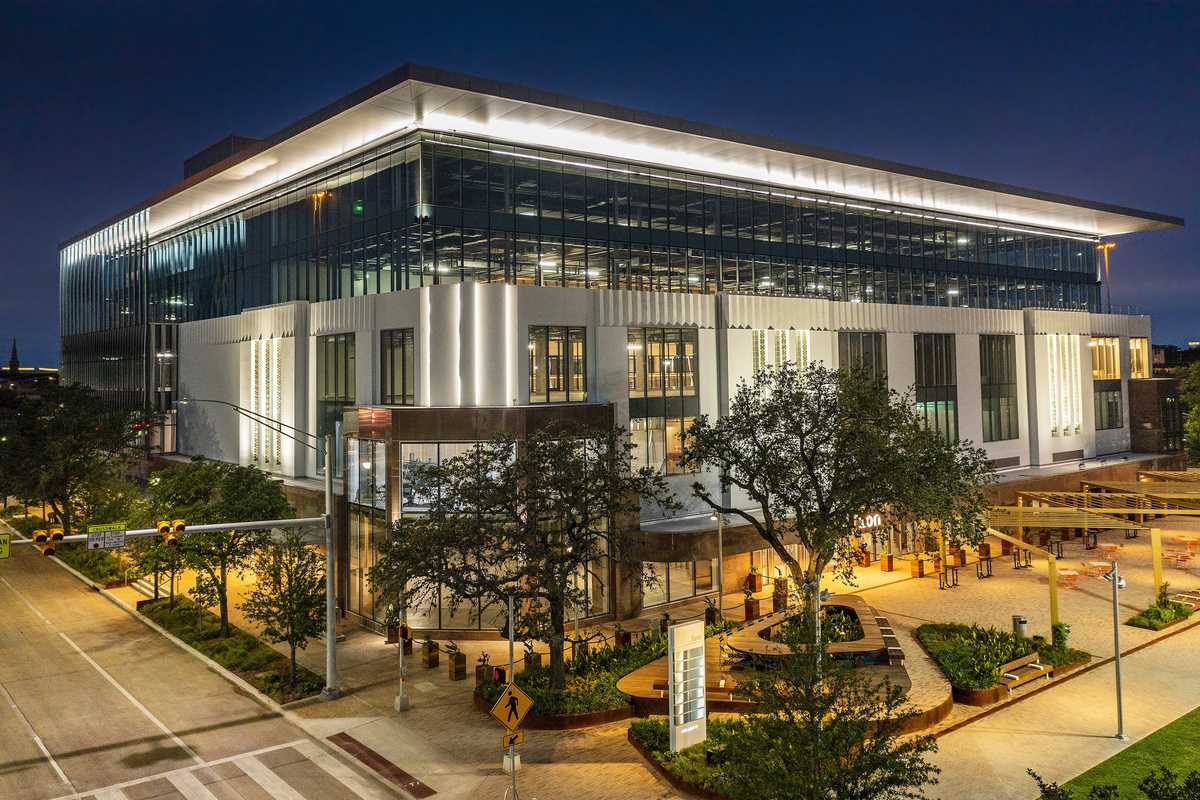
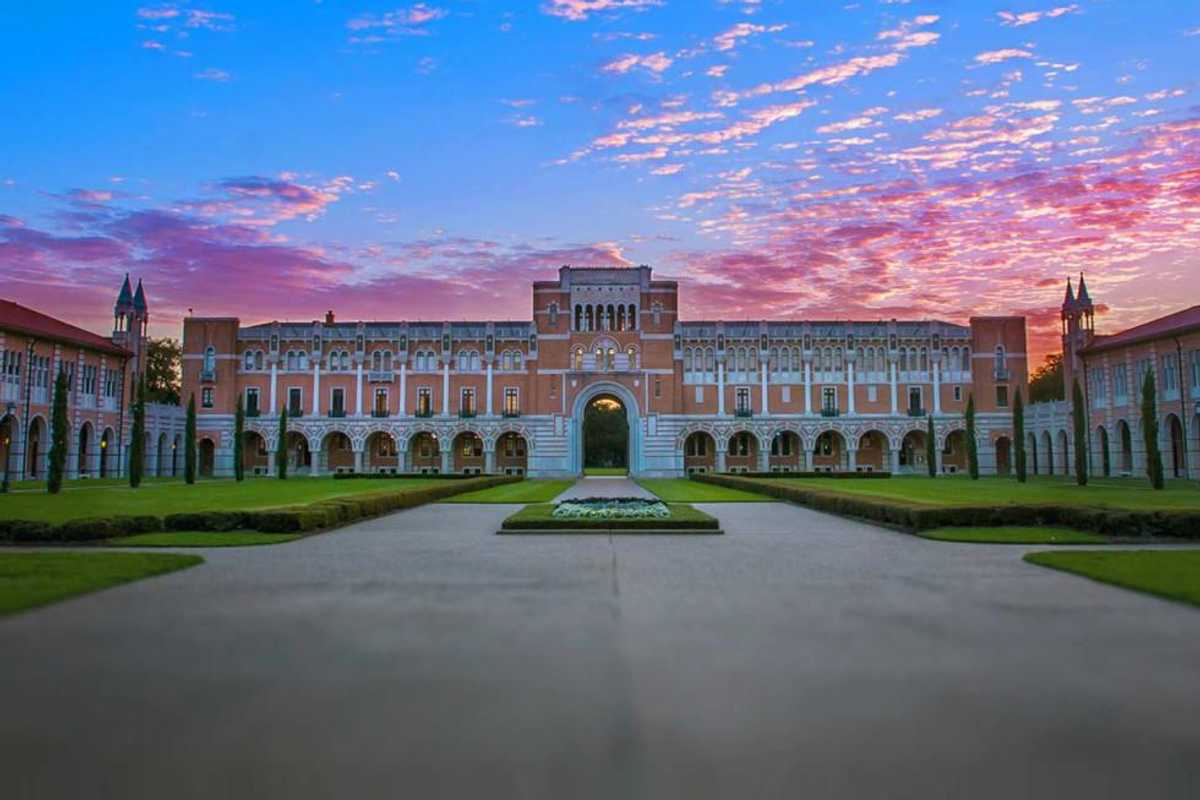
Baylor College of Medicine has named Dr. Jakub Tolar as its new president, CEO and executive dean. Photo courtesy of Mendel Lectures.

Dr. Jakub Tolar, dean of the University of Minnesota Medical School, is taking over as president, CEO and executive dean of Houston’s Baylor College of Medicine on July 1.

Tolar—who’s also vice president for clinical affairs at the University of Minnesota and a university professor—will succeed Dr. Paul Klotman as head of BCM. Klotman is retiring June 30 after leading Texas’ top-ranked medical school since 2010.

In tandem with medical facilities such as Baylor St. Luke’s Medical Center and Texas Children’s Hospital, Baylor trains nearly half of the doctors who work at Texas Medical Center. In addition, Baylor is home to the Dan L Duncan Comprehensive Cancer Center and the Texas Heart Institute.

The hunt for a new leader at Baylor yielded 179 candidates. The medical school’s search firm interviewed 44 candidates, and the pool was narrowed to 10 contenders who were interviewed by the Board of Trustees’ search committee. The full board then interviewed the four finalists, including Tolar.

Greg Brenneman, chair of Baylor’s board and the search committee, says Tolar is “highly accomplished” in the core elements of the medical school’s mission: research, patient care, education and community service.

“Baylor is phenomenal. Baylor is a superpower in academic medicine,” Tolar, a native of the Czech Republic, says in a YouTube video filmed at the medical school. “And everything comes together here because science saves lives. That is the superpower.”

Tolar’s medical specialties include pediatric blood and bone marrow transplants. His research, which he’ll continue at Baylor, focuses on developing cellular therapies for rare genetic disorders. In the research arena, he’s known for his care of patients with recessive dystrophic epidermolysis bullosa, a severe genetic skin disorder.

In a news release, Tolar praises Baylor’s “achievements and foundation,” as well as the school’s potential to advance medicine and health care in “new and impactful ways.”

The Baylor College of Medicine employs more than 9,300 full-time faculty and staff. For the 2025-26 academic year, nearly 1,800 students are enrolled in the School of Medicine, Graduate School of Biomedical Sciences and School of Health Professions. Its M.D. program operates campuses in Houston and Temple.

In the fiscal year that ended June 30, 2024, Baylor recorded $2.72 billion in operating revenue and $2.76 billion in operating expenses.

The college was founded in 1900 in Dallas and relocated to Houston in 1943. It was affiliated with Baylor University in Waco from 1903 to 1969.


Ad Placement 300x100
Ad Placement 300x600

CultureMap Emails are Awesome

NASA unveils Artemis III astronauts at Johnson Space Center in Houston

To the moon

NASA on Tuesday, June 9, revealed the crew for its Artemis III mission, the next step in the space agency's plan to eventually land astronauts on the moon.

The announcement came two months after Artemis II's record-breaking trip around the moon that surpassed the distance record of Apollo 13.

NASA's Randy Bresnik, Frank Rubio, Andre Douglas and the European Space Agency's Luca Parmitano won't fly to the moon or land on the surface. Instead, they’ll orbit Earth while practicing docking their Orion capsule with two lunar landers.

“To the Artemis III crew, we wish you Godspeed on the journey ahead,” said NASA administrator Jared Isaacman.

Elon Musk’s SpaceX and Jeff Bezos’ Blue Origin are racing to deliver the lunar landers. The two-week demo is targeted for 2027. Blue Origin suffered a recent setback when its massive rocket exploded during an engine-firing test on the launch pad in Florida, shaking nearby homes and illuminating the sky with an orange fireball.

NASA's Jeremy Parsons said the setback is a learning opportunity and that the space agency is confident Blue Origin's rocket will be ready in time.

NASA's Artemis program aims to return astronauts to the moon's surface for the first time since the 1970s. A recent revamp of the program announced by Isaacman aims to fast-track it similarly to the Apollo era, adding the upcoming spaceflight around Earth before eyeing a lunar landing in 2028.

“We are certainly humbled as a crew to be able to be your crew that executes this Artemis III mission in space,” said Bresnik, Artemis III commander.

Added Douglas, mission specialist: “My brain — it is going a mile a minute right now. But my heart, it is so warm. It is so full."

In May, NASA awarded hundreds of millions of dollars in contracts to four companies, including Blue Origin, to build landers, rovers and drones for a future moon base. Isaacman said the goal of the moon base is to lay the foundation for a Mars expedition.

Meta to bring $115 million AI data center training initiative to Houston

ai workforce

Meta and Associated Builders and Contractors have entered into a partnership to invest $115 million in training programs for the construction of AI data centers, with a portion of the project launching in Houston.

The companies announced June 8 that they would open America’s Workforce Academies at ABC chapter training centers in Houston; Indianapolis; Baton Rouge, Louisiana; and Columbus, Ohio.

The academies will offer career readiness and safety training, plus five weeks of hands-on education. Participants who complete the program will be granted a job offer from contractors working on Meta projects.

“The AI revolution is bringing change but also historic opportunities,” Dina Powell McCormick, Meta president and vice-chairman, said in a news release. “Skilled workers electrified rural America one pole at a time. They manned the factories that built the arsenal that won World War II. Now a new generation will pour the foundations and lay the fiber that secures American strength in this new age.”

Overall, the Meta and ABC aim for the academies to build a more sustainable pipeline of skilled construction workers and ensure safety and job readiness for the surging number of data center projects underway.

“This new program is an innovative talent solution that is a critical part of addressing the construction industry’s ongoing workforce shortage and creates an accelerated, new-entrant strategy for job seekers ... The sustained demand for data center construction technicians means the industry needs an all-of-the-above approach to address this shortage and grow the construction talent pool,” Michael Bellaman, ABC president and CEO, added in the release.

In Texas, Meta, the parent company of Facebook and Instagram, has launched or broken ground on data centers in El Paso, Fort Worth and Temple. The company announced in March that it planned to grow its El Paso Data center by 1 gigawatt, representing more than a $10 billion investment.

Apart from Meta, Texas has attracted data center development to power other giants like Google and Amazon in recent years. In turn, Texas has been predicted to become the biggest data center market. Commercial real estate services provider JLL reported this spring that the state could topple Northern Virginia as the world’s largest data-center market by 2030. Similarly, CBRE predicted that Houston's data center capacity could double by 2028. Read more here.

New Houston biotech co. lands $30M for pulmonary fibrosis drug

drug money

Most of us can claim a scar or two on our bodies. But when scarring develops inside the body, it’s known as a fibrotic disorder. A freshly launched Houston company, Oorja Bio Inc., is working on a treatment that can help to repair cells and reduce the damage wrought by the growth of fibrotic tissue in patients.

Late last month, Oorja Bio hit the scene with a pair of big announcements. Not only has the company raised a $30 million Series A thanks to founding investor California-based Westlake BioPartners, but it has also already paved the way for a Phase 2 study to take place this year.

Oorja Bio received Investigational New Drug (IND) clearance from the U.S. Food and Drug Administration (FDA), allowing the company to test its treatment in patients with idiopathic pulmonary fibrosis (IPF), a scarring of the lung tissue. IPF affects more than 150,000 adults in the United States and can result in a range of symptoms from shortness of breath to organ failure and death as it progresses.

Oorja Bio’s lead drug candidate, ORJ-001, was shown in a Phase 1 in-human trial to demonstrate “therapeutically relevant exposure and favorable tolerability” in 64 healthy adult volunteers in whom it was administered daily or weekly, according to a news release. Pre-clinical studies of ORJ-001 showed durable target tissue engagement and biomarker activity in bleomycin-induced lung fibrosis.

Administered subcutaneously, ORJ-001 is intended to improve and even restore function in cells that can reduce the signaling that causes IPF. It stops advancement of IPF and also allows for tissue repair. Currently available treatments for the disease can slow the development of IPF down, but do not address the declining lung function that’s inherent in its progression.

“The clinical and preclinical results from our studies to date give us confidence that ORJ-001 represents a novel treatment approach with the potential to repair and reverse fibrosis and modify disease progression in IPF,” Dr. Janethe Pena, CMO of Oorja Bio, said in the release.

“Our team is energized to deliver on our goal of redefining the future of fibrotic diseases, beginning with ORJ-001,” CEO and founder Sujay Kango added. “As we advance ORJ-001 in the clinic, we are embracing the paradigm shift in our biological understanding of IPF pathology that aligns with the central role of the alveolar epithelium. ORJ-001 was designed with this biology in mind and may provide, for the first time, a therapeutic intervention that repairs and reverses fibrosis and promotes disease modification.”

Most patients live only three to five years following their IPF diagnosis. Soon, ORJ-001 and Oorja Bio could give them a fighting chance.