The winners have been revealed.

After weeks of anticipation, the 2025 Houston Innovation Awards winners have been revealed. Finalists, judges, and VIPs from Houston's vibrant innovation community gathered on Nov. 13 at Greentown Labs for the fifth annual event.

This year, the Houston Innovation Awards recognized more than 40 finalists, with winners unveiled in 10 categories.

Finalists and winners were determined by our esteemed panel of judges, comprised of 2024 winners who represent various Houston industries, as well as InnovationMap editorial leadership. One winner was determined by the public via an online competition: Startup of the Year.

The program was emceed by Lawson Gow, Head of Houston for Greentown Labs. Sponsors included Houston City College Northwest, Houston Powder Coaters, FLIGHT by Yuengling, and more.

Without further adieu, meet the 2025 Houston Innovation Awards winners:

Minority-founded Business: Mars Materials

Clean chemical manufacturing business Mars Materials is working to convert captured carbon into resources, such as carbon fiber and wastewater treatment chemicals. The company develops and produces its drop-in chemical products in Houston and uses an in-licensed process for the National Renewable Energy Lab to produce acrylonitrile, which is used to produce plastics, synthetic fibers and rubbers. The company reports that it plans to open its first commercial plant in the next 18 months.


Female-founded Business, presented by Houston Powder Coaters: March Biosciences

Houston cell therapy company March Biosciences aims to treat unaddressed challenging cancers, with its MB-105, a CD5-targeted CAR-T cell therapy for patients with relapsed or refractory CD5-positive T-cell lymphoma, currently in Phase 2 clinical trials. The company was founded in 2021 by CEO Sarah Hein, Max Mamonkin and Malcolm Brenner and was born out of the TMC Accelerator for Cancer Therapeutics.

Energy Transition Business: Eclipse Energy

Previously known as Gold H2, Eclipse Energy converts end-of-life oil fields into low-cost, sustainable hydrogen sources. It completed its first field trial this summer, which demonstrated subsurface bio-stimulated hydrogen production. According to the company, its technology could yield up to 250 billion kilograms of low-carbon hydrogen.

Health Tech Business: Koda Health

Koda Health has developed an advance care planning platform (ACP) that allows users to document and share their care preferences, goals and advance directives for health systems. The web-based platform guides patients through values-based decisions with interactive tools and generates state-specific, legally compliant documents that integrate seamlessly with electronic health record systems. Last year, the company also added kidney action planning to its suite of services for patients with serious illnesses. In 2025, it announced major partnerships and integrations with Epic, Guidehealth, and others, and raised a $7 million series A.

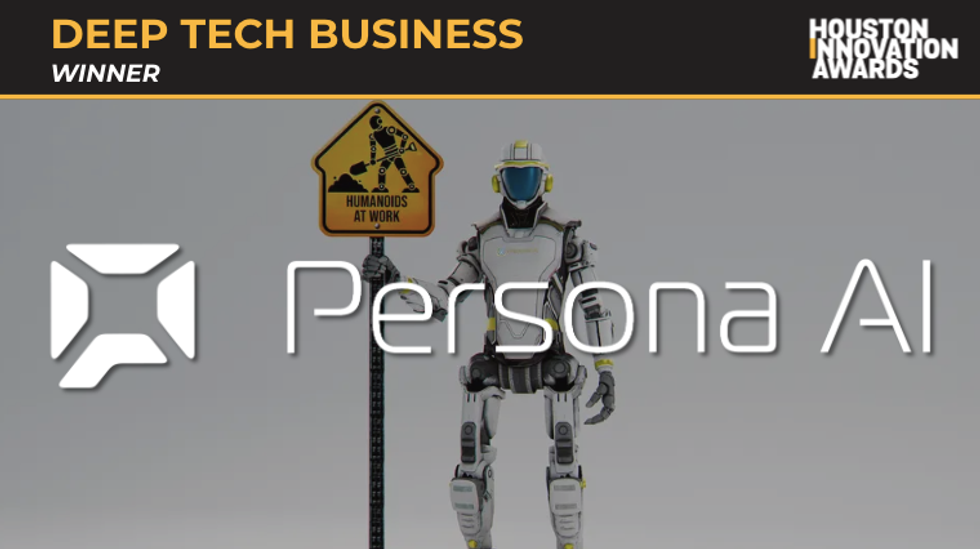
Deep Tech Business: Persona AI

Persona AI is building modularized humanoid robots that aim to deliver continuous, round-the-clock productivity and skilled labor for "dull, dirty, dangerous, and declining" jobs. The company was founded by Houston entrepreneur Nicolaus Radford, who serves as CEO, along with CTO Jerry Pratt and COO Jide Akinyode. It raised eight figures in pre-seed funding this year and is developing its prototype of a robot-welder for Hyundai's shipbuilding division, which it plans to unveil in 2026.

Scaleup of the Year: Fervo Energy

Houston-based Fervo Energy is working to provide 24/7 carbon-free energy through the development of cost-competitive geothermal power. The company is developing its flagship Cape Station geothermal power project in Utah, which is expected to generate 400 megawatts of clean energy for the grid. The company raised $205.6 million in capital to help finance the project earlier this year and fully contracted the project's capacity with the addition of a major power purchase agreement from Shell.

Incubator/Accelerator of the Year: Greentown Labs

Climatetech incubator Greentown Labs offers its community resources and a network to climate and energy innovation startups looking to grow. The collaborative community offers members state-of-the-art prototyping labs, business resources and access to investors and corporate partners. The co-located incubator was first launched in Boston in 2011 before opening in Houston in 2021.

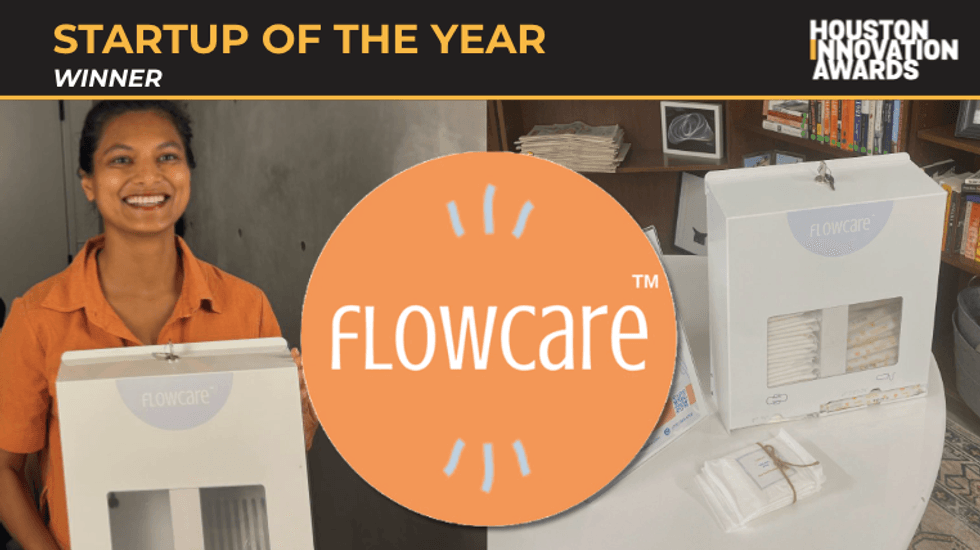
Startup of the Year (People's Choice): FlowCare

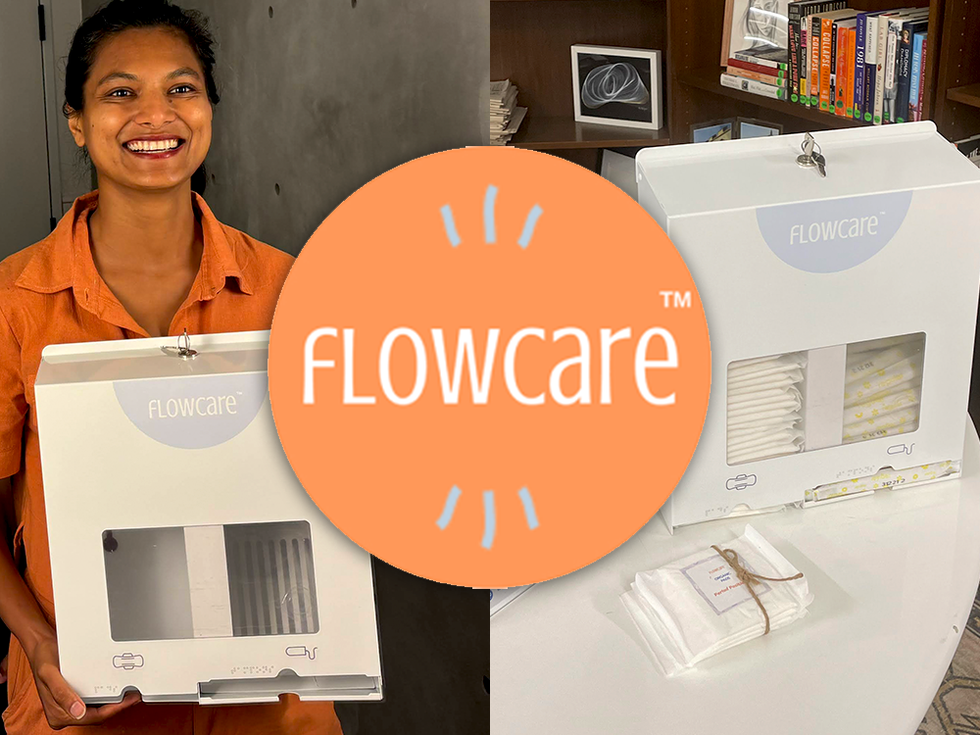
FlowCare is developing a period health platform that integrates smart dispensers, education, and healthcare into one system to make free, high-quality, organic period products more accessible. FlowCare is live at prominent Houston venues, including Discovery Green, Texas Medical Center, The Ion, and, most recently, Space Center Houston, helping make Houston a “period positivity” city.

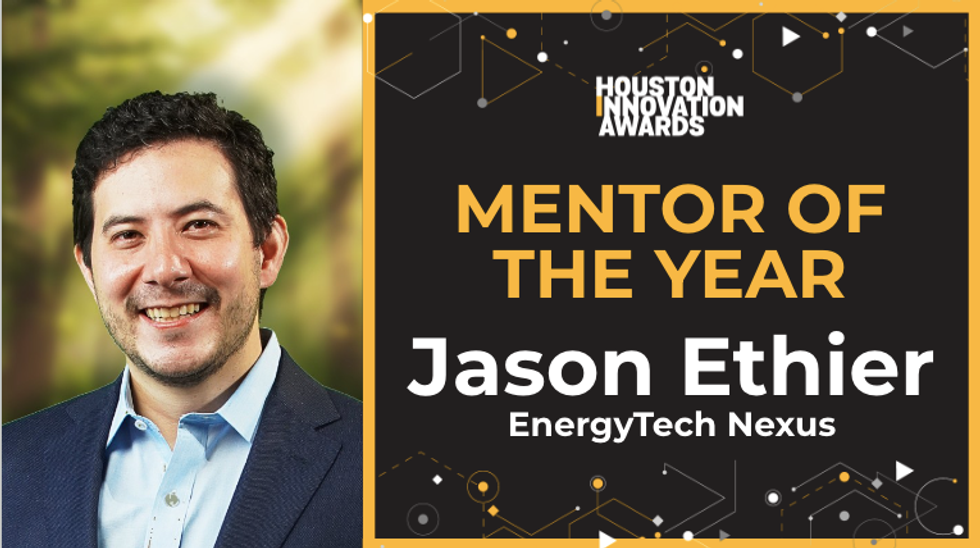
Mentor of the Year, presented by Houston City College Northwest: Jason Ethier, EnergyTech Nexus

Jason Ethier is the founding partner of EnergyTech Nexus, through which he has mentored numerous startups and Innovation Awards finalists, including Geokiln, Energy AI Solutions, Capwell Services and Corrolytics. He founded Dynamo Micropower in 2011 and served as its president and CEO. He later co-founded Greentown Labs in Massachusetts and helped bring the accelerator to Houston.

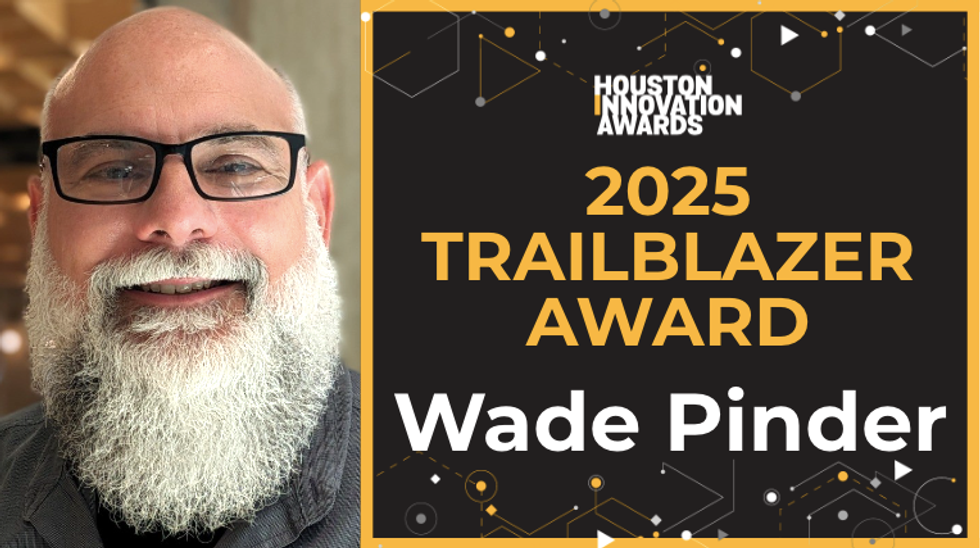
2025 Trailblazer Award: Wade Pinder

Wade Pinder, founder of Product Houston, identifies as an "Ecosystem Wayseeker" and is the founder of Product Houston. A former product manager at Blinds.com, he has been deeply engaged in Houston’s startup and innovation scene since 2012. Over the years, he has supported hundreds of founders, product leaders, and community builders across the Houston area. In 2023, he was honored as Mentor of the Year in the Houston Innovation Awards.

It's time to vote for Houston's Startup of the Year. Graphic via Gow Media

6 finalists compete to be crowned Houston's 2025 Startup of the Year

Cast Your Vote

We're just two weeks away from the 2025 Houston Innovation Awards, and while our expert panel of judges will determine the winners in most categories, one award is up to you.

Voting is now open for our people's choice award: 2025 Startup of the Year. Six exceptional finalists are in the running for the title, and your votes will determine the winner.

From rugged humanoid robots to next-generation sustainable materials, each of these startups is making an impact on the innovation ecosystem in Houston — and beyond.

Read about our Startup of the Year finalists and their missions below, then cast your vote. You can vote once per day through November 12, so make your voice heard.

The winner, along with winners in all other categories, will be revealed live at our event on November 13 at Greentown Labs. Tickets to the 2025 Houston Innovation Awards are available now — get yours today.

Eclipse Energy

Eclipse Energy, previously known as Gold H2, is a climatetech startup converting end-of-life oil fields into low-cost, sustainable hydrogen sources. The company completed its first field trial this summer, which demonstrated subsurface bio-stimulated hydrogen production. Eclipse Energy says Its technology could yield up to 250 billion kilograms of low-carbon hydrogen.

FlowCare

FlowCare is developing a period health platform that integrates smart dispensers, education, and healthcare into one system to make free, high-quality, organic period products more accessible. FlowCare is live at prominent Houston venues, including Discovery Green, Texas Medical Center, The Ion, and, most recently, Space Center Houston, helping make Houston a “period positivity” city.

MyoStep

MyoStep is a next-generation, lightweight, soft exoskeleton developed at University of Houston for children with cerebral palsy. The soft skeleton aims to address motor impairments that impact their ability to participate in physical activities, self-care, and academics, via an affordable, child-friendly solution that empowers mobility and independence.

Persona AI

Persona AI is a humanoid robotics startup that is creating rugged, autonomous robots for skilled, heavy industry work for various "4D" (dull, dirty, dangerous, and declining) jobs. In May, the company announced a memorandum of understanding with HD Korea Shipbuilding & Offshore Engineering, HD Hyundai Robotic, and Vazil Company to create and deploy humanoid robots for complex welding tasks in shipyards. The project will deliver prototype humanoids by the end of 2026.

Rheom Materials

Rheom Materials is a next-generation startup developing biobased materials for a more sustainable future. Its two flagship offerings are Shorai, a sustainable leather alternative that is usable for apparel, accessories, car interiors, and more, and Benree, an alternative to plastic without the carbon footprint.

Solidec

Solidec is a chemical manufacturing company developing autonomous generators that extract molecules from water and air and convert them into pure chemicals and fuels that are free of carbon emissions. The technology eliminates the need for transport, storage, and permitting.

---

The Houston Innovation Awards program is sponsored by Houston City College Northwest, Houston Powder Coaters, FLIGHT by Yuengling, and more to be announced soon. For sponsorship opportunities, please contact sales@innovationmap.com.

Meagan Pitcher, CEO of Houston-based Bairitone Health. Photo courtesy of LinkedIn

6 female-founded startups shaping the Houston innovation ecosystem

meet the finalists

Female-founded businesses reached a new milestone last year. According to payroll company Gusto, female founders launched 49 percent of new businesses in 2024, reaching near parity with male-founded businesses for the first time.

And though they still face challenges, with access to VC funding at the top of the list, those women-led companies are driving major impact in the startup and innovation ecosystem.

The fifth-annual Houston Innovation Awards will honor six women-led startups that are shaping Houston innovation in our Female-founded Businesses category, presented by Houston Powder Coaters.

The finalists for the 2025 award, selected by our esteemed panel of judges, range from a company developing natural carbon-free fuel to another launching at-home sleep apnea technology.

Read more about these innovative startups and the visionary female founders behind them below. Then join us at the Houston Innovation Awards on Nov. 13 at Greentown Labs, when the winner will be unveiled at our live awards ceremony.

Tickets are now on sale for this exclusive event celebrating all things Houston innovation.

Anning Corporation

Clean energy company Anning Corporation is working to develop geologic hydrogen, a natural carbon-free fuel, using its proprietary stimulation approaches and advanced exploration modeling. The company said that geologic hydrogen has the potential to be the lowest-cost source of reliable baseload electricity in the U.S.

The company was founded by CEO Sophie Broun in 2024 and is a member of Greentown Labs. Last month, it also announced that it was chosen to participate in Breakthrough Energy’s prestigious Fellows Program. Anning raised a pre-seed round this year and is currently raising a $6 million seed round.

Bairitone Health

Bairitone Health is bringing anatomy imaging for sleep apnea to the home environment. The company's platform maps users' anatomy during natural sleep using a facial patch to determine the root cause of airway obstruction. It then offers effective therapies for each patient. The system is currently in the research and development phase and is being used in clinical trials and studies.

The company was founded in 2022 in the Texas Medical Center's Biodesign program by CEO Meagan Pitcher, CTO Onur Kilic and chief medical officer Britt Cross. It was a member of Activate Houston's inaugural cohort and has participated in numerous accelerators and incubators. It raised a pre-seed round last year of $435,000.

Brain Haven

Founded at the University of Houston, Brain Haven is developing neuroscience-based, clinically validated protocols that use sensory stimulation through smell and sound to offer a natural and non-invasive way to activate the brain and preserve neuroplasticity. The company aims to deliver an accessible and affordable way for the aging population to preserve memory, delay cognitive decline and improve quality of life.

The company was co-founded by Gail Aflalo, a graduate student in the University of Houston College of Optometry, and Jokūbas Žiburkus, an associate professor in the department of biology and biochemistry at UH. It was selected to participate in the 2024 Innov8 Cohort, where it won the cohort's Startup Pitch Day, and was included in Class 13 of UH RED Labs. Brain Haven was awarded $70,000 in seed funding from UH in June 2025 to support a year-long research initiative in adults aged 50 and above.

FlowCare

Sugar Land-based FlowCare is developing a period health platform that integrates smart dispensers, education and healthcare into one system to make free, high-quality organic period products more accessible.

The company was founded by CEO Tanu Jain, a registered nurse and product management executive, in 2024. It participated in the TiE Women Program and the Houston Community College Business Plan Competition, placing in the top five in both pitch competitions.

March Biosciences

Houston cell therapy company March Biosciences aims to treat unaddressed challenging cancers, with its MB-105, a CD5-targeted CAR-T cell therapy for patients with relapsed or refractory CD5-positive T-cell lymphoma, currently in Phase 2 clinical trials.

The company was founded in 2021 by CEO Sarah Hein, Max Mamonkin and Malcolm Brenner and was born out of the TMC Accelerator for Cancer Therapeutics. The company completed a $29.6 million series A last year and also raised a $4.2 million seed round.

TrialClinIQ

Houston-based TrialClinIQ is an AI-powered clinical trial recruitment platform that helps identify, qualify and enroll eligible patients in appropriate trials faster and more accurately.

The company was founded in 2025 by CEO Jontel Pierce and Janette Obi.

-----

The Houston Innovation Awards program is sponsored by Houston City College Northwest, Houston Powder Coaters, FLIGHT by Yuengling, and more to be announced soon. For sponsorship opportunities, please contact sales@innovationmap.com.

Calling all Houstonians — help InnovationMap decide on this year's People's Choice: Startup of the Year winner. Graphic via Gow Media

People's Choice: Pick your startup of the year for the 2024 Houston Innovation Awards

you decide

It's firmly voting season in Houston, and in addition to deciding the nation's next political leaders, the local innovation ecosystem is being called to weigh in on one category for the Houston Innovation Awards.

This year's People's Choice: Startup of the Year voting is officially open online. Read about each company below, then click here to cast your vote. You may vote once per day up until Nov. 8 when the portal closes. The winner will be named at the Nov. 14 event — click here to secure your ticket to see who wins in this and the other dozen categories.

Corrolytics

Founded by CEO Anwar Sadek, this minority-owned startup uses its patented electrochemical technology to detect and monitor corrosion. Unlike others in the market, Corrolytics allows for on-site, real-time, accurate detection of corrosion, helping to safeguard industrial assets and prolong their lifespans.

Last month, Corrolytics, which is also a finalist in the Minority-Founded Business category, was named among the most promising energy tech startups at the Rice Alliance for Technology and Entrepreneurship's Energy Tech Venture Forum and won the People's Choice Award. It was part of the Rice Alliance Clean Energy Accelerator earlier this year.

What significant milestone(s) has your company reached this year?

We launched our comprehensive in-lab services in Q4 of 2023, generating $100,000 in revenue. By 2024, we tripled our revenue, confirming our early product-market fit while serving four major customers in the energy sector. With the ruggedization and scalable design of our test kit now complete, we’re set to begin field trials in the next quarter. Additionally, Corrolytics has secured a Joint Development Agreement with a leading oil and gas service provider, extending our reach across the global energy market.

What advice do you wish you could tell yourself before you started your company?

Embrace the challenges early on, as they are invaluable learning opportunities. Focus on building a strong network, especially with mentors and industry leaders who can guide you through the unknowns. Lastly, be prepared for the unexpected, stay adaptable and never underestimate the importance of a clear mission that inspires both your team and your customers.

Why did you choose Houston for your company's headquarters and how has your experience been growing a company here?

Houston is the energy capital of the world, providing unparalleled access to major industry players, talent and resources. The city's strong focus on innovation and its thriving clean energy ecosystem has been a perfect fit for Corrolytics. Growing the company here has been an amazing experience—Houston’s vibrant startup community, world-class accelerators like the Rice Alliance, and its strategic location have accelerated our growth and opened doors to invaluable partnerships. Houston truly offers the ideal environment for scaling a cleantech startup like ours and advancing the future of sustainable energy.

FlowCare

FlowCare is focused on addressing menstrual inequity by providing flagship dispensers stocked with free, 100 percent organic pads and tampons for schools and businesses, while raising awareness about the issues that impacks millions.

The startup was founded in January and is led by Founder and CEO Tanu Jain.

What significant milestone(s) has your company reached this year?

Here’s a summary of the significant milestones FlowCare has reached this year:

  • Building a supportive community: We’ve established a vibrant community of FlowCare cheerleaders and advisors who are passionate about our mission.
  • Newsletter Success: Our newsletter, launched just two months ago, now reaches 2,000 people each month with an impressive 50 percent to 60 percent open rate. We’ve also been moved by the personal stories of period struggles shared by our readers.
  • Competition Achievements: We secured fourth place in the Houston Community College Business Plan Competition, winning $1,000 and raising awareness about period product accessibility. FlowCare also earned a top four finish out of 200 participants in the TiE Dallas Global Pitch Competition.
  • Successful Pilot at ION: We’ve commenced a paid pilot with ION, receiving heartfelt text messages from women expressing how FlowCare has positively impacted their day and alleviated embarrassment by providing period products in restrooms."

What advice do you wish you could tell yourself before you started your company?

Expect the journey to be challenging and more time-consuming than anticipated. You’ll face financial struggles and setbacks, but remember to stay patient and resilient. Embrace the journey and find joy in the small victories along the way. Build a network of supportive individuals who believe in your mission and can help you navigate the tough times. You’ll experience self-doubt and imposter syndrome, but remember, even high-profile leaders experience these feelings. Stay focused on your mission and trust in your ability to make a difference.

Why did you choose Houston for your company's headquarters and how has your experience been growing a company here?

I chose Houston for FlowCare’s headquarters because it’s home to me—having grown up here, it felt natural to build my company in a place I know and love. My experience growing the company here has been incredibly positive. Houston boasts a strong and supportive community with a robust network of individuals who are always willing to help. As an entrepreneur, having access to people who are willing to spend time with you, offer guidance, and introduce you to the right connections is invaluable. The local support has been a key factor in keeping us going towards the mission of period equity.

InnoVent Renewables

InnoVent Renewables is a circular economy business that has developed a proprietary net-zero process that converts waste tires, plastics, and biomass into fuels and chemicals. It estimates that it will reduce emissions by 80 million pounds when its production facility is operating.

InnoVent was founded by chemical-engineer-turned-CEO Vibhu Sharma in 2023. It has plans for aggressive growth across North America and Latin America.

What significant milestone(s) has your company reached this year?

We started our business in July 2023, raised a "friends and family" round, which was oversubscribed, and we carry no debt. We went from concept to the commissioning stage in 14 months and will start full commercial operations in Q4 2024.

What advice do you wish you could tell yourself before you started your company?

Always raise more cash than you think you will need. We raised a friends and family round and then had to tap that network again to get some additional funds to account for some add-ons and escalations.

Why did you choose Houston for your company's headquarters and how has your experience been growing a company here?

Houston is a remarkably affordable city with exceptional talent and expertise in engineering, design, renewables, and oil and gas processes. In addition, we were able to tap an excellent and experienced advisory board that has been guiding us. Houston is well connected with the rest of the world, as well as easy access to Monterrey, Mexico, where our tire facility is located.

MendIt

MendIt Inc. was founded in 2019 to help quickly and easily connect users with small businesses and non-profits that can mend and repair clothing sustainably.

It is led by CEO and founder Kaitlyn Allen and was a member of the gBETA Houston accelerator in 2023.

What significant milestone(s) has your company reached this year?

We are finally in the feasibility phase of our (stealth) B2B offering for brands and are excited that the initial results are positive and are pointing to scalability. We are currently in the process of contracting to provide our solution for two initial B2B customers.

What advice do you wish you could tell yourself before you started your company?

Seek product-market fit from the beginning (rather than product-problem fit), and don’t invest so much before that is demonstrated.

Why did you choose Houston for your company's headquarters and how has your experience been growing a company here?

We founded MendIt in Houston because it is our hometown and where we lived. It’s been interesting growing a non-energy-related company because so many of the resources are focused on that sector, and at the same time we get to stand out as the only “tech” startup focused on fashion and textile sustainability.

Passport Journeys

Passport Journeys is a teletherapy app that's specifically designed for mother-daughter pairs. The app launched on Mother's Day 2023 and provides users with personalized therapies, journal opportunities, interactive worksheets and intentional bonding activities.

The company is led by founder and CEO Lacey Tezino.

What significant milestone(s) has your company reached this year?

This year, we’ve achieved several significant milestones: We filed for a trademark to protect our brand, applied for our first NIH SBIR grant to secure funding for our innovative teletherapy app, and launched a nonprofit arm to provide free therapy to those in need, demonstrating our commitment to both innovation and community support.

What advice do you wish you could tell yourself before you started your company?

I would advise myself to secure funding and the sustainability plan for the first five years before leaving the big corporate job.

Why did you choose Houston for your company's headquarters and how has your experience been growing a company here?

We chose Houston for our company’s headquarters due to its vibrant and diverse community, robust health care and tech sectors, and supportive entrepreneurial ecosystem. Growing our company here has been a rewarding experience, marked by strong local partnerships, access to a large talent pool, and a dynamic business environment that fosters innovation and collaboration. The city’s emphasis on healthcare and technology aligns well with our mission, providing a solid foundation for our growth and impact.

TrueLeap

Ed-tech startup TrueLeap Inc. aims to address the global education gap by providing affordable, scalable digital tools to educators in emerging markets through its e-learning platform.

Founded in 2022, it raised $610,000 in a pre-seed round earlier this year, which was over its target of $500,000. It's led by co-founders Sandip Bordoloi, who serves as CEO, and Sunny Zhang, the company's Chief Evangelist. Dario Calogero, founder and CEO of Maya Investments Limited, which led the round, was recently named to the company's board of directors.

True Leap is being developed out of Born Global Ventures, a Houston venture studio focused on advancing immigrant-founded technology, of which Zhang is a founding partner. It serves educators in schools in the United States, India, the Democratic Republic of Congo and other countries.

What significant milestone(s) has your company reached this year?

Advancing our mission to make education accessible to underserved communities worldwide, we have reached the following milestones:

1. New country entry into Ghana by partnering with International Business and Opportunity Network (IBON)
2. Expanded implementation in the DRC by partnering with the Catholic School Association
3. New product launch enabled global educators and institutions to create and distribute high-quality content to prepare global talents for success.

What advice do you wish you could tell yourself before you started your company?

Just do it.

Why did you choose Houston for your company's headquarters and how has your experience been growing a company here?

We chose Houston for its diversity and international connections, which align with our mission to expand access to education worldwide. The city's supportive startup scene, access to top talent, and thriving innovation ecosystem have made it an ideal place to grow TrueLeap.


Pick your 2024 Houston Startup of the Year.

Ad Placement 300x100
Ad Placement 300x600

CultureMap Emails are Awesome

Texas still No. 1 in U.S. for inbound moves, but growth dips

by the numbers

Texas continues to be the country’s No. 1 magnet for newcomers from other states, giving a boost to the state’s economy. However, Texas’ appeal weakened in 2024 compared with the previous year, due in large part to spiking home prices.

An analysis of U.S. Census Bureau data by self-storage platform StorageCafe shows Texas saw net interstate migration of 76,000 people in 2024. Texas’ net interstate migration dropped nearly 50 percent from 2023, according to the analysis. Net migration refers to the number of incoming residents minus the number of outgoing residents.

California remained the top source of newcomers for Texas, sending nearly 77,000 residents to the Lone Star State in 2024, the analysis says. Florida ranked second, followed by New York, Colorado and Illinois.

“These trends reveal Texas’ continued pull from both high-cost coastal markets and other large Sun Belt states, resulting in a mix of affordability-driven and job-driven relocation,” StorageCafe says.

Putting a damper on the influx of new residents: a roughly 124 percent surge in Texas home prices over the past decade, according to StorageCafe.

“While the state remains significantly more affordable than California, its top feeder state, the once-wide pricing gap has narrowed,” says StorageCafe. “For many movers, Texas is still a relative bargain, but no longer an undisputed one.”

Nonetheless, Texas keeps attracting young, highly educated people, which bodes well for the state’s long-term economic outlook, StorageCafe says. More than half of new arrivals to Texas in 2024 held at least a bachelor’s degree, and the age of newcomers averaged 32.

Where are most of these young, highly educated newcomers settling?

Lloyd Potter, former Texas state demographer, tells StorageCafe that population growth in Texas is happening most rapidly in suburban “ring counties” at the expense of slowing growth in urban cores. Ring counties are on the outskirts of major metro areas.

“Many people are moving from urban cores to suburban rings seeking lower costs, newer housing, better schools, and more space,” Potter says. “Typically, a move to a suburban county will be within commuting or hybrid‑commuting distance of major metro economies.”

Artemis II makes historic call to space station with help from Houston Mission Control

History in the making

Still aglow from their triumphant lunar flyby, the Artemis II astronauts made more history Tuesday, April 7: calling their friends aboard the International Space Station hundreds of thousands of miles away as they headed home from the moon.

It was the first moonship-to-spaceship radio linkup ever. NASA's Apollo crews had no off-the-planet company back in the 1960s and 1970s, the last time humanity set sail for deep space.

"We have been waiting for this like you can’t imagine,” Artemis II commander Reid Wiseman called out.

For Christina Koch on Artemis II and Jessica Meir aboard the space station, it marked a joyous space reunion despite being 230,000 miles (370,000 kilometers) apart. The two teamed up for the world's first all-female spacewalk in 2019 outside the orbiting lab.

Koch told her “astro-sister” that she'd hoped to meet up with her again in space “but I never thought it would be like this — it's amazing.”

“I'm so happy that we are back in space together,” Meir replied, “even if we are a few miles apart.”

Houston's Mission Control arranged the cosmic chitchat between the four lunar travelers and the space station's three NASA and one French residents.

Koch described being awe-struck by not just the beauty of Earth, “but how much blackness there was around it.”

“It just made it even more special. It truly emphasized how alike we are, how the same thing keeps every single person on planet Earth alive,” she told the space station crew. “The specialness and preciousness of that really is emphasized” when viewing the home planet from the moon.

By late Tuesday afternoon, the Artemis II astronauts had beamed back more than 50 gigabytes' worth of pictures and other data from the previous day's lunar rendezvous, which set a new distance record for humanity. The highlight: an Earthset photo reminiscent of Apollo 8's Earthrise shot from 1968.

"While they are inspirational and, I think, allow all of us to really feel a little bit of what they were feeling, there's also a lot of science hidden inside of those images," said Mission Control's lead lunar scientist Kelsey Young. “The conversations and the science lessons learned are just beginning."

During a debriefing with Young, the astronauts recounted how they spotted a cascade of pinpricks of light on the lunar surface from impacting cosmic debris. The flashes lasted mere milliseconds and coincided by chance with Monday evening's total solar eclipse.

Young said it was too soon to know whether the crew witnessed an actual meteor shower or more random, run-of-the-mill micrometeoroid hits. Either way, there were “audible screams of delight” in the science operations center, she said.

Koch described being awe-struck by not just the beauty of Earth, “but how much blackness there was around it.”

“It just made it even more special. It truly emphasized how alike we are, how the same thing keeps every single person on planet Earth alive,” she told the space station crew. “The specialness and preciousness of that really is emphasized” when viewing the home planet from the moon.

The first lunar explorers since Apollo 17 in 1972, Wiseman and his crew are aiming for a splashdown off the San Diego coast on Friday to wrap up the nearly 10-day test flight. The recovery ship USS John P. Murtha left port Tuesday for the target zone.

It sets the stage for next year's Artemis III, a lunar lander docking demo in orbit around Earth. Artemis IV will follow in 2028 with two astronauts attempting to land near the lunar south pole.

As for the Orion capsule’s pesky potty, Mission Control assured the astronauts that no maintenance was required Tuesday. The toilet has been on-and-off limits to the crew ever since last week’s launch, prompting them to rely on a backup bag-and-funnel system for urinating.

NASA Administrator Jared Isaacman told the crew following the lunar flyby Monday night: “We definitely have to fix some of the plumbing” ahead of the next Artemis mission. Engineers suspect a clogged filter in the overboard flushing system.

Aside from the toilet and other relatively minor matters, the mission has gone well, Isaacman noted at a news conference Tuesday, “but I'll breathe easier when we get through reentry and everybody's under chutes and in the water.”

AI-powered Houston startup helps restaurants boost customer loyalty

order up

It’s no secret that restaurant trends move fast and margins run thin. And with the proliferation of platforms like Uber Eats, DoorDash and Easy Cater, customer loyalty is fleeting.

The solution?

How about an AI-powered restaurant technology platform that helps restaurant brands cut back on third-party platforms in favor of driving direct discovery, conversion and loyalty?

Enter Saivory. Founded in 2025 by Stephen Klein, a software investor, and Fajita Pete’s restaurateur Hugh Guill, the Houston-based startup aims to help eateries better understand and activate guest behavior across digital channels as AI increasingly reshapes how consumers discover and engage with brands.

In less than a year, Saivory has partnered with Shipley Do-Nuts and Fajita Pete’s to bring AI-powered ordering to life.

“With Saivory, we were able to answer the question of, ‘what if the ordering process could be reduced to a single step, where customers simply tell us what they want and AI takes care of the rest?’” Klein tells InnovationMap.

The Houston-based startup made such an immediate impact that it was selected as a semi-finalist during Start-Up Alley at MURTEC, the restaurant industry’s leading technology conference, which took place last month in Las Vegas.

“Houston is a great hub for technology innovation, and we were proud to represent the city at MURTEC this year,” says Klein. “We didn’t win, but we were able to talk about some of the work that we have existing in the market for clients right now and a little bit about what we’re working on in the future.”

In the current restaurant technology ecosystem, the third-party aggregators own the customer attention that brings volume to restaurants, while also taking big commissions and having control over the end relationships with the customer.

That can often make it difficult for restaurants to grow loyalty and repeat business from customers. Saivory aims to level the playing field for restaurants, helping them stay more connected to their customers.

Take Saivory’s recent application with Shipley’s Do-Nuts, for example.

Saivory powered the donut giant’s AI-ordering and launched Shipley's website and mobile app to support its over 300 locations in Texas alone.

Shipley’s new AI-powered assistant helps users create personalized order recommendations based on individual or group preferences. And unlike standard chatbox features, the new assistant makes custom recommendations based on multiple customer factors, including budgetary habits, individual flavor preferences and order size. It can also be used for large catering orders.

“They're seeing more traffic to the site and they're seeing when customers use our AI-enabled flows,” Klein says. “And they're seeing higher basket sizes, bigger tickets, by about 25 percent.”

Klein says Saivory’s technology helps strengthen first-party digital relationships, reduce friction and cart abandonment, improve average order value, and delivers personalized, efficient experiences.

“It’s a win-win: the customer gets the right order quickly, while the restaurant gets a bigger margin,” he adds.

Additionally, the technology makes it easier for restaurants to share rewards, loyalty and discounts, ultimately growing more direct traffic and making restaurants less reliant on third-party delivery apps.

Next up for Saivory is adding new components to its platform to enhance the relationship between restaurant and customer, as well as technology around making it easier for restaurants to get found on Google.

“A lot of people are still searching for the best donuts near me,” Klein says. “Or what’s the best Mexican food near me? Customers will increasingly move to AI, where they’re going to ask where they should eat dinner and expect it to just order them dinner. They will eventually expect the technology to know how to do that. So that’s what we’re driving at.”