The winners have been revealed.

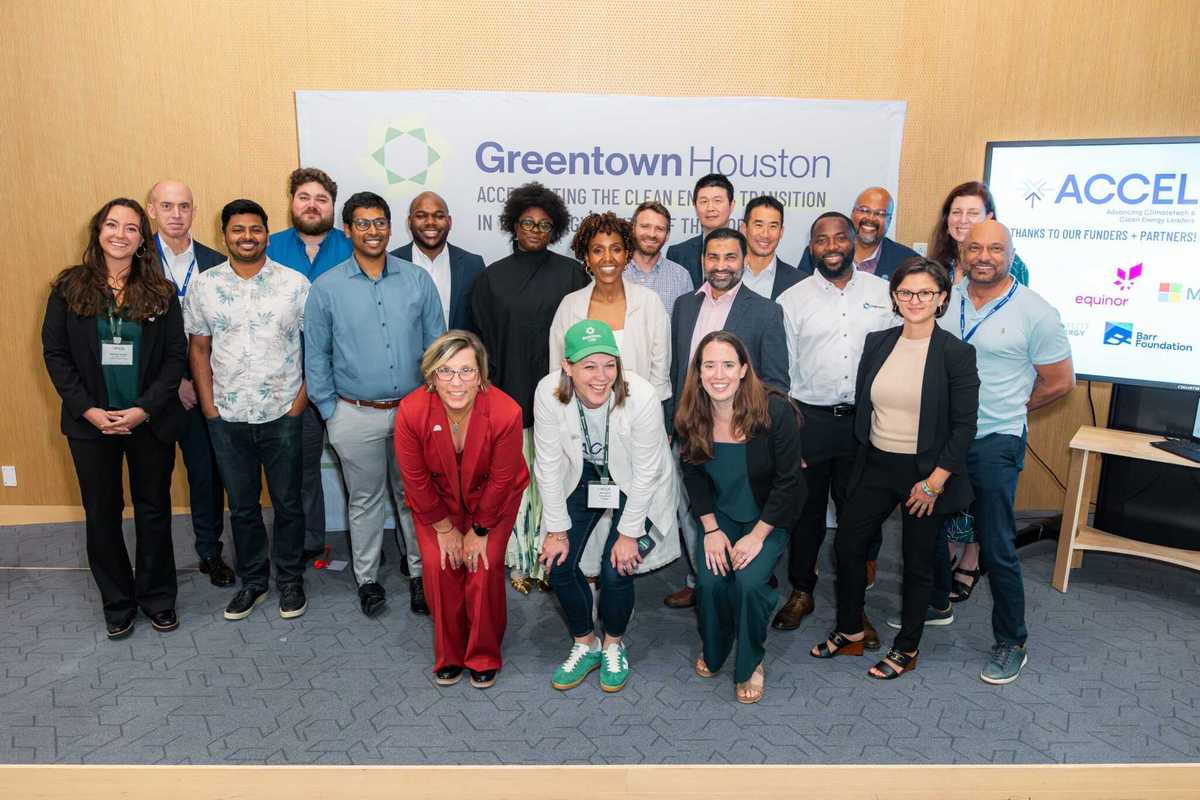
After weeks of anticipation, the 2025 Houston Innovation Awards winners have been revealed. Finalists, judges, and VIPs from Houston's vibrant innovation community gathered on Nov. 13 at Greentown Labs for the fifth annual event.

This year, the Houston Innovation Awards recognized more than 40 finalists, with winners unveiled in 10 categories.

Finalists and winners were determined by our esteemed panel of judges, comprised of 2024 winners who represent various Houston industries, as well as InnovationMap editorial leadership. One winner was determined by the public via an online competition: Startup of the Year.

The program was emceed by Lawson Gow, Head of Houston for Greentown Labs. Sponsors included Houston City College Northwest, Houston Powder Coaters, FLIGHT by Yuengling, and more.

Without further adieu, meet the 2025 Houston Innovation Awards winners:
Minority-founded Business: Mars Materials

Clean chemical manufacturing business Mars Materials is working to convert captured carbon into resources, such as carbon fiber and wastewater treatment chemicals. The company develops and produces its drop-in chemical products in Houston and uses an in-licensed process for the National Renewable Energy Lab to produce acrylonitrile, which is used to produce plastics, synthetic fibers and rubbers. The company reports that it plans to open its first commercial plant in the next 18 months.

Female-founded Business, presented by Houston Powder Coaters: March Biosciences

Houston cell therapy company March Biosciences aims to treat unaddressed challenging cancers, with its MB-105, a CD5-targeted CAR-T cell therapy for patients with relapsed or refractory CD5-positive T-cell lymphoma, currently in Phase 2 clinical trials. The company was founded in 2021 by CEO Sarah Hein, Max Mamonkin and Malcolm Brenner and was born out of the TMC Accelerator for Cancer Therapeutics.
Energy Transition Business: Eclipse Energy

Previously known as Gold H2, Eclipse Energy converts end-of-life oil fields into low-cost, sustainable hydrogen sources. It completed its first field trial this summer, which demonstrated subsurface bio-stimulated hydrogen production. According to the company, its technology could yield up to 250 billion kilograms of low-carbon hydrogen.

Health Tech Business: Koda Health

Koda Health has developed an advance care planning platform (ACP) that allows users to document and share their care preferences, goals and advance directives for health systems. The web-based platform guides patients through values-based decisions with interactive tools and generates state-specific, legally compliant documents that integrate seamlessly with electronic health record systems. Last year, the company also added kidney action planning to its suite of services for patients with serious illnesses. In 2025, it announced major partnerships and integrations with Epic, Guidehealth, and others, and raised a $7 million series A.
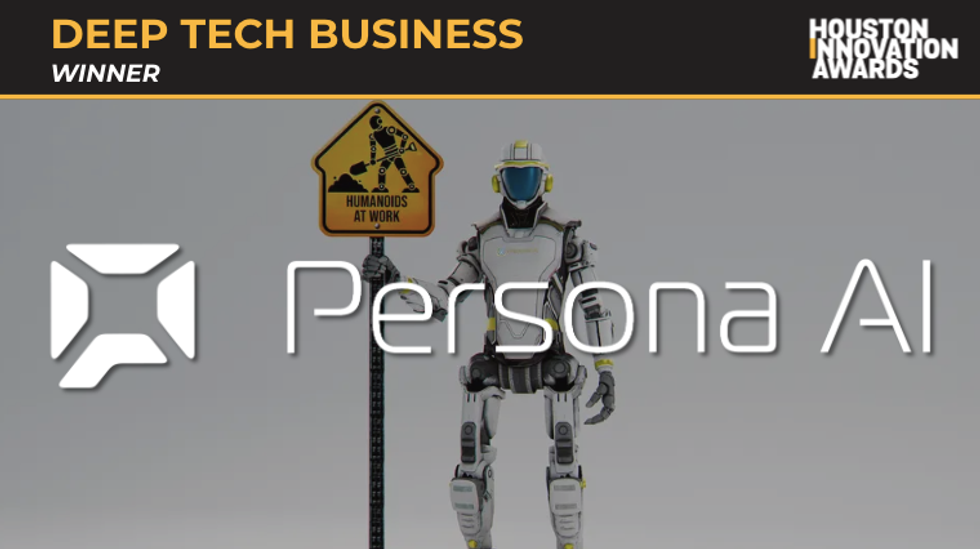
Deep Tech Business: Persona AI

Persona AI is building modularized humanoid robots that aim to deliver continuous, round-the-clock productivity and skilled labor for "dull, dirty, dangerous, and declining" jobs. The company was founded by Houston entrepreneur Nicolaus Radford, who serves as CEO, along with CTO Jerry Pratt and COO Jide Akinyode. It raised eight figures in pre-seed funding this year and is developing its prototype of a robot-welder for Hyundai's shipbuilding division, which it plans to unveil in 2026.
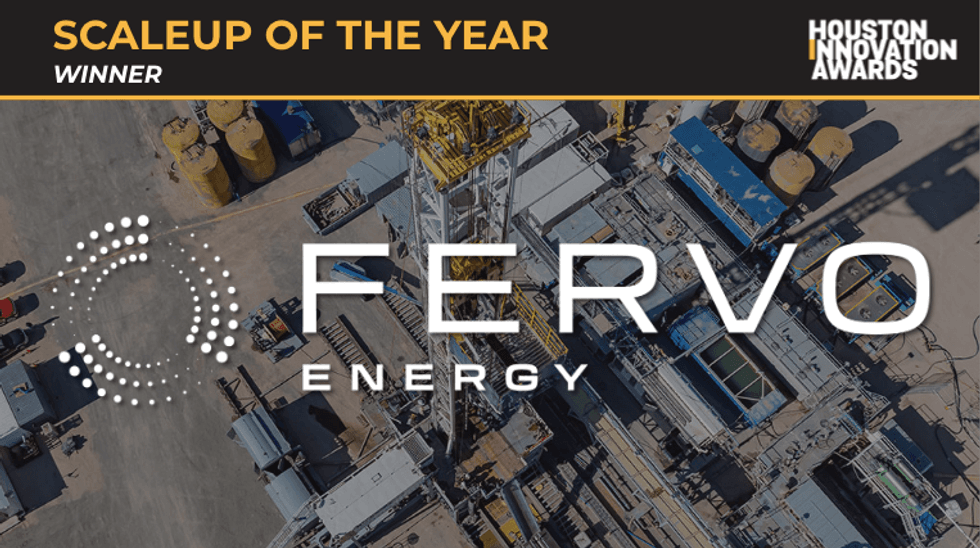
Scaleup of the Year: Fervo Energy

Houston-based Fervo Energy is working to provide 24/7 carbon-free energy through the development of cost-competitive geothermal power. The company is developing its flagship Cape Station geothermal power project in Utah, which is expected to generate 400 megawatts of clean energy for the grid. The company raised $205.6 million in capital to help finance the project earlier this year and fully contracted the project's capacity with the addition of a major power purchase agreement from Shell.
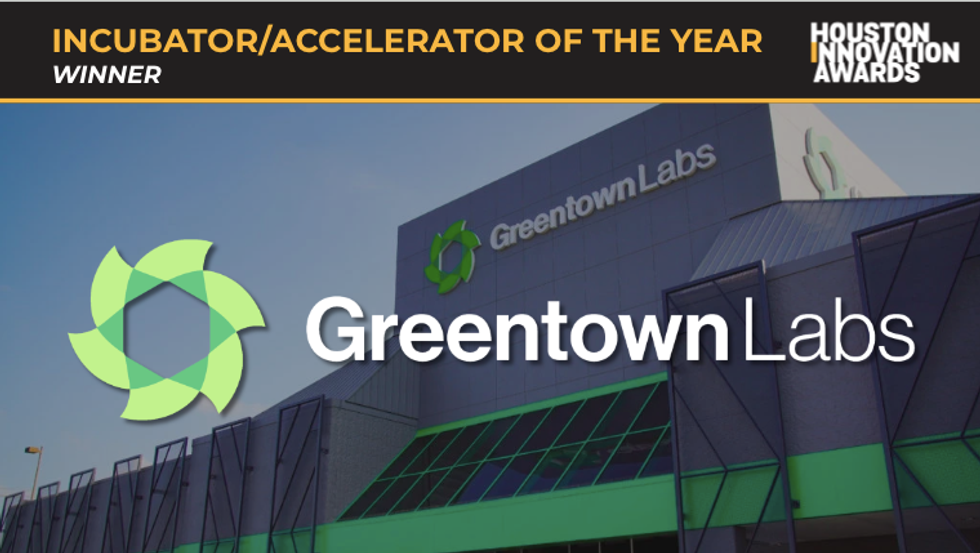
Incubator/Accelerator of the Year: Greentown Labs

Climatetech incubator Greentown Labs offers its community resources and a network to climate and energy innovation startups looking to grow. The collaborative community offers members state-of-the-art prototyping labs, business resources and access to investors and corporate partners. The co-located incubator was first launched in Boston in 2011 before opening in Houston in 2021.
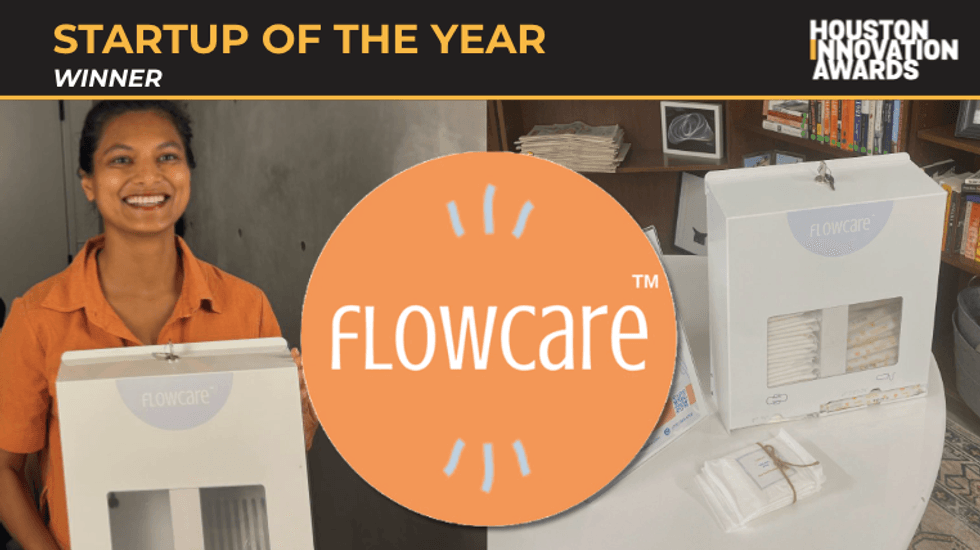
Startup of the Year (People's Choice): FlowCare

FlowCare is developing a period health platform that integrates smart dispensers, education, and healthcare into one system to make free, high-quality, organic period products more accessible. FlowCare is live at prominent Houston venues, including Discovery Green, Texas Medical Center, The Ion, and, most recently, Space Center Houston, helping make Houston a “period positivity” city.
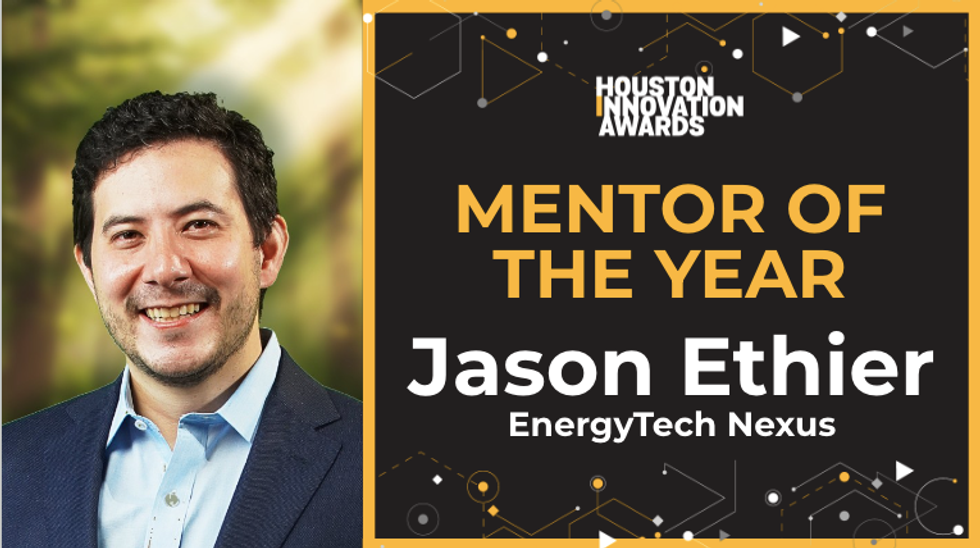
Mentor of the Year, presented by Houston City College Northwest: Jason Ethier, EnergyTech Nexus

Jason Ethier is the founding partner of EnergyTech Nexus, through which he has mentored numerous startups and Innovation Awards finalists, including Geokiln, Energy AI Solutions, Capwell Services and Corrolytics. He founded Dynamo Micropower in 2011 and served as its president and CEO. He later co-founded Greentown Labs in Massachusetts and helped bring the accelerator to Houston.

2025 Trailblazer Award: Wade Pinder

Wade Pinder, founder of Product Houston, identifies as an "Ecosystem Wayseeker" and is the founder of Product Houston. A former product manager at Blinds.com, he has been deeply engaged in Houston’s startup and innovation scene since 2012. Over the years, he has supported hundreds of founders, product leaders, and community builders across the Houston area. In 2023, he was honored as Mentor of the Year in the Houston Innovation Awards.
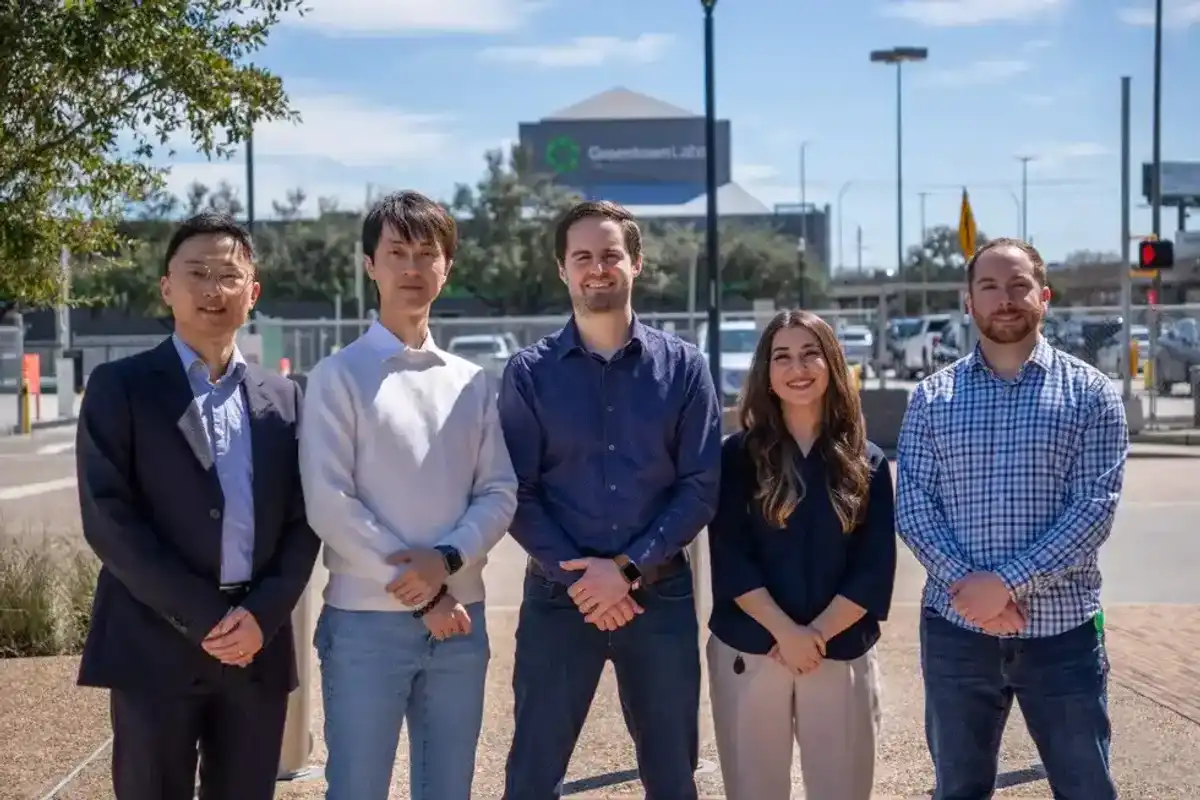
Houston-based Solidec was founded around innovations developed by Rice University associate professor Haotian Wang (far left). Photo courtesy Greentown Labs.

7 innovative startups that are leading the energy transition in Houston

meet the finalists

Houston has long been touted as the energy capital of the world, and it's now it's also a leading player in the energy transition — home to numerous startups and innovators working toward a cleaner future.

As part of the 2025 Houston Innovation Awards, our Energy Transition Business category honors innovative startups that are providing solution within renewables, climatetech, clean energy, alternative materials, circular economy, and more.

Seven energy transition companies have been named finalists for the 2025 award. They range from a spinoff stimulating subsurface hydrogen from end-of-life oil fields to a company converting prickly pear cactus biogas into energy.

Read more about these climatetech businesses, their founders, and their green initiatives below. Then join us at the Houston Innovation Awards on Nov. 13 at Greentown Labs, when the winner will be unveiled at our live awards ceremony.

Tickets are now on sale for this exclusive event celebrating all things Houston Innovation.

Anning Corporation

Clean energy company Anning Corporation is working to develop geologic hydrogen, a natural carbon-free fuel, using its proprietary stimulation approaches and advanced exploration modeling. The company said that geologic hydrogen has the potential to be the lowest-cost source of reliable baseload electricity in the U.S.

The company was founded by CEO Sophie Broun in 2024 and is a member of Greentown Labs. Last month, it also announced that it was chosen to participate in Breakthrough Energy’s prestigious Fellows Program. Anning raised a pre-seed round this year and is currently raising a $6 million seed round.

Capwell Services

Houston-based methane capture company Capwell Services works to eliminate vented oil and gas emissions economically for operators. According to the company, methane emissions are vented from most oil and gas facilities due to safety protocols, and operators are not able to capture the gas cost-effectively, leading operators to emit more than 14 million metric tons of methane per year in the U.S. and Canada. Founded in 2022, Capwell specializes in low and intermittent flow vents for methane capture.

The company began as a University of Pennsylvania senior design project led by current CEO Andrew Lane. It has since participated in programs with Greentown Labs and Rice Clean Energy Accelerator. The company moved to Houston in 2023 and raised a pre-seed round. It has also received federal funding from the DOE. Capwell is currently piloting its commercial unit with oil and gas operators.

Deep Anchor Solutions

Offshore energy consulting and design company Deep Anchor Solutions aims to help expedite the adoption of floating offshore energy infrastructure with its deeply embedded ring anchor (DERA) technology. According to the company, its patented DERA system can be installed quietly without heavy-lift vessels, reducing anchor-related costs by up to 75 percent and lifecycle CO2 emissions by up to 80 percent.

The company was founded in 2023 by current CEO Junho Lee and CTO Charles Aubeny. Lee earned his Ph.D. in geotechnical engineering from Texas A&M University, where Aubeny is a professor of civil and environmental engineering. The company has participated in numerous accelerators and incubators, including Greentown Labs, MassChallenge, EnergyTech Nexus LiftOff, and others. Lee is an Activate 2025 fellow.

Eclipse Energy

Previously known as Gold H2, Eclipse Energy converts end-of-life oil fields into low-cost, sustainable hydrogen sources. It completed its first field trial this summer, which demonstrated subsurface bio-stimulated hydrogen production. According to the company, its technology could yield up to 250 billion kilograms of low-carbon hydrogen, which is estimated to provide enough clean power to Los Angeles for over 50 years and avoid roughly 1 billion metric tons of CO2 equivalent.

Eclipse was founded in 2022 by Moji Karimi (CEO and chairman of Cemvita), Prabhdeep Sekhon (CEO of Eclipse), Tara Karimi, and Rayyan Islam. The company closed an $8 million series A this year and has plans to raise another round in 2026.

Loop Bioproducts

Agricultural chemical manufacturing company Loop Bioproducts leverages the physiology of prickly pear cactus grown in Texas to produce bioenergy, food, and remediate industrial wastewater streams. The company uses its remote sensing technology, proprietary image-based machine learning model, and R&D innovation to capture raw biogas from the cactuses and is focused on scaling cactuses as an industrial crop on land.

Rhiannon Parker founded Loop Bioproducts in 2023.

Mars Materials

Clean chemical manufacturing business Mars Materials is working to convert captured carbon into resources, such as carbon fiber and wastewater treatment chemicals. The company develops and produces its drop-in chemical products in Houston and uses an in-licensed process for the National Renewable Energy Lab to produce acrylonitrile, which is used to produce plastics, synthetic fibers, and rubbers. The company reports that it plans to open its first commercial plant in the next 18 months.

Founded in 2019 by CEO Aaron Fitzgerald, CTO Kristian Gubsch, and lead engineer Trey Sheridan, the company has raised just under $1 million in capital and is backed by Bill Gates’ Breakthrough Energy, Shell, Black & Veatch, and other organizations.

Solidec

Chemical manufacturing company Solidec has developed autonomous generators that extract molecules from water and air and converts them into pure chemicals and fuels that are free of carbon emissions onsite, eliminating the need for transport, storage, and permitting. The company was founded around innovations developed by Rice University associate professor Haotian Wang.

The company was selected for the Chevron Technology Ventures’ catalyst program, Greentown Labs, NSF I-Corps and was part of the first cohort of the Activate Houston program. It won first place at the 2024 startup pitch competition at CERAWeek. Solidec was founded in 2023 by Wang, who serves as chief scientist, CEO Ryan DuChanois, and CTO Yang Xia. It closed a $2.5 million seed round earlier this year.

-----

The Houston Innovation Awards program is sponsored by Houston City College Northwest, Houston Powder Coaters, FLIGHT by Yuengling, and more to be announced soon. For sponsorship opportunities, please contact sales@innovationmap.com.

Ad Placement 300x100
Ad Placement 300x600

CultureMap Emails are Awesome

Houston researchers develop material to boost AI speed and cut energy use

ai research

A team of researchers at the University of Houston has developed an innovative thin-film material that they believe will make AI devices faster and more energy efficient.

AI data centers consume massive amounts of electricity and use large cooling systems to operate, adding a strain on overall energy consumption.

“AI has made our energy needs explode,” Alamgir Karim, Dow Chair and Welch Foundation Professor at the William A. Brookshire Department of Chemical and Biomolecular Engineering at UH, explained in a news release. “Many AI data centers employ vast cooling systems that consume large amounts of electricity to keep the thousands of servers with integrated circuit chips running optimally at low temperatures to maintain high data processing speed, have shorter response time and extend chip lifetime.”

In a report recently published in ACS Nano, Karim and a team of researchers introduced a specialized two-dimensional thin film dielectric, or electric insulator. The film, which does not store electricity, could be used to replace traditional, heat-generating components in integrated circuit chips, which are essential hardware powering AI.

The thinner film material aims to reduce the significant energy cost and heat produced by the high-performance computing necessary for AI.

Karim and his former doctoral student, Maninderjeet Singh, used Nobel prize-winning organic framework materials to develop the film. Singh, now a postdoctoral researcher at Columbia University, developed the materials during his doctoral training at UH, along with Devin Shaffer, a UH professor of civil engineering, and doctoral student Erin Schroeder.

Their study shows that dielectrics with high permittivity (high-k) store more electrical energy and dissipate more energy as heat than those with low-k materials. Karim focused on low-k materials made from light elements, like carbon, that would allow chips to run cooler and faster.

The team then created new materials with carbon and other light elements, forming covalently bonded sheetlike films with highly porous crystalline structures using a process known as synthetic interfacial polymerization. Then they studied their electronic properties and applications in devices.

According to the report, the film was suitable for high-voltage, high-power devices while maintaining thermal stability at elevated operating temperatures.

“These next-generation materials are expected to boost the performance of AI and conventional electronics devices significantly,” Singh added in the release.

Houston to become 'global leader in brain health' and more innovation news

Top Topics

Editor's note: The most-read Houston innovation news this month is centered around brain health, from the launch of Project Metis to Rice''s new Amyloid Mechanism and Disease Center. Here are the five most popular InnovationMap stories from December 1-15, 2025:

1. Houston institutions launch Project Metis to position region as global leader in brain health

The Rice Brain Institute, UTMB's Moody Brain Health Institute and Memorial Hermann’s comprehensive neurology care department will lead Project Metis. Photo via Unsplash.

Leaders in Houston's health care and innovation sectors have joined the Center for Houston’s Future to launch an initiative that aims to make the Greater Houston Area "the global leader of brain health." The multi-year Project Metis, named after the Greek goddess of wisdom and deep thought, will be led by the newly formed Rice Brain Institute, The University of Texas Medical Branch's Moody Brain Health Institute and Memorial Hermann’s comprehensive neurology care department. The initiative comes on the heels of Texas voters overwhelmingly approving a ballot measure to launch the $3 billion, state-funded Dementia Prevention and Research Institute of Texas (DPRIT). Continue reading.

2.Rice University researchers unveil new model that could sharpen MRI scans

New findings from a team of Rice University researchers could enhance MRI clarity. Photo via Unsplash.

Researchers at Rice University, in collaboration with Oak Ridge National Laboratory, have developed a new model that could lead to sharper imaging and safer diagnostics using magnetic resonance imaging, or MRI. In a study published in The Journal of Chemical Physics, the team of researchers showed how they used the Fokker-Planck equation to better understand how water molecules respond to contrast agents in a process known as “relaxation.” Continue reading.

3. Rice University launches new center to study roots of Alzheimer’s and Parkinson’s

The new Amyloid Mechanism and Disease Center will serve as the neuroscience branch of Rice’s Brain Institute. Photo via Unsplash.

Rice University has launched its new Amyloid Mechanism and Disease Center, which aims to uncover the molecular origins of Alzheimer’s, Parkinson’s and other amyloid-related diseases. The center will bring together Rice faculty in chemistry, biophysics, cell biology and biochemistry to study how protein aggregates called amyloids form, spread and harm brain cells. It will serve as the neuroscience branch of the Rice Brain Institute, which was also recently established. Continue reading.

4. Baylor center receives $10M NIH grant to continue rare disease research

BCM's Center for Precision Medicine Models has received funding that will allow it to study more complex diseases. Photo via Getty Images

Baylor College of Medicine’s Center for Precision Medicine Models has received a $10 million, five-year grant from the National Institutes of Health that will allow it to continue its work studying rare genetic diseases. The Center for Precision Medicine Models creates customized cell, fly and mouse models that mimic specific genetic variations found in patients, helping scientists to better understand how genetic changes cause disease and explore potential treatments. Continue reading.

5. Luxury transportation startup connects Houston with Austin and San Antonio

Shutto is a new option for Houston commuters. Photo courtesy of Shutto

Houston business and leisure travelers have a luxe new way to hop between Texas cities. Transportation startup Shutto has launched luxury van service connecting San Antonio, Austin, and Houston, offering travelers a comfortable alternative to flying or long-haul rideshare. Continue reading.

Texas falls to bottom of national list for AI-related job openings

jobs report

For all the hoopla over AI in the American workforce, Texas’ share of AI-related job openings falls short of every state except Pennsylvania and Florida.

A study by Unit4, a provider of cloud-based enterprise resource planning (ERP) software for businesses, puts Texas at No. 49 among the states with the highest share of AI-focused jobs. Just 9.39 percent of Texas job postings examined by Unit4 mentioned AI.

Behind Texas are No. 49 Pennsylvania (9.24 percent of jobs related to AI) and No. 50 Florida (9.04 percent). One spot ahead of Texas, at No. 47, is California (9.56 percent).

Unit4 notes that Texas’ and Florida’s low rankings show “AI hiring concentration isn’t necessarily tied to population size or GDP.”

“For years, California, Texas, and New York dominated tech hiring, but that’s changing fast. High living costs, remote work culture, and the democratization of AI tools mean smaller states can now compete,” Unit4 spokesperson Mark Baars said in a release.

The No. 1 state is Wyoming, where 20.38 percent of job openings were related to AI. The Cowboy State was followed by Vermont at No. 2 (20.34 percent) and Rhode Island at No. 3 (19.74 percent).

“A company in Wyoming can hire an AI engineer from anywhere, and startups in Vermont can build powerful AI systems without being based in Silicon Valley,” Baars added.

The study analyzed LinkedIn job postings across all 50 states to determine which ones were leading in AI employment. Unit4 came up with percentages by dividing the total number of job postings in a state by the total number of AI-related job postings.

Experts suggest that while states like Texas, California and Florida “have a vast number of total job postings, the sheer volume of non-AI jobs dilutes their AI concentration ratio,” according to Unit4. “Moreover, many major tech firms headquartered in California are outsourcing AI roles to smaller, more affordable markets, creating a redistribution of AI employment opportunities.”