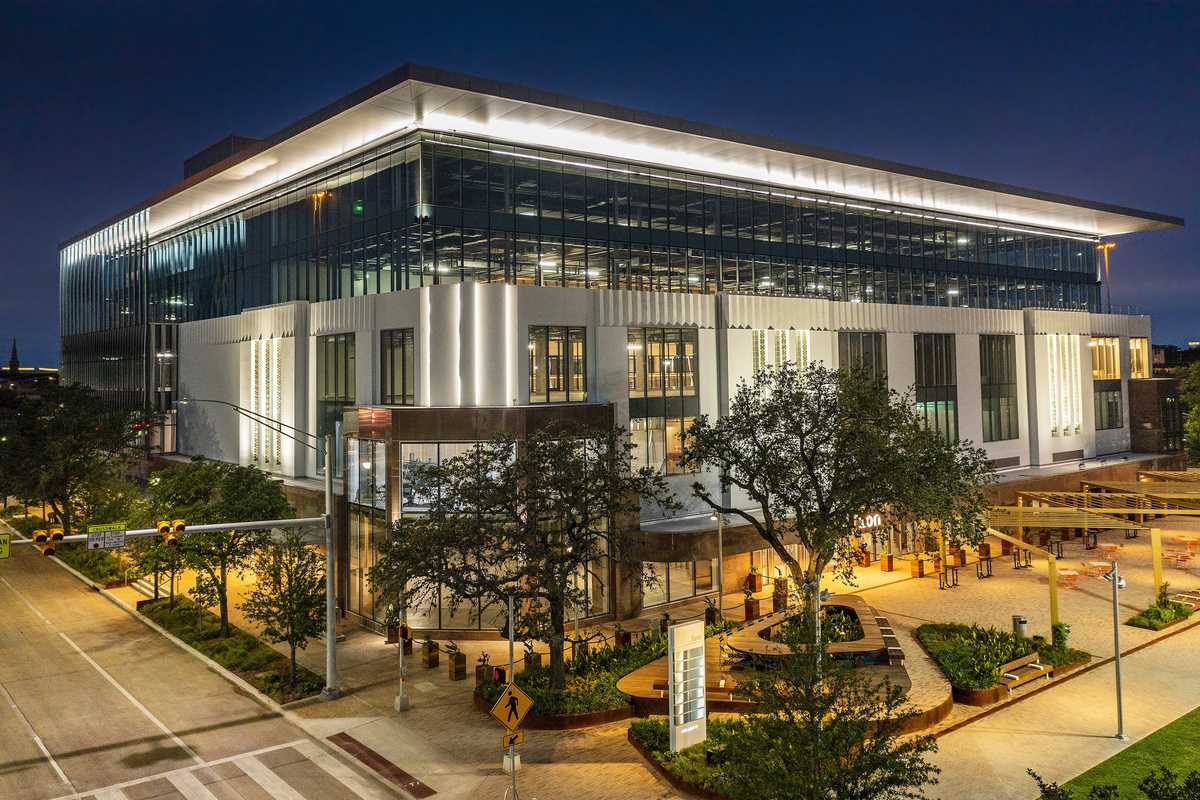
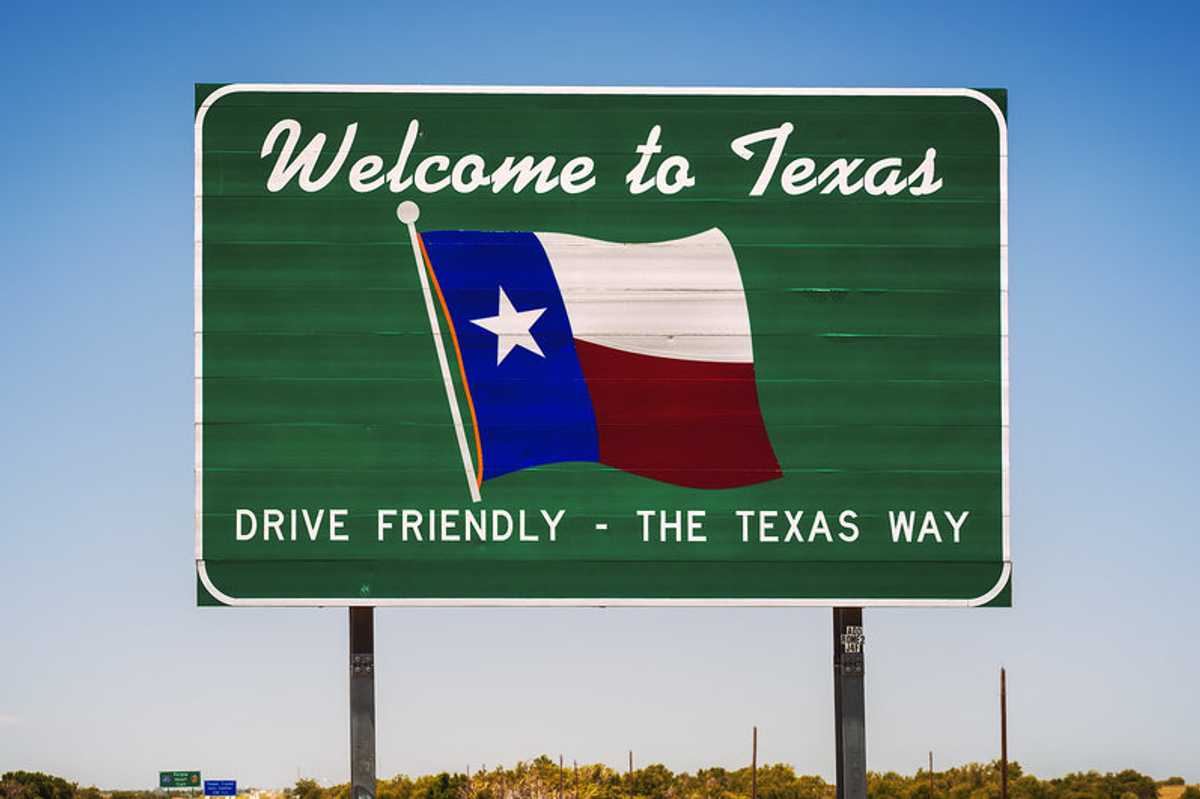
Texas has claimed a top spot on Wallethub's Best & Worst States for Jobs report. Photo via Unsplash.

If you’re hunting for a job in Texas amid a tough employment market, you stand a better chance of landing it here than you might in other states.

A new ranking by personal finance website WalletHub of the best states for jobs puts Texas at No. 7. The Lone Star State lands at No. 2 in the economic environment category and No. 18 in the job market category.

Massachusetts tops the list, and West Virginia appears at the bottom.

To determine the most attractive states for employment, WalletHub compared the 50 states across 34 key indicators of economic health and job market strength. Ranking factors included employment growth, median annual income, and average commute time.

“Living in one of the best states for jobs can provide stable conditions for the long term, helping you ride out the fluctuations that the economy will experience in the future,” WalletHub analyst Chip Lupo says.

In September, Gov. Greg Abbott announced Texas led the U.S. in job creation with the addition of 195,600 jobs over the past 12 months.

“Texas is America’s jobs leader,” Abbott says. “With the best business climate in the nation and a skilled and growing labor force, Texas is where businesses invest, jobs grow, and families thrive. Texas will continue to cut red tape and invest in businesses large and small to spur the economic growth of communities across our great state.”

While Abbott proclaims Texas is “America’s jobs leader,” the state’s level of job creation has recently slowed. In June, the Federal Reserve Bank of Dallas noted that the state’s year-to-date job growth rate had dipped to 1.8 percent, and that even slower job growth was expected in the second half of this year.

The August unemployment rate in Texas stood at 4.1 percent, according to the Texas Workforce Commission. Throughout 2025, the monthly rate in Texas has been either four percent or 4.1 percent.

By comparison, the U.S. unemployment rate in August was 4.3 percent, according to the U.S. Bureau of Labor Statistics. In 2025, the monthly rate for the U.S. has ranged from 4 percent to 4.3 percent.

Here’s a rundown of the August unemployment rates in Texas’ four biggest metro areas:

  • Austin — 3.9 percent
  • Dallas-Fort Worth — 4.4 percent
  • Houston — 5 percent
  • San Antonio — 4.4 percent

Unemployment rates have remained steady this year despite layoffs and hiring freezes driven by economic uncertainty. However, the number of U.S. workers who’ve been without a job for at least 27 weeks has risen by 385,000 this year, the Bureau of Labor Statistics reported in August. That month, long-term unemployed workers accounted for about one-fourth of all unemployed workers.

An August survey by the Federal Reserve Bank of New York showed a record-low 44.9 percent of Americans were confident about finding a job if they lost their current one.
Ad Placement 300x100
Ad Placement 300x600

CultureMap Emails are Awesome

Houston mental health nonprofit expands platform statewide to connect more Texans with care

access granted

As mental health conversations evolve, the necessary pivot becomes how organizations across Texas navigate improved ways to help people access the care they need before their challenges become crises.

That’s why Mental Health America of Greater Houston recently announced that it is expanding its Care Connect platform statewide.

The expansion will address perhaps the most persistent barrier to behavioral healthcare—helping people find and navigate services that already exist.

Care Connect’s extended reach comes at a time when more than 3.5 million adults in the state live with some kind of mental health condition and scores of those in need continue to struggle with accessing care despite the growing awareness of mental health needs.

According to President and CEO Renae Vania Tomczak, Care Connect’s main goal was to remove as many obstacles as possible that Texans face when seeking mental health support.

“Care Connect was about a two-year planning process,” Tomczak says. “It really began with asking what challenges people in the Greater Houston Area were facing regarding mental health. It’s not just accessing care, but the difficulty in navigating the mental healthcare system.”

While provider shortages remain a challenge in some communities, Mental Health America of Greater Houston found that many individuals and families struggle simply to determine where to turn, how to identify the right provider and whether services are affordable.

“We wanted to make it easier for people who have questions, who may never have had a mental health challenge before, or they’re a caregiver for somebody who has a mental health issue,” Tomczak says. “We wanted to be the place that people can come to get their questions answered and be connected to care.”

Care Connect combines a vetted network of more than 1,000 providers and services across Texas with personalized navigation support.

Searches generate care results based on insurance coverage, language preferences, ZIP code and clinical specialties.

Additionally, one-on-one guidance and follow-up support are provided by bilingual resource specialists.

The platform also seeks to address affordability, one of the most significant barriers to mental healthcare access. Through participating providers, eligible individuals can receive six to eight counseling sessions at no cost.

“We have several providers who are willing to provide six to eight counseling sessions at no cost for people who do not have the means to pay for services themselves,” Tomczak says.

When provider matches are unavailable, the organization can connect individuals with master’s-level mental health professionals working under the supervision of licensed clinicians.

The statewide rollout builds on the platform’s early success in the Houston region, where it has helped thousands of individuals connect with mental health resources since launching last fall.

According to Tomczak, the decision to expand was driven in part by growing demand from outside the organization’s traditional service area.

“Last month we decided to take this program statewide,” she says. “It’s not just Houston that can use help in connecting to appropriate mental health services, but the whole state.”

The Care Connect program’s promotion through healthcare providers, community organizations and public-sector partners across Texas is now one of Mental Health America of Greater Houston’s top priorities.

Their goal is to create a stronger referral ecosystem that ultimately helps those who need access to mental health care more quickly.

To facilitate that, the organization has also added free mental health screenings to its website so that users will better identify any symptoms related to anxiety, depression and other conditions.

“Once they do that, then where do they go?” Tomczak says. “They’re not sure who to call and who can help them. At that point, we hope they’ll call us and talk to somebody live who can answer their questions and help them get started on the right path to improving their mental health.”

With eyes on the future, Tomczak believes public understanding of mental health has improved in recent years, particularly following the COVID-19 pandemic, which brought new attention to the effects of stress, isolation and uncertainty.

“The more we talk about it and have the opportunity to share that mental health conditions are traceable, the better,” she says.

According to Tomczak, long-term, Care Connect aims to reduce roadblocks that exist between recognizing the need for help and receiving it.

Ultimately, Care Connect hopes to create a robustly connected behavioral health system that gives Texans the ability to access mental health services swiftly and with confidence.

“No one should have to navigate mental health challenges alone,” Tomczak adds. “Care Connect is here to help connect people with resources, services and answers to ensure they get the care they need to take the next step toward better mental health.”

ExxonMobil sets date to make Texas its legal HQ

save the date

Energy giant Exxon Mobil Corp. has set a date to move its legal headquarters to Texas.

The Spring-based company announced this week that the redomiciliation from New Jersey to Texas is expected to be effective July 1. Exxon's board of directors unanimously recommended redomiciling in the Lone Star State in March, and shareholders approved the move to Texas at the company’s annual meeting in May.

As part of the move, ExxonMobil Holdings Corp. will replace Exxon Mobil Corp. of New Jersey and become the publicly traded parent company. Exxon reports that its shares will continue to trade on the New York Stock Exchange under the ticker symbol “XOM,” and that shareholders do not need to take action.

At the time of the recommendation, Exxon said the move would not affect business operations, management, strategy, assets or employee locations.

Exxon Chairman and CEO Darren Woods added that the redomiciliation was in part due to Texas' business-friendly environment and policies.

"Over the past several years, Texas has made a noticeable effort to embrace the business community. In doing so, it has created a policy and regulatory environment that can allow the company to maximize shareholder value,” Woods said in a news release. "Aligning our legal home with our operating home, in a state that understands our business and has a stake in the company’s success, is important.”

The Associated Press reports that about 30 percent of Exxon's employees work in Texas. Exxon's legal headquarters has been based in New Jersey since 1882, when it was Standard Oil Company.

Exxon moved its operational headquarters from Irving, Texas, to the Houston area in 2023.

Exxon was the highest-ranking Houston-area company on this year's Fortune 500 list, coming in at No. 9. Houston tied with Chicago for the second-most Fortune 500 headquarters on this year's list, with Texas leading the nation for the most Fortune 500 headquarters (57).

“Texas is the undisputed headquarters of headquarters,” Gov. Greg Abbott said in a news release. “The world’s leading businesses invest with confidence in Texas because of our welcoming business climate, predictable regulatory environment, and skilled and growing workforce. People and businesses are choosing Texas because Texas works.”

---

This article originally appeared on our sister site, EnergyCapitalHTX.com.