The winners have been revealed.

After weeks of anticipation, the 2025 Houston Innovation Awards winners have been revealed. Finalists, judges, and VIPs from Houston's vibrant innovation community gathered on Nov. 13 at Greentown Labs for the fifth annual event.

This year, the Houston Innovation Awards recognized more than 40 finalists, with winners unveiled in 10 categories.

Finalists and winners were determined by our esteemed panel of judges, comprised of 2024 winners who represent various Houston industries, as well as InnovationMap editorial leadership. One winner was determined by the public via an online competition: Startup of the Year.

The program was emceed by Lawson Gow, Head of Houston for Greentown Labs. Sponsors included Houston City College Northwest, Houston Powder Coaters, FLIGHT by Yuengling, and more.

Without further adieu, meet the 2025 Houston Innovation Awards winners:
Minority-founded Business: Mars Materials

Clean chemical manufacturing business Mars Materials is working to convert captured carbon into resources, such as carbon fiber and wastewater treatment chemicals. The company develops and produces its drop-in chemical products in Houston and uses an in-licensed process for the National Renewable Energy Lab to produce acrylonitrile, which is used to produce plastics, synthetic fibers and rubbers. The company reports that it plans to open its first commercial plant in the next 18 months.


Female-founded Business, presented by Houston Powder Coaters: March Biosciences

Houston cell therapy company March Biosciences aims to treat unaddressed challenging cancers, with its MB-105, a CD5-targeted CAR-T cell therapy for patients with relapsed or refractory CD5-positive T-cell lymphoma, currently in Phase 2 clinical trials. The company was founded in 2021 by CEO Sarah Hein, Max Mamonkin and Malcolm Brenner and was born out of the TMC Accelerator for Cancer Therapeutics.

Energy Transition Business: Eclipse Energy

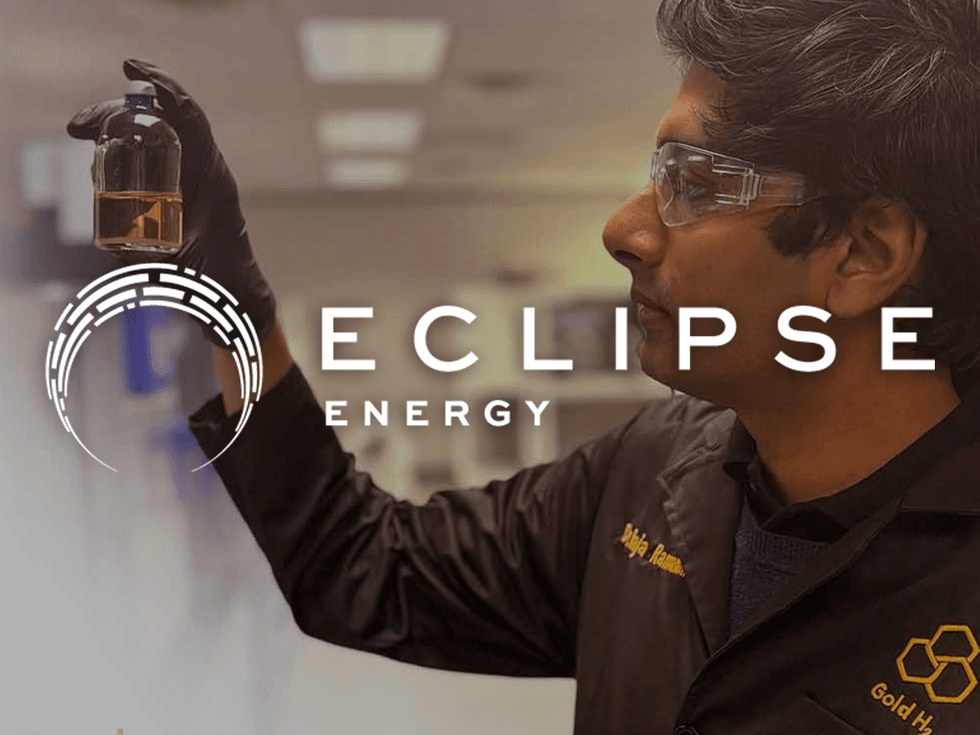
Previously known as Gold H2, Eclipse Energy converts end-of-life oil fields into low-cost, sustainable hydrogen sources. It completed its first field trial this summer, which demonstrated subsurface bio-stimulated hydrogen production. According to the company, its technology could yield up to 250 billion kilograms of low-carbon hydrogen.

Health Tech Business: Koda Health

Koda Health has developed an advance care planning platform (ACP) that allows users to document and share their care preferences, goals and advance directives for health systems. The web-based platform guides patients through values-based decisions with interactive tools and generates state-specific, legally compliant documents that integrate seamlessly with electronic health record systems. Last year, the company also added kidney action planning to its suite of services for patients with serious illnesses. In 2025, it announced major partnerships and integrations with Epic, Guidehealth, and others, and raised a $7 million series A.

Deep Tech Business: Persona AI

Persona AI is building modularized humanoid robots that aim to deliver continuous, round-the-clock productivity and skilled labor for "dull, dirty, dangerous, and declining" jobs. The company was founded by Houston entrepreneur Nicolaus Radford, who serves as CEO, along with CTO Jerry Pratt and COO Jide Akinyode. It raised eight figures in pre-seed funding this year and is developing its prototype of a robot-welder for Hyundai's shipbuilding division, which it plans to unveil in 2026.

Scaleup of the Year: Fervo Energy

Houston-based Fervo Energy is working to provide 24/7 carbon-free energy through the development of cost-competitive geothermal power. The company is developing its flagship Cape Station geothermal power project in Utah, which is expected to generate 400 megawatts of clean energy for the grid. The company raised $205.6 million in capital to help finance the project earlier this year and fully contracted the project's capacity with the addition of a major power purchase agreement from Shell.
Incubator/Accelerator of the Year: Greentown Labs

Climatetech incubator Greentown Labs offers its community resources and a network to climate and energy innovation startups looking to grow. The collaborative community offers members state-of-the-art prototyping labs, business resources and access to investors and corporate partners. The co-located incubator was first launched in Boston in 2011 before opening in Houston in 2021.
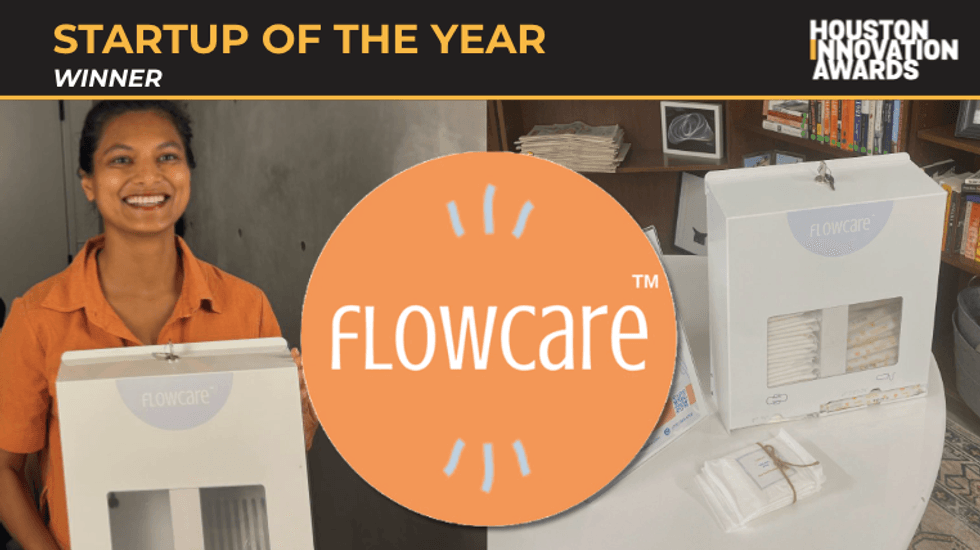
Startup of the Year (People's Choice): FlowCare

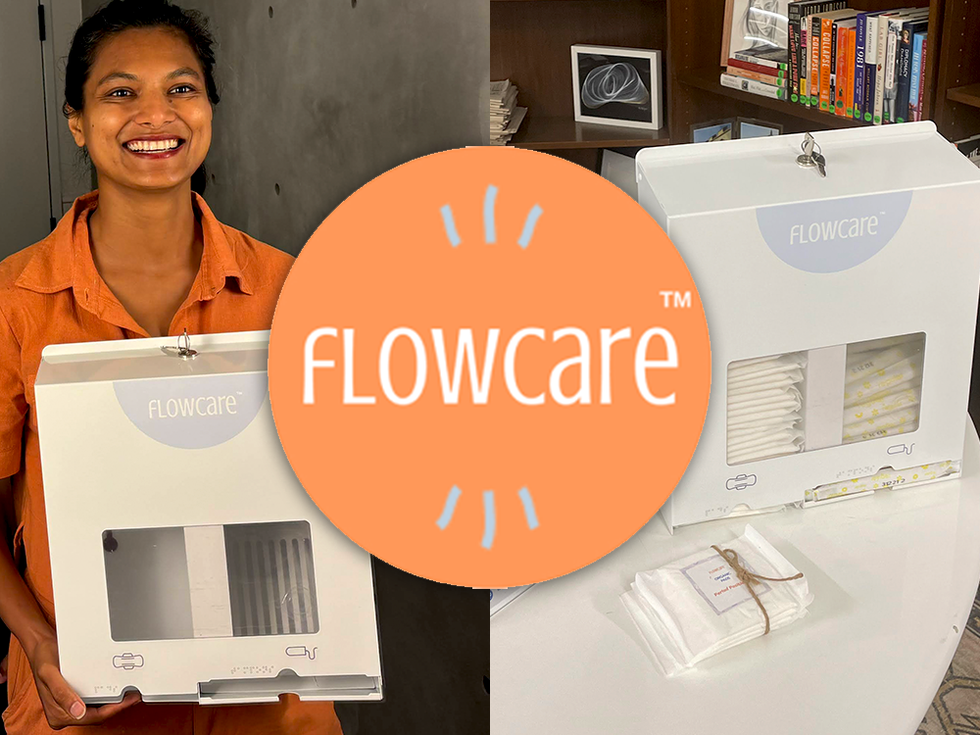
FlowCare is developing a period health platform that integrates smart dispensers, education, and healthcare into one system to make free, high-quality, organic period products more accessible. FlowCare is live at prominent Houston venues, including Discovery Green, Texas Medical Center, The Ion, and, most recently, Space Center Houston, helping make Houston a “period positivity” city.

Mentor of the Year, presented by Houston City College Northwest: Jason Ethier, EnergyTech Nexus

Jason Ethier is the founding partner of EnergyTech Nexus, through which he has mentored numerous startups and Innovation Awards finalists, including Geokiln, Energy AI Solutions, Capwell Services and Corrolytics. He founded Dynamo Micropower in 2011 and served as its president and CEO. He later co-founded Greentown Labs in Massachusetts and helped bring the accelerator to Houston.

2025 Trailblazer Award: Wade Pinder

Wade Pinder, founder of Product Houston, identifies as an "Ecosystem Wayseeker" and is the founder of Product Houston. A former product manager at Blinds.com, he has been deeply engaged in Houston’s startup and innovation scene since 2012. Over the years, he has supported hundreds of founders, product leaders, and community builders across the Houston area. In 2023, he was honored as Mentor of the Year in the Houston Innovation Awards.
It's time to vote for Houston's Startup of the Year. Graphic via Gow Media

6 finalists compete to be crowned Houston's 2025 Startup of the Year

Cast Your Vote

We're just two weeks away from the 2025 Houston Innovation Awards, and while our expert panel of judges will determine the winners in most categories, one award is up to you.

Voting is now open for our people's choice award: 2025 Startup of the Year. Six exceptional finalists are in the running for the title, and your votes will determine the winner.

From rugged humanoid robots to next-generation sustainable materials, each of these startups is making an impact on the innovation ecosystem in Houston — and beyond.

Read about our Startup of the Year finalists and their missions below, then cast your vote. You can vote once per day through November 12, so make your voice heard.

The winner, along with winners in all other categories, will be revealed live at our event on November 13 at Greentown Labs. Tickets to the 2025 Houston Innovation Awards are available now — get yours today.

Eclipse Energy

Eclipse Energy, previously known as Gold H2, is a climatetech startup converting end-of-life oil fields into low-cost, sustainable hydrogen sources. The company completed its first field trial this summer, which demonstrated subsurface bio-stimulated hydrogen production. Eclipse Energy says Its technology could yield up to 250 billion kilograms of low-carbon hydrogen.

FlowCare

FlowCare is developing a period health platform that integrates smart dispensers, education, and healthcare into one system to make free, high-quality, organic period products more accessible. FlowCare is live at prominent Houston venues, including Discovery Green, Texas Medical Center, The Ion, and, most recently, Space Center Houston, helping make Houston a “period positivity” city.

MyoStep

MyoStep is a next-generation, lightweight, soft exoskeleton developed at University of Houston for children with cerebral palsy. The soft skeleton aims to address motor impairments that impact their ability to participate in physical activities, self-care, and academics, via an affordable, child-friendly solution that empowers mobility and independence.

Persona AI

Persona AI is a humanoid robotics startup that is creating rugged, autonomous robots for skilled, heavy industry work for various "4D" (dull, dirty, dangerous, and declining) jobs. In May, the company announced a memorandum of understanding with HD Korea Shipbuilding & Offshore Engineering, HD Hyundai Robotic, and Vazil Company to create and deploy humanoid robots for complex welding tasks in shipyards. The project will deliver prototype humanoids by the end of 2026.

Rheom Materials

Rheom Materials is a next-generation startup developing biobased materials for a more sustainable future. Its two flagship offerings are Shorai, a sustainable leather alternative that is usable for apparel, accessories, car interiors, and more, and Benree, an alternative to plastic without the carbon footprint.

Solidec

Solidec is a chemical manufacturing company developing autonomous generators that extract molecules from water and air and convert them into pure chemicals and fuels that are free of carbon emissions. The technology eliminates the need for transport, storage, and permitting.

---

The Houston Innovation Awards program is sponsored by Houston City College Northwest, Houston Powder Coaters, FLIGHT by Yuengling, and more to be announced soon. For sponsorship opportunities, please contact sales@innovationmap.com.

Ad Placement 300x100
Ad Placement 300x600

CultureMap Emails are Awesome

Baylor center receives $10M NIH grant to continue rare disease research

NIH funding

Baylor College of Medicine’s Center for Precision Medicine Models received a $10 million, five-year grant from the National Institutes of Health last month that will allow it to continue its work studying rare genetic diseases.

The Center for Precision Medicine Models creates customized cell, fly and mouse models that mimic specific genetic variations found in patients, helping scientists to better understand how genetic changes cause disease and explore potential treatments.

The center was originally funded by an NIH grant, and its models have contributed to the discovery of several new rare disease genes and new symptoms caused by known disease genes. It hosts an online portal that allows physicians, families and advocacy groups to nominate genetic variants or rare diseases that need further investigation or new treatments.

Since its founding in 2020, it has received 156 disease/variant nominations, accepted 63 for modeling and produced more than 200 precision models, according to Baylor.

The center plans to use the latest round of funding to bring together more experts in rare disease research, animal modeling and bioinformatics, and to expand its focus and model more complex diseases.

Dr. Jason Heaney, associate professor in the Department of Molecular and Human Genetics at BCM, serves as the lead principal investigator of the center.

“The Department of Molecular and Human Genetics is uniquely equipped to bring together the diverse expertise needed to connect clinical human genetics, animal research and advanced bioinformatics tools,” Heaney added in the release. “This integration allows us to drive personalized medicine forward using precision animal models and to turn those discoveries into better care for patients.”

Houston institutions launch Project Metis to position region as global leader in brain health

brain trust

Leaders in Houston's health care and innovation sectors have joined the Center for Houston’s Future to launch an initiative that aims to make the Greater Houston Area "the global leader of brain health."

The multi-year Project Metis, named after the Greek goddess of wisdom and deep thought, will be led by the newly formed Rice Brain Institute, The University of Texas Medical Branch's Moody Brain Health Institute and Memorial Hermann’s comprehensive neurology care department. The initiative comes on the heels of Texas voters overwhelmingly approving a ballot measure to launch the $3 billion, state-funded Dementia Prevention and Research Institute of Texas (DPRIT).

According to organizers, initial plans for Project Metis include:

  • Creating working teams focused on brain health across all life stages, science and medical advances, and innovation and commercialization
  • Developing a regional Brain Health Index to track progress and equity
  • Implanting pilot projects in areas such as clinical care, education and workplace wellness
  • Sharing Houston’s progress and learnings at major international forums, including Davos and the UN General Assembly

The initiative will be chaired by:

  • Founding Chair: Dr. Jochen Reiser, President of UTMB and CEO of the UTMB Health System
  • Project Chair: Amy Dittmar, Howard R. Hughes Provost and Executive Vice President of Rice University
  • Project Chair: Dr. David L. Callender, President and CEO of Memorial Hermann Health System

The leaders will work with David Gow, Center for Houston’s Future president and CEO. Gow is the founder and chairman of Gow Media, InnovationMap's parent company.

“Now is exactly the right time for Project Metis and the Houston-Galveston Region is exactly the right place,” Gow said in a news release. “Texas voters, by approving the state-funded Dementia Prevention Institute, have shown a strong commitment to brain health, as scientific advances continue daily. The initiative aims to harness the Houston’s regions unique strengths: its concentration of leading medical and academic institutions, a vibrant innovation ecosystem, and a history of entrepreneurial leadership in health and life sciences.”

Lime Rock Resources, BP and The University of Texas MD Anderson Cancer Center served as early steering members for Project Metis. HKS, Houston Methodist and the American Psychiatric Association Foundation have also supported the project.

An estimated 460,000 Texans are living with dementia, according to the Alzheimer’s Association, and more than one million caregivers support them.

“Through our work, we see both the immense human toll of brain-related illness and the tremendous potential of early intervention, coordinated care and long-term prevention," Callender added in the release. "That’s why this bold new initiative matters so much."

Texas launches cryptocurrency reserve with $5 million Bitcoin purchase

Money Talks

Texas has launched its new cryptocurrency reserve with a $5 million purchase of Bitcoin as the state continues to embrace the volatile and controversial digital currency.

The Texas Comptroller’s Office confirmed the purchase was made last month as a “placeholder investment” while the office works to contract with a cryptocurrency bank to manage its portfolio.

The purchase is one of the first of its kind by a state government, made during a year where the price of Bitcoin has exploded amid the embrace of the digital currency by President Donald Trump’s administration and the rapid expansion of crypto mines in Texas.

“The Texas Legislature passed a bold mandate to create the nation’s first Strategic Bitcoin Reserve,” acting Comptroller Kelly Hancock wrote in a statement. “Our goal for implementation is simple: build a secure reserve that strengthens the state’s balance sheet. Texas is leading the way once again, and we’re proud to do it.”

The purchase represents half of the $10 million the Legislature appropriated for the strategic reserve during this year’s legislative session, but just a sliver of the state’s $338 billion budget.

However, the purchase is still significant, making Texas the first state to fund a strategic cryptocurrency reserve. Arizona and New Hampshire have also passed laws to create similar strategic funds but have not yet purchased cryptocurrency.

Wisconsin and Michigan made pension fund investments in cryptocurrency last year.

The Comptroller’s office purchased the Bitcoin the morning of Nov. 20 when the price of a single bitcoin was $91,336, according to the Comptroller’s office. As of Friday afternoon, Bitcoin was worth slightly less than the price Texas paid, trading for $89,406.

University of Houston energy economist Ed Hirs questioned the state’s investment, pointing to Bitcoin’s volatility. That makes it a bad investment of taxpayer dollars when compared to more common investments in the stock and bond markets, he said.

“The ordinary mix [in investing] is one that goes away from volatility,” Hirs said. “The goal is to not lose to the market. Once the public decides this really has no intrinsic value, then it will be over, and taxpayers will be left holding the bag.”

The price of Bitcoin is down significantly from an all-time high of $126,080 in early October.

Lee Bratcher, president of the Texas Blockchain Council, argued the state is making a good investment because the price of Bitcoin has trended upward ever since it first launched in early 2009.

“It’s only a 16-year-old asset, so the volatility, both in the up and down direction, will smooth out over time,” Bratcher said. “We still want it to retain some of those volatility characteristics because that’s how we could see those upward moves that will benefit the state’s finances in the future.”

Bratcher said the timing of the state’s investment was shrewd because he believes it is unlikely to be valued this low again.

The investment comes at a time that the crypto industry has found a home in Texas.

Rural counties have become magnets for crypto mines ever since China banned crypto mining in 2021 and Gov. Greg Abbott declared “Texas is open for crypto business” in a post on social media.

The state is home to at least 27 Bitcoin facilities, according to the Texas Blockchain Council, making it the world’s top crypto mining spot. The two largest crypto mining facilities in the world call Texas home.

The industry has also come under criticism as it expands.

Critics point to the industry’s significant energy usage, with crypto mines in the state consuming 2,717 megawatts of power in 2023, according to the comptroller’s office. That is enough electricity to power roughly 680,000 homes.

Crypto mines use large amounts of electricity to run computers that run constantly to produce cryptocurrencies, which are decentralized digital currencies used as alternatives to government-backed traditional currencies.

A 2023 study by energy research and consulting firm Wood Mackenzie commissioned by The New York Times found that Texans’ electric bills had risen nearly 5%, or $1.8 billion per year, due to the increase in demand on the state power grid created by crypto mines.

Residents living near crypto mines have also complained that the amount of job creation promised by the facilities has not materialized and the noise of their operation is a nuisance.

“Texas should be reinvesting Texan’s tax money in things that truly bolster the economy long term, living wage, access to quality healthcare, world class public schools,” said state Sen. Molly Cook, D-Houston, who voted against the creation of the strategic fund. “Instead it feels like they’re almost gambling our money on something that is known to be really volatile and has not shown to be a tide that raises all boats.”

State Sen. Charles Schwertner, R-Georgetown, who authored the bill that created the fund, said at the time it passed that it will allow Texas to “lead and compete in the digital economy.”

___

This story was originally published by The Texas Tribune and distributed through a partnership with The Associated Press.