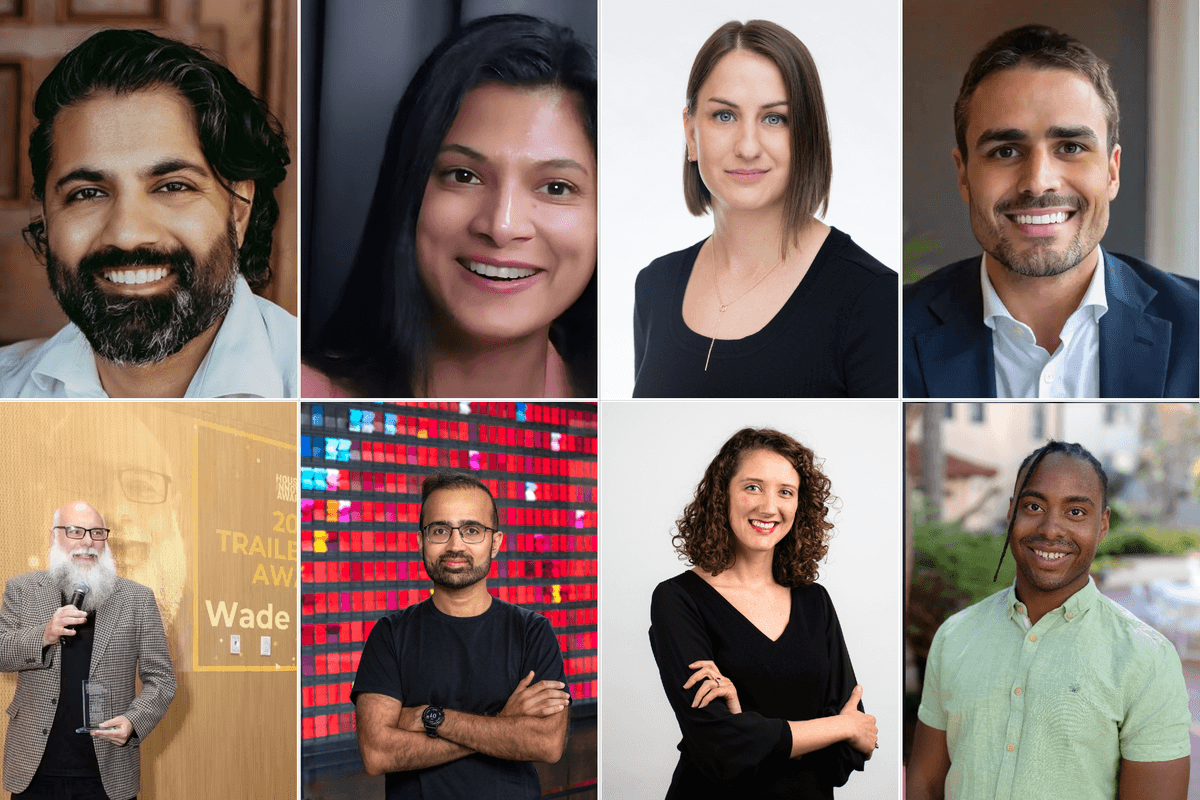
Austin billionaires Tench and Simone Coxe have gifted $100 million toward the planned UT medical center. Courtesy photo.

The University of Texas at Austin’s planned multibillion-dollar medical center, which will include a hospital run by Houston’s University of Texas MD Anderson Cancer Center, just received a $100 million boost from a billionaire husband-and-wife duo.

Tench Coxe, a former venture capitalist who’s a major shareholder in chipmaking giant Nvidia, and Simone Coxe, co-founder and former CEO of the Blanc & Otus PR firm, contributed the $100 million—one of the largest gifts in UT history. The Coxes live in Austin.

“Great medical care changes lives,” says Simone Coxe, “and we want more people to have access to it.”

The University of Texas System announced the medical center project in 2023 and cited an estimated price tag of $2.5 billion. UT initially said the medical center would be built on the site of the Frank Erwin Center, a sports and entertainment venue on the UT Austin campus that was demolished in 2024. The 20-acre site, north of downtown and the state Capitol, is near Dell Seton Medical Center, UT Dell Medical School and UT Health Austin.

Now, UT officials are considering a bigger, still-unidentified site near the Domain mixed-use district in North Austin, although they haven’t ruled out the Erwin Center site. The Domain development is near St. David’s North Medical Center.

As originally planned, the medical center would house a cancer center built and operated by MD Anderson and a specialty hospital built and operated by UT Austin. Construction on the two hospitals is scheduled to start this year and be completed in 2030. According to a 2025 bid notice for contractors, each hospital is expected to encompass about 1.5 million square feet, meaning the medical center would span about 3 million square feet.

Features of the MD Anderson hospital will include:

  • Inpatient care
  • Outpatient clinics
  • Surgery suites
  • Radiation, chemotherapy, cell, and proton treatments
  • Diagnostic imaging
  • Clinical drug trials

UT says the new medical center will fuse the university’s academic and research capabilities with the medical and research capabilities of MD Anderson and Dell Medical School.

UT officials say priorities for spending the Coxes’ gift include:

  • Recruiting world-class medical professionals and scientists
  • Supporting construction
  • Investing in technology
  • Expanding community programs that promote healthy living and access to care

Tench says the opportunity to contribute to building an institution from the ground up helped prompt the donation. He and others say that thanks to MD Anderson’s participation, the medical center will bring world-renowned cancer care to the Austin area.

“We have a close friend who had to travel to Houston for care she should have been able to get here at home. … Supporting the vision for the UT medical center is exactly the opportunity Austin needed,” he says.

The rate of patients who leave the Austin area to seek care for serious medical issues runs as high as 25 percent, according to UT.

Ad Placement 300x100
Ad Placement 300x600

CultureMap Emails are Awesome

Pharma giant considers Houston for $1B manufacturing campus

in the works

Another pharmaceutical giant is considering Houston’s Generation Park for a manufacturing hub.

According to a recent filing with the Texas Jobs, Energy, Technology and Innovation (JETI) program, Bristol Myers Squibb Co. is considering the northeast Houston management district for a new $1 billion multi-modal pharmaceutical manufacturing campus.

If approved, the campus, known as Project Argonaut, could create 489 jobs in Texas by 2031. Jobs would include operations technicians, engineering roles, administrative and management roles, production specialists, maintenance support, and quality control/assurance. The company predicts annual average wages for these positions to be around $96,000, according to the filing.

The project currently includes the 600,000-square-foot facility, but according to the filing, Bristol Myers Squibb “envisions this site growing in scale and capability well beyond its opening configuration."

The Texas JETI program offers companies temporary school property tax limitations in exchange for major capital investment and job creation. E.R. Squibb & Sons LLC applied for a 10-year tax abatement agreement in the Sheldon Independent School District.

The agreement promises a $ 1 billion investment. Construction would begin in 2027 and wrap in 2029.

“The proposed project reflects [Bristol Myers Squibb Co.’s] enduring commitment to bringing innovative medicines to patients and ensuring the long-term supply reliability they depend on,” the filing says. “The proposed project is purpose-built to support and manufacture medicines spanning multiple therapeutic areas and modalities, positioning the site as a long-term launch and commercial campus for decades to come. These medicines will provide therapies to the [Bristol Myers Squibb Co.’s] patients located in markets both nationally and internationally.”

The Fortune 100 company is considering 16 other cities for the new manufacturing facility in the Central and Eastern markets in the U.S. According to the Houston Chronicle, Bristol Myers Squibb Co is still in the “evaluation process” for its potential manufacturing site.

Last fall, Eli Lilly and Co. selected Generation Park for its $6.5 billion manufacturing plant. More than 300 locations in the U.S. competed for the factory. Read more here.

Houston health tech co. lands NIH grant for AI cancer prediction tool

fresh funding

Houston-based CellChorus and Stanford Medicine were recently awarded a Phase I Small Business Innovation Research grant for the company's AI platform to test how certain cancer patients will respond to therapies.

The funding comes from the National Cancer Institute of the National Institutes of Health. According to a filing, the grant totaled just under $400,000.

CellChorus, which spun out from the University of Houston’s Technology Bridge, has developed TIMING (Time-lapse Imaging Microscopy In Nanowell Grids), which analyzes the behavior of thousands of individual immune cells over time and can identify early indicators of treatment success or failure.

The company will work with Stanford's Dr. David Miklos and Dr. Saurabh Dahiya, who have built the Bone Marrow Transplantation and Cell Therapy Biobank. The biobank manages and stores biological samples from patients treated at their clinic and in clinical trials.

"Predicting which patients will achieve durable responses after CAR-T therapy remains one of the most important challenges in the field,” Miklos said in a news release. “We aim to uncover functional cellular signatures that can guide treatment decisions and improve patient outcomes.”

The project will specifically profile cells from patients with relapsed/refractory large B-cell lymphoma (r/rLBCL). According to CellChorus, only about half of r/rLBCL patients who receive CAR-T therapy "achieve a durable, long-term remission." Others do not respond to therapy or experience relapse.

“The sooner we know whether a cancer therapy is working, the better. To maximize patient benefit, we need technology that can provide a robust and early prediction of response to therapy. The technology needs to be scalable, cost-efficient, and capable of rapid turnaround times,” Rebecca Berdeaux, chief scientific officer of CellChorus, added in the release. “We are excited to work with Drs. David Miklos and Saurabh Dahiya and their colleagues on this very important project.”

CellChorus has previously received SBIR grants from federal agencies, including a $2.5 million award in 2024 from its National Center for Advancing Translational Sciences (NCATS) and a $2.3 million SBIR Fast-Track award from the National Institute of General Medical Sciences in 2023.

Houston museum showcases America's founding documents in rare exhibit

Experience History

As the United States prepares to celebrate its 250th birthday, Houstonians have a chance to see rare documents from the founding of the nation. Freedom Plane National Tour: Documents That Forged a Nation, presented by the National Archives Foundation, will be on display at the Houston Museum of Natural Science through Monday, May 25.

The collection includes a rare engraving of the original Declaration of Independence; official Oaths of Allegiance signed by George Washington, Aaron Burr, and Alexander Hamilton; a draft of the Bill of Rights; the Treaty of Paris, the documented that recognized America's independence from Great Britain; and the tally of votes approving the Constitution.

The National Archives specifically chose Houston as one of only eight cities in the country to host the exhibit as a means to help the documents reach a wider audience outside of the main hub of semiquincentennial events in New England and the Washington, D.C. area.

"One of the things we decided when we put the tour together because we wanted to be off the East Coast," said Patrick Madden, CEO of the National Archives Foundation, who was onsite for the exhibit's opening in Houston. "There's a lot of 250th celebration stuff happening in the original 13 colonies. How do we get it to major markets where larger numbers of people can see it? So in the case of Houston, obviously, [is a] major market in this part of the country, but also we've partnered with the museum twice before with National Archives exhibits, so we knew that they would be up to the task of handling the exhibit and the crowds."

The star of the collection is a rare engraving of the original Declaration of Independence. Secretary of State and future president John Quincy Adams commissioned 200 exact replicas of the document from engraver William J. Stone in 1823. Less than 50 now remain. Madden joyfully pointed out that there are errors in this document, a potent reminder that the men who forged a nation made mistakes.

"There's a couple of typos in it where they had to make corrections," said Madden. "So even the founders, you know, they're all human. That resonates because here these people are making this move against the most powerful nation in the world and putting their lives on the line for a country based on ideas."

Other impressive parts of the collection include official Oaths of Allegiance signed by George Washington, Aaron Burr, and Alexander Hamilton, as well as one of the drafts of the Bill of Rights. Many states would not ratify the Constitution until certain rights were included in the document, leading to Washington going on a national tour assuring state leaders enshrining protections was first on the list. The draft copy on display specifically shows the First Amendment in progress.

Houston is the fourth stop on the exhibition's tour, which will take the documents to Denver, Miami, Dearborn, and Seattle through the summer. Freedom Plane is just one part of a larger patriotic celebration at the HMNS, which includes a film series celebrating American science and culture and general Americana decoration throughout the main hall.

Admission to Freedom Plane is free to the public, but separate from general admission to the museum. Space is limited, and passes are available on a first-come, first-serve basis. Non-members should expect long waits or the possibility that the day's passes are sold out. Only museum members can reserve passes for specific times. Flash photography is prohibited due to the fragile nature of the documents.

---

This article originally appeared on CultureMap.com.