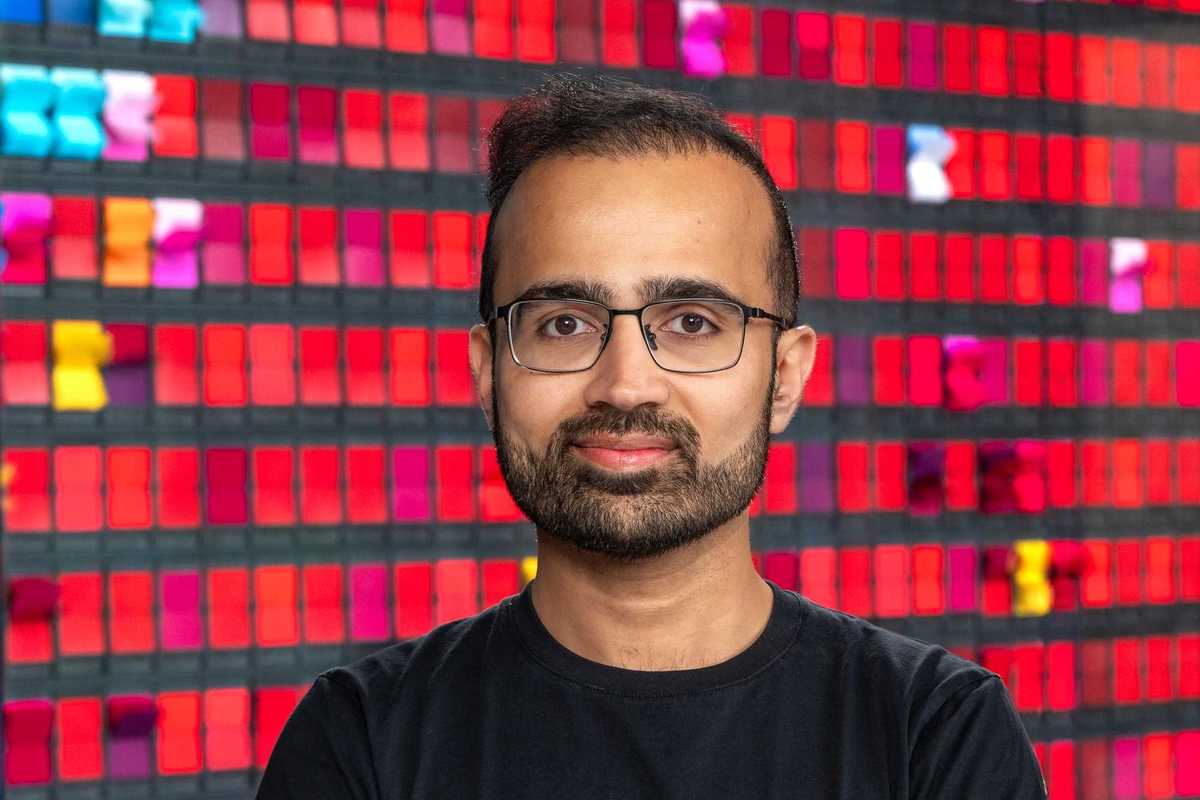
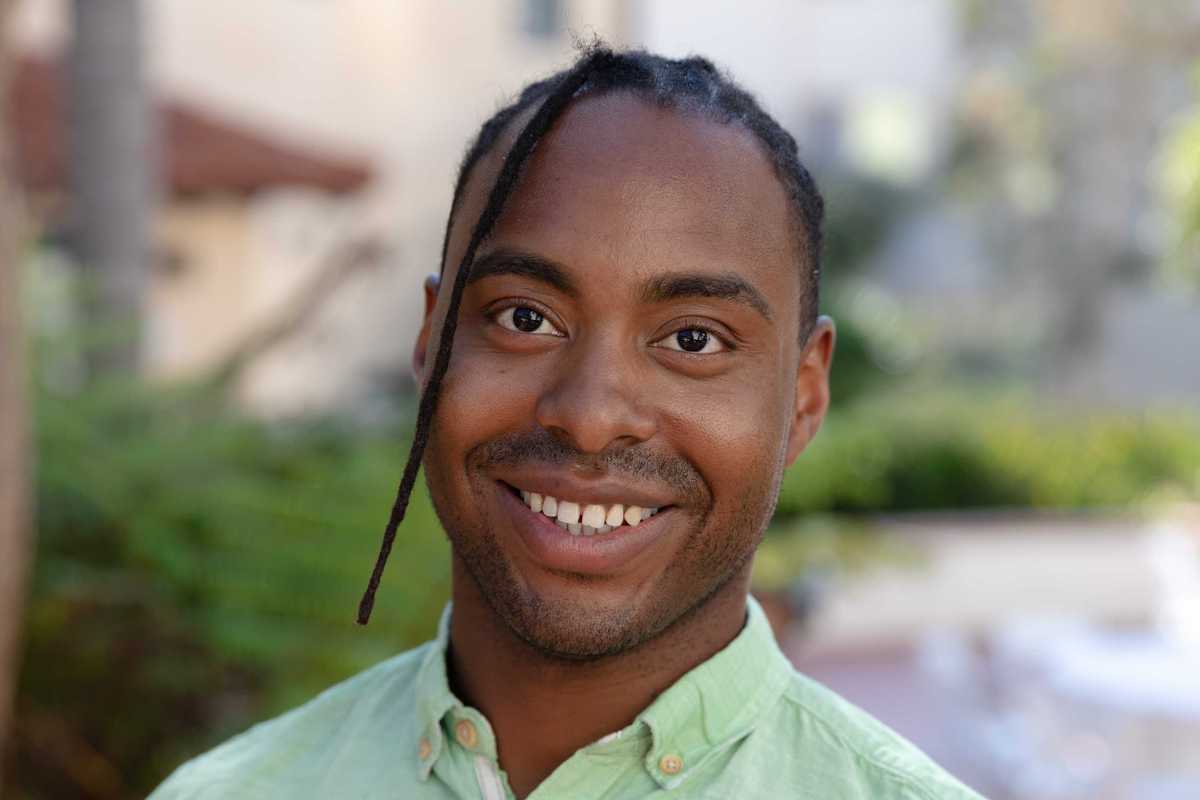
A team from UH has published two breakthrough studies that could help cut costs and boost efficiency in carbon capture. Photo courtesy UH.

A team of researchers at the University of Houston has made two breakthroughs in addressing climate change and potentially reducing the cost of capturing harmful emissions from power plants.

Led by Professor Mim Rahimi at UH’s Cullen College of Engineering, the team released two significant publications that made significant strides relating to carbon capture processes. The first, published in Nature Communications, introduced a membraneless electrochemical process that cuts energy requirements and costs for amine-based carbon dioxide capture during the acid gas sweetening process. Another, featured on the cover of ES&T Engineering, demonstrated a vanadium redox flow system capable of both capturing carbon and storing renewable energy.

“These publications reflect our group’s commitment to fundamental electrochemical innovation and real-world applicability,” Rahimi said in a news release. “From membraneless systems to scalable flow systems, we’re charting pathways to decarbonize hard-to-abate sectors and support the transition to a low-carbon economy.”

According to the researchers, the “A Membraneless Electrochemically Mediated Amine Regeneration for Carbon Capture” research paper marked the beginning of the team’s first focus. The research examined the replacement of costly ion-exchange membranes with gas diffusion electrodes. They found that the membranes were the most expensive part of the system, and they were also a major cause of performance issues and high maintenance costs.

The researchers achieved more than 90 percent CO2 removal (nearly 50 percent more than traditional approaches) by engineering the gas diffusion electrodes. According to PhD student and co-author of the paper Ahmad Hassan, the capture costs approximately $70 per metric ton of CO2, which is competitive with other innovative scrubbing techniques.

“By removing the membrane and the associated hardware, we’ve streamlined the EMAR workflow and dramatically cut energy use,” Hassan said in the news release. “This opens the door to retrofitting existing industrial exhaust systems with a compact, low-cost carbon capture module.”

The second breakthrough, published by PhD student Mohsen Afshari, displayed a reversible flow battery architecture that absorbs CO2 during charging and releases it upon discharge. The results suggested that the technology could potentially provide carbon removal and grid balancing when used with intermittent renewables, such as solar or wind power.

“Integrating carbon capture directly into a redox flow battery lets us tackle two challenges in one device,” Afshari said in the release. “Our front-cover feature highlights its potential to smooth out renewable generation while sequestering CO2.”

---

This article originally appeared on our sister site, EnergyCapitalHTX.com.

Vicki Hollub, president and CEO of Occidental, said the company's Stratos DAC project is on track to begin capturing CO2 later this year. Photo via 1pointfive.com

Oxy's $1.3B Texas carbon capture facility on track to​ launch this year

gearing up

Houston-based Occidental Petroleum is gearing up to start removing CO2 from the atmosphere at its $1.3 billion direct air capture (DAC) project in the Midland-Odessa area.

Vicki Hollub, president and CEO of Occidental, said during the company’s recent second-quarter earnings call that the Stratos project — being developed by carbon capture and sequestration subsidiary 1PointFive — is on track to begin capturing CO2 later this year.

“We are immensely proud of the achievements to date and the exceptional record of safety performance as we advance towards commercial startup,” Hollub said of Stratos.

Carbon dioxide captured by Stratos will be stored underground or be used for enhanced oil recovery.

Oxy says Stratos is the world’s largest DAC facility. It’s designed to pull 500,000 metric tons of carbon dioxide from the air and either store it underground or use it for enhanced oil recovery. Enhanced oil recovery extracts oil from unproductive reservoirs.

Most of the carbon credits that’ll be generated by Stratos through 2030 have already been sold to organizations such as Airbus, AT&T, All Nippon Airways, Amazon, the Houston Astros, the Houston Texans, JPMorgan, Microsoft, Palo Alto Networks and TD Bank.

The infrastructure business of investment manager BlackRock has pumped $550 million into Stratos through a joint venture with 1PointFive.

As it gears up to kick off operations at Stratos, Occidental is also in talks with XRG, the energy investment arm of the United Arab Emirates-owned Abu Dhabi National Oil Co., to form a joint venture for the development of a DAC facility in South Texas. Occidental has been awarded up to $650 million from the U.S. Department of Energy to build the South Texas DAC hub.

The South Texas project, to be located on the storied King Ranch, will be close to industrial facilities and energy infrastructure along the Gulf Coast. Initially, the roughly 165-square-mile site is expected to capture 500,000 metric tons of carbon dioxide per year, with the potential to store up to 3 billion metric tons of CO2 per year.

“We believe that carbon capture and DAC, in particular, will be instrumental in shaping the future energy landscape,” Hollub said.

---

This article originally appeared on our sister site, EnergyCapitalHTX.com.

Ad Placement 300x100
Ad Placement 300x600

CultureMap Emails are Awesome

11 Houston researchers named to Rice innovation cohort

top of class

The Liu Idea Lab for Innovation and Entrepreneurship (Lilie) has named 11 students and researchers with breakthrough ideas to its 2026 Rice Innovation Fellows cohort.

The program, first launched in 2022, aims to support Rice Ph.D. students and postdocs in turning their research into real-world ventures. Participants receive $10,000 in translational research funding, co-working space and personalized mentorship.

The eleven 2026 Innovation Fellows are:

Ehsan Aalaei, Bioengineering, Ph.D. 2027

Professor Michael King Laboratory

Aalaei is developing new therapies to prevent the spread of cancer.

Matt Lee, Bioengineering, Ph.D. 2027

Professor Caleb Bashor Laboratory

Lee’s work uses AI to design the genetic instructions for more effective therapies.

Thomas Howlett, Bioengineering, Postdoctoral 2028

Professor Kelsey Swingle Laboratory

Howlett is developing a self-administered, nonhormonal treatment for heavy menstrual bleeding.

Jonathan Montes, Bioengineering, Ph.D. 2025

Professor Jessica Butts Laboratory

Montes and his team are developing a fast-acting, long-lasting nasal spray to relieve chronic and acute anxiety.

Siliang Li, BioSciences, Postdoctoral 2025

Professor Caroline Ajo-Franklin Laboratory

Li is developing noninvasive devices that can quickly monitor gut health signals.

Gina Pizzo, Statistics, Lecturer

Pizzo’s research uses data modeling to forecast crop performance and soil health.

Alex Sadamune, Bioengineering, Ph.D. 2027

Professor Chong Xie Laboratory

Sadamune is working to scale the production of high-precision neural implants.

Jaeho Shin, Chemistry, Postdoctoral 2027

Professor James M. Tour Laboratory

Shin is developing next-generation semiconductor and memory technologies to advance computing and AI.

Will Schmid, Electrical and Computer Engineering, Postdoctoral 2025

Professor Alessandro Alabastri Laboratory

Schmid is developing scalable technologies to recover critical minerals from high-salinity resources.

Khadija Zanna, Electrical and Computer Engineering, Ph.D. 2026

Professor Akane Sano Laboratory

Zanna is building machine learning tools to help companies deploy advanced AI in compliance with complex global regulations.

Ava Zoba, Materials Science and Nano Engineering, Ph.D. 2029

Professor Christina Tringides Laboratory

Zoba is designing implantable devices to improve the monitoring of brain function following tumor-removal surgery.

According to Rice, its Innovation Fellows have gone on to raise over $30 million and join top programs, including The Activate Fellowship, Chain Reaction Innovations Fellowship, the Texas Medical Center’s Cancer Therapeutics Accelerator and the Rice Biotech Launch Pad. Past participants include ventures like Helix Earth Technologies and HEXASpec.

“These fellows aren’t just advancing science — they’re building the future of industry here at Rice,” Kyle Judah, Lilie’s executive director, said in a news release. “Alongside their faculty members, they’re stepping into the uncertainty of turning research into real-world solutions. That commitment is rare, and it’s exactly why Lilie and Rice are proud to stand shoulder-to-shoulder with them and nurture their ambition to take on civilization-scale problems that truly matter.”

Houston startup debuts new drone for first responders

taking flight

Houston-based Paladin Drones has debuted Knighthawk 2.0, its new autonomous, first-responder drone.

The drone aims to strengthen emergency response and protect first responders, the company said in a news release.

“We’re excited to launch Knighthawk 2.0 to help build safer cities and give any city across the world less than a 70-second response time for any emergency,” said Divyaditya Shrivastava, CEO of Paladin.

The Knighthawk 2.0 is built on Paladin’s Drone as a First Responder (DFR) technology. It is equipped with an advanced thermal camera with long-range 5G/LTE connectivity that provides first responders with live, critical aerial awareness before crews reach the ground. The new drone is National Defense Authorization Act-compliant and integrates with Paladin's existing products, Watchtower and Paladin EXT.

Knighthawk 2.0 can log more than 40 minutes of flight time and is faster than its previous model, reaching a reported cruising speed of more than 70 kilometers per hour. It also features more advanced sensors, precision GPS and obstacle avoidance technology, which allows it to operate in a variety of terrains and emergency conditions.

Paladin also announced a partnership with Portuguese drone manufacturer Beyond Vision to integrate its Drone as a First Responder (DFR) technology with Beyond Vision’s NATO-compliant, fully autonomous unmanned aerial systems. Paladin has begun to deploy the Knighthawk 2.0 internationally, including in India and Portugal.

The company raised a $5.2 million seed round in 2024 and another round for an undisclosed amount earlier this year. In 2019, Houston’s Memorial Villages Police Department piloted Paladin’s technology.

According to the company, Paladin wants autonomous drones responding to every 911 call in the U.S. by 2027.

Rice research explores how shopping data could reshape credit scores

houston voices

More than a billion people worldwide can’t access credit cards or loans because they lack a traditional credit score. Without a formal borrowing history, banks often view them as unreliable and risky. To reach these borrowers, lenders have begun experimenting with alternative signals of financial reliability, such as consistent utility or mobile phone payments.

New research from Rice Business builds on that approach. Previous work by assistant professor of marketing Jung Youn Lee showed that everyday data like grocery store receipts can help expand access to credit and support upward mobility. Her latest study extends this insight, using broader consumer spending patterns to explore how alternative credit scores could be created for people with no credit history.

Forthcoming in the Journal of Marketing Research, the study finds that when lenders use data from daily purchases — at grocery, pharmacy, and home improvement stores — credit card approval rates rise. The findings give lenders a powerful new tool to connect the unbanked to credit, laying the foundation for long-term financial security and stronger local economies.

Turning Shopping Habits into Credit Data

To test the impact of retail transaction data on credit card approval rates, the researchers partnered with a Peruvian company that owns both retail businesses and a credit card issuer. In Peru, only 22% of people report borrowing money from a formal financial institution or using a mobile money account.

The team combined three sets of data: credit card applications from the company, loyalty card transactions, and individuals’ credit histories from Peru’s financial regulatory authority. The company’s point-of-sale data included the types of items purchased, how customers paid, and whether they bought sale items.

“The key takeaway is that we can create a new kind of credit score for people who lack traditional credit histories, using their retail shopping behavior to expand access to credit,” Lee says.

The final sample included 46,039 credit card applicants who had received a single credit decision, had no delinquent loans, and made at least one purchase between January 2021 and May 2022. Of these, 62% had a credit history and 38% did not.

Using this data, the researchers built an algorithm that generated credit scores based on retail purchases and predicted repayment behavior in the six months following the application. They then simulated credit card approval decisions.

Retail Scores Boost Approvals, Reduce Defaults

The researchers found that using retail purchase data to build credit scores for people without traditional credit histories significantly increased their chances of approval. Certain shopping behaviors — such as seeking out sale items — were linked to greater reliability as borrowers.

For lenders using a fixed credit score threshold, approval rates rose from 15.5% to 47.8%. Lenders basing decisions on a target loan default rate also saw approvals rise, from 15.6% to 31.3%.

“The key takeaway is that we can create a new kind of credit score for people who lack traditional credit histories, using their retail shopping behavior to expand access to credit,” Lee says. “This approach benefits unbanked applicants regardless of a lender’s specific goals — though the size of the benefit may vary.”

Applicants without credit histories who were approved using the retail-based credit score were also more likely to repay their loans, indicating genuine creditworthiness. Among first-time borrowers, the default rate dropped from 4.74% to 3.31% when lenders incorporated retail data into their decisions and kept approval rates constant.

For applicants with existing credit histories, the opposite was true: approval rates fell slightly, from 87.5% to 84.5%, as the new model more effectively screened out high-risk applicants.

Expanding Access, Managing Risk

The study offers clear takeaways for banks and credit card companies. Lenders who want to approve more applications without taking on too much risk can use parts of the researchers’ model to design their own credit scoring tools based on customers’ shopping habits.

Still, Lee says, the process must be transparent. Consumers should know how their spending data might be used and decide for themselves whether the potential benefits outweigh privacy concerns. That means lenders must clearly communicate how data is collected, stored, and protected—and ensure customers can opt in with informed consent.

Banks should also keep a close eye on first-time borrowers to make sure they’re using credit responsibly. “Proactive customer management is crucial,” Lee says. That might mean starting people off with lower credit limits and raising them gradually as they demonstrate good repayment behavior.

This approach can also discourage people from trying to “game the system” by changing their spending patterns temporarily to boost their retail-based credit score. Lenders can design their models to detect that kind of behavior, too.

The Future of Credit

One risk of using retail data is that lenders might unintentionally reject applicants who would have qualified under traditional criteria — say, because of one unusual purchase. Lee says banks can fine-tune their models to minimize those errors.

She also notes that the same approach could eventually be used for other types of loans, such as mortgages or auto loans. Combined with her earlier research showing that grocery purchase data can predict defaults, the findings strengthen the case that shopping behavior can reliably signal creditworthiness.

“If you tend to buy sale items, you’re more likely to be a good borrower. Or if you often buy healthy food, you’re probably more creditworthy,” Lee explains. “This idea can be applied broadly, but models should still be customized for different situations.”

---

This article originally appeared on Rice Business Wisdom. Written by Deborah Lynn Blumberg

Anderson, Lee, and Yang (2025). “Who Benefits from Alternative Data for Credit Scoring? Evidence from Peru,” Journal of Marketing Research.