The site will manufacture Lilly's first synthetic oral GLP-1 medication and other advanced therapeutics. Photo via gov.texas.gov

Leading pharmaceutical company Eli Lilly broke ground today, Sept. 21, on its $6.5 billion manufacturing site at Houston's Generation Park.

The 236-acre, state-of-the art factory is expected to come online in 2030 and will manufacture Foundayo, the company's first synthetic oral GLP-1 medication, as well as other advanced therapeutics.

"We are thrilled to break ground on our latest ‘medicines made in America’ site in the great state of Texas," David Ricks, Lilly chair and CEO, said in a prepared statement. "This $6.5 billion investment will help change the game for tens of millions of people suffering from overweight, obesity and its consequences like diabetes. We will make and ship Lilly’s latest products from Texas to people here at home and around the world.”

Houston was up against more than 300 locations in the U.S. for the factory, as part of Lilly’s $50 billion investment in domestic medicine production that has launched 10 manufacturing sites since 2020. Lilly first announced Houston had been selected for the site last September.
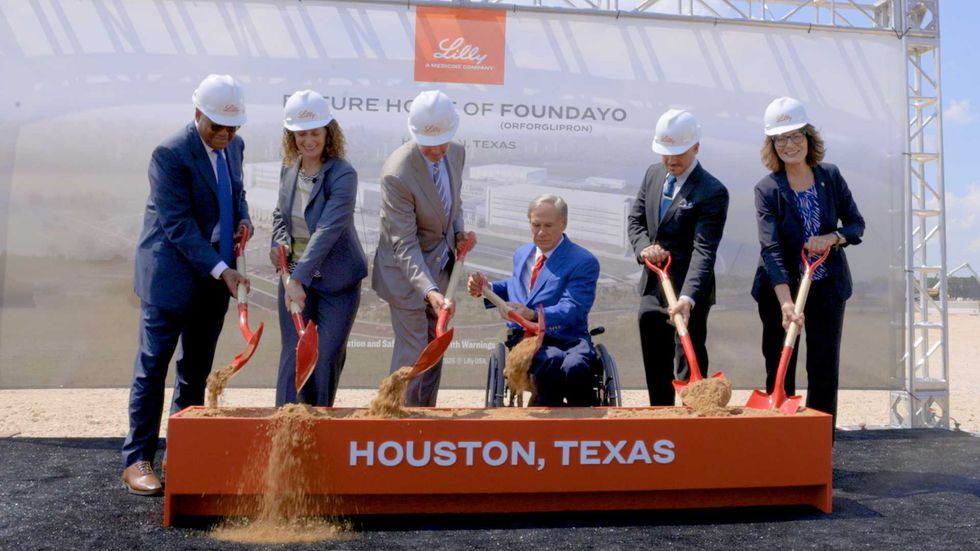
Photo via gov.texas.gov

As Abbott mentioned, the site is expected to create hundreds of jobs, and will hire engineers, scientists, operations personnel and lab technicians once up and running. It will create 4,000 construction jobs while being built.

In an effort to support workforce development, Lilly also announced a $12.5 million commitment to Houston's San Jacinto College in addition to a $2.5 million charitable donation to the San Jacinto College Foundation. The funding will go toward hands-on training, equipment and facilities to support future technicians, operators, maintenance professionals, and other manufacturing talent, according to Lilly. The charitable donation will fund scholarships for students.

"This relationship will build a strong, sustainable talent pipeline for Lilly while creating meaningful, high-demand career opportunities across our region,” Brenda Hellyer, chancellor of San Jacinto College, said in the release.

"When you invest in a place like Houston, you invest in its people first," Edgardo Hernandez, executive vice president and president of Lilly Manufacturing Operations, added. "This facility will run on the talent of this community, powered by our relationship with San Jacinto College. We're hiring across the greater Houston area to help residents build careers close to home."
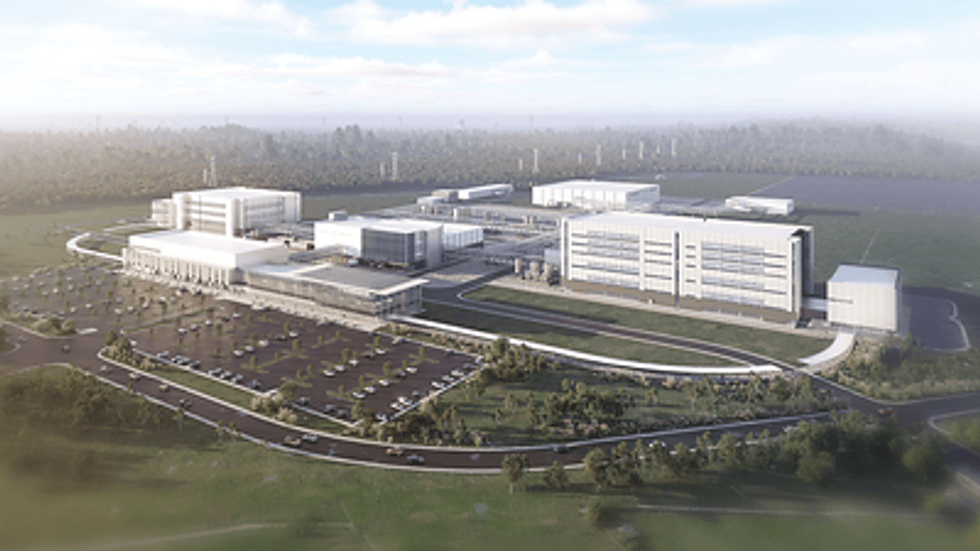
Rendering courtesy Eli Lilly

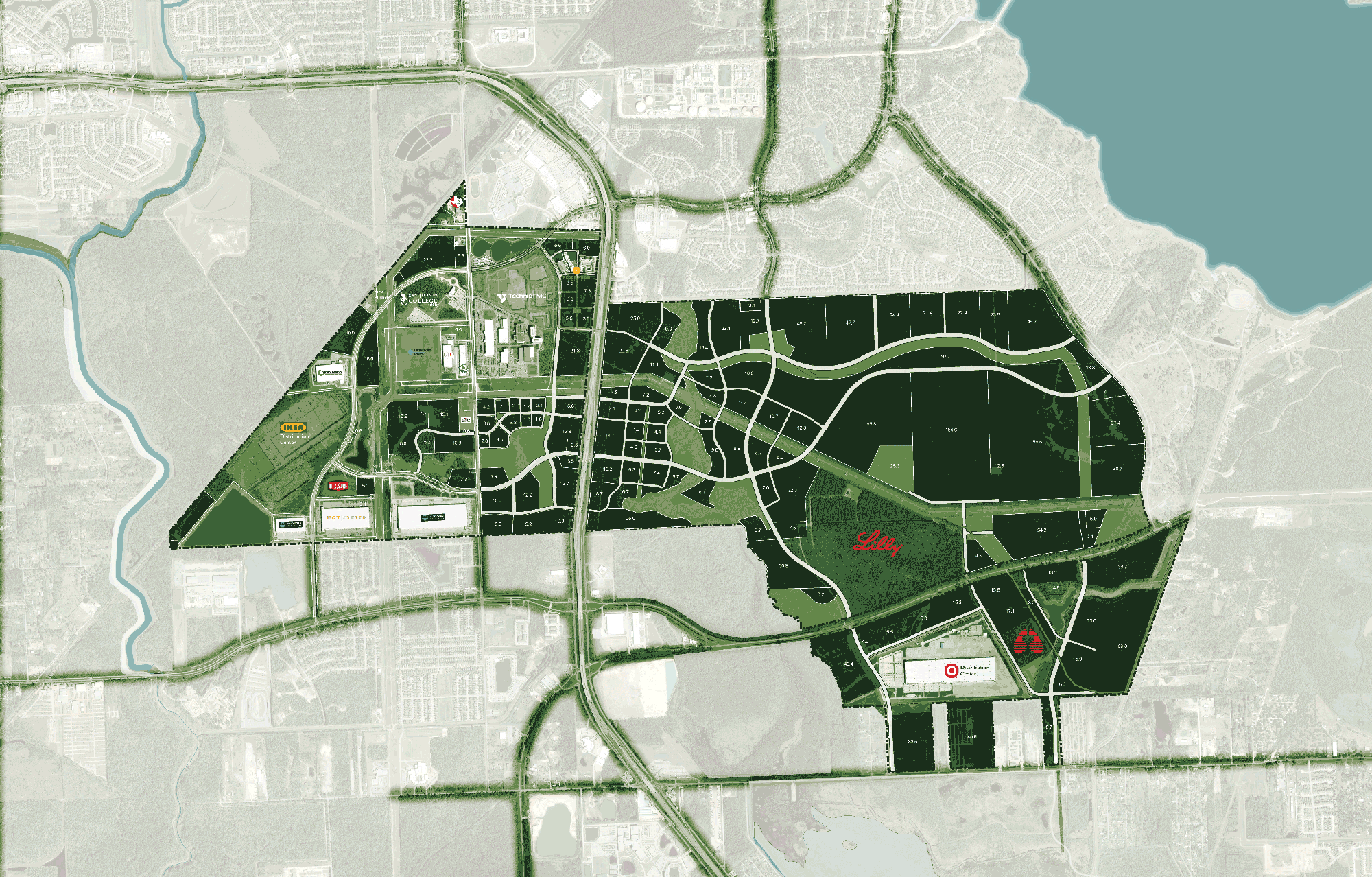
Lilly previously said it chose Generation Park, a 4,300-acre, master-planned commercial district near Lake Houston, because of factors such as financial incentives, access to utilities and transportation and the region’s business-friendly environment. Generation Park is home to campuses for San Jacinto College and Lone Star College.

Since Lilly first announced plans for the site, another fellow pharma giant has made plans to move into Generation Park. Bristol Myers Squibb Co. announced last month that it would build a $2.3 billion factory in the district. The site is expected to manufacture small molecule, biologic and antibody-drug conjugates and will also come online around 2030. Read more here.
The report considered patents, NIH funding, lab space, venture capital investments and the number of jobs. Photo via Pexels

Houston named the No.1 emerging city for biopharma in inaugural report

Biopharma Leader

Houston is ranked No.1 on the first-ever Next 10 U.S. Biopharma Clusters report published by Genetic Engineering & Biotechnology News (GEN).

The report, which ranks the best emerging hubs for life science activities, considered patents, NIH funding, lab space, venture capital investments, and the number of jobs in regions in cities, states and “clusters” across the U.S. GEN touts Houston as the top city for the biopharma industry due to a surge in funding, job creation, medical innovations and startup success.

Here’s how Houston ranked in the report’s different categories;

  • No. 1 for NIH funding with 2,262 awards totaling more than $1.25 billion
  • No. 2 for emerging regions for jobs, with 28,000 jobs
  • No. 2 for lab space, with roughly 8 million square feet in the market
  • No. 6 for patents, with 2,760 patent families

According to BioHouston chairman Jeff Wade, Houston secured half a billion dollars in venture capital funding in 2025 and 2026 to date.

The report called out major biopharm news out of Houston in the last few months, including Bristol Myers Squibb selecting Houston for its $1 billion, 600,000-square-foot manufacturing site and Eli Lily selecting Houston for its $6.5 billion, 236-acre manufacturing site. Both facilities will be located within Generation Park, a 4,300-acre, master-planned commercial district near Lake Houston.

Houston startups like CrossBridge Bio and Duracyte were also mentioned in the report. CrossBridge, which develops antibody-drug conjugates for cancer, was acquired by Eli Lily in April for $300 million. Duracyte, a “living pharmacy” company, was launched out of Rice University’s biotech venture studio RBL LLC this spring and is backed by up to a $45 million Advanced Research Projects Agency for Health (ARPA-H) award.

The startup is working to commercialize its Hybrid Advanced Molecular Manufacturing Regulator (HAMMR) technology, a rechargeable, implantable device that can sense biological signals, monitor tumor environments and adjust therapeutic output in real time.

“There’s a lot of great talent, but the unique advantage that we have is we are able to benefit from a lot of unique clinical infrastructure and clinician insights,” Omid Veiseh, Duracyte co-founder and managing partner of RBL LLC, told GEN. “There are a lot of clinicians here who are eager to partner on investigator-initiated trials.”

The report also touted Houston’s Texas Medical Center, home to the University of Texas MD Anderson Cancer Center and Baylor College of Medicine, and international partnerships like the recently expanded TMC Korea BioBridge.

Other cities to make the list include:

  • No. 2 Minneapolis-St. Paul
  • No. 3 Denver-Boulder
  • No. 4 St. Louis
  • No. 5 Dallas-Fort Worth

States to make the list include:

  • No. 1 Ohio (including Cincinnati, Cleveland, and Columbus)
  • No. 2 Indiana (including Indianapolis)
  • No. 3 Florida (including Jacksonville and Miami-Fort Lauderdale)
  • No. 4 Georgia (including Atlanta and Augusta)
  • No. 5 Wisconsin (including Madison and Kenosha)

Regional state clusters to watch include:

  • Phoenix
  • Pittsburgh
  • Greater Richmond, Virginia
  • South Carolina
  • Utah

See the full report here.

Another pharma giant will build a massive manufacturing facility in Houston. Rendering courtesy Bristol Myers Squibb Co.

Bristol Myers Squibb to build $2.3B Houston pharma manufacturing campus

coming soon

New Jersey-based pharmaceutical giant Bristol Myers Squibb Co. has officially named Houston as the home of its new state-of-the-art manufacturing site.

The 60,000-square-foot facility represents a $2.3 billion investment, according to a news release. It is expected to create 500 skilled jobs and will be located in Houston's Generation Park.

BMS first announced that it was considering Houston among 16 other cities for the facility in May. The new hub will manufacture small molecule, biologic and antibody-drug conjugates and is part of a $40 billion commitment to invest in the United States over five years. Construction is slated to begin next year, with the facility coming online in 2030.

"We're building the domestic manufacturing capabilities needed to deliver the next generation of medicines and support future scientific breakthroughs. Houston and the state of Texas offer the talent, infrastructure, and partnership needed to help bring that vision to life," Christopher Boerner, CEO and board chair of BMS, said in the release.

The new facility will feature a modular, multi-modal design, which will allow the company to reconfigure and add to its manufacturing capabilities over time. BMS says it expects the facility to "(grow) in scale and capability well beyond its opening configuration."

"Our decision to build this state-of-the-art manufacturing campus in Houston, Texas, reflects our confidence in the region’s ability to support a world-class, digitally advanced supply operation,” Karin Shanahan, EVP and chief supply chain and operations officer of BMS, added in the release. “This facility is designed to deliver the speed, quality, and reliability that patients depend on, combining flexible, modular manufacturing with advanced digital capabilities to ensure consistent supply across multiple modalities. It strengthens our ability to operate with resilience and positions us to reliably deliver medicines to patients today while adapting future demands.”

Texas Gov. Greg Abbott shared that the state has granted BMS a $4.89 million Texas Enterprise Fund (TEF) grant for the project. TEF grants, administered by the Texas Economic Development & Tourism Office, support business relocation or expansion projects that create "new, good-paying jobs in the community and attract significant new capital investment to the state." The development is also a qualified project under the Texas Jobs, Energy, Technology, and Innovation (JETI) program.

“Texas is a global hub for life sciences, where today’s innovations shape the future of healthcare,” Abbott said in a news release. “This $2.3 billion investment by Bristol Myers Squibb in the dynamic biotech ecosystem in Houston is a testament to the depth of our skilled workforce and the pipeline of talent coming through our nation-leading technical colleges and research universities. With lower operating costs and easy access to markets across the U.S. and the world, Texas drives affordability for consumers.”

"Bristol Myers Squibb’s announcement is a tremendous win for Texas and the Houston region, further reinforcing our position as a premier destination for life sciences and advanced manufacturing,” added Greater Houston Partnership President and CEO Steve Kean.

Last fall, Eli Lilly and Co. selected Generation Park, a 4,300-acre, master-planned commercial district near Lake Houston, for its $6.5 billion manufacturing plant. More than 300 locations in the U.S. competed for the factory. Read more here.

Bristol Myers Squibb Co. is considering the Generation Park for a new $1 billion manufacturing campus. Rendering courtesy McCord

Pharma giant considers Houston for $1 billion manufacturing campus

in the works

Another pharmaceutical giant is considering Houston’s Generation Park for a manufacturing hub.

According to a recent filing with the Texas Jobs, Energy, Technology and Innovation (JETI) program, Bristol Myers Squibb Co. is considering the northeast Houston management district for a new $1 billion multi-modal pharmaceutical manufacturing campus.

If approved, the campus, known as Project Argonaut, could create 489 jobs in Texas by 2031. Jobs would include operations technicians, engineering roles, administrative and management roles, production specialists, maintenance support, and quality control/assurance. The company predicts annual average wages for these positions to be around $96,000, according to the filing.

The project currently includes the 600,000-square-foot facility, but according to the filing, Bristol Myers Squibb “envisions this site growing in scale and capability well beyond its opening configuration."

The Texas JETI program offers companies temporary school property tax limitations in exchange for major capital investment and job creation. E.R. Squibb & Sons LLC applied for a 10-year tax abatement agreement in the Sheldon Independent School District.

The agreement promises a $ 1 billion investment. Construction would begin in 2027 and wrap in 2029.

“The proposed project reflects [Bristol Myers Squibb Co.’s] enduring commitment to bringing innovative medicines to patients and ensuring the long-term supply reliability they depend on,” the filing says. “The proposed project is purpose-built to support and manufacture medicines spanning multiple therapeutic areas and modalities, positioning the site as a long-term launch and commercial campus for decades to come. These medicines will provide therapies to the [Bristol Myers Squibb Co.’s] patients located in markets both nationally and internationally.”

The Fortune 100 company is considering 16 other cities for the new manufacturing facility in the Central and Eastern markets in the U.S. According to the Houston Chronicle, Bristol Myers Squibb Co is still in the “evaluation process” for its potential manufacturing site.

Last fall, Eli Lilly and Co. selected Generation Park for its $6.5 billion manufacturing plant. More than 300 locations in the U.S. competed for the factory. Read more here.

Ad Placement 300x100
Ad Placement 300x600

CultureMap Emails are Awesome

Meet the esteemed judges for the 2026 Houston Innovation Awards

Meet The Judges

Editor's note: Judging is now underway for the 2026 Houston Innovation Awards, and it's time to meet the decision makers.

Our 2026 judging panel comprises past award winners who represent a variety of industries and areas of expertise. They are joined by InnovationMap's interim editor. All are deeply engaged in the Houston innovation ecosystem.

Our judging panel will review all nominee applications submitted across 10 prestigious categories. They will determine the 2026 finalists in all categories, and they will select the winners in all but one category — our people's choice award for Startup of the Year.

The sixth annual Houston Innovation Awards program will be presented in an all-digital format in 2026. We will announce this year's finalists and feature their stories throughout our special editorial series this fall. Then, stay tuned as we reveal the 2026 Houston Innovation Awards winners on InnovationMap.com in mid-November.

Sagar Dalal, Fervo Energy, 2025 Scaleup of the Year

Sagar Dalal

Sagar Dalal serves as chief of staff at Fervo Energy, a company pioneering the commercialization of next-generation geothermal power. In this role, he helps translate the CEO’s vision and priorities into execution, leading cross-functional strategic initiatives that support the company’s growth and operations.

Dalal brings nearly eight years of experience in structural engineering and project management from his time at Thornton Tomasetti and Tesla, where he engineered and built a wide range of infrastructure projects ranging from stadiums to manufacturing facilities. He holds an MBA from Stanford University and an MS in Civil Engineering from Texas A&M University. He is also a licensed professional engineer.

Aaron Fitzgerald, Mars Materials, 2025 Minority-founded Business of the Year

Aaron Fitzgerald

Aaron Fitzgerald is a three-time founder and carbon removal entrepreneur focused on reimagining how we make things. As the CEO of Mars Materials, he leads a team working to commercialize technologies that sequester captured carbon into industrial supply chains.

His vision for a defossilized future is shaped by a unique path through both policy, including a tenure in the United States Senate, and deep carbontech, with fellowships at The Lewis Latimer program, Breakthrough Energy, Prime Coalition, and Carbon 180.

Tatiana Fofanova, Koda Health, 2025 Health Tech Business of the Year

Tatiana Fofonova

Tatiana Fofanova, PhD, is the co-founder and CEO of Koda Health, an AI-enhanced patient decision support platform designed to make advance care planning (ACP) scalable, accessible, and patient-centered for patients with serious illness.

After earning her PhD in Translational Medicine at Baylor College of Medicine, she joined Texas Medical Center (TMC) as a Founder-in-Residence. It was there that she and her co-founders identified one of the most overlooked yet critical gaps in healthcare: the lack of meaningful, accessible advance care planning. Under her leadership, Koda Health now supports over 1 million patients through partnerships with organizations like Cigna, Privia, and Houston Methodist.

Lawson Gow, Greentown Labs, 2025 Incubator/Accelerator of the Year

Lawson Gow currently serves as chief strategy officer for Greentown Labs, which was named Incubator/Accelerator of the Year in the 2025 Houston Innovation Awards. Prior to joining Greentown Labs as Head of Houston in 2025, Gow was as a managing partner at Helium Capital, an investment and advisory firm that aims to support founders across the entire lifecycle of entrepreneurship.

He is also the founder of The Cannon, an innovation-infrastructure provider that operates a growing network of innovation hubs for its community of startups, entrepreneurs, investors, and corporate innovators.

Sarah Hein, March Biosciences, 2025 Female-founded Business of the Year

Sarah Hein

Sarah Hein is the founding CEO of March Biosciences, a clinical-stage cell-therapy company targeting challenging malignancies. Prior to cofounding March Biosciences, she was the founding Entrepreneur in Residence for the Texas Medical Center Innovation Accelerator for Cancer Therapeutics (TMCi ACT).

Formerly, she was a cofounder and the vice president of operations at Courier Therapeutics, a cancer immunotherapy startup acquired by Valo Health. She was also director of research at Resonant Therapeutics, an antibody therapeutics platform technology company. She began at Mercury Fund as a Venture Fellow directly after graduating with her PhD in Molecular Biology from Baylor College of Medicine.

Tanu Jain, FlowCare, 2025 Startup of the Year

Tanu Jain

Tanu Jain is a product executive, entrepreneur, founder and CEO of FlowCare, and registered nurse with a track record of building products from zero to global scale. She previously led product at BioIQ before founding FlowCare, a Houston-based period care infrastructure platform making period care a standard in every restroom. In under 16 months, FlowCare has signed deployed across four enterprise customers and impacted more than 1.5 million women.

FlowCare was named Startup of the Year at the 2025 Houston Innovation Awards, and Jain has been recognized with additional honors including the SDG Super Changemaker – Pewter — at the Global Sustainability Awards 2026.

Prabhdeep "Prab" Sekhon, Eclipse Energy, 2025 Energy Transition Business of the Year

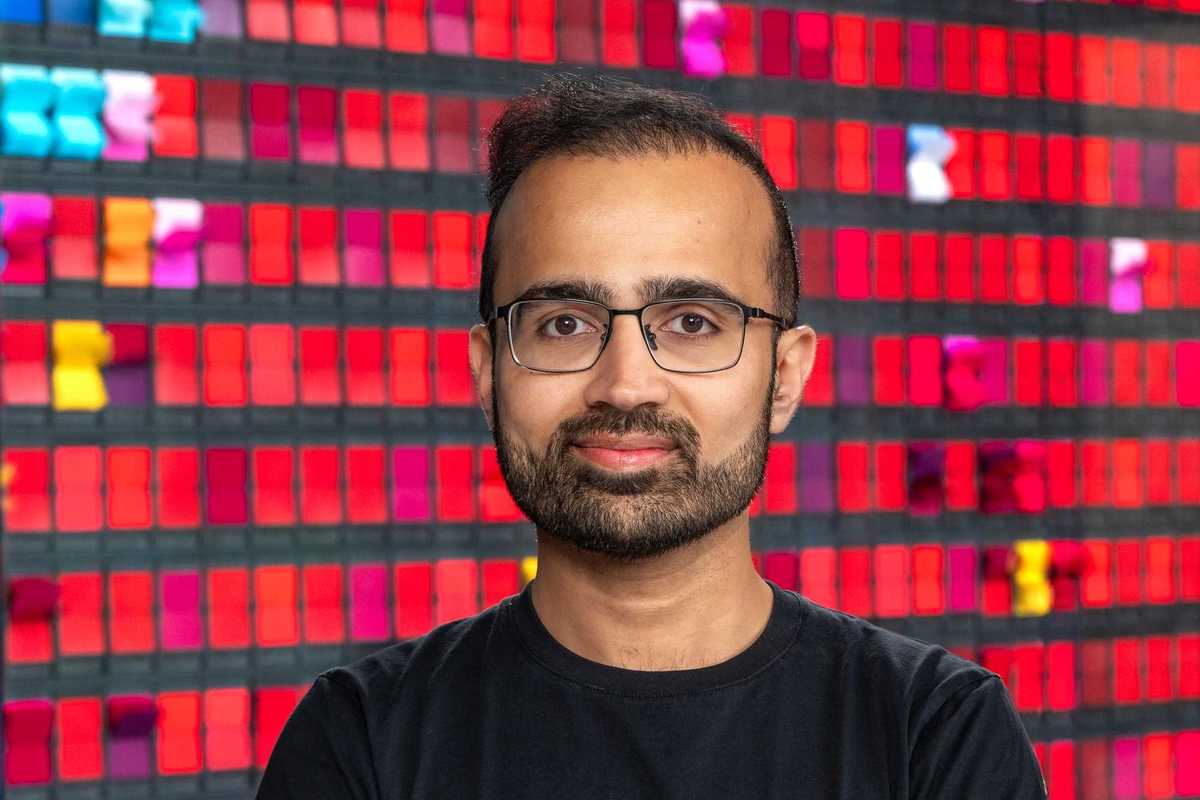
Prabhdeep Singh Sekhon

Prabhdeep Singh Sekhon is CEO of Eclipse Energy, an energy technology company transforming depleted oil fields into low-cost, sustainable hydrogen resources through subsurface biotechnology. He brings nearly two decades of global energy experience spanning climate technology, venture capital, private equity, and multi-billion-dollar energy projects across five continents.

Previously, he held leadership roles at NextEra Energy Resources and Hess Corporation. He is also a founder and managing director of GreenLite Resources and a founding member of Cotogna Sports Group. He holds an MBA from Wharton, a Masters in Engineering from Texas A&M, and a BS from the University of Calgary.

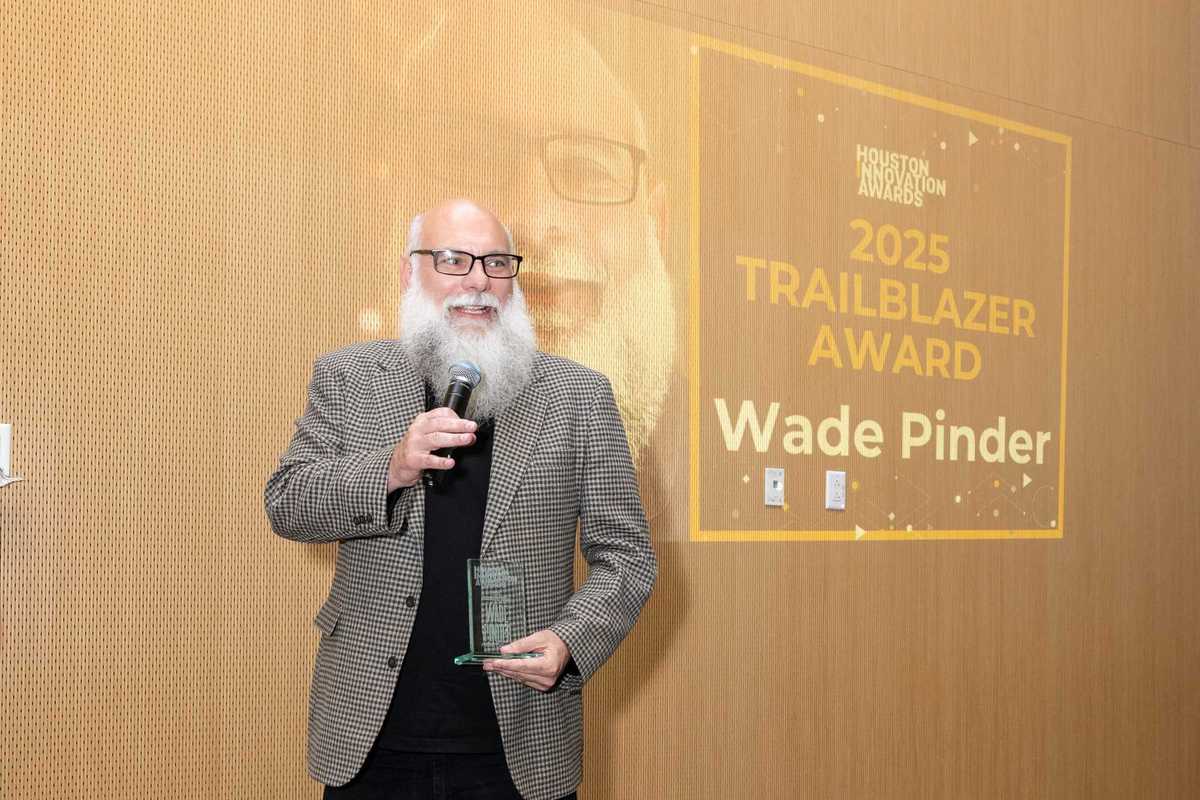
Wade Pinder, Product Houston, 2025 Trailblazer Award Winner

Wade Pinder thinks of himself as an "ecosystem wayseeker," helping founders and builders in and around Houston find their footing, understand the landscape, and move through uncertainty with more clarity. Through Product Houston, he works at the intersection of product strategy, founder support, ecosystem mapping, and community-building, with a particular focus on helping people show up in the right rooms before they feel fully ready.

His background includes years in product management at Blinds.com and Home Depot, along with founding and leading the Houston Product Community for six years. He was recognized by as Mentor of the Year in the 2023 Houston Innovation Awards and received the Trailblazer Award in 2025.

Laura Furr Mericas, Interim Editor, InnovationMap

Laura Furr Mericas is interim editor for InnovatonMap.com and EnergyCapitalHTX.com. She is a longtime contributor to both sites and has reported on Houston's innovation ecosystem for InnovationMap since 2020. Previously, she served as web editor and data reporter for Houston Business Journal.

Report: Income for top 1 percent earners in Texas has surged in 2026

money matters

In a state where local billionaires are wealthier than they've ever been, high-earning Texans need to make $73,000 more than they did a year ago if they want to be among the top 1 percent of earners, a new report has revealed.

SmartAsset's study analyzed income thresholds for the top 1, 5, and 10 percent of earners in all 50 states and the District of Columbia, using 2022 IRS data for individual tax return filers (the most recent year available), adjusted to 2026 dollars.

Texas has the 11th highest income threshold, with residents needing to make a minimum of $817,158 to be considered among the top 1 percent of earners statewide. In 2025, Texans needed to make about $744,000 to be among the top 1 percent.

For comparison, residents living in the nation's capital must make at least $1.16 million to qualify as top 1 percent earners. The District of Columbia led the nation with the highest income threshold to be a top earner.

To be considered among the top 5 percent of earners in Texas, a resident would need to make $312,671. The income threshold to be considered among the top 10 percent is $210,609.

SmartAsset additionally found that 128,130 Texas residents qualified as top 1 percent earners in 2022. Nationally, the report estimated that fewer than 2 million households earn enough to be considered among the top 1 percent of earners nationwide, but 23 million households rank among the top 10 percent.

"In some places, households can enter the top 1 percent at income levels that fall well below the threshold elsewhere, reflecting an uneven landscape of wages and wealth," the report said.

A separate SmartAsset study that tracked the upper and lower thresholds for middle class households found Houston residents need to make anywhere from $42,907 to $128,722 to maintain their middle class status.

The top 10 states with the highest thresholds to be considered in the top 1 percent of earners in the U.S. are:

  • No. 1 – District of Columbia ($1,156,664)
  • No. 2 – Connecticut ($1,147,898)
  • No. 3 – Massachusetts ($1,006,921)
  • No. 4 – California ($987,325)
  • No. 5– New Jersey ($969,976)
  • No. 6 – New York ($959,562)
  • No. 7 – Florida ($956,449)
  • No. 8 – Washington ($903,303)
  • No. 9 – Colorado ($828,772)
  • No. 10 – Wyoming ($819,014)
---

This article originally appeared on CultureMap.com.

Here’s where wages grew the most in Houston since 2021, according to new report

pay raise

Bolstered by a thriving manufacturing sector, Waller County—the country’s second-fastest-growing county—leads all Houston-area counties for the growth of pay from 2021 to 2026, according to a new study.

The study, conducted by personal finance website SmartAsset, found average pay in Waller County rose 48 percent from 2021 to 2026. The county’s average weekly pay climbed from $891 to $1,323 during that period.

Manufacturing ranks as the No. 1 employment sector in Waller County, accounting for about 4,500 workers, according to Executive Pulse. Those workers earn an average pay of $77,442 per year.

Waller County powers up its manufacturing hub

Waller County’s manufacturing economy keeps expanding, almost certainly contributing to the 48 percent spike in average pay from 2021 to 2026.

Grundfos, the world’s largest producer of water pumps, broke ground in June on a manufacturing plant at its Brookshire campus. The Danish company’s U.S. headquarters is in Brookshire. In conjunction with the groundbreaking, Grundfos opened the Grundfos Academy Americas training center.

The new 143,000-square-foot facility will make pump systems and water technology, primarily for water utilities and commercial real estate landlords.

Grundfos expects construction to be completed by Q3 2027, with the first production lines planned to start in Q4 of next year.

“Our growing presence in Brookshire reflects both our confidence in the U.S. market and our long‑term commitment to investing where our customers and partners need us most,” Grundfos CEO Poul Due Jensen said in a release.

Another manufacturer, TMEIC Corporation America, recently opened its third U.S. plant at Twinwood Business Park in Brookshire. The 280,000-square-foot facility, which eventually might employ 500 people, makes uninterruptible power supply units and medium-voltage power drives. The $65 million plant includes a customer training center and tech development labs.

The Twinwood facility is the largest of TMEIC’s 13 factories around the world.

TMEIC’s two other U.S. manufacturing plants are in the Houston area. The company’s North American headquarters is in the Houston Energy Corridor.

Perhaps the biggest recent manufacturing prize for Waller County: Austin-based electric vehicle maker Tesla’s new 1.65 million-square-foot factory at Brookshire’s Empire West Industrial Park. The $200 million plant, expected to employ up to 1,500 people by 2028, produces utility-scale batteries for energy storage.

Other major manufacturers in Waller County include Daikin North America and Igloo.

Pay growth around the region

Here’s a rundown of 2021-26 pay growth in the Houston metro’s eight other counties, according to SmartAsset.

  • Austin County — 42 percent
  • Chambers County — 37 percent
  • Harris County — 33 percent
  • Liberty County — 31 percent
  • Montgomery County — 29 percent
  • Fort Bend County — 28 percent
  • Galveston County — 26 percent
  • Brazoria County — 23 percent

Statewide, Dickens County, outside of Lubbock, saw the most significant growth in wages. According to the study, wages grew by 212 percent over the five years, from $707 per week in 2021 to $2,204 per week in 2026.

Among all Texas counties, Waller was ranked No. 44 on the report.

Small counties in the High Plains and West Texas regions saw the largest percent changes in average weekly wage, according to the report. See the full findings here.