


Three panelists representing the real estate, banking, and health care industries weighed in on innovation in Houston. Photo via Greater Houston Partnership/Facebook

Something has shifted in Houston, and businesses across industries — whether it be real estate, health care, or energy — are focused on innovation, emerging technologies, and the role of startups within the business community.

At the Greater Houston Partnership's annual Economic Outlook on December 5, three panelists from various industries gathered to discuss some of the biggest issues in Houston — from the multifamily real estate market to what the local workforce needs. The panel was moderated by Eddie Robinson, the morning news anchor for Houston Public Radio, and the panelists did weigh in a few issues affecting innovation.

Missed the talk? Here are a few overheard moments from the discussion.

"Houston allows you to do what you do. And you don't get that in other places."
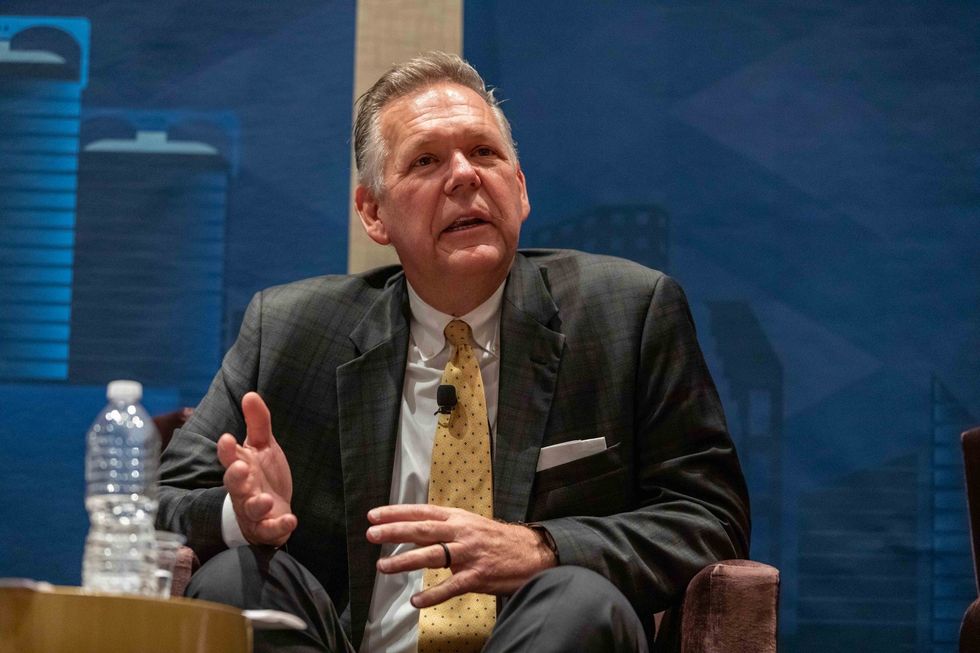
Photo via Greater Houston Partnership/Facebook

Bradley R. Freels, chairman of Midway Cos. Freels says, while the city's been overshadowed by other Texas cities for innovation and tech — and even by its large oil and gas industry presence, the city is becoming a great place for startups. "This is a great place to do business because it's easy to get started in business here. I think it's just over shadowed to some degree," he says, adding later that, "the initiative around the innovation corridor is real."

"Houston is unique, in my opinion, in how open and welcoming it is."
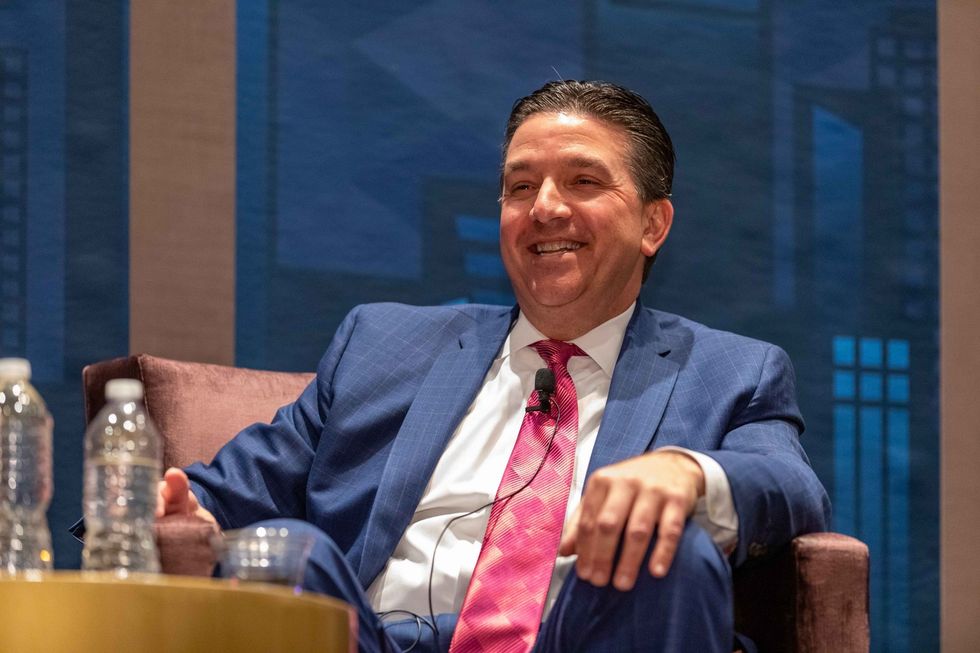
Photo via Greater Houston Partnership/Facebook

— David Milich, CEO of UnitedHealthcare - Texas & Oklahoma. Building off the panelists point that Houston is a spirited, can-do city, Milich specifies that it's the collaboration between people in Houston that sets the city apart. "When we present ourselves with something to get done, we generally get it down."

"We're realizing that the economy is shifting. As we move forward in the 21st century, our entire workforce needs to be tech fluent."
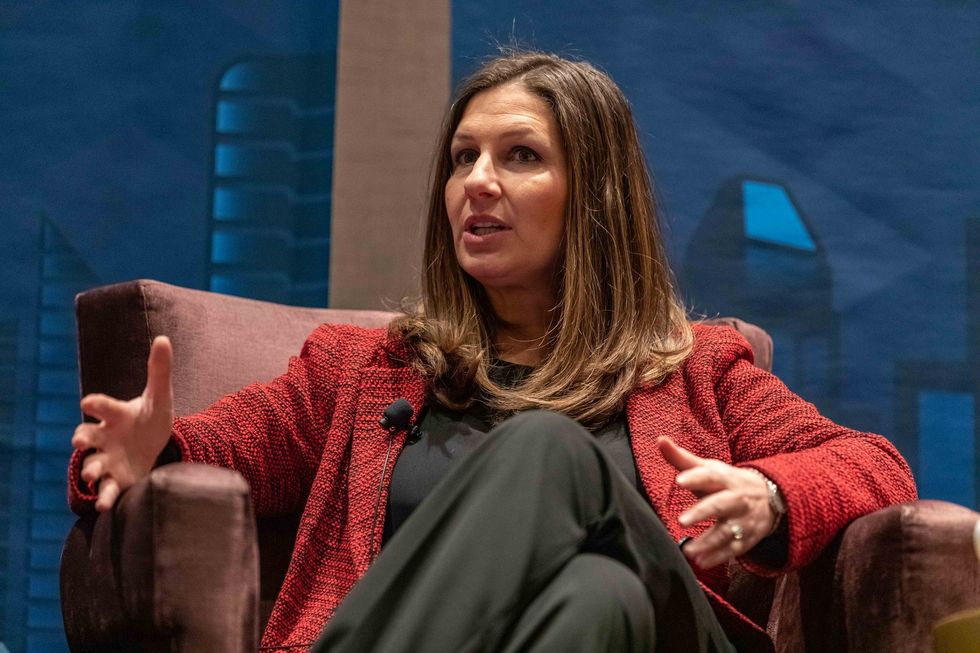
Photo via Greater Houston Partnership/Facebook

Nataly Marks, managing director and region manager at JPMorgan Chase. When asked about jobs needed in Houston, Marks specified technology positions. Moreover, JPMorgan Chase is emphasizing getting the entire staff proficient in the latest tech resources.

Ad Placement 300x100
Ad Placement 300x600

CultureMap Emails are Awesome

Baylor College of Medicine names Minnesota med school dean as new president, CEO ​

new leader

Dr. Jakub Tolar, dean of the University of Minnesota Medical School, is taking over as president, CEO and executive dean of Houston’s Baylor College of Medicine on July 1.

Tolar—who’s also vice president for clinical affairs at the University of Minnesota and a university professor—will succeed Dr. Paul Klotman as head of BCM. Klotman is retiring June 30 after leading Texas’ top-ranked medical school since 2010.

In tandem with medical facilities such as Baylor St. Luke’s Medical Center and Texas Children’s Hospital, Baylor trains nearly half of the doctors who work at Texas Medical Center. In addition, Baylor is home to the Dan L Duncan Comprehensive Cancer Center and the Texas Heart Institute.

The hunt for a new leader at Baylor yielded 179 candidates. The medical school’s search firm interviewed 44 candidates, and the pool was narrowed to 10 contenders who were interviewed by the Board of Trustees’ search committee. The full board then interviewed the four finalists, including Tolar.

Greg Brenneman, chair of Baylor’s board and the search committee, says Tolar is “highly accomplished” in the core elements of the medical school’s mission: research, patient care, education and community service.

“Baylor is phenomenal. Baylor is a superpower in academic medicine,” Tolar, a native of the Czech Republic, says in a YouTube video filmed at the medical school. “And everything comes together here because science saves lives. That is the superpower.”

Tolar’s medical specialties include pediatric blood and bone marrow transplants. His research, which he’ll continue at Baylor, focuses on developing cellular therapies for rare genetic disorders. In the research arena, he’s known for his care of patients with recessive dystrophic epidermolysis bullosa, a severe genetic skin disorder.

In a news release, Tolar praises Baylor’s “achievements and foundation,” as well as the school’s potential to advance medicine and health care in “new and impactful ways.”

The Baylor College of Medicine employs more than 9,300 full-time faculty and staff. For the 2025-26 academic year, nearly 1,800 students are enrolled in the School of Medicine, Graduate School of Biomedical Sciences and School of Health Professions. Its M.D. program operates campuses in Houston and Temple.

In the fiscal year that ended June 30, 2024, Baylor recorded $2.72 billion in operating revenue and $2.76 billion in operating expenses.

The college was founded in 1900 in Dallas and relocated to Houston in 1943. It was affiliated with Baylor University in Waco from 1903 to 1969.

​Planned UT Austin med center, anchored by MD Anderson, gets $100M gift​

med funding

The University of Texas at Austin’s planned multibillion-dollar medical center, which will include a hospital run by Houston’s University of Texas MD Anderson Cancer Center, just received a $100 million boost from a billionaire husband-and-wife duo.

Tench Coxe, a former venture capitalist who’s a major shareholder in chipmaking giant Nvidia, and Simone Coxe, co-founder and former CEO of the Blanc & Otus PR firm, contributed the $100 million—one of the largest gifts in UT history. The Coxes live in Austin.

“Great medical care changes lives,” says Simone Coxe, “and we want more people to have access to it.”

The University of Texas System announced the medical center project in 2023 and cited an estimated price tag of $2.5 billion. UT initially said the medical center would be built on the site of the Frank Erwin Center, a sports and entertainment venue on the UT Austin campus that was demolished in 2024. The 20-acre site, north of downtown and the state Capitol, is near Dell Seton Medical Center, UT Dell Medical School and UT Health Austin.

Now, UT officials are considering a bigger, still-unidentified site near the Domain mixed-use district in North Austin, although they haven’t ruled out the Erwin Center site. The Domain development is near St. David’s North Medical Center.

As originally planned, the medical center would house a cancer center built and operated by MD Anderson and a specialty hospital built and operated by UT Austin. Construction on the two hospitals is scheduled to start this year and be completed in 2030. According to a 2025 bid notice for contractors, each hospital is expected to encompass about 1.5 million square feet, meaning the medical center would span about 3 million square feet.

Features of the MD Anderson hospital will include:

  • Inpatient care
  • Outpatient clinics
  • Surgery suites
  • Radiation, chemotherapy, cell, and proton treatments
  • Diagnostic imaging
  • Clinical drug trials

UT says the new medical center will fuse the university’s academic and research capabilities with the medical and research capabilities of MD Anderson and Dell Medical School.

UT officials say priorities for spending the Coxes’ gift include:

  • Recruiting world-class medical professionals and scientists
  • Supporting construction
  • Investing in technology
  • Expanding community programs that promote healthy living and access to care

Tench says the opportunity to contribute to building an institution from the ground up helped prompt the donation. He and others say that thanks to MD Anderson’s participation, the medical center will bring world-renowned cancer care to the Austin area.

“We have a close friend who had to travel to Houston for care she should have been able to get here at home. … Supporting the vision for the UT medical center is exactly the opportunity Austin needed,” he says.

The rate of patients who leave the Austin area to seek care for serious medical issues runs as high as 25 percent, according to UT.