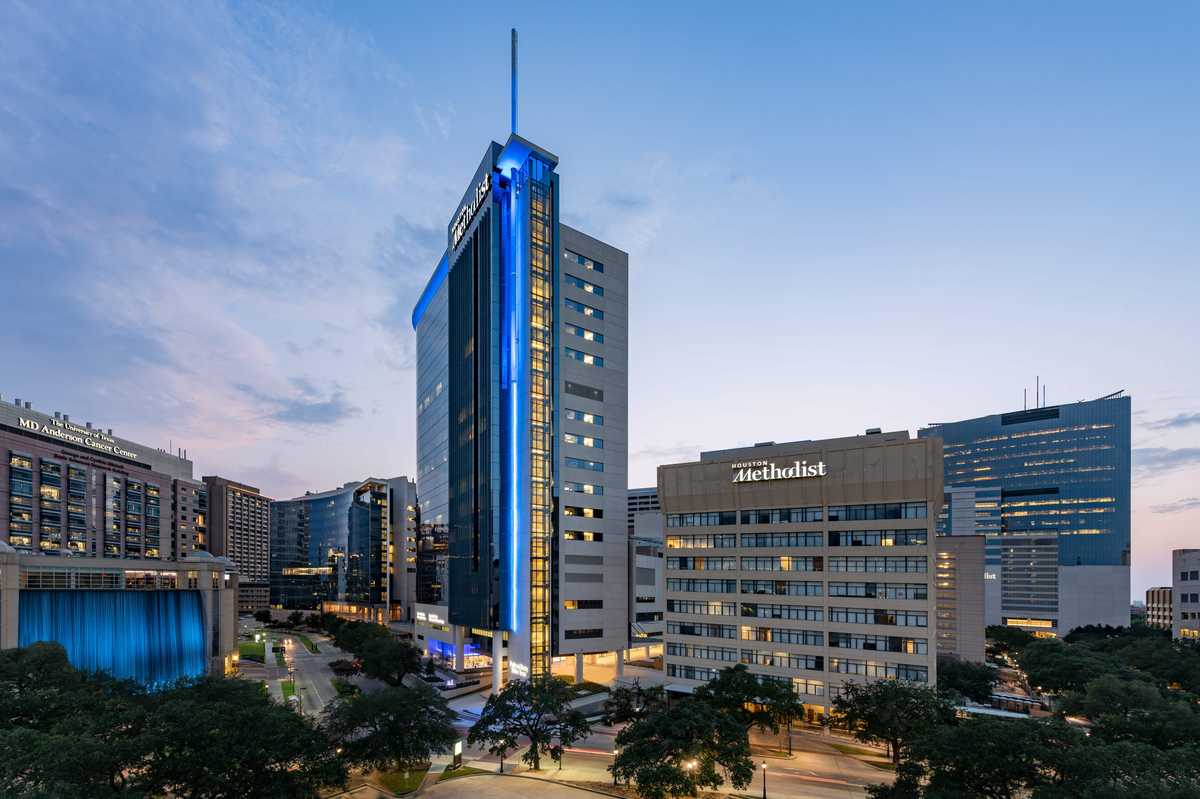
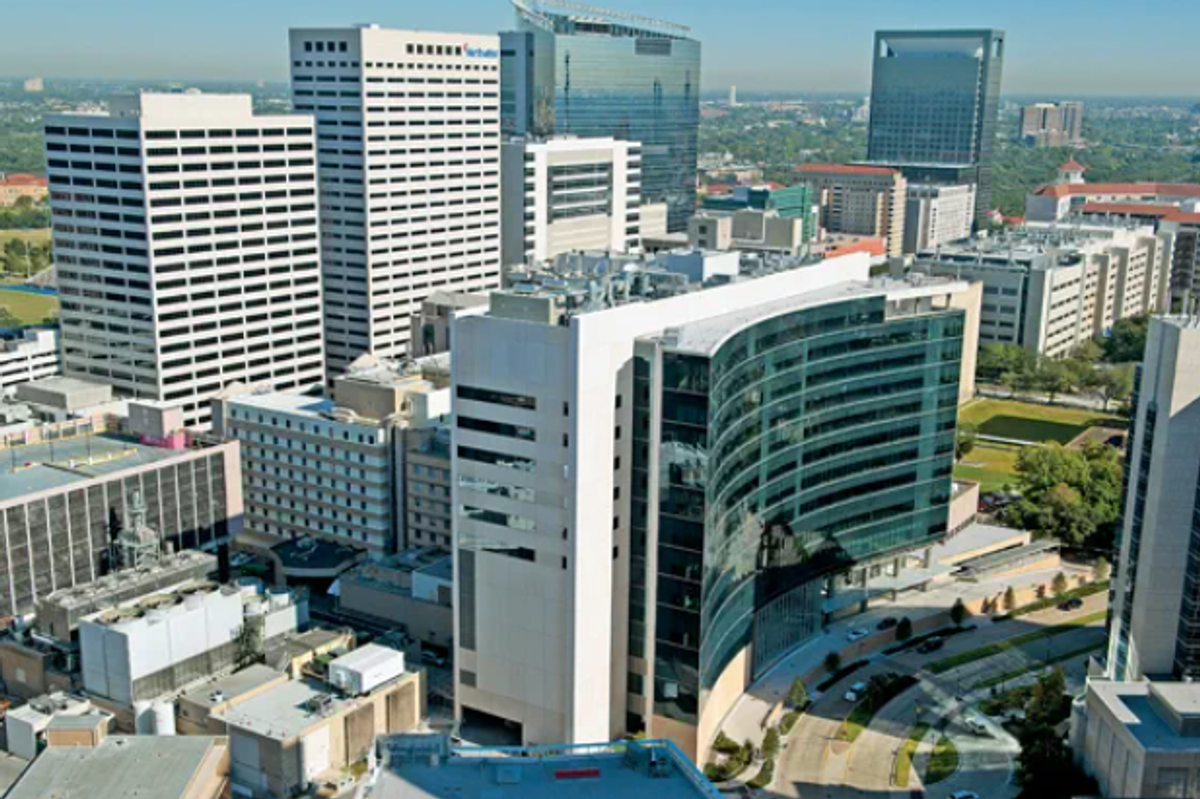
Houston Methodist is once again the top hospital in Texas. Photo via Houston Methodist

U.S. News ranks Houston hospital No. 1 in Texas for 14th year in a row

Topping the Charts

U.S. News & World Report has released its 2025 rankings of the best hospitals in Texas, and they prove that Houston is in good hands.

The esteemed Houston Methodist Hospital was rated the No. 1 best hospital in Texas for the 14th consecutive year, and the No. 1 hospital in the metro area. Eleven more Houston-area hospitals earned spots among the statewide top 35.

U.S. News annually evaluates 581 Texas hospitals to determine which meet the publication's rigorous standards and offer the best care for patients. Hospitals are also ranked among 15 specialties, including cancer, cardiology, heart and vascular surgery, obstetrics and gynecology, orthopedics, psychiatry, rehabilitation, diabetes and endocrinology, and more.

Houston Methodist also appeared on U.S. News' prestigious list of Honor Roll hospitals, consisting of 20 medical centers that are deemed the "best of the best" hospitals in the nation. No other Texas hospitals made the list, further proving that Houston Methodist takes exceptional care of its patients.

"This is a tremendous achievement for our physicians and employees who dedicate themselves every day to our patients," said Marc Boom, M.D., president and CEO of Houston Methodist, in a press release. "We take pride in these national recognitions but more importantly, these accolades reflect our unparalleled commitment to keeping our patients at the center of everything we do."

Houston Methodist earned several top-20 rankings across 11 of the 15 total specialties nationwide. It also earned national recognition for having the 7th best gastroenterology/GI surgery program, the 8th best pulmonology and lung surgery programs, and the 10th best diabetes and endocrinology programs in the country.

Elsewhere in Houston, The University of Texas MD Anderson Cancer Center ranked as the No. 1 best cancer hospital in the nation for the 11th year in a row.

"We are honored to again be ranked as the nation’s top hospital for cancer care – a recognition that reaffirms our commitment to our shared mission to end cancer," said MD Anderson president Peter WT Pisters, M.D., in a release. "We are grateful to every one of our teammates, trainees, students, donors, volunteers, advocates and patients, whose unwavering dedication make it possible for MD Anderson to deliver outstanding patient care."

Other top-performing Houston-area hospitals that ranked among the best in Texas include:

  • No. 4 – Baylor St. Luke's Medical Center
  • No. 5 – Memorial Hermann Greater Heights Hospital
  • No. 6 – Memorial Hermann Hospital
  • No. 8 – Houston Methodist Sugar Land Hospital
  • No. 9 – Houston Methodist Willowbrook Hospital
  • No. 12 – Houston Methodist The Woodlands Hospital
  • No. 13 – Memorial Hermann Memorial City Medical Center (tied with Baylor Scott and White All Saints Medical Center - Fort Worth)
  • No. 21 – Houston Methdodist Baytown Hospital (tied with Methodist Hospital - Stone Oak in San Antonio and Texas Health Harris Methodist Hospital Fort Worth)
  • No. 25 – HCA Houston Healthcare Clear Lake in Webster (tied with St. Luke's Health - The Woodlands Hospital, Baylor Scott and White Medical Center - Round Rock-Lakeway, and Texas Health Presbyterian Hospital Plano)
  • No. 29 – University of Texas Medical Branch in Galveston (tied with Medical City Plano)
---

This article originally appeared on CultureMap.com.

Houston Methodist stood out yet again on an annual best hospitals report, but several other Houston institutions were recognized as well. Courtesy of Methodist Hospital/Facebook

New report recognizes best hospitals in Houston

better than all the rest

Hospitals across Houston were ranked by their patient care, patient safety, outcomes, nursing, advanced technology and reputation in an annual report that identifies the top medical facilities in the country.

U.S. News & World Report released its 31st annual best hospital rankings this week, which included both adult and children's hospital tracks across several categories. The report released both overall and local rankings after evaluating over 4,500 medical centers nationwide in 16 specialties, and 134 hospitals were ranked in at least one specialty.

For the ninth year in a row, the top hospital in Houston and Texas, according to the report, is Houston Methodist, which ranked at No. 20 nationally and made the report's Honor Roll.

"Our U.S. News rankings are especially meaningful right now as this has been an exceptionally difficult time for our health care workers," says Marc Boom, M.D., president and CEO of Houston Methodist, in a news release. "We have always served our community by providing exceptional care — during the COVID-19 pandemic and before. It's a true testament to our commitment to being unparalleled."

Houston Methodist Sugar Land Hospital tied for No. 4 in Houston and No. 6 (three-way tie) in Texas. Additionally, the hospital was recognized on the top lists for 11 specialties:

  • No. 12 for cardiology/heart surgery
  • No. 13 for orthopedics
  • No. 14 for gastroenterology/GI surgery
  • No. 17 for cancer
  • No. 19 (tie) for nephrology
  • No. 20 for pulmonology and lung surgery
  • No. 23 for neurology/neurosurgery
  • No. 26 for geriatrics
  • No. 26 (tie) for gynecology
  • No. 28 for diabetes and endocrinology
  • No. 49 for ear, nose and throat

The second-best hospital in Houston on this year's ranking was Baylor St. Luke's Medical Center, which was also named the No. 3 hospital in the state.

"At Baylor St. Luke's, we are transforming the way we deliver care for our patients through groundbreaking technologies and a multidisciplinary approach that allows us to give the best possible care to patients and their families," says Doug Lawson, CEO of St. Luke's Health, in a news release. "I praise our dedicated staff and physicians for helping us achieve this recognition."

Baylor St. Luke's also made an appearance across five specialties:

  • No. 17 for cardiology/heart surgery
  • No. 21 for gastroenterology/GI surgery
  • No. 21 for neurology/neurosurgery
  • No. 27 for cancer
  • No. 47 for geriatrics

"This is a great report that confirms the efforts of our partnership at Baylor St. Luke's and our affiliated hospitals to provide unsurpassed care to patients, conduct research that will change lives and train the next generation of physicians", says Dr. Paul Klotman, president, CEO, and executive dean at Baylor College of Medicine. "Baylor St. Luke's high ranking in Texas is in parallel with Baylor College of Medicine being the highest ranked medical school in Texas. Together, we are an outstanding academic medical center and learning health system."

Memorial Hermann - Texas Medical Center came in No. 3 in Houston and No. 5 in Texas. The hospital ranked in one adult specialty and two children's specialties.

  • No. 43 for ear, nose and throat (adult)
  • No. 22 for cardiology/heart surgery (pediatric)
  • No. 31 for neurology/neurosurgery (pediatric)

On the children's hospital track, Houston's Texas Children's Hospital ranked as No. 4 nationally and was recognized in all 10 pediatric specialties, which included:

  • No. 1 for pediatric cardiology/heart surgery
  • No. 2 for pediatric nephrology
  • No. 2 for pediatric neurology/neurosurgery
  • No. 3 for pediatric pulmonology and lung surgery
  • No. 4 for pediatric cancer
  • No. 5 for pediatric diabetes and endocrinology
  • No. 5 for pediatric gastroenterology/GI surgery
  • No. 6 for pediatric urology
  • No. 10 for neonatology
  • No. 15 for pediatric orthopedics

Zooming in on the specific specialties, several other Houston hospitals in addition to these top tier hospitals, secured spots in the top 10 rankings.

University of Texas MD Anderson Cancer Center was ranked No. 1 nationally for adult cancer treatment. Additionally, the hospital made an appearance in six other adult specialties and one pediatric specialty.

  • No. 4 for ear, nose and throat
  • No. 6 for urology
  • No. 14 for gynecology
  • No. 27 for diabetes and endocrinology
  • No. 41 for geriatrics
  • No. 46 for gastroenterology/GI surgery
  • No. 38 for cancer (pediatric)
TIRR Memorial Hermann in Houston ranked No. 3 nationally for rehabilitation.
For all 31 years, The Menninger Clinic has been recognized as a top hospital in the psychiatric speciality. This year, the clinic ranked at No. 9 nationally.

"Our clinical teams provide personalized care with the right blend of art and science. We have pioneered measuring the effectiveness of this treatment, and the results consistently demonstrate that patients sustain their well-being for at least a year after they leave Menninger," says Armando Colombo, president and CEO, in a news release. "Going forward, we will improve access to make it easier for more Texans to access these life-changing results."

Ad Placement 300x100
Ad Placement 300x600

CultureMap Emails are Awesome

Houston energy trailblazer Fervo closes $462 million Series E

Fresh Funds

Houston-based geothermal energy company Fervo Energy has closed an oversubscribed $462 million series E funding round, led by new investor B Capital.

“Fervo is setting the pace for the next era of clean, affordable, and reliable power in the U.S.,” Jeff Johnson, general partner at B Capital, said in a news release.

“With surging demand from AI and electrification, the grid urgently needs scalable, always-on solutions, and we believe enhanced geothermal energy is uniquely positioned to deliver. We’re proud to support a team with the technical leadership, commercial traction, and leading execution capabilities to bring the world’s largest next-generation geothermal project online and make 24/7 carbon-free power a reality.”

The financing reflects “strong market confidence in Fervo’s opportunity to make geothermal energy a cornerstone of the 24/7 carbon-free power future,” according to the company. The round also included participation from Google, a longtime Fervo Partner, and other new and returning investors like Devon Energy, Mitsui & Co., Ltd., Mitsubishi Heavy Industries and Centaurus Capital. Centaurus Capital also recently committed $75 million in preferred equity to support the construction of Cape Station Phase I, Fervo noted in the release.

The latest funding will support the continued buildout of Fervo’s Utah-based Cape Station development, which is slated to start delivering 100 MW of clean power to the grid beginning in 2026. Cape Station is expected to be the world's largest next-generation geothermal development, according to Fervo. The development of several other projects will also be included in the new round of funding.

“This funding sharpens our path from breakthrough technology to large-scale deployment at Cape Station and beyond,” Tim Latimer, CEO and co-founder of Fervo, added in the news release. “We’re building the clean, firm power fleet the next decade requires, and we’re doing it now.”

Fervo recently won Scaleup of the Year at the 2025 Houston Innovation Awards, and previously raised $205.6 million in capital to help finance the Cape Station earlier this year. The company fully contracted the project's capacity with the addition of a major power purchase agreement from Shell this spring. Fervo’s valuation has been estimated at $1.4 billion and includes investments and support from Bill Gates.

“This new investment makes one thing clear: the time for geothermal is now,” Latimer added in a LinkedIn post. “The world desperately needs new power sources, and with geothermal, that power is clean and reliable. We are ready to meet the moment, and thrilled to have so many great partners on board.”

---

This article originally appeared on EnergyCapitalHTX.com.

Baylor center receives $10M NIH grant to continue rare disease research

NIH funding

Baylor College of Medicine’s Center for Precision Medicine Models received a $10 million, five-year grant from the National Institutes of Health last month that will allow it to continue its work studying rare genetic diseases.

The Center for Precision Medicine Models creates customized cell, fly and mouse models that mimic specific genetic variations found in patients, helping scientists to better understand how genetic changes cause disease and explore potential treatments.

The center was originally funded by an NIH grant, and its models have contributed to the discovery of several new rare disease genes and new symptoms caused by known disease genes. It hosts an online portal that allows physicians, families and advocacy groups to nominate genetic variants or rare diseases that need further investigation or new treatments.

Since its founding in 2020, it has received 156 disease/variant nominations, accepted 63 for modeling and produced more than 200 precision models, according to Baylor.

The center plans to use the latest round of funding to bring together more experts in rare disease research, animal modeling and bioinformatics, and to expand its focus and model more complex diseases.

Dr. Jason Heaney, associate professor in the Department of Molecular and Human Genetics at BCM, serves as the lead principal investigator of the center.

“The Department of Molecular and Human Genetics is uniquely equipped to bring together the diverse expertise needed to connect clinical human genetics, animal research and advanced bioinformatics tools,” Heaney added in the release. “This integration allows us to drive personalized medicine forward using precision animal models and to turn those discoveries into better care for patients.”

Houston institutions launch Project Metis to position region as global leader in brain health

brain trust

Leaders in Houston's health care and innovation sectors have joined the Center for Houston’s Future to launch an initiative that aims to make the Greater Houston Area "the global leader of brain health."

The multi-year Project Metis, named after the Greek goddess of wisdom and deep thought, will be led by the newly formed Rice Brain Institute, The University of Texas Medical Branch's Moody Brain Health Institute and Memorial Hermann’s comprehensive neurology care department. The initiative comes on the heels of Texas voters overwhelmingly approving a ballot measure to launch the $3 billion, state-funded Dementia Prevention and Research Institute of Texas (DPRIT).

According to organizers, initial plans for Project Metis include:

  • Creating working teams focused on brain health across all life stages, science and medical advances, and innovation and commercialization
  • Developing a regional Brain Health Index to track progress and equity
  • Implanting pilot projects in areas such as clinical care, education and workplace wellness
  • Sharing Houston’s progress and learnings at major international forums, including Davos and the UN General Assembly

The initiative will be chaired by:

  • Founding Chair: Dr. Jochen Reiser, President of UTMB and CEO of the UTMB Health System
  • Project Chair: Amy Dittmar, Howard R. Hughes Provost and Executive Vice President of Rice University
  • Project Chair: Dr. David L. Callender, President and CEO of Memorial Hermann Health System

The leaders will work with David Gow, Center for Houston’s Future president and CEO. Gow is the founder and chairman of Gow Media, InnovationMap's parent company.

“Now is exactly the right time for Project Metis and the Houston-Galveston Region is exactly the right place,” Gow said in a news release. “Texas voters, by approving the state-funded Dementia Prevention Institute, have shown a strong commitment to brain health, as scientific advances continue daily. The initiative aims to harness the Houston’s regions unique strengths: its concentration of leading medical and academic institutions, a vibrant innovation ecosystem, and a history of entrepreneurial leadership in health and life sciences.”

Lime Rock Resources, BP and The University of Texas MD Anderson Cancer Center served as early steering members for Project Metis. HKS, Houston Methodist and the American Psychiatric Association Foundation have also supported the project.

An estimated 460,000 Texans are living with dementia, according to the Alzheimer’s Association, and more than one million caregivers support them.

“Through our work, we see both the immense human toll of brain-related illness and the tremendous potential of early intervention, coordinated care and long-term prevention," Callender added in the release. "That’s why this bold new initiative matters so much."