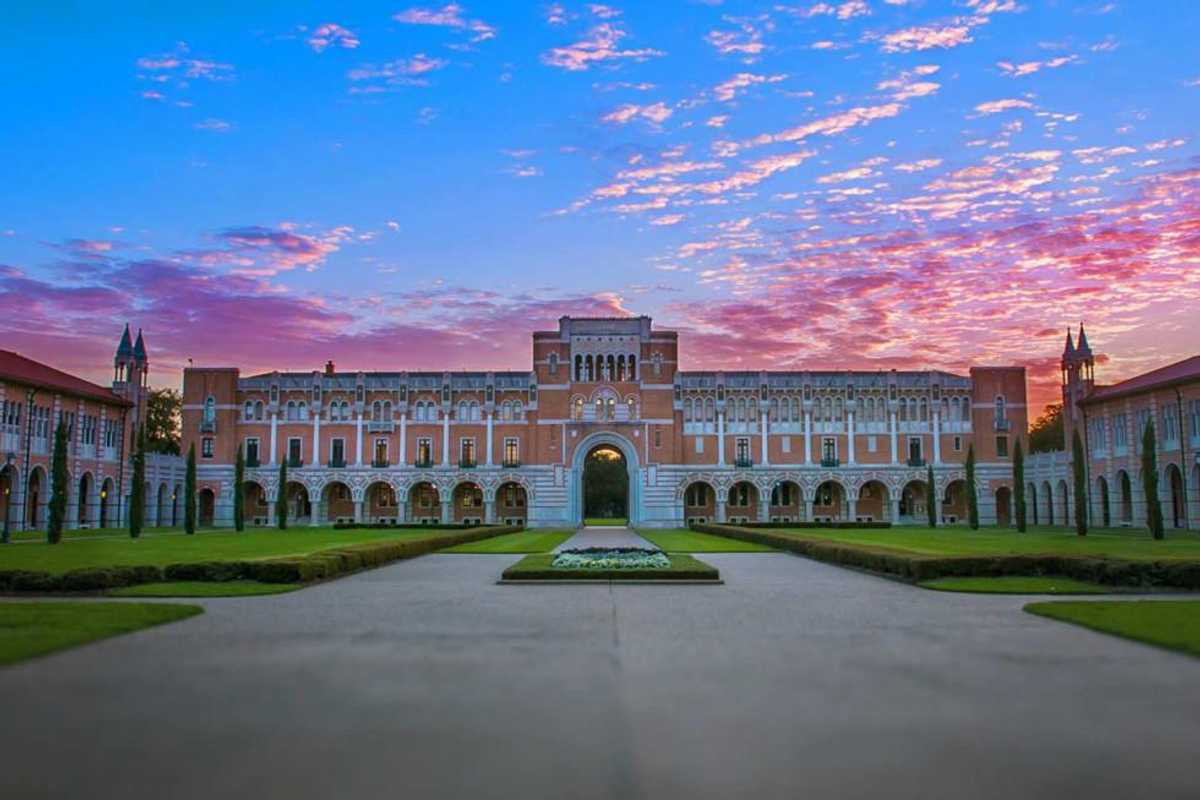
Austin billionaires Tench and Simone Coxe have gifted $100 million toward the planned UT medical center. Courtesy photo.

The University of Texas at Austin’s planned multibillion-dollar medical center, which will include a hospital run by Houston’s University of Texas MD Anderson Cancer Center, just received a $100 million boost from a billionaire husband-and-wife duo.

Tench Coxe, a former venture capitalist who’s a major shareholder in chipmaking giant Nvidia, and Simone Coxe, co-founder and former CEO of the Blanc & Otus PR firm, contributed the $100 million—one of the largest gifts in UT history. The Coxes live in Austin.

“Great medical care changes lives,” says Simone Coxe, “and we want more people to have access to it.”

The University of Texas System announced the medical center project in 2023 and cited an estimated price tag of $2.5 billion. UT initially said the medical center would be built on the site of the Frank Erwin Center, a sports and entertainment venue on the UT Austin campus that was demolished in 2024. The 20-acre site, north of downtown and the state Capitol, is near Dell Seton Medical Center, UT Dell Medical School and UT Health Austin.

Now, UT officials are considering a bigger, still-unidentified site near the Domain mixed-use district in North Austin, although they haven’t ruled out the Erwin Center site. The Domain development is near St. David’s North Medical Center.

As originally planned, the medical center would house a cancer center built and operated by MD Anderson and a specialty hospital built and operated by UT Austin. Construction on the two hospitals is scheduled to start this year and be completed in 2030. According to a 2025 bid notice for contractors, each hospital is expected to encompass about 1.5 million square feet, meaning the medical center would span about 3 million square feet.

Features of the MD Anderson hospital will include:

  • Inpatient care
  • Outpatient clinics
  • Surgery suites
  • Radiation, chemotherapy, cell, and proton treatments
  • Diagnostic imaging
  • Clinical drug trials

UT says the new medical center will fuse the university’s academic and research capabilities with the medical and research capabilities of MD Anderson and Dell Medical School.

UT officials say priorities for spending the Coxes’ gift include:

  • Recruiting world-class medical professionals and scientists
  • Supporting construction
  • Investing in technology
  • Expanding community programs that promote healthy living and access to care

Tench says the opportunity to contribute to building an institution from the ground up helped prompt the donation. He and others say that thanks to MD Anderson’s participation, the medical center will bring world-renowned cancer care to the Austin area.

“We have a close friend who had to travel to Houston for care she should have been able to get here at home. … Supporting the vision for the UT medical center is exactly the opportunity Austin needed,” he says.

The rate of patients who leave the Austin area to seek care for serious medical issues runs as high as 25 percent, according to UT.

Ad Placement 300x100
Ad Placement 300x600

CultureMap Emails are Awesome

Houston maritime startup raises $43M to electrify vessels, opens new HQ

Maritime Mission

A Houston-based maritime technology company that is working to reduce emissions in the cargo and shipping industry has raised VC funding and opened a new Houston headquarters.

Fleetzero announced that it closed a $43 million Series A financing round this month led by Obvious Ventures with participation from Maersk Growth, Breakthrough Energy Ventures, 8090 Industries, Y Combinator, Shorewind, Benson Capital and others. The funding will go toward expanding manufacturing of its Leviathan hybrid and electric marine propulsion system, according to a news release.

The technology is optimized for high-energy and zero-emission operation of large vessels. It uses EV technology but is built for maritime environments and can be used on new or existing ships with hybrid or all-electric functions, according to Fleetzero's website. The propulsion system was retrofitted and tested on Fleetzero’s test ship, the Pacific Joule, and has been deployed globally on commercial vessels.

Fleetzero is also developing unmanned cargo vessel technology.

"Fleetzero is making robotic ships a reality today. The team is moving us from dirty, dangerous, and expensive to clean, safe, and cost-effective. It's like watching the future today," Andrew Beebe, managing director at Obvious Ventures, said in the news release. "We backed the team because they are mariners and engineers, know the industry deeply, and are scaling with real ships and customers, not just renderings."

Fleetzero also announced that it has opened a new manufacturing and research and development facility, which will serve as the company's new headquarters. The facility features a marine robotics and autonomy lab, a marine propulsion R&D center and a production line with a capacity of 300 megawatt-hours per year. The company reports that it plans to increase production to three gigawatt-hours per year over the next five years.

"Houston has the people who know how to build and operate big hardware–ships, rigs, refineries and power systems," Mike Carter, co-founder and COO of Fleetzero, added in the release. "We're pairing that industrial DNA with modern batteries, autonomy, and software to bring back shipbuilding to the U.S."

---

This article originally appeared on EnergyCapitalHTX.com.

Innovative Houston-area hardtech startup closes $5M seed round

fresh funding

Conroe-based hardtech startup FluxWorks has closed a $5 million seed round.

The funding was led by Austin-based Scout Ventures, which invests in early-stage startups working to solve national security challenges.

Michigan Capital Network also contributed to the round from its MCN Venture Fund V. The fund is one of 18 selected by the Department of Defense and Small Business Administration to participate in the Small Business Investment Company Critical Technologies Initiative, which will invest $4 billion into over 1,700 portfolio companies.

FluxWorks reports that it will use the funding to drive the commercialization of its flagship Celestial Gear technology.

"At Scout, we invest in 'frontier tech' that is essential to national interest. FluxWorks is doing exactly that by solving critical hardware bottlenecks with its flagship Celestial Gear technology ... This is about more than just gears; it’s about strengthening our industrial infrastructure," Scout Ventures shared in a LinkedIn post.

Fluxworks specializes in making contactless magnetic gears for use in extreme conditions, which can enhance in-space manufacturing. Its contactless design leads to less wear, debris and maintenance. Its technology is particularly suited for space applications because it does not require lubricants, which can be difficult to control at harsh temperatures and in microgravity.

The company received a grant from the Texas Space Commission last year and was one of two startups to receive the Technology in Space Prize, funded by Boeing and the Center for the Advancement of Science in Space (CASIS), in 2024. It also landed $1.2 million through the National Science Foundation's SBIR Phase II grant this fall.

Fluxworks was founded in College Station by CEO Bryton Praslicka in 2021. Praslicka moved the company to Conroe 2024.