ExxonMobil named two winners in its inaugural reverse pitch competition with BBL Ventures. Courtesy of OctoRD

ExxonMobil and BBL Ventures have teamed up to flip the script on pitch competitions. Rather than have startups pitch themselves, the two companies collaborated on a reverse pitch event where Exxon identifies a few problems and search for companies that can build a solution.

The purpose of the event, says Tim Westhoven, technology scouting and venturing at ExxonMobil at the Baytown refinery, was to get the company out of its day-to-day to spark new ideas and innovation.

"Typically, as an engineer, when we think about how we solve a problem, we start inside the organization," Westhoven says at the event, which took place on Wednesday, June 5, at Station Houston. "Then we think about what problems we want to solve. Sometimes, you don't even think at all about what's available on the outside. This reverse pitch is us thinking about the impact we want to have and what the outside can offer."

In his experience, once an organization goes outside itself for solutions, they can find more options to choose from.

"As we cycle through and innovate on these things and find more and more outside solutions to a particular problem, we find the impact scales very quickly," Westhoven says.

The reverse pitch contest, which launched in March, asked for solutions to two problems ExxonMobil employees actually encounter. The first is regarding the opening process equipment, with the goal being to "create a method to stop exposure to flow or residual material," according to the website. The company needs a device that works remotely, thus reducing the risk of exposure and contact with the material for technicians.

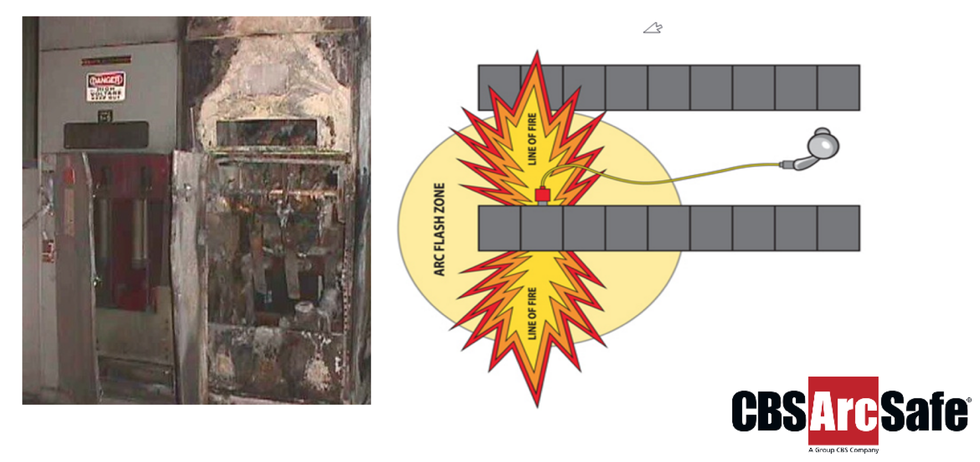
The other problem ExxonMobil is looking to solve has to do with reducing arc flash that result in exposure to electrical charges. The company has "identified the promotion of personal safety as a priority action in addressing and reducing negative events on campuses globally," the website says. All the specifics for these two issues are available online.

For both problems, ExxonMobil wants AI and automation involved — and that's deliberate to minimize human involvement, which can lead to error.

"Human error causes 40 to 70 percent of those issues," Westhoven says. "This is why we are looking to robotics and automation to solve this problem."

Seven companies pitched during the evening, and two — one for each solution — were named winners. Here's what solutions stood out to the judges, potentially took home $60,000, and are up for a pilot program at ExxonMobil.

Opening Process Equipment: OctoRD
Courtesy of OctoRD

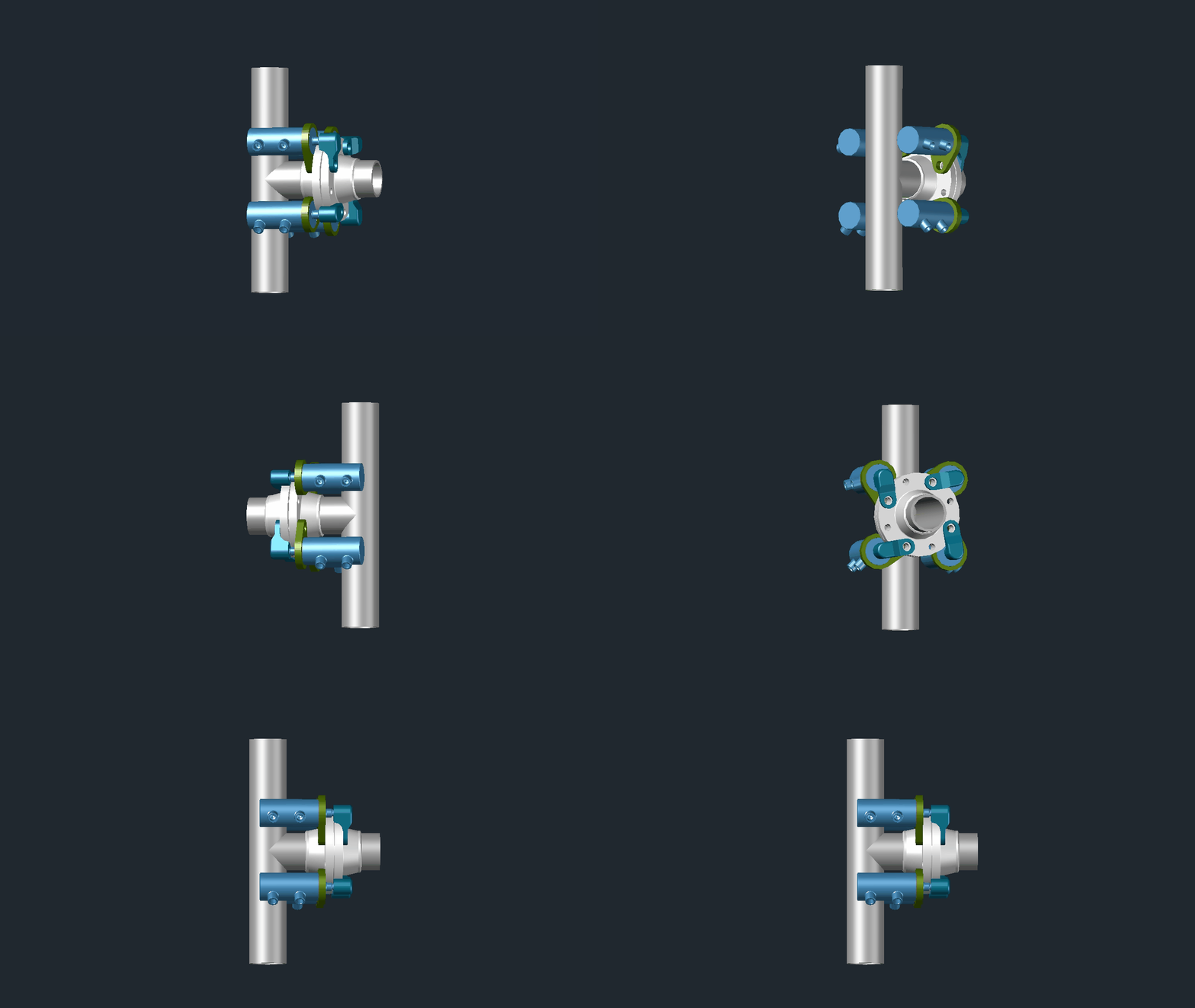
OctoRD's OPE solution includes using materials that are already available on the market to create a safer solution to the current process. In fact, Kevin Larsen, founder of Phoenix, Arizona-based OctoRD, even brought an early prototype to his pitch to demonstrate for the judges.

"My whole background has been taking technology, applying it to problems, and getting it into production and real life," he says.

OctoRD's product would take 90 days to get to market. It would allow for employees to open and close the device from up to 15 feet away, and, should an emergency occur, would have an automatic shutting feature. While the current model satisfies the requirements for the category, Larsen's pitch even included future ways to advance the tool.

Reducing Arc Flash: CBS ArcSafe
Courtesy of CBS ArcSafe

CBS ArcSafe, based in Denton, Texas, has been around for a while and knows how to increase worker safety using technology, says Justin Gaull, marketing manager for CBS ArcSafe. The company has designed over 700 tools for safety purposes.

"Our business is the business of safety, and decreasing arc flash hazards is our priority," he says to the crowd at the pitch event.

The company's solution would take 10 weeks or less to get from discovery to production to market. The technology includes a switchgear box, the Elliot 230-PM, that syncs with a remote that allows workers to operate well out of the arc flash zone — even up to 300 feet away with the wireless option. There would also be a video camera able to capture a view of the gauges so the operator can see them in real time.

Ad Placement 300x100
Ad Placement 300x600

CultureMap Emails are Awesome

Houston researcher examines how AI helps and hurts creativity

eye on ai

As artificial intelligence continues to grow and seeps into spaces like art, design and writing, a Houston researcher is examining its effects on creativity.

University of Houston’s Bauer College Assistant Professor Jinghui Hou, in collaboration with scholars around the world, recently published the paper "The Double-Edged Roles of Generative AI in the Creative Process" in the journal Information Systems Research.

Through the research, the team identified two stages of creativity that AI can influence: ideation and implementation.

In one study, Hou and her team developed a lab experiment to examine the impact of a cutting-edge generative AI tool during the brainstorming or ideation phase on a group of designers with varying levels of expertise.

The study showed that nearly all designers who used generative AI during this stage improved in the creativity of their graphic design work, and that the improvements were substantial and consistent across the board.

“In the first stage, we find that for anyone, including ordinary people and expert designers, AI is very helpful because of its computational power,” Hou said in a news release. “It can go beyond the imagination that humans have. For example, if I wanted to imagine a tiger with wings, it would be hard to see that in my head, but AI can do it easily.”

However, a second study examining the implementation stage found that AI affects professionals differently than novice designers.

The study showed that novice designers continued to improve in all aspects of their work when using AI. But more expert designers did not see significant improvements in the implementation stage. Rather, expert designers who used AI spent 57 percent more time completing their work compared with their peers who did not use AI.

“In the implementation stage, we find that AI is still very helpful for those ordinary people, but it creates more work for expert designers,” Hou said in the release. “This is because the designer has years of training to materialize a piece of artwork. We find that AI uses different techniques to produce creative work. For designers, it can become burdensome to revise what AI made.”

Hou’s paper suggests that AI is most helpful in the brainstorming stage, but hopes to see generative AI developers program tailor the technology for expert-level, professional needs.

“It could give users more freedom to fit the technology to their usage pattern and workflow,” Hou added. “In a sense, it's not about people catering to the AI, but the AI technology catering to people."

World Cup's 14-mile Green Corridor to leave lasting impact on Houston

Big Win

The FIFA World Cup 2026 Houston Host Committee has announced new details about its massive Green Corridor project, including the many improvements that will outlast the iconic sporting event taking place in Houston this summer.

The Green Corridor will be a 14-mile long verdant artery connecting multiple major landmarks in Houston through safe, walkable paths that include shade trees and other improvements. First conceived in 2024 by the Sustainability Subcommittee led by Elizabeth Carlson, it will unite East Downtown, Downtown, Midtown, the Museum District, and Third Ward through a hike and bike trail as well as METRO Rail stops. Though the Green Corridor is beginning its life as a showcase for the city to visitors attending the FIFA World Cup June 14 -July 4, it will remain a permanent installation for Houstonians to travel the city without cars.

Management of the project is being handled by Impact Houston 26, a portion of the Host Committee empowered by the Harris County-Houston Sports Authority’s Sports Authority Foundation to promote long-term benefits to the city after the World Cup. Funding partners include private corporations as well as civic organizations such as the City of Sugar Land and Rice University.

“The Green Corridor reflects what Impact Houston 26 is all about, using the FIFA World Cup as a catalyst to deliver lasting environmental benefits for our city,” Carlson said in a statement. “Through Impact Houston’s pillar on sustainability, we’re able to collaborate with local stakeholders to create not just demonstrations of resilience and innovation but education and engagement in the community, a meaningful legacy long after 2026.”

The corridor will provide access to both Houston Stadium (also known as NRG Stadium) and the FIFA Fan Festival, as well as improve existing paths like the Columbia Tap Trail in Third Ward. These improvements include the installation of shade structures, native plantings, expanding the tree canopy, air quality monitoring devices, and water and bike repair stations.

Impact Houston 26 is also working with local institutions like the Houston Zoo, Greentown Labs, and Discovery Green to install various educational materials along the Green Corridor.

The Green Corridor initiative.Courtesy rendering

Below is a breakdown of other improvements planned or completed as part of the Green Corridor.

  • Downtown Houston Main Street Promenade: Four permanent shade structures, native plants, and expanding the tree canopy by 154% to be implemented by May 2026. Further shade structures and plantings planned for Texas Avenue.
  • East Downtown Management District: Native tree plantings and landscaping in and around the FIFA Fan Festival site to improve first/last mile connectivity around the Green Corridor.
  • Columbia Tap Trail: Installation of 325 solar lights.
  • Stadium Park/Astrodome and TMC/Dryden plus Fannin South Transit Center: Various landscaping and safety enhancements.
  • Midtown Houston: $1.5 million in landscaping and beautification along the Red Line, including over 80 trees, native plantings, water stations, waste receptacles, crosswalk improvements, and public art installations.

The Green Corridor is only one of the World Cup Host Committee's sustainability initiatives. In January, it announced the "New Year, New Hou" program that provides hospitality businesses such as restaurants and hotels with one of three certifications.

---

This article originally appeared on CultureMap.com.

Houston humanoid robotics startup Persona AI hires new strategy leader

new hire

Houston-based Persona AI, a two-year-old startup that develops robots for heavy industry, has hired an automation and robotics professional as its head of commercial strategy.

In his new position, Michael Perry will focus on building Persona AI’s business development operations, coordinating with strategic partners and helping early adopters of the company’s humanoids. Target customers include offshore platforms, shipyards, steel mills and construction sites.

Perry previously served as vice president of business development at Boston Dynamics, where he led market identification for robotics, and as an executive at DJI. He holds a bachelor’s degree in Chinese and government studies from the University of Texas at Austin.

“Now is the perfect time to join Persona AI as we rapidly close the gap between what’s possible in the lab versus what’s driving real commercial value,” Perry says. “Building industry-hardened humanoid hardware and production-deployable AI is only one piece of the puzzle.”

“Getting humanoids into operations for heavy industry will require the systematic commercial and operational work that makes enterprises humanoid-ready and defining the business case, solving the integration challenges, and building the playbook for safe, scalable adoption,” he adds. “That’s what I’m here to build.”