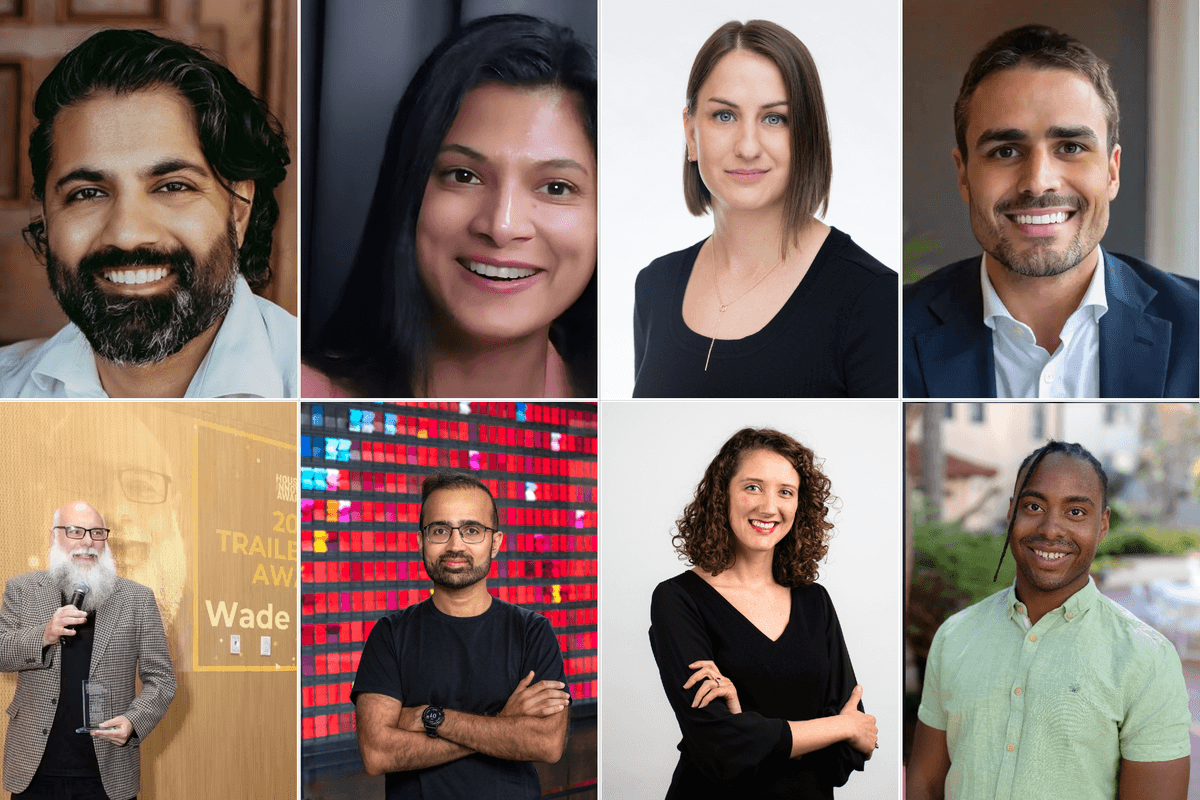
The 17 finalists are competing for Ernst & Young’s Entrepreneur Of The Year 2024 Gulf South Award. Photo via Getty Images

Entrepreneurs from the Houston area have been named finalists for one of the region’s most prestigious business awards.

The 17 finalists are competing for Ernst & Young’s Entrepreneur Of The Year 2024 Gulf South Award. The Gulf South region includes parts of Texas, along with Louisiana and Mississippi.

An independent panel of judges selected the 48 finalists. Contenders were evaluated based on their demonstration of building long-term value through factors such as entrepreneurial spirit, purpose, growth, and impact.

The Houston-area finalists are:

  • Shannon Payne, Allied Fire Protection, Pearland
  • Jay McEntire IV, Arva Intelligence, Houston
  • Andrew Levy, Avelo Airlines, Houston
  • Derek Maetzold, Castle Biosciences, Friendswood
  • Scott Aronstein, Connectivity Source, Houston
  • Joshua Weisman, Construction Concepts, Houston
  • Feras Moussa and Ben Suttles, Disrupt Equity, Houston
  • John Poindexter, J.B. Poindexter, Houston
  • James Ross, LJA Engineering, Houston
  • Asher Kazmann, Locke Solutions, Houston
  • Chad Millis, Millis, Missouri City
  • Mike Francis, NanoTech Materials, Houston
  • Stuart Hinchen and Peter Jenkins, Quva Pharma, Sugar Land
  • Trevor Best and Suman Khatiwada, Syzygy Plasmonics, Houston
  • Hal Brumfield, Tachus Fiber Internet, The Woodlands
  • Jared Boudreaux, Vector Controls and Automation Group, Pearland
  • Ting Qiao, Wan Bridge, Houston

“The finalists of this year are audacious entrepreneurs who are making a significant impact in their respective industries and communities,” says Anna Horndahl, an EY partner and co-director of the EOY Gulf South Program.

“These pioneers, chosen by an independent panel of judges, showcase relentless commitment to their businesses, customers and communities. We are thrilled to acknowledge their accomplishments,” adds Travis Garms, an EY partner and co-director of the EOY Gulf South Program.

Ad Placement 300x100
Ad Placement 300x600

CultureMap Emails are Awesome

Rice lands $15M U.S. Army award to launch next-gen wireless research center

defense funding

The U.S. Army Research Office has awarded Rice University $15 million to establish a new center for next-generation sensing and communications.

The five-year research center—dubbed the Center for Large Aperture Secure Sensing, Imaging and Communications (CLASSIC)—will unite researchers from universities and national laboratories to develop advanced antenna technologies for future wireless systems. Edward Knightly, the Sheafor-Lindsay Professor of Electrical and Computer Engineering at Rice, will lead the center that “combines expertise in wireless networking, antennas, radar, artificial intelligence, circuits and physics to address growing demands on wireless systems,” according to Rice.

“The challenges we’re tackling require advances that span physics, hardware, communications and computing," Knightly said in a news release. “By combining those strengths in a single center, we can accelerate the development and demonstration of technologies that would not be possible through individual efforts alone.”

Joining Knightly will be Ashutosh Sabharwal of Rice, Sensen Li of the University of Texas at Austin, Hou-Tong Chen of Los Alamos National Laboratory, Danijela Cabric of UCLA, Josep M. Jornet and Tommaso Melodia of Northeastern University, Daniel M. Mittleman of Brown University, and Willie Padilla of Duke University.

Industry partners include Booz Allen Hamilton, Intel, Keysight, Lockheed Martin, MITRE, Northrop Grumman, Qualcomm and Raytheon.

CLASSIC researchers will investigate how large-scale antenna arrays (ELSAAs) can expand the capabilities of wireless systems where technology is limited.

ELSAAs use thousands of coordinated antenna elements to direct radio waves. Researchers aim to develop ways to use the technology to help maintain steady communication when signals are blocked or disrupted and to detect and generate detailed images of concealed objects.

Along with ELSAAs, the center will work to develop sensing techniques for threat detection, study wireless jamming and build resilient high-speed wireless networks. Researchers will ultimately validate the technology in labs and via drone-based field trials.

CLASSIC will also work on developing an AI-driven modeling framework that will simulate complex electromagnetic environments in real time.

“This award demonstrates Rice’s leadership in tackling complex national research challenges through collaboration across disciplines and institutions,” David Sholl, executive vice president for research at Rice, added in the release.

UH scores $18M NIH grant for chronic disease research

research funding

The University of Houston has received a coveted $18.8 million grant from the National Institutes of Health to launch a program to address the root causes of chronic disease.

Only 22 institutions nationwide receive this NIH award, and the 5-year process aligns with the newly established UH Health’s mission to expand healthcare innovations in Texas and beyond. The initiative will be housed in the UH Population Health department.

"This generous funding allows us to directly confront the root causes of chronic illness that place a heavy burden on so many families," Dr. Jonathan McCullers, vice president for health affairs at UH, said in a news release. "With the recent launch of UH Health, we have an unprecedented opportunity to translate scientific discovery into healthier outcomes for our communities by bringing together experts from across the university to improve health where it matters most.”

Through the program, UH researchers from different areas of expertise will work together to address the challenges of chronic illness by looking at biological, social and behavioral factors.

According to the university, chronic diseases like heart disease, diabetes, strokes and others are the leading cause of illness, disability and death in the U.S. They account for 90 percent of the nation’s $5.3 trillion in annual healthcare spending.

Bettina Beech, chief of population health and translational science at UH, serves as principal investigator for the program.

“Chronic disease management largely happens during the 8,700 hours each year that people are not visiting their healthcare provider,” Beech added in the news release. “While healthcare is indispensable, it only accounts for 20 percent of how health is created — genetics accounts for another 10 percent, and the other 70 percent is determined by behavior, social conditions and environment.”

With the funds from the grant, UH will also be able to expand research infrastructure, add to community partnerships, support complementary research, and invest in early-career investigators, according to the news release. UH also aims to develop solutions that could help ease the economic burden of chronic disease.

Report: Where Texas ranks among best and worst states to live in 2026

Texas Talk

After earning its worst-ever ranking last year, Texas has improved slightly on an evaluation of the best states to live, but it's still at the bottom of the pack.

Each year, WalletHub's analysts compare all 50 states using 51 livability metrics to measure their affordability, economy, education and health, quality of life, and safety. Factors that were weighed include the cost of living, homeownership rates, population and income growth rates, wealth gaps, public school system quality, road quality, crime rates, and many others.

The Lone Star State landed at No. 36 in 2026, making it the 15th worth state to live right now. That's on par with its 2024 ranking, and it's a two-spot improvement over its 2025 performance.

While Texas residents can brag about living in a state with the No. 1 highest number of restaurants per capita and the 7th best quality of life in the country, that's about it. Texas earned middling-to-poor scores among the four remaining livability rankings: safety (No. 33), affordability (No. 35), economy (No. 37), and education and health (No. 40).

Here's how Texas fared in other nationwide rankings in the study:

  • No. 27 – Income Growth
  • No. 30 – Housing Costs
  • No. 39 – Percentage of Population in Poverty
  • No. 42 – Percentage of Adults in Fair or Poor Health
  • No. 46 – Homeownership Rate
  • No. 49 – Percentage of Population Aged 25 and Older with a High School Diploma or Higher
  • No. 48 – Average Weekly Work Hours
  • No. 50 – Percentage of Insured Population

Texas has a lot of work to do to improve its livability for all of its residents, but especially for women, according to several other 2026 WalletHub studies. Texas is the fourth-worst state for women, the ninth-worst state for working mothers, and the seventh-worst place to have a baby based on limited access to maternal and pediatric healthcare.

At the very bottom of the report is New Mexico, ranking 50th overall, with Louisiana (No. 49), Mississippi (No. 48), Alaska (No. 47), and Arkansas (No. 46) rounding out the bottom five.

After holding on as the No. 1 best state to live for a few years in a row, Massachusetts now ranks No. 4 and was overtaken by Idaho (No. 1), New Jersey (No. 2), and Wisconsin (No. 3). New Hampshire rounds out the top five best states to live.

WalletHub's top 10 best states to live in 2026 are:

  • No. 1 – Idaho
  • No. 2 – New Jersey
  • No. 3 – Wisconsin
  • No. 4 – Massachusetts
  • No. 5 – New Hampshire
  • No. 6 – Wyoming
  • No. 7 – Utah
  • No. 8 – Minnesota
  • No. 9 – Pennsylvania
  • No. 10 – Florida
---

This article originally appeared on CultureMap.com.