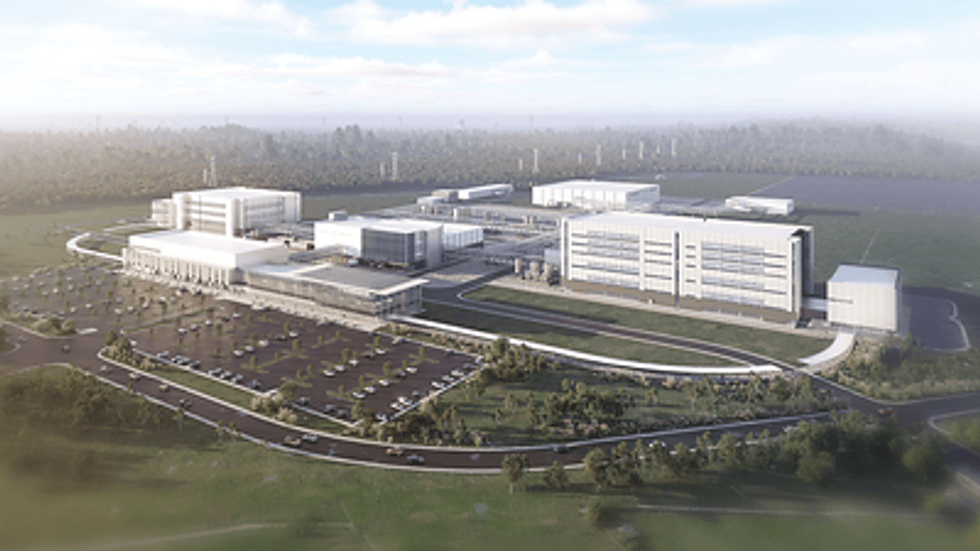
The Cancer Prevention and Research Institute of Texas has awarded its latest round of grants. Photo via tmc.edu

Cancer research capabilities in the Houston area just got an $8 million boost.

On Wednesday, May 20, the Cancer Prevention and Research Institute of Texas (CPRIT) awarded $8 million in grants to institutions in Houston and Bryan for the creation or expansion of so-called “core” cancer research facilities.

“Core facilities provide shared access to advanced technology, equipment, and scientific expertise that may not be available at every institution,” CPRIT says. “These core facilities are vital to not only cancer research but also to the study of diseases beyond cancer.”

Houston-area recipients of these $2 million grants are:

  • A facility at the University of Texas Health Science Center for preclinical support of cancer researchers in Texas to evaluate new safe, effective drugs and drug combinations.
  • The Accelerator for Cancer Therapeutics, operated by Houston’s Texas Medical Center Foundation. The accelerator helps researchers and startups move innovative cancer treatments from the lab to clinical trials.
  • Rice University’s Genetic Design & Engineering Center in Houston. The center enables researchers to collaborate on studies of custom DNA for cancer treatment.
  • A facility at the Texas A&M University System’s Health Science Center in Bryan that aims to speed up the development of cancer therapies.

In addition to those grants, the University of Texas M.D. Anderson Cancer Center, Methodist Hospital Research Institute, Baylor College of Medicine, and Rice University shared $21 million to recruit cancer researchers from other institutions.

The largest of those grants—totalling $4 million—went to M.D. Anderson for the recruitment of renowned cancer researcher Andre Nussenzweig from the National Institutes of Health. His research focuses on how DNA damage and faulty DNA repairs lead to cancer.

Here are the totals for the other CPRIT grants awarded in the Houston area:

  • $12.8 million to Houston-based Indapta Therapeutics for the development of an off-the-shelf therapy that naturally kills cancer cells, combined with an immunity-targeting agent for a type of leukemia.
  • $11.1 million to MD Anderson, including $5 million for a statewide platform to improve long-term health outcomes in adolescents and young adults who survived cancer.
  • $8.4 million to Baylor College of Medicine, including $4.8 million for two training programs for cancer researchers.
  • $6.25 million to UT Health Houston, including $4 million for a biomedical informatics and genomics training program for cancer researchers.
  • $4.4 million to the Texas A&M Health Science Center’s Houston campus, including $2.4 million for a cancer therapeutics training program.
  • $2.75 million to Rice, including $250,000 for a study of ovarian cancer.
  • $2 million to Houston-based March Biosciences for the development of a targeted therapy for treating T-cell lymphoma.
  • $1.15 million to the University of Houston, including $900,000 for a platform for detection of lung cancer.
  • $900,000 to Texas A&M in Bryan to conduct clinical drug trials in rural and underserved communities around the state.
  • $800,000 to Houston- and Israel-based Xerient Pharma for the development of an oral form of a cell-protecting drug called amifostine to protect the upper GI tract from radiation damage during pancreatic cancer treatment.
  • $659,000 to Missouri City-based OmniNano Pharmaceuticals for the development of a two-drug combination to treat the most common form of pancreatic cancer.
  • $250,000 to the University of Texas Medical Branch at Galveston for a novel therapeutic to prevent colitis-related colorectal cancer.

Ad Placement 300x100
Ad Placement 300x600

CultureMap Emails are Awesome

Meta to bring $115 million AI data center training initiative to Houston

ai workforce

Meta and Associated Builders and Contractors have entered into a partnership to invest $115 million in training programs for the construction of AI data centers, with a portion of the project launching in Houston.

The companies announced June 8 that they would open America’s Workforce Academies at ABC chapter training centers in Houston; Indianapolis; Baton Rouge, Louisiana; and Columbus, Ohio.

The academies will offer career readiness and safety training, plus five weeks of hands-on education. Participants who complete the program will be granted a job offer from contractors working on Meta projects.

“The AI revolution is bringing change but also historic opportunities,” Dina Powell McCormick, Meta president and vice-chairman, said in a news release. “Skilled workers electrified rural America one pole at a time. They manned the factories that built the arsenal that won World War II. Now a new generation will pour the foundations and lay the fiber that secures American strength in this new age.”

Overall, the Meta and ABC aim for the academies to build a more sustainable pipeline of skilled construction workers and ensure safety and job readiness for the surging number of data center projects underway.

“This new program is an innovative talent solution that is a critical part of addressing the construction industry’s ongoing workforce shortage and creates an accelerated, new-entrant strategy for job seekers ... The sustained demand for data center construction technicians means the industry needs an all-of-the-above approach to address this shortage and grow the construction talent pool,” Michael Bellaman, ABC president and CEO, added in the release.

In Texas, Meta, the parent company of Facebook and Instagram, has launched or broken ground on data centers in El Paso, Fort Worth and Temple. The company announced in March that it planned to grow its El Paso Data center by 1 gigawatt, representing more than a $10 billion investment.

Apart from Meta, Texas has attracted data center development to power other giants like Google and Amazon in recent years. In turn, Texas has been predicted to become the biggest data center market. Commercial real estate services provider JLL reported this spring that the state could topple Northern Virginia as the world’s largest data-center market by 2030. Similarly, CBRE predicted that Houston's data center capacity could double by 2028. Read more here.

New Houston biotech co. lands $30M for pulmonary fibrosis drug

drug money

Most of us can claim a scar or two on our bodies. But when scarring develops inside the body, it’s known as a fibrotic disorder. A freshly launched Houston company, Oorja Bio Inc., is working on a treatment that can help to repair cells and reduce the damage wrought by the growth of fibrotic tissue in patients.

Late last month, Oorja Bio hit the scene with a pair of big announcements. Not only has the company raised a $30 million Series A thanks to founding investor California-based Westlake BioPartners, but it has also already paved the way for a Phase 2 study to take place this year.

Oorja Bio received Investigational New Drug (IND) clearance from the U.S. Food and Drug Administration (FDA), allowing the company to test its treatment in patients with idiopathic pulmonary fibrosis (IPF), a scarring of the lung tissue. IPF affects more than 150,000 adults in the United States and can result in a range of symptoms from shortness of breath to organ failure and death as it progresses.

Oorja Bio’s lead drug candidate, ORJ-001, was shown in a Phase 1 in-human trial to demonstrate “therapeutically relevant exposure and favorable tolerability” in 64 healthy adult volunteers in whom it was administered daily or weekly, according to a news release. Pre-clinical studies of ORJ-001 showed durable target tissue engagement and biomarker activity in bleomycin-induced lung fibrosis.

Administered subcutaneously, ORJ-001 is intended to improve and even restore function in cells that can reduce the signaling that causes IPF. It stops advancement of IPF and also allows for tissue repair. Currently available treatments for the disease can slow the development of IPF down, but do not address the declining lung function that’s inherent in its progression.

“The clinical and preclinical results from our studies to date give us confidence that ORJ-001 represents a novel treatment approach with the potential to repair and reverse fibrosis and modify disease progression in IPF,” Dr. Janethe Pena, CMO of Oorja Bio, said in the release.

“Our team is energized to deliver on our goal of redefining the future of fibrotic diseases, beginning with ORJ-001,” CEO and founder Sujay Kango added. “As we advance ORJ-001 in the clinic, we are embracing the paradigm shift in our biological understanding of IPF pathology that aligns with the central role of the alveolar epithelium. ORJ-001 was designed with this biology in mind and may provide, for the first time, a therapeutic intervention that repairs and reverses fibrosis and promotes disease modification.”

Most patients live only three to five years following their IPF diagnosis. Soon, ORJ-001 and Oorja Bio could give them a fighting chance.

Axiom Space tops $525M in oversubscribed round, announces Swiss subsidiary

funding boost

Axiom Space tacked on an additional $175 million to a previously announced capital raise, bringing the oversubscribed round to a total of more than $525 million.

Axiom shared in February that it had secured $350 million in a financing round led by Type One Ventures and Qatar Investment Authority. In the latest release from the company, Axiom reports that Japan-based MUFG Bank Ltd. joined the round as a new investor, in addition to continued participation from existing backers.

The funding will go toward developing the company's commercial space station, known as Axiom Station, and the production of its Axiom Extravehicular Mobility Unit (AxEMU) under its NASA spacesuit contract.

“Investor interest in this round outpaced what we set out to raise, which speaks to the moment we’re in,” Jonathan Cirtain, CEO and president of Axiom Space, said in the news release. “Our partners see what is possible in low-Earth orbit, and they see who is positioned to lead it.”

Axiom announced last month that it planned to open a Japanese subsidiary July 1. Earlier this week, it also shared plans to establish Axiom Space Switzerland, a wholly owned subsidiary based in Lucerne that is also expected to begin operations this summer.

The Switzerland subsidiary aims to establish Axiom's presence in Europe and help it partner with the European Space Agency and other space organizations and companies on the continent.

“Europe is a founding leader in the creation of the commercial space economy, and Switzerland is uniquely positioned to convene the government agencies, research institutions, and industrial entities that will shape its next decade,” Cirtain added in a separate release. “Axiom Space Switzerland facilitates the scaling of development and deployment of the infrastructure that will succeed the International Space Station.”