A concept design rendering of Persona AI's humanoid robot. The company is one of the finalists for the 2025 Houston Innovation Awards in the Deep Tech Business category. Rendering courtesy Persona AI.

Houston is no stranger to technology that's shaping the future. As the longtime location of NASA Johnson Space Center to home base for new ventures disrupting industries with their technology, the Bayou City has had its finger on the pulse of what's new and next for decades.

The Deep Tech Business category in our 2025 Houston Innovation Awards will honor an innovative startup providing technology solutions based on substantial scientific or engineering challenges, including those in the AI, robotics and space sectors.

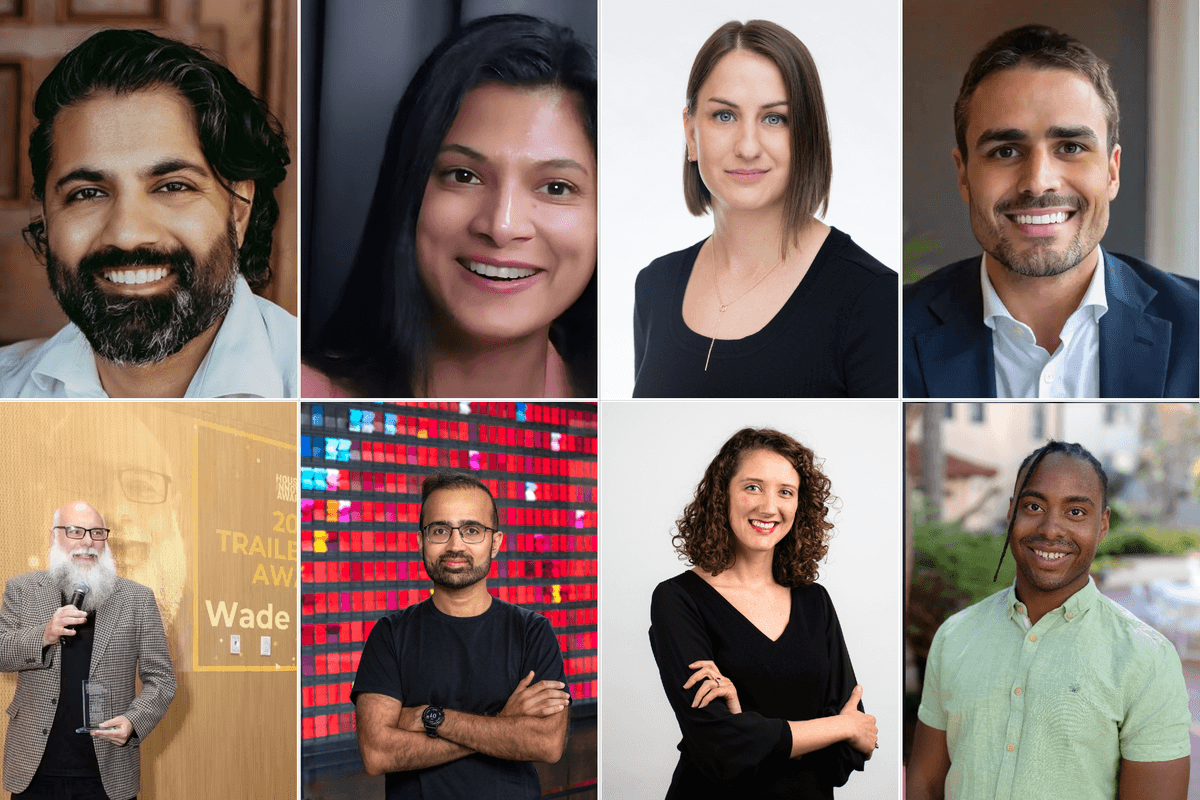
Six deep tech companies have been named finalists for the 2025 award. They range from a company developing predictive software to accelerate the energy transition to a new venture that's developing humanoid robots.

Read more about these businesses, their founders and their breakthrough technologies below. Then join us at the Houston Innovation Awards on Nov. 13 at Greentown Labs, when the winner will be unveiled.

Tickets are now on sale for this exclusive event celebrating Houston Innovation.

ARIX Technologies

Industrial and robotics company ARIX Technologies is an integrated robotics and data analytics company that delivers inspection services. Its ARIX VENUS robot combines aerospace-grade engineering, advanced non-destructive testing (NDT) and AI-powered analytics to detect hidden corrosion under insulation for the downstream energy, petrochemical, and chemical processing sectors.

ARIX was founded in 2017 by Dianna Liu, a former ExxonMobil engineer. Craig Mallory serves as CEO. The company reports that it is scaling deployments with major Gulf Coast refineries, expanding its analytics platform to include predictive corrosion modeling and growing a global partner program.

Little Place Labs

Space tech company Little Place Labs is developing an AI, machine-learning software across a network of satellites that can provide insights from space in under seven minutes.

The company was founded in 2022 by CEO Bosco Lai and CTO Gaurav Bajaj. The company recently received an award from the U.S. Space Force that will support it in deploying multiple applications and products onto more than 55 satellites over the next 36 months for both national security and commercial use cases. The company won the Security, GovTech & Space competition at the SXSW Pitch showcase last year.

Newfound Materials

Newfound Materials has developed a predictive synthesis software platform for accelerating the discovery of novel materials for critical energy applications, such as batteries, magnets, catalysts, and more. It guides users on the best experiments to try in the lab to optimize the synthesis of their materials.

Newfound Materials was founded in 2024 by CEO Matthew McDermott and participated in the inaugural Activate cohort. The company plans to release a public web app soon. It also has plans to raise a pre-seed or angel round.

Paladin Drones

Paladian develops drone-as-first-responder (DFR) systems for public safety. Its technology gives first responders live aerial video before teams arrive, enabling quicker decisions, better resource allocation and reduced false alarms.

The company was founded in 2018 by Divyaditya Shrivastava and participated in the Y Combinator accelerator that year. The company raised a $5.2 million seed round in 2024 and another round for an undisclosed amount earlier this year. In the future, it plans to expand its DFR deployments into more cities, offer new payload delivery capabilities (like delivering Narcan and life vests), and enhance deconfliction features.

Persona AI

Persona AI is building modularized humanoid robots that aim to deliver continuous, round-the-clock productivity and skilled labor for "dull, dirty, dangerous, and declining" jobs.

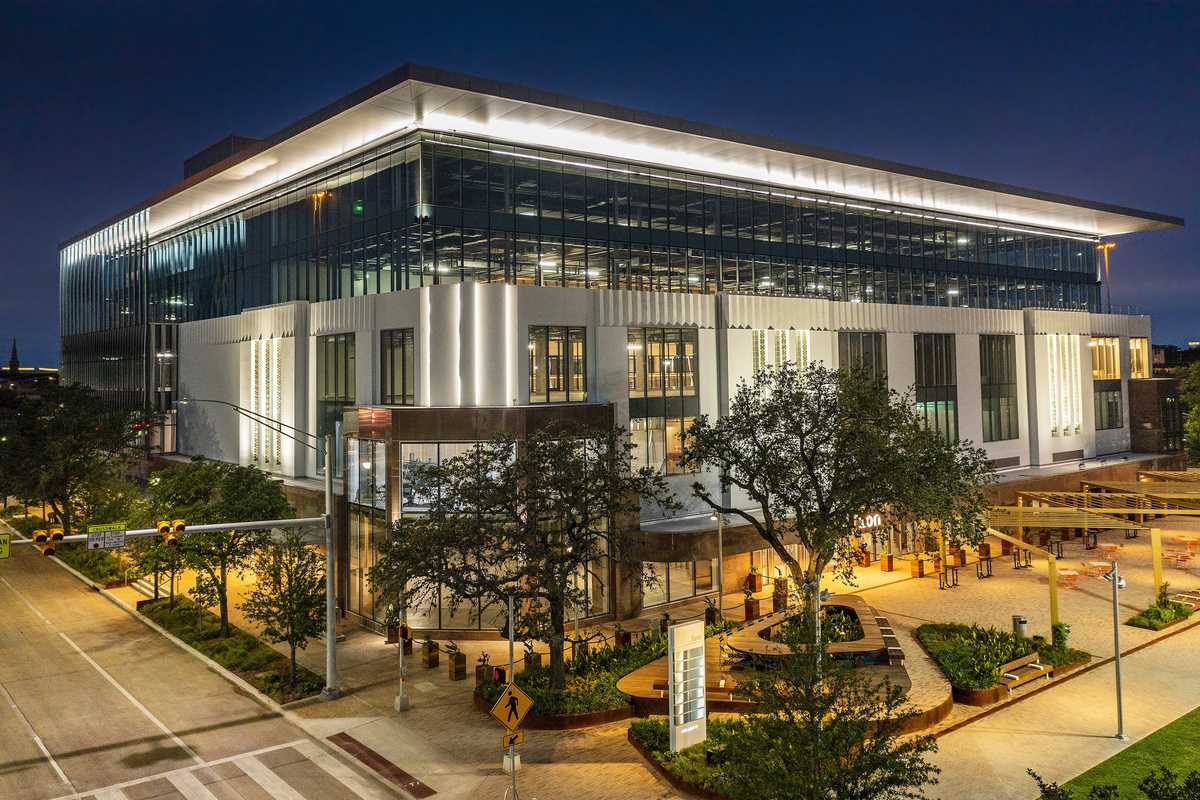
The company was founded by Houston entrepreneur Nicolaus Radford, who serves as CEO, along with CTO Jerry Pratt and COO Jide Akinyode. It raised eight figures in pre-seed funding this year and also expanded its operations at the Ion. The company is developing its prototype of a robot-welder for Hyundai's shipbuilding division, which it plans to unveil in 2026.

Tempest Droneworx

Tempest Droneworx provides real-time intelligence collected through drones, robots and sensors. Its Harbinger software platform shares data through a video game engine and aims to provide teams with early warning and insight to help them make decisions faster.

The company was founded in 2021 by CEO Ty Audronis and COO Dana Abramovitz. It participated in the Mass Challenge Air Force Labs and won the Best Speed Pitch at SXSW earlier this year. The company is currently raising a $2.5M seed round.

---

The Houston Innovation Awards program is sponsored by Houston City College Northwest, Houston Powder Coaters, FLIGHT by Yuengling, and more to be announced soon. For sponsorship opportunities, please contact sales@innovationmap.com.


Ad Placement 300x100
Ad Placement 300x600

CultureMap Emails are Awesome

Kinder leads 19 Houstonians on Forbes' World's Billionaires List 2026

World's Richest 2026

According to Forbes, there has “never been a better time to be a billionaire” than in 2026, and the publication's newest World’s Billionaires List has revealed the 19 Houston billionaires that have risen among the wealthiest worldwide.

Kinder Morgan chairman Richard Kinder surpassed hospitality honcho Tilman Fertitta as the richest billionaire in Houston, ranking No. 232 on the global list with an estimated net worth of $13 billion. His net worth has grown by $2.4 billion since last year.

Fertitta, 68, may not be the richest Houstonian anymore, but his wealth is still on the rise. He ranked 268th on the list with an estimated net worth of $11.7 billion, up from $11.3 billion last year.

Out of the 390 billionaire newbies that made their debut onto the list this year, one of them calls Houston home: restaurateur and commodities trader Ignacio Torras. Torras, 61, is the founder and CEO of global commodities trading company Tricon Energy, and he owns Michelin-starred local restaurant BCN Taste & Tradition and its sister eatery MAD. But that's not all he spends his time doing, according to Forbes.

"In 2024 Torras launched a soccer tournament for neurodivergent players called the Genuine Cup," his profile said. "Last year 800 players and 30 teams from around the world played at Rice University stadium."

Torras debuted as No. 2600 on the list with an estimated net worth of $1.5 billion.

Houston-born multi-hyphenate superstar Beyoncé Knowles-Carter also staked a claim among the world's richest people in 2026. She ranked No. 3332 on the list with a net worth of $1 billion, thanks to her "years of music sales, touring and collecting art with her already-billionaire husband Jay-Z (estimated net worth: $2.8 billion)," Forbes said.

"The majority of pop star Beyonce’s net worth comes from her roughly three decades as a solo performer and a member of the girl-group Destiny's Child," her profile said. "She holds the record for the most Grammy wins ever, with 35, and won her first Album of the Year trophy in 2025. She and her billionaire husband Jay-Z purchased a $200 million Malibu mansion in 2023, in what was the most expensive home sale in California history."

Beyoncé also ranks No. 21 in the publication's separate list of The World's Celebrity Billionaires.

Here's how the rest of Houston's billionaires fared on this year's list:

  • Toyota mega-dealer Dan Friedkin: No. 279; $11.4 billion, up from $7.7 billion
  • Pipeline heir Randa Duncan Williams: tied for No. 323 with an estimated net worth of $10.2 billion, up from $9.3 billion in 2025. Fellow pipeline heirs Dannine Avara and Milane Frantz tied for No. 332 globally. Each has an estimated net worth of $10.1 billion, up from $9.2 billion. Scott Duncan ranks No. 353 with a $9.8 billion estimated net worth, up from $9 billion in 2025.
  • Oil tycoon Jeffery Hildebrand: No. 341; $10 billion, up from $7.7 billion
  • Houston Texans owner Janice McNair and family: No. 528; $7.3 billion, up from $6.2 billion
  • Energy exploration chief exec George Bishop of The Woodlands: No. 908; $4.7 billion, down from $5 billion
  • Westlake Corporation co-owners Albert Chao, James Chao and their families: tied for No. 1074; $4 billion, flat from 2025
  • Hedge fund honcho John Arnold: No. 1504; $2.8 billion, down from $2.9 billion
  • Perry Homes executive chair Kathy Britton: No. 1611; $2.6 billion, flat from 2025
  • Houston Astros owner Jim Crane: No. 1676; $2.5 billion, up from $2.4 billion
  • Former Houston Rockets owner Leslie Alexander: No. 1834; $2.3 billion, up from $1.9 billion
  • Mercedes-Benz mega-dealer Joe Agresti: No. 3185; $1.1 billion, flat from 2025
  • Frontier Airlines chairman William Franke: No. 3332; $1 billion, down from $1.2 billion

Elsewhere in Texas

Austin billionaire Elon Musk was declared the world's richest person for the second consecutive year, and Forbes said his “grip on the top spot is as strong as it’s ever been.”

“Musk became the first person to hit $500 billion in wealth, in October,” Forbes said. “Then $600 billion and $700 billion, within four days in December. Then $800 billion, in February.”

The Tesla, SpaceX, and xAI founder’s current net worth has skyrocketed to $839 billion — a shocking $497 billion more than his 2025 net worth.

In Dallas-Fort Worth, Walmart heiress Alice Walton has maintained her elite status as the world’s richest woman for the third year in a row. Walton is the 14th richest person on the planet with a current net worth of $134 billion, an eye-catching $33 billion higher than her 2025 net worth. She is the first American woman worth $100 billion, and one of only 20 “centi-billionaires” worldwide claiming 12-figure fortunes, also known as the "$100 Billion Club."

Koch Inc. stakeholder Elaine Marshall and her family are the richest Dallas residents, ranking No. 71 globally with an estimated net worth of $30.9 billion. Her net worth has grown by $2.6 billion since last year.

---

This article originally appeared on CultureMap.com.

Where founders go to grow: the rise of peer-driven scale support

Inside EO

Entrepreneurship can be exhilarating — but it can also be isolating. Founders often carry the weight of leadership, strategy, hiring decisions, and financial risk without many people who truly understand the pressure. Increasingly, business owners are turning to peer-driven communities for support, insight, and accountability.

One of the most prominent of these communities is the Entrepreneurs’ Organization (EO), a global network of more than 19,000 influential business owners across 86 countries. Built on the belief that entrepreneurs grow best when they learn from one another, EO creates a space where founders can openly share challenges, test ideas, and gain perspective from peers who have faced similar decisions.

A 360-Degree Approach to Growth
Unlike traditional business groups that focus solely on revenue and scale, EO emphasizes holistic development. The organization encourages members to pursue what it calls “360-degree growth” — improving not only their businesses but also their personal lives, leadership skills, and overall well-being.

Through mentorship, peer forums, and curated learning experiences, members gain tools to better balance the demands of entrepreneurship with life outside the office. The goal is not just stronger companies, but stronger leaders.

A Global Network of Entrepreneurs
Connection sits at the center of the EO experience. Members become part of a trusted community of entrepreneurs who exchange ideas, challenge assumptions, and celebrate wins together. These peer relationships often provide clarity that founders can’t easily find inside their own organizations.

EO also opens doors to world-class education opportunities. Members can access proprietary programs and leadership experiences developed in collaboration with leading institutions such as London Business School, Harvard Business School, and The Wharton School. These programs combine academic insight with practical founder experience.

But for many entrepreneurs, the most valuable lessons come directly from fellow members. See how founders feel about the forum experience and the insights they've gained from other participants:

Q: What’s the biggest business change you made because of EO peer advice, and what single metric moved?

A: “My EO Forum encouraged me to slow down long enough to see my blind spots. I stopped running the company purely on instinct and intensity, and I started building real structure, accountability, and leadership around me.” -Jeremy Jenson, Encore Search Partners

A: “Joined and utilized EOS and have quadrupled our business.” —Mark Thiessen, Thiessen Law Firm

Q: What tough moment did EO help you navigate, and what was the outcome?

A: “Changing my business model to focus on one service and one service only — lawn sprinkler system repairs. We have seen greatly improved labor efficiency rates and profit margins.” —Jason Troth, Sprinkler Repair Professionals

A: “My forum helped me navigate and get past a health issue that had derived into a depression.” —Alejandro Cortez, SAI Environmental Services

Q: What’s the best “playbook” you borrowed from another member?

A: “Show up on time. Do what you say. Finish what you start. Say please and thank you.” —Robert Wagnon, W5Ranches

A: “You have to confidently ask for the business. Don’t chase clients at pricing that does not work.” —Pete Patterson, Patterson PC

The Power of Peer Insight
For many founders, the biggest breakthroughs don’t come from books or consultants—they come from conversations with other entrepreneurs who have walked the same path.

Peer-driven organizations like EO are redefining how leaders grow. By combining trusted relationships, shared experience, and access to world-class education, they create an environment where founders can think bigger, lead better, and build businesses that last.

And perhaps most importantly, they remind entrepreneurs that while building a company can feel lonely, they don’t have to do it alone.

Austin company to bring AI-powered school to The Woodlands

AI education

Austin-based Alpha School, which operates AI-powered private schools, is opening its first Houston-area location in The Woodlands.

The 8,000-square-foot school, scheduled to be ready for the 2026-27 academic year, initially will serve students in kindergarten through eighth grade. Alpha says the school will offer “open workshop spaces and innovative classrooms that support personalized instruction, core academics, leadership development, and real-world life skills.”

Alpha sets aside two hours each school day for the AI-driven, self-paced study of core subjects like math, reading and science. The rest of each school day consists of life-skills workshops focusing on topics such as leadership and financial literacy.

Alpha’s school in The Woodlands has begun accepting applications for the 2026-27 school year. Annual tuition costs $40,000.

“The Woodlands is one of the most dynamic, forward-thinking communities in Texas, and Alpha is proud to bring

an innovative educational model that complements its strong academic foundation,” says Rachel Goodlad, head

of expansion for Alpha.

Founded in 2014, Alpha School combines adaptive technology-driven instruction with immersive life-skills workshops. Its model emphasizes mastery-based learning in core subjects alongside development of communication, critical thinking, financial literacy and leadership skills. It operates more than 15 schools across the country.

Elsewhere in Texas, Alpha operates schools in Austin, Brownsville, Fort Worth and Plano. Alpha also operates 12 Texas Sports Academy campuses in Texas, including locations in Houston, Pearland and Richmond, along with a NextGen Academy esports school in Austin, a school for gifted students in Georgetown, and lower-cost Nova Academy campuses in Austin and Bastrop.

Alpha has fans and critics. While supporters tout students’ high achievement rates, detractors complain about the high tuition and the AI-influenced depersonalization of education.

“Students and our country need to be in relationship with other human beings,” Randi Weingarten, president of the American Federation of Teachers, a teachers union, tells The New York Times. “When you have a school that is strictly AI, it is violating that core precept of the human endeavor and of education.”

Alpha co-founder MacKenzie Price, a podcaster and social media influencer, doesn’t share Weingarten’s views.

“Parents and teachers: We need to embrace this change,” Price wrote after President Trump signed an executive order promoting AI in schools.

The Times notes that Alpha doesn’t employ AI as a tutor or a supplement. Rather, the newspaper says, AI is “the school’s primary educational driver to move students through academic content.”