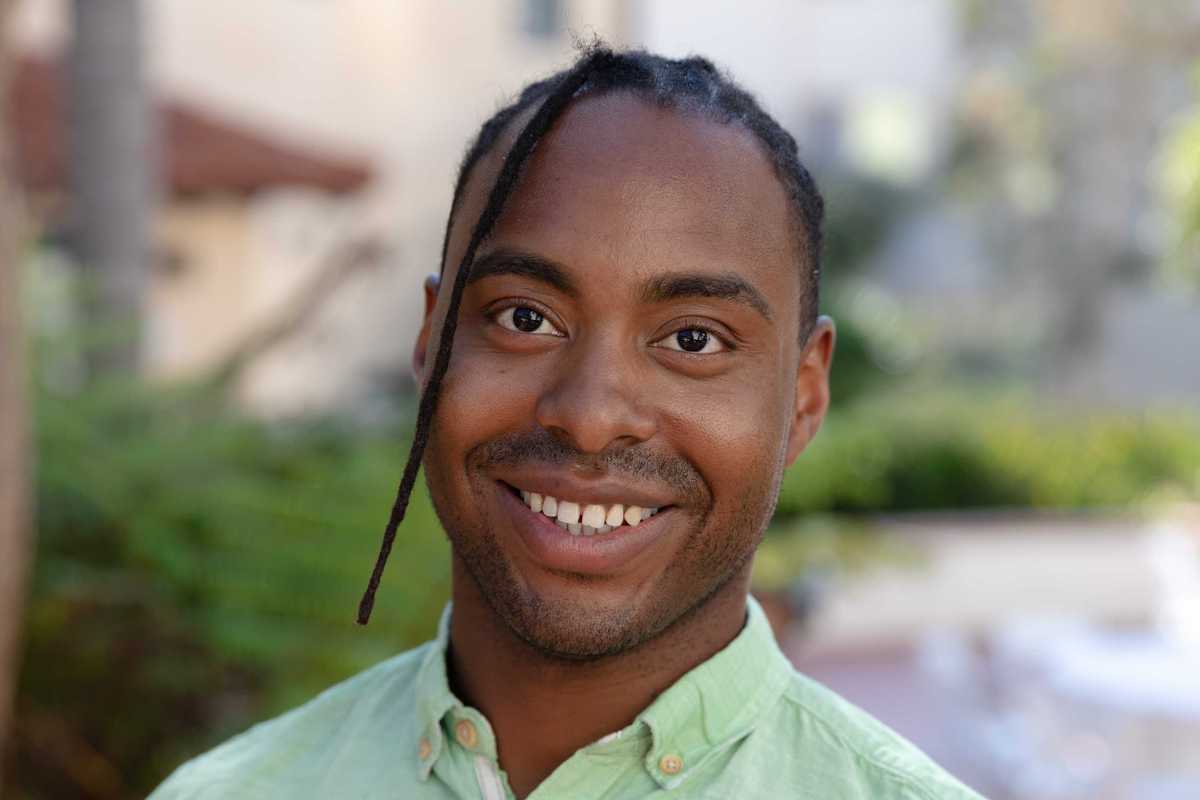
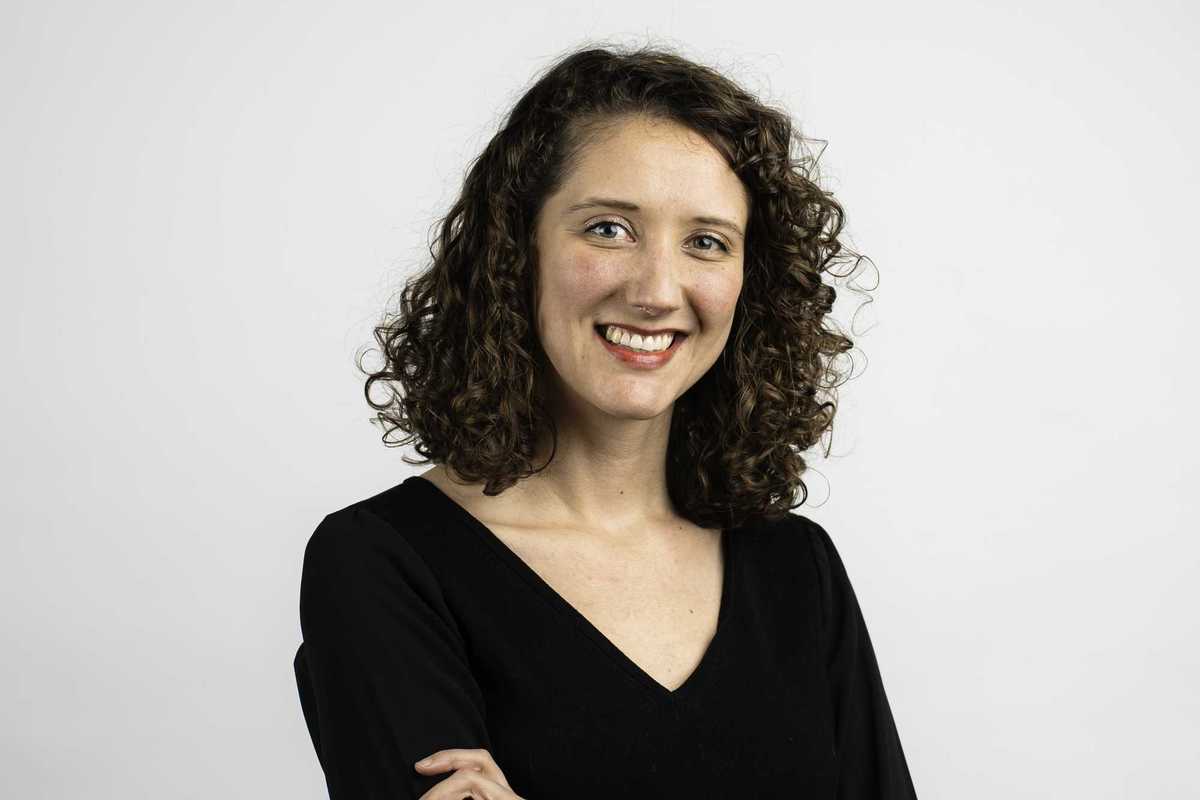
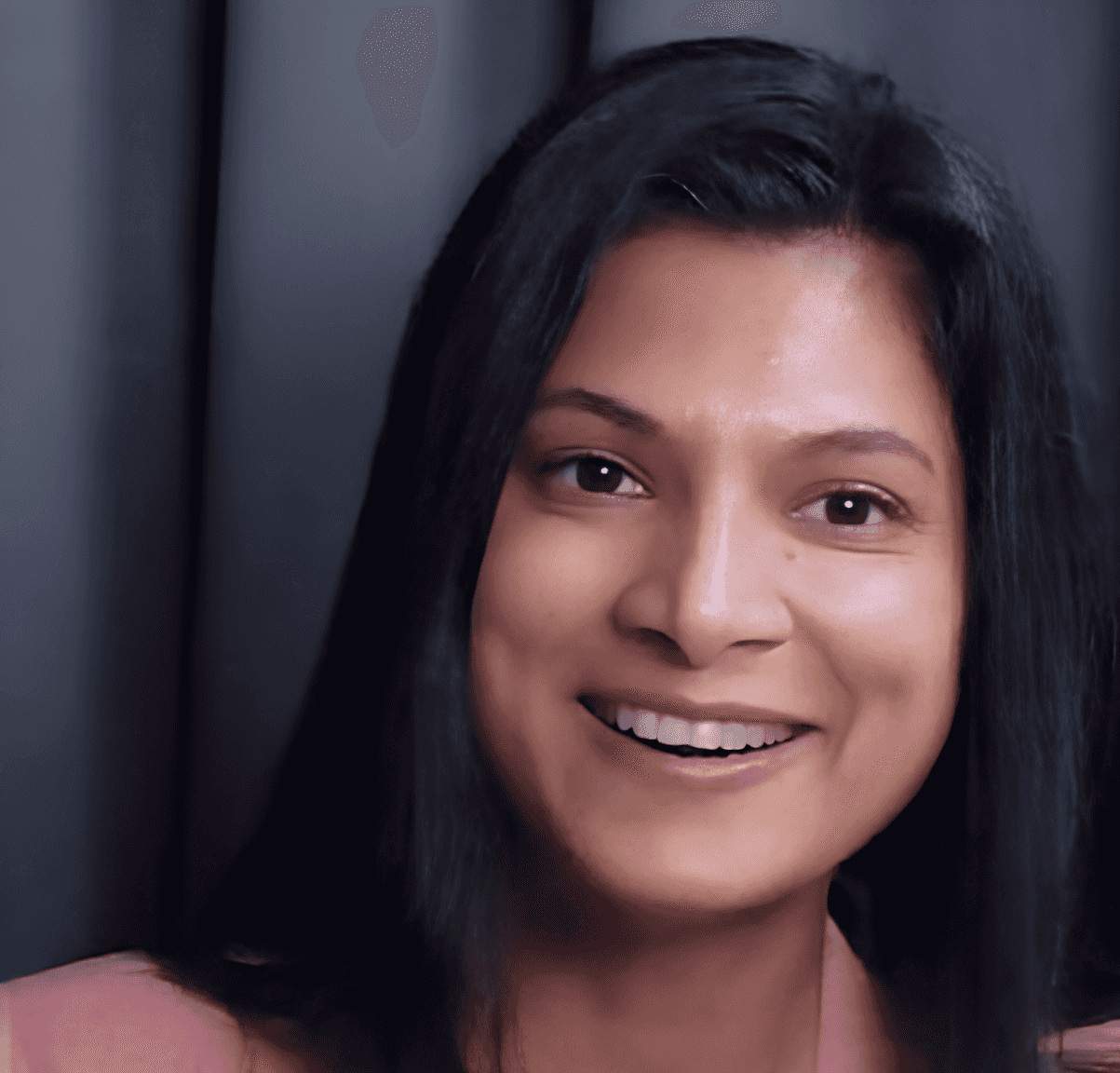
Angle Bush, founder and CEO of Black Women in Artificial Intelligence, was named to the TIME100 AI earlier this year. Photo courtesy BWIAI

Angle Bush, founder and CEO of Black Women in Artificial Intelligence, has a running question for her organization's members: Are you in the lab?

For Bush, inquiry isn’t philosophical. Learning about artificial intelligence is one thing. But building with it? Developing products, solving problems and creating a stake in the emerging AI economy? That’s another thing entirely—and exactly the point.

Bush’s own path into AI began in 2019 with an unlikely project: a robot named Usher, designed to bring her hot cocoa. She went down what she calls “YouTube University” to figure out how to build it and kept encountering another subject: artificial intelligence. Her curiosity eventually led her to a Houston AI event, where she noticed something missing.

She didn’t see a full reflection of herself, prompting a bigger question: If AI was becoming a transformative force, who would have a role in shaping it? Her answer became the premise for what came next: There couldn’t be an AI revolution without Black women.

Bush never finished Usher. Instead, she built Black Women in Artificial Intelligence, which has grown into a global organization with members across five continents.

Six years after launching BWIAI, the Houston founder was named to the 2026 TIME100 AI, TIME’s annual list recognizing 100 of the world’s most influential people in artificial intelligence.

The recognition is significant, but Bush is focused on what comes next: moving people beyond AI literacy and adoption and into creation—turning ideas into deployed products, building economic opportunity and ensuring more people have a hand in shaping the technology.

That mission brings Bush back to Houston, where she sees an opportunity to build on the city’s entrepreneurial culture while advancing conversations around responsible and ethical AI.

InnovationMap spoke with Bush about her TIME100 AI recognition, her push to get more people building with AI, Houston’s role in the technology’s future and her simple message: Get in the lab.

InnovationMap: What accomplishment at BWIAI are you most proud of?

Angle Bush: This past March, 11 of our members designed and deployed products and services utilizing artificial intelligence. For me, that's what we want to do. We're looking for builders. I continually ask our members: Are you in the lab? What are you building?

We have members here in Houston who built a conference app designed to help people better understand and navigate the conference experience. We also have Shonda and Shalisha Witherspoon, The Digital Twins, who created a patent assistant to help individuals interested in creating a patent for their product or service.

For me, watching those women move dreams from notebooks to deployment is more important than anything else. Notebooks are designed to hold your dreams, but not keep your dreams.

For NVIDIA's GPU Technology Conference, if you wanted to participate as part of the Black Women in AI delegation, you had to build something. You couldn't just give me a concept and say, “Hey, Angle, I'm building ABC.” No. I needed you to design it, build it and deploy it. That will continually be one of the things I'm most proud of.

IM: Why is building so important to you?

AB: I've been saying that from the beginning because I tell people all the time: I can talk all day. We can have this conversation all day. But at the end of the day, are we building? What is the result?

Conversation is great. It can provide insight. But we have to put our hands on products. We have to put our hands on the APIs. We have to put our hands on that knowledge and ask, What do we do with it?

After you learn it, what are you doing with it? Are you going to create an app that helps your family? Are you creating an app that allows you to be part of the AI economy in a way that you can control? We're all going to be part of the AI economy at some point based on our careers and everything else. But what part of it can you control?

IM: What's next for Black Women in Artificial Intelligence?

AB: I want to continue our mission to educate, engage, embrace and empower Black women in AI. I want our organization to serve as an opportunity for women to build. How do we build? How do we understand how to build? How do we move beyond how we've been conditioned and start asking questions—not only of ourselves, but also the right questions of corporations?

Long term, I want us to continue building, and then I want us to pass that knowledge and insight down to the next generation. But I also want us to reach back to generations that may not have had this opportunity when they were younger. Maybe they were discouraged from going into STEM when they were younger. I want them to know that you can still build. It doesn't matter what your age is. It doesn't matter what college or university you attended. If you have an idea, we want to democratize AI so that you can build.

IM: BWIAI's story began in Houston. What role do you think Houston can play in the AI boom?

AB: First, I absolutely love Houston. I'm originally from Chicago and was raised in Saginaw, Michigan. But as they say, I got to Houston as quickly as I could. I think Houston has a great opportunity to position itself as a center of excellence for innovation. We have an entrepreneurial spirit and drive that I believe is unmatched.

And as much as we have entrepreneurs, we also have advocates who want to see the ethical use of AI. I think we'll see a rise in entrepreneurship. Houston is already building that ecosystem with the Ion and other entities coming into the fold.

As far as the mark Black Women in Artificial Intelligence will make in Houston, I think we'll bring a different perspective to the city's AI ecosystem. We'll make an impact on the entrepreneurial side, but also on the advocacy side when it comes to the responsible and ethical use of AI, which isn't always talked about.

IM: One of the biggest concerns surrounding AI is its potential to displace workers faster than people can acquire new skills. How should we be thinking about that?

AB: In full transparency, that's a tough question to answer because AI is moving so quickly. There are so many different models and so many different things happening that it can appear as though they're coming out of thin air.

For me, it's a matter of how we work with individuals so they can think more about the system than the model, because the models can retire. The impact this is going to have on communities globally is going to be an interesting dynamic. With the work we're doing at Black Women in Artificial Intelligence, this is our mitigation system: How can we bring individuals along so they can learn artificial intelligence and understand that there is a pivot—and it's not coming. It's happening right now, live.

How can we create an ecosystem where individuals get the training, support and understanding they need? For me, that's how we mitigate it: by creating a space where individuals can learn how to pivot.

IM: If readers take one thing away from this conversation, what do you want it to be?

AB: How important it is to be in the lab. It is important to start building today—not tomorrow, not next week, not next month. We have to be in the lab today. That's it.

This interview has been edited for brevity and clarity.
Ad Placement 300x100
Ad Placement 300x600

CultureMap Emails are Awesome

UTMB launches new department for space medicine, names inaugural leader

department launch

In space, no one can hear you scream—but they can hear you discuss your medical history and recent symptoms.

The University of Texas Medical Branch (UTMB) announced last month that it would form a new Department of Aerospace and Exploration Medicine within its School of Public and Population Health under the leadership of Dr. Ronak V. Shah, who will serve as inaugural chair.

“Human exploration is changing rapidly, and the health challenges associated with distance, isolation, and limited resources are changing along with it,” Shah said in a news release. “Creating the Department of Aerospace and Exploration Medicine gives us an opportunity to build on decades of expertise at UTMB as we prepare for the future.”

The new department elevates UTMB’s existing Aerospace Medicine Division and provides "broader academic structure for expanding research, education, and collaboration across disciplines," according to the release. Shah was previously named director of the division in 2022 after serving as medical director of Johnson Space Center.

Space exploration in particular has a wide variety of highly specific medical side effects that are in need of the formalized study that the department will specialize in. For example, zero- and low-gravity environments cause everything from detached fingernails to flattened eyeballs. Even in modern, high-tech spacecraft, the human body feels the impacts of space.

It’s an area of medicine UTMB is uniquely suited for. Starting in the 1950s with NASA’s director of medical research Dr. Charles A. Berry, UTMB partnered with the blossoming era of exploration by monitoring astronauts. In 1993, UTMB and the NASA Johnson Space Center created the joint Aerospace Medicine Residency Program, which used bed facilities at the Galveston branch to simulate weightlessness. Wherever there has been a question about how flight and space affect health, odds are UTMB has been involved.

The Department of Aerospace and Exploration Medicine will launch several new initiatives soon. One planned for 2027 is an Undersea and Hyperbaric Medicine Fellowship that will allow scientists to study the physiology of high-pressure flight.

“In the era of a growing global space economy, we are revisiting questions such as who is flying, what is their destination, what vehicle will get them there?” Shah added in the release. “The answers to these questions will drive what research is needed and how we train the next generation.”

Energy AI company opens first U.S. office at Houston's the Ion

new to hou

Building on its partnership with Houston-based oilfield services provider Halliburton, energy-sector AI company Shape Digital recently opened an office at The Ion. It’s the company’s first U.S. location.

Shape Digital’s workforce in Houston includes employees specializing in tech support, business development and client services. The company’s local hiring projections and headcount weren’t available. The new office will be located within Industrious at the Ion, according to Rice Alliance.

A key driver of the new Houston office: The company forecasts North America will account for more than 20 percent of its business in 2027.

“North America is a critical market for industrial innovation, and Houston sits at the center of companies driving that progress,” Caio Sene, vice president of client services at Shape Digital, said in a release. “Growing our presence here allows us to work alongside operators as they look for practical ways to turn existing operational data into clear recommendations for what to do next.”

Shape Digital, which also has offices in Singapore and Brazil, develops decision-making platforms for the oil and gas sector.

The Ion District office gives Shape Digital a presence close to Halliburton’s headquarters. In May, the two companies forged a partnership to combine Halliburton’s Digital Field Solverdecision-making system with Shape Digital’s AI portfolio.

Shape Digital layers AI software atop existing operations data rather than replacing legacy systems or adding new software.

The company’s suite of AI agents draws on more than 200 operations-monitoring algorithms, continually learning from company and industry data. The suite comprises four products: Shape Aura, Shape Lighthouse, Shape Lumen and Shape Reef.

Shape Digital says that by working with a customer’s existing operations data, it can deliver ROI in less than two months without any additional investment in equipment or infrastructure.

The company is a 2021 spinoff of Japan-based Modec. Modec builds, owns, and operates floating offshore oil and gas production facilities. Its Modec America subsidiary is based in Houston.

Meet the esteemed judges for the 2026 Houston Innovation Awards

Meet The Judges

Editor's note: Judging is now underway for the 2026 Houston Innovation Awards, and it's time to meet the decision makers.

Our 2026 judging panel comprises past award winners who represent a variety of industries and areas of expertise. They are joined by InnovationMap's interim editor. All are deeply engaged in the Houston innovation ecosystem.

Our judging panel will review all nominee applications submitted across 10 prestigious categories. They will determine the 2026 finalists in all categories, and they will select the winners in all but one category — our people's choice award for Startup of the Year.

The sixth annual Houston Innovation Awards program will be presented in an all-digital format in 2026. We will announce this year's finalists and feature their stories throughout our special editorial series this fall. Then, stay tuned as we reveal the 2026 Houston Innovation Awards winners on InnovationMap.com in mid-November.

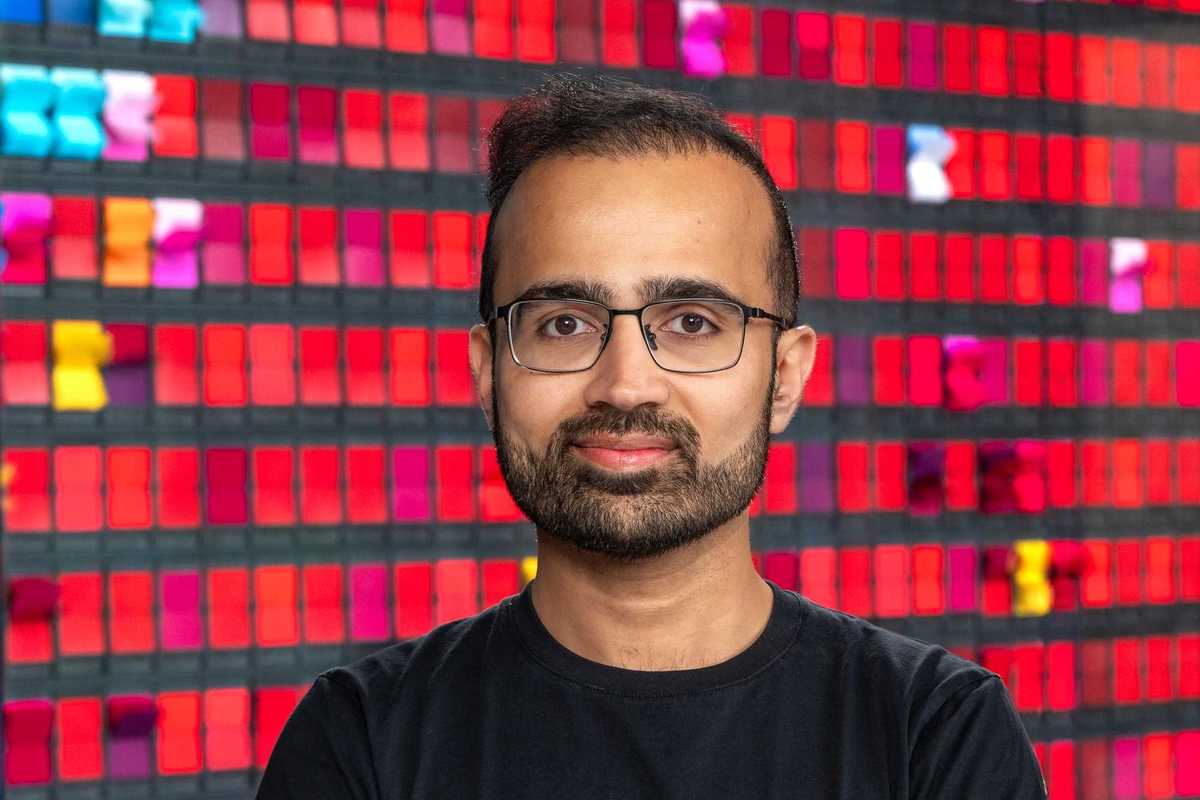
Sagar Dalal, Fervo Energy, 2025 Scaleup of the Year

Sagar Dalal

Sagar Dalal serves as chief of staff at Fervo Energy, a company pioneering the commercialization of next-generation geothermal power. In this role, he helps translate the CEO’s vision and priorities into execution, leading cross-functional strategic initiatives that support the company’s growth and operations.

Dalal brings nearly eight years of experience in structural engineering and project management from his time at Thornton Tomasetti and Tesla, where he engineered and built a wide range of infrastructure projects ranging from stadiums to manufacturing facilities. He holds an MBA from Stanford University and an MS in Civil Engineering from Texas A&M University. He is also a licensed professional engineer.

Aaron Fitzgerald, Mars Materials, 2025 Minority-founded Business of the Year

Aaron Fitzgerald

Aaron Fitzgerald is a three-time founder and carbon removal entrepreneur focused on reimagining how we make things. As the CEO of Mars Materials, he leads a team working to commercialize technologies that sequester captured carbon into industrial supply chains.

His vision for a defossilized future is shaped by a unique path through both policy, including a tenure in the United States Senate, and deep carbontech, with fellowships at The Lewis Latimer program, Breakthrough Energy, Prime Coalition, and Carbon 180.

Tatiana Fofanova, Koda Health, 2025 Health Tech Business of the Year

Tatiana Fofonova

Tatiana Fofanova, PhD, is the co-founder and CEO of Koda Health, an AI-enhanced patient decision support platform designed to make advance care planning (ACP) scalable, accessible, and patient-centered for patients with serious illness.

After earning her PhD in Translational Medicine at Baylor College of Medicine, she joined Texas Medical Center (TMC) as a Founder-in-Residence. It was there that she and her co-founders identified one of the most overlooked yet critical gaps in healthcare: the lack of meaningful, accessible advance care planning. Under her leadership, Koda Health now supports over 1 million patients through partnerships with organizations like Cigna, Privia, and Houston Methodist.

Lawson Gow, Greentown Labs, 2025 Incubator/Accelerator of the Year

Lawson Gow currently serves as chief strategy officer for Greentown Labs, which was named Incubator/Accelerator of the Year in the 2025 Houston Innovation Awards. Prior to joining Greentown Labs as Head of Houston in 2025, Gow was as a managing partner at Helium Capital, an investment and advisory firm that aims to support founders across the entire lifecycle of entrepreneurship.

He is also the founder of The Cannon, an innovation-infrastructure provider that operates a growing network of innovation hubs for its community of startups, entrepreneurs, investors, and corporate innovators.

Sarah Hein, March Biosciences, 2025 Female-founded Business of the Year

Sarah Hein

Sarah Hein is the founding CEO of March Biosciences, a clinical-stage cell-therapy company targeting challenging malignancies. Prior to cofounding March Biosciences, she was the founding Entrepreneur in Residence for the Texas Medical Center Innovation Accelerator for Cancer Therapeutics (TMCi ACT).

Formerly, she was a cofounder and the vice president of operations at Courier Therapeutics, a cancer immunotherapy startup acquired by Valo Health. She was also director of research at Resonant Therapeutics, an antibody therapeutics platform technology company. She began at Mercury Fund as a Venture Fellow directly after graduating with her PhD in Molecular Biology from Baylor College of Medicine.

Tanu Jain, FlowCare, 2025 Startup of the Year

Tanu Jain

Tanu Jain is a product executive, entrepreneur, founder and CEO of FlowCare, and registered nurse with a track record of building products from zero to global scale. She previously led product at BioIQ before founding FlowCare, a Houston-based period care infrastructure platform making period care a standard in every restroom. In under 16 months, FlowCare has signed deployed across four enterprise customers and impacted more than 1.5 million women.

FlowCare was named Startup of the Year at the 2025 Houston Innovation Awards, and Jain has been recognized with additional honors including the SDG Super Changemaker – Pewter — at the Global Sustainability Awards 2026.

Prabhdeep "Prab" Sekhon, Eclipse Energy, 2025 Energy Transition Business of the Year

Prabhdeep Singh Sekhon

Prabhdeep Singh Sekhon is CEO of Eclipse Energy, an energy technology company transforming depleted oil fields into low-cost, sustainable hydrogen resources through subsurface biotechnology. He brings nearly two decades of global energy experience spanning climate technology, venture capital, private equity, and multi-billion-dollar energy projects across five continents.

Previously, he held leadership roles at NextEra Energy Resources and Hess Corporation. He is also a founder and managing director of GreenLite Resources and a founding member of Cotogna Sports Group. He holds an MBA from Wharton, a Masters in Engineering from Texas A&M, and a BS from the University of Calgary.

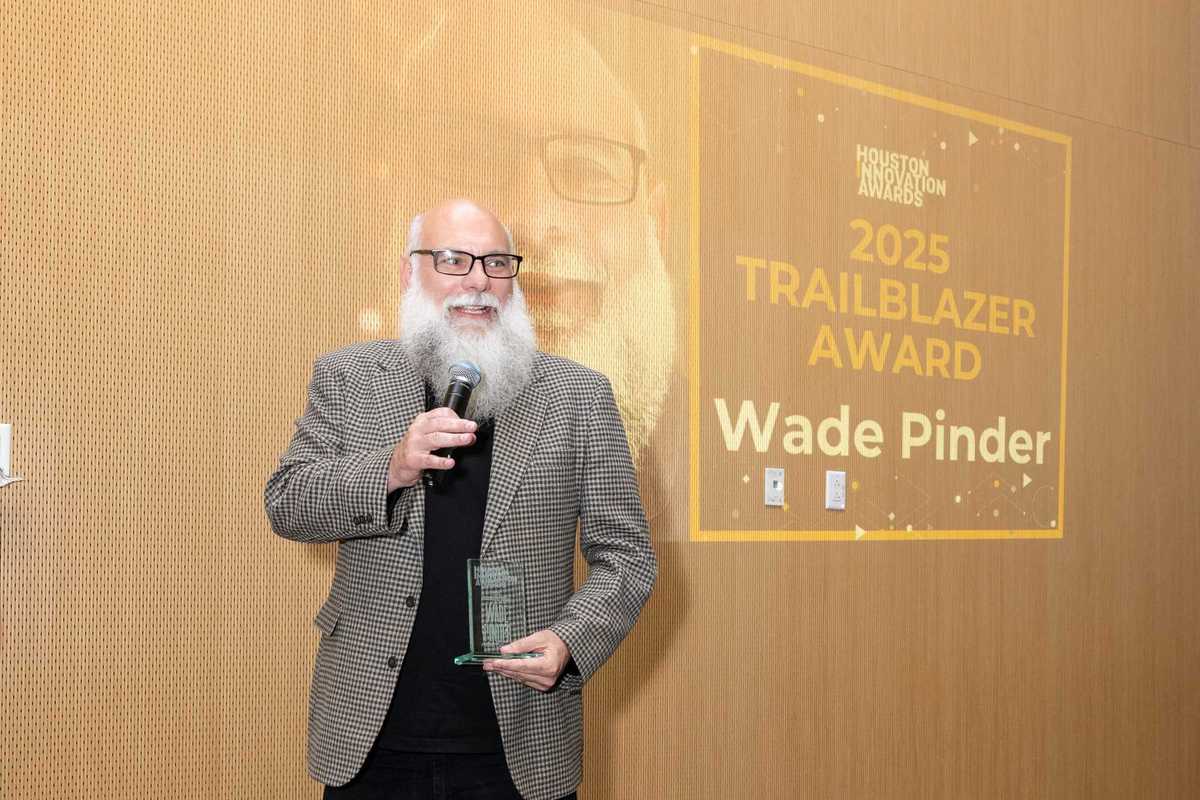
Wade Pinder, Product Houston, 2025 Trailblazer Award Winner

Wade Pinder thinks of himself as an "ecosystem wayseeker," helping founders and builders in and around Houston find their footing, understand the landscape, and move through uncertainty with more clarity. Through Product Houston, he works at the intersection of product strategy, founder support, ecosystem mapping, and community-building, with a particular focus on helping people show up in the right rooms before they feel fully ready.

His background includes years in product management at Blinds.com and Home Depot, along with founding and leading the Houston Product Community for six years. He was recognized by as Mentor of the Year in the 2023 Houston Innovation Awards and received the Trailblazer Award in 2025.

Laura Furr Mericas, Interim Editor, InnovationMap

Laura Furr Mericas is interim editor for InnovatonMap.com and EnergyCapitalHTX.com. She is a longtime contributor to both sites and has reported on Houston's innovation ecosystem for InnovationMap since 2020. Previously, she served as web editor and data reporter for Houston Business Journal.