


Zach Ellis, founder and general partner of South Loop Ventures. Photo via LinkedIn

Editor's note: Houston innovators are making waves this month with revolutionary VC funding, big steps towards humanoid robotics, and software that is impacting the agriculture sector. Here are three Houston innovators to know right now.

Zach Ellis, founder and partner of South Loop Ventures
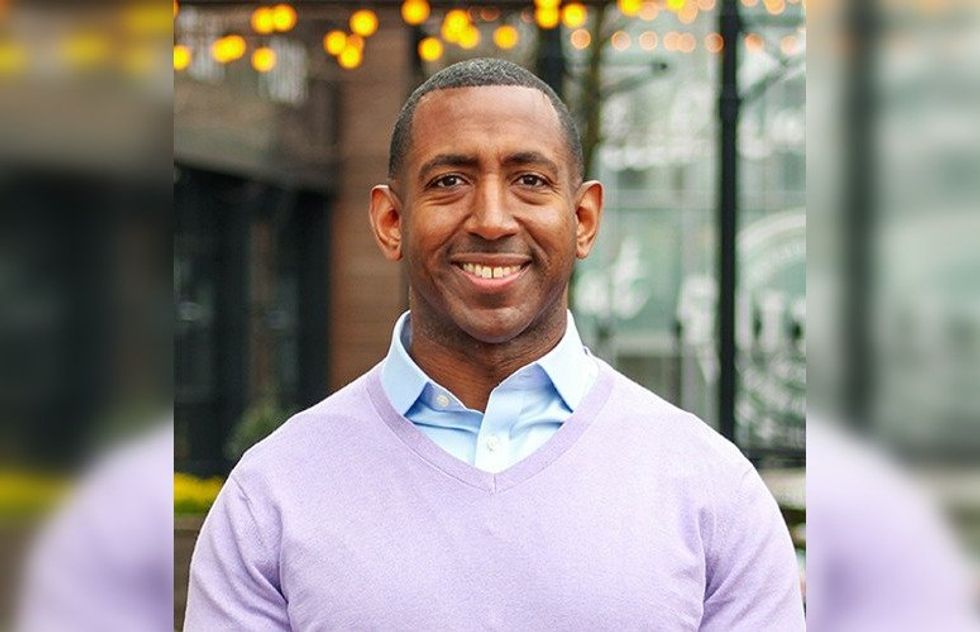
Zach Ellis. Photo via LinkedIn

Zach Ellis Jr., founder and general partner of South Loop Ventures, says the firm wants to address the "billion-dollar blind spot" of inequitable distribution of venture capital to underrepresented founders of color. The Houston-based firm recently closed its debut fund for more than $21 million. Learn more.

Ty Audronis, CEO and founder of Tempest Droneworx
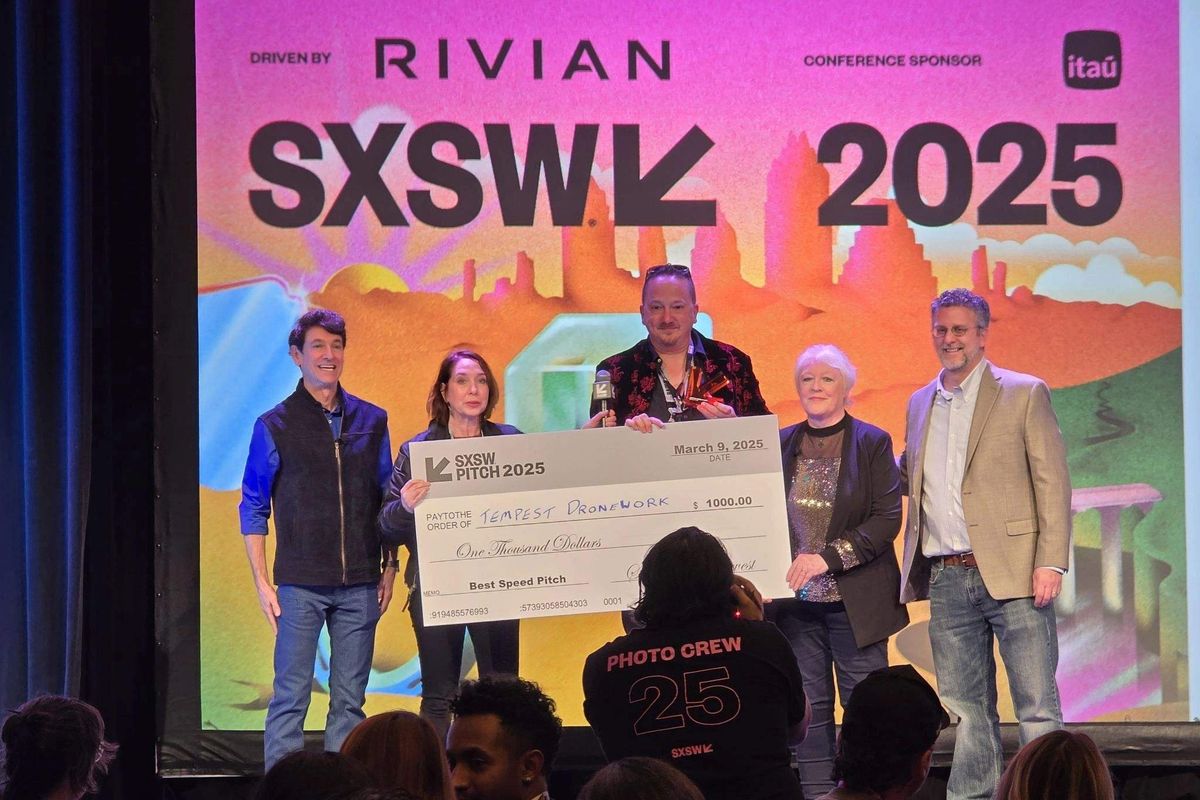
Ty Audronis, CEO and founder of Tempest Droneworx

Ty Audronis, center. Photo via LinkedIn.

Ty Audronis and his company, Tempest Droneworx, made a splash at SXSW Interactive 2025, winning the Best Speed Pitch award at the annual festival. The company is known for it flagship product, Harbinger, a software solution that agnostically gathers data at virtually any scale and presents that data in easy-to-understand visualizations using a video game engine. Audronis says his company won based on its merits and the impact it’s making and will make on the world, beginning with agriculture. Learn more.

Nicolaus Radford, CEO of Persona AI
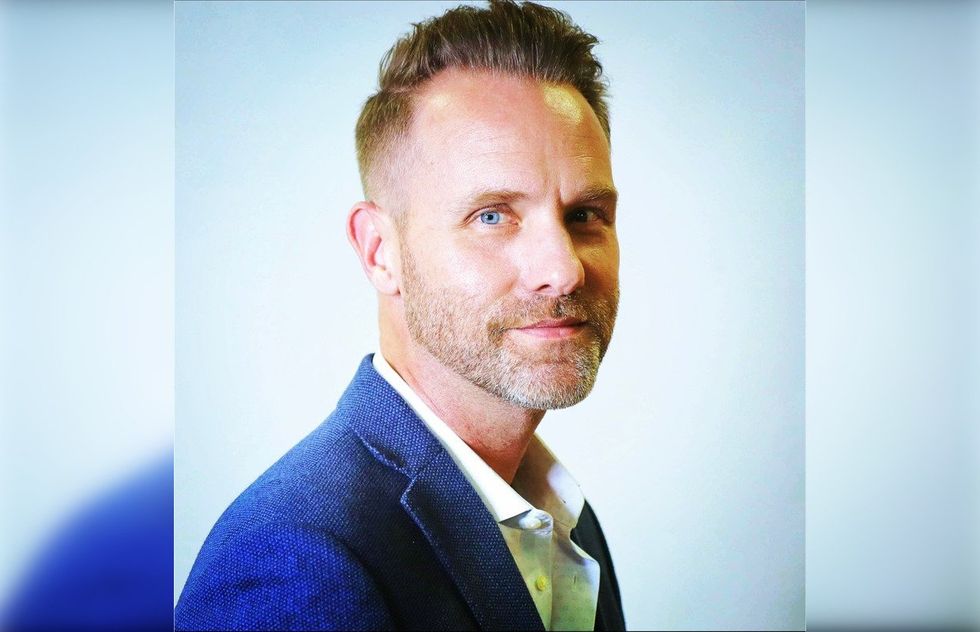
Nicolaus Radford, founder and CEO of Nauticus RoboticsNicolaus Radford. Image via LinkedIn

Houston-based Persona AI and CEO Nicolaus Radford continue to make steps toward deploying a rugged humanoid robot, and with that comes the expansion of its operations at Houston's Ion. Radford and company will establish a state-of-the-art development center in the prominent corner suite on the first floor of the building, with the expansion slated to begin in June. “We chose the Ion because it’s more than just a building — it’s a thriving innovation ecosystem,” Radford says. Learn more.

Zach Ellis, founder and general partner of South Loop Ventures, which recently closed its debut fund. Photo via LinkedIn

Houston VC firm closes $21M fund for underrepresented founders

fresh funding

Houston-based South Loop Ventures recently closed its debut fund for more than $21 million, led by investments from Rice Management Company and Chevron Technology Ventures.

The funds will go toward teams with at least one underrepresented founder of color working in the energy, health, space, sports and fintech sectors. Additional investments came from The Great Commission Foundation of the Episcopal Diocese of Texas, Texas CapitalBank and others organizations.

According to South Loop Ventures, less than 3 percent of venture capital reaches underrepresented founders of color. Zach Ellis Jr., founder and general partner of South Loop, says the firm wants to address this "billion-dollar blind spot."

"Inequitable distribution of venture capital represents a clear market inefficiency—and market inefficiencies translate into exceptional opportunities," Ellis said in a release.

He added that the firm's location in Houston will help it make an impact.

"Being anchored here gives us front-row access to world-class corporations eager to engage and support innovation from founders with underrepresented voices and perspectives," he added in the release.

Ellis founded South Loop Ventures in 2022. It has funded 13 companies since August 2023 and plans to fund several more this year. Its portfolio includes Houston-based Milkify, a breast milk freeze-drying service; Lokum App, a Houston-founded platform for recruiting certified registered nurse anesthetists; and others.

Ellis' background spans the United States Military, academia, and roles at Rev1 Ventures and PepsiCo’s corporate venture team. He previously told InnovationMap that he was called to invest in founders of color after George Floyd's murder. He says he also realized how much money was being left on the table by overlooking these innovators.

"The mission of South Loop is to become the preeminent source of venture capital dollars for underrepresented, diverse teams nationally to serve as a beacon for the best underrepresented talent and to enable them to be successful through leveraging the unique resources and talent of Houston," he said on the Houston Innovators Podcast in 2024. "A big part of our mission is also to help catalyze Houston as an ecosystem for tech entrepreneurship."

Listen to the full interview with Ellis here. The recent funding news and Ellis were also featured in a profile by TechCrunch earlier this week. Click here to read more.

Ad Placement 300x100
Ad Placement 300x600

CultureMap Emails are Awesome

This Houston airport saw sharp passenger decline in 2025, study shows

Travel Talk

A new global airport travel study has revealed passenger traffic at Houston's William P. Hobby Airport (HOU) sharply decreased from 2024 to 2025.

The analysis from travel magazine LocalsInsider examined recently released data from the Bureau of Transportation Statistics (BTS), the U.S. International Trade Association, and a nationwide survey to determine the following American traveler habits: The most popular U.S. and international destinations, emerging hotspots, and destinations on the decline. The study covered passenger travel trends from January through July 2025.

In the report's ranking of the 40 U.S. airports with the sharpest declines in passenger traffic, HOU ranked 13th on the list.

About 4.26 million arrivals were reported at HOU from January through July 2024, compared to about 3.96 million during the same seven-month period in 2025. According to the data, that's a significant 7.1 percent drop in passenger traffic year-over-year, or a loss of 300,974 passengers.

"As travelers chase new hotspots, some destinations are seeing reduced passenger traffic whether due to rising costs, shifting airline schedules, or evolving traveler preferences, some destinations are seeing a decrease in visitors," the report's author wrote.

It appears most major Texas airports had drops in passenger traffic from 2024 to 2025. Dallas Love Field Airport (DAL) saw the worst in the state, with a dramatic 7.4 percent dip in arrivals. DAL also ranked 11th on the list of U.S. airports with the steepest declines in passenger traffic.

More than 5.13 million arrivals were reported at DAL from January through July 2024, compared to over 4.75 million during the same seven-month period in 2025.

This is how passenger traffic has fallen at other major Texas airports from 2024 to 2025:

Austin-Bergstrom International Airport (AUS):

  • 6,107,597 – Passenger arrivals from January to July 2024
  • 5,828,396 – Passenger arrivals from January to July 2025
  • -4.6 percent – Year-over-year passenger change
Dallas/Fort Worth International Airport (DFW):
  • 23,830,017 – Passenger arrivals from January to July 2024
  • 23,251,302 – Passenger arrivals from January to July 2025
  • -2.4 percent – Year-over-year passenger change

San Antonio International Airport (SAT):

  • 2,937,870 – Passenger arrivals from January to July 2024
  • 2,836,774 – Passenger arrivals from January to July 2025
  • -3.4 percent – Year-over-year passenger change
El Paso International Airport (ELP):
  • 1,094,431 – Passenger arrivals from January to July 2024
  • 1,076,845 – Passenger arrivals from January to July 2025
  • -1.6 percent – Year-over-year passenger change
---

This story originally appeared on CultureMap.com.

NASA names new chief astronaut based in Houston

new hire

NASA has a new chief astronaut. Scott Tingle, stationed at the space agency’s Johnson Space Center in Houston, assumed the post Nov. 10.

Tingle succeeds NASA astronaut Joe Acaba, who had been chief astronaut since February 2023. Acaba now works on the staff of the Johnson Space Center’s director.

As chief astronaut, Tingle runs NASA’s Astronaut Office. His job includes developing astronauts’ flight crew operations and assigning crews for space missions, such as Artemis missions to the moon.

Tingle, a former captain in the Navy, was named a NASA astronaut candidate in 2009. He has logged over 4,500 flight hours in more than 50 aircraft.

Tingle was a flight engineer aboard the International Space Station, where he spent 168 days in orbit during two expeditions that launched in December 2017. Since returning to Earth, he has held various roles in the Astronaut Office, including mission support, technical leadership and crew readiness.

Before joining NASA, Tingle worked in El Segundo, California, on the technical staff of The Aerospace Corp., a nonprofit that supports U.S. space programs.

Tingle recalls expressing his desire to be an astronaut when he was 10 years old. It took him four tries to be accepted by NASA as an astronaut candidate.

“The first time I figured it was kind of too early. The second application, they sent out some feelers, and that was about it. Put in my third application, and got a couple of calls, but it didn’t quite happen,” Tingle said in an article published on the website of Purdue University, his alma mater.

ExxonMobil officially pauses plans for $7B Baytown hydrogen plant

Change of Plans

As anticipated, Spring-based oil and gas giant ExxonMobil has officially paused plans to build a low-hydrogen plant in Baytown, Chairman and CEO Darren Woods told Reuters in late November.

“The suspension of the project, which had already experienced delays, reflects a wider slowdown in efforts by traditional oil and gas firms to transition to cleaner energy sources as many of the initiatives struggle to turn a profit,” Reuters reported.

Woods signaled during ExxonMobil’s second-quarter earnings call that the company was weighing whether it would move forward with the proposed $7 billion plant.

The Biden-era Inflation Reduction Act created a new 10-year incentive, the 45V tax credit, for production of clean hydrogen. But under President Trump’s "One Big Beautiful Bill Act," the window for starting construction of low-carbon hydrogen projects that qualify for the tax credit has narrowed. The Inflation Reduction Act mandated that construction start by 2033. But the Big Beautiful Bill switched the construction start time to early 2028.

“While our project can meet this timeline, we’re concerned about the development of a broader market, which is critical to transition from government incentives,” ExxonMobil Chairman and CEO Darren Woods said during the company’s second-quarter earnings call.

Woods had said ExxonMobil was figuring out whether a combination of the 45Q tax credit for carbon capture projects and the revised 45V tax credit would enable a broader market for low-carbon hydrogen.

“If we can’t see an eventual path to a market-driven business, we won’t move forward with the [Baytown] project,” Woods said.

“We knew that helping to establish a brand-new product and a brand-new market initially driven by government policy would not be easy or advance in a straight line,” he added.

ExxonMobil announced in 2022 that it would build the low-carbon hydrogen plant at its refining and petrochemical complex in Baytown. The company has said the plant is slated to go online in 2027 and 2028.

ExxonMobil had said the Baytown plant would produce up to 1 billion cubic feet of hydrogen per day made from natural gas, and capture and store more than 98 percent of the associated carbon dioxide. The plant would have been capable of storing as much as 10 million metric tons of CO2 per year.

---

This article originally appeared on EnergyCapitalHTX.com; it was updated to include new information about the plant in December 2025.