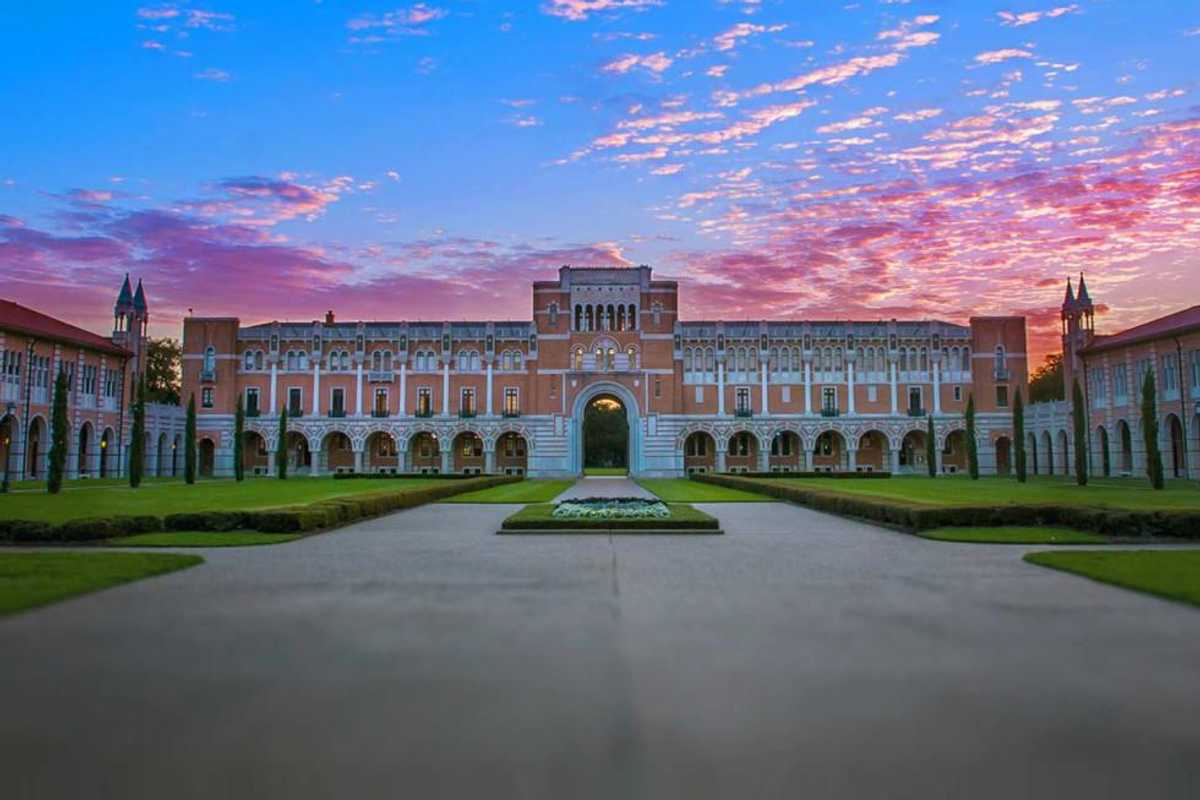
Houston Methodist boasts a great corporate culture. Photo via TMC.edu

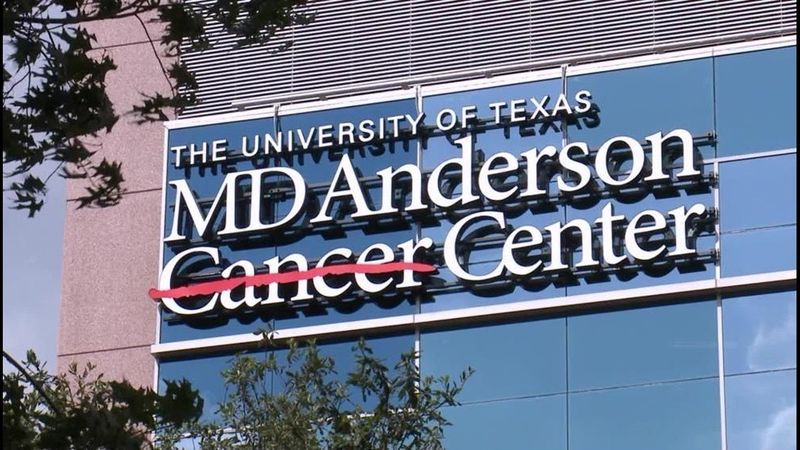
Two of Houston's biggest medical institutions – Houston Methodist and MD Anderson Cancer Center – have just landed top-50 spots on Forbes' new ranking of "America's Best Employers for Company Culture." The report highlighted eight more Houston-area companies for their inspiring company culture.

Forbes partnered with market research firm Statista to survey over 218,000 workers at companies with at least 1,000 employees throughout the U.S, and relied on data from the past three years of employee surveys (with an emphasis on the most recent data and recommendations from current employees). Companies don't pay to be included, Forbes additionally noted.

Among the final list of 600 U.S. companies, 30 Texas employers were praised for providing "a unifying company culture that inspires a sense of purpose and loyalty among employees."

Houston Methodist climbed into the No. 15 spot nationally and outranked all other Texas companies on the list, while MD Anderson ranked 47th nationwide. Both institutions have dominated U.S. News' annual rankings of the best Texas hospitals for over a decade, proving exactly how having a great company culture can also improve the service provided to patients.

MD Anderson Cancer Center MD Anderson Cancer Center has been the No. 1 best cancer hospital in the U.S. for over a decade. Photo courtesy of KVUE

According to the report's research, employers with a successful company culture don't rely on "surface-level perks" such as free lunches, wellness apps, and flex days to inspire employee engagement. Instead, employers that focused on conflict resolution and coaching their managers saw a reduction in employee burnout and an increase in "perceptions of fairness and leadership care."

"In fact, the researchers noted that when 'senior leaders changed how they led — how they ran meetings, gave feedback, made decisions and responded to challenge — trust scores rose by an average of 26 percent,'" the report said.

The eight other Houston-area companies that earned national acclaim for their company culture are:

  • No. 220 – Stewart Info Services
  • No. 325 – BP
  • No. 332 – Baylor College of Medicine
  • No. 492 – Chevron Phillips Chemical, The Woodlands
  • No. 525 – Insperity
  • No. 558 – NRG Energy
  • No. 586 – Waste Management
  • No. 593 – LyondellBassell

Other Texas employers with great company culture:

Elsewhere in Texas, 15 North Texas companies and five Central Texas companies were included on Forbes' list of employers with the best company culture.

The three Austin-area companies that earned spots on the list include Austin Community College District (No. 56), Round Rock-based Dell Technologies (No. 207), and Keller Williams Realty (No. 352).

The two San Antonio-based companies that made the cut are beloved Texas grocery chain H-E-B (No. 445), and municipal electric utility company CPS Energy (No. 551).

The 15 Dallas-Fort Worth-based companies that made the list include:

  • No. 58 – The Container Store, Coppell
  • No. 73 – Lewisville Independent School District, Lewisville
  • No. 117 – Southwest Airlines, Dallas
  • No. 123 –Topgolf, Dallas
  • No. 170 – McKesson, Irving
  • No. 190 – Kimberly-Clark, Irving
  • No. 245 – Jacobs Solutions,Dallas
  • No. 312 – Brinker International, Coppell
  • No. 350 – Texas Health Resources, Arlington
  • No. 482 – Toyota North America, Plano
  • No. 562 – Dallas Area Rapid Transit (DART), Dallas
  • No. 567 – AT&T, Dallas
  • No. 569 – Energy Transfer, Dallas
  • No. 591 – American Airlines Group, Fort Worth
  • No. 597 – Aimbridge Hospitality, Plano
---

This article originally appeared on CultureMap.com.

Heath care organizations made up 20 percent of the top 100 employers on Forbes' list. Photo via houstonmethodist.org

Prestigious Houston hospital system named No. 1 large employer in Texas and No. 2 in U.S. by Forbes

where to work

Attention to all those seeking a career in the medical industry: this top city hospital is one of the best places to work for. Houston Methodist was named the best large employer in Texas, and second best employer in America, according to Forbes’ latest report.

Health care organizations are the shining stars in this year’s report; they represented 20 percent of the top 100 employers. Houston Methodist made some major improvements within the span of a year after being ranked No. 37 in Forbes' 2022 report. In another win for health care, Dallas’ University of Texas Southwestern Medical Center was placed at No. 19.

To determine their rankings, Forbes partnered with consumer data and statistics firm Statista to survey 45,000 employees at companies with a staff of 5,000 or more. The full list categorized 500 of America’s large employers that earned the most recommendations.

Other Houston-area companies on the list after Houston Methodist include:

  • No. 210 – Shell
  • No. 289 – Schlumberger, based in Sugar Land
  • No. 341 – BP
  • No. 383 – Sysco
  • No. 421 – Waste Management
  • No. 479 – Air Liquide

Elsewhere in Texas, the Dallas-Fort Worth area had the most employers on Forbes’ list, with 14 companies making an appearance after UT Southwestern Medical Center’s No. 19 ranking.

Dallas-Fort Worth area companies on Forbes’ list include:

  • No. 70 – Southwest Airlines
  • No. 83 – Topgolf
  • No. 164 – McKesson, based in Irving
  • No. 188 – Toyota North America, based in Plano
  • No. 250 – Jacobs Engineering
  • No. 268 – Texas Instruments
  • No. 339 – ExxonMobil, based in Irving
  • No. 369 – CBRE Group
  • No. 376 – American Airlines Group, based in Fort Worth
  • No. 400 – Aimbridge Hospitality, based in Plano
  • No. 403 – NTT Data, based in Plano
  • No. 410 – Republic National Distributing Company, based in Grand Prairie
  • No. 430 – AT&T
  • No. 497 – Crossmark, based in Plano

San Antonio had a top 10 contender on Forbes’ report for best employers: none other than Texas’ signature grocery store H-E-B. Other San Antonio companies that were ranked include United Services Automobile Association (USAA) at No. 42 and Whataburger at No. 493.

In Austin, five employers earned spots in Forbes' rankings:

  • No. 77 – Dell Technologies, based in Round Rock
  • No. 96 – Keller Williams Realty
  • No. 121 – University of Texas at Austin
  • No. 306 – Whole Foods Market
  • No. 454 – McLane Company, based in Temple

The full rankings and its methodology can be found at forbes.com.

------

This article originally ran on CultureMap.

Ad Placement 300x100
Ad Placement 300x600

CultureMap Emails are Awesome

Houston researchers develop material to boost AI speed and cut energy use

ai research

A team of researchers at the University of Houston has developed an innovative thin-film material that they believe will make AI devices faster and more energy efficient.

AI data centers consume massive amounts of electricity and use large cooling systems to operate, adding a strain on overall energy consumption.

“AI has made our energy needs explode,” Alamgir Karim, Dow Chair and Welch Foundation Professor at the William A. Brookshire Department of Chemical and Biomolecular Engineering at UH, explained in a news release. “Many AI data centers employ vast cooling systems that consume large amounts of electricity to keep the thousands of servers with integrated circuit chips running optimally at low temperatures to maintain high data processing speed, have shorter response time and extend chip lifetime.”

In a report recently published in ACS Nano, Karim and a team of researchers introduced a specialized two-dimensional thin film dielectric, or electric insulator. The film, which does not store electricity, could be used to replace traditional, heat-generating components in integrated circuit chips, which are essential hardware powering AI.

The thinner film material aims to reduce the significant energy cost and heat produced by the high-performance computing necessary for AI.

Karim and his former doctoral student, Maninderjeet Singh, used Nobel prize-winning organic framework materials to develop the film. Singh, now a postdoctoral researcher at Columbia University, developed the materials during his doctoral training at UH, along with Devin Shaffer, a UH professor of civil engineering, and doctoral student Erin Schroeder.

Their study shows that dielectrics with high permittivity (high-k) store more electrical energy and dissipate more energy as heat than those with low-k materials. Karim focused on low-k materials made from light elements, like carbon, that would allow chips to run cooler and faster.

The team then created new materials with carbon and other light elements, forming covalently bonded sheetlike films with highly porous crystalline structures using a process known as synthetic interfacial polymerization. Then they studied their electronic properties and applications in devices.

According to the report, the film was suitable for high-voltage, high-power devices while maintaining thermal stability at elevated operating temperatures.

“These next-generation materials are expected to boost the performance of AI and conventional electronics devices significantly,” Singh added in the release.

Houston to become 'global leader in brain health' and more innovation news

Top Topics

Editor's note: The most-read Houston innovation news this month is centered around brain health, from the launch of Project Metis to Rice''s new Amyloid Mechanism and Disease Center. Here are the five most popular InnovationMap stories from December 1-15, 2025:

1. Houston institutions launch Project Metis to position region as global leader in brain health

The Rice Brain Institute, UTMB's Moody Brain Health Institute and Memorial Hermann’s comprehensive neurology care department will lead Project Metis. Photo via Unsplash.

Leaders in Houston's health care and innovation sectors have joined the Center for Houston’s Future to launch an initiative that aims to make the Greater Houston Area "the global leader of brain health." The multi-year Project Metis, named after the Greek goddess of wisdom and deep thought, will be led by the newly formed Rice Brain Institute, The University of Texas Medical Branch's Moody Brain Health Institute and Memorial Hermann’s comprehensive neurology care department. The initiative comes on the heels of Texas voters overwhelmingly approving a ballot measure to launch the $3 billion, state-funded Dementia Prevention and Research Institute of Texas (DPRIT). Continue reading.

2.Rice University researchers unveil new model that could sharpen MRI scans

New findings from a team of Rice University researchers could enhance MRI clarity. Photo via Unsplash.

Researchers at Rice University, in collaboration with Oak Ridge National Laboratory, have developed a new model that could lead to sharper imaging and safer diagnostics using magnetic resonance imaging, or MRI. In a study published in The Journal of Chemical Physics, the team of researchers showed how they used the Fokker-Planck equation to better understand how water molecules respond to contrast agents in a process known as “relaxation.” Continue reading.

3. Rice University launches new center to study roots of Alzheimer’s and Parkinson’s

The new Amyloid Mechanism and Disease Center will serve as the neuroscience branch of Rice’s Brain Institute. Photo via Unsplash.

Rice University has launched its new Amyloid Mechanism and Disease Center, which aims to uncover the molecular origins of Alzheimer’s, Parkinson’s and other amyloid-related diseases. The center will bring together Rice faculty in chemistry, biophysics, cell biology and biochemistry to study how protein aggregates called amyloids form, spread and harm brain cells. It will serve as the neuroscience branch of the Rice Brain Institute, which was also recently established. Continue reading.

4. Baylor center receives $10M NIH grant to continue rare disease research

BCM's Center for Precision Medicine Models has received funding that will allow it to study more complex diseases. Photo via Getty Images

Baylor College of Medicine’s Center for Precision Medicine Models has received a $10 million, five-year grant from the National Institutes of Health that will allow it to continue its work studying rare genetic diseases. The Center for Precision Medicine Models creates customized cell, fly and mouse models that mimic specific genetic variations found in patients, helping scientists to better understand how genetic changes cause disease and explore potential treatments. Continue reading.

5. Luxury transportation startup connects Houston with Austin and San Antonio

Shutto is a new option for Houston commuters. Photo courtesy of Shutto

Houston business and leisure travelers have a luxe new way to hop between Texas cities. Transportation startup Shutto has launched luxury van service connecting San Antonio, Austin, and Houston, offering travelers a comfortable alternative to flying or long-haul rideshare. Continue reading.

Texas falls to bottom of national list for AI-related job openings

jobs report

For all the hoopla over AI in the American workforce, Texas’ share of AI-related job openings falls short of every state except Pennsylvania and Florida.

A study by Unit4, a provider of cloud-based enterprise resource planning (ERP) software for businesses, puts Texas at No. 49 among the states with the highest share of AI-focused jobs. Just 9.39 percent of Texas job postings examined by Unit4 mentioned AI.

Behind Texas are No. 49 Pennsylvania (9.24 percent of jobs related to AI) and No. 50 Florida (9.04 percent). One spot ahead of Texas, at No. 47, is California (9.56 percent).

Unit4 notes that Texas’ and Florida’s low rankings show “AI hiring concentration isn’t necessarily tied to population size or GDP.”

“For years, California, Texas, and New York dominated tech hiring, but that’s changing fast. High living costs, remote work culture, and the democratization of AI tools mean smaller states can now compete,” Unit4 spokesperson Mark Baars said in a release.

The No. 1 state is Wyoming, where 20.38 percent of job openings were related to AI. The Cowboy State was followed by Vermont at No. 2 (20.34 percent) and Rhode Island at No. 3 (19.74 percent).

“A company in Wyoming can hire an AI engineer from anywhere, and startups in Vermont can build powerful AI systems without being based in Silicon Valley,” Baars added.

The study analyzed LinkedIn job postings across all 50 states to determine which ones were leading in AI employment. Unit4 came up with percentages by dividing the total number of job postings in a state by the total number of AI-related job postings.

Experts suggest that while states like Texas, California and Florida “have a vast number of total job postings, the sheer volume of non-AI jobs dilutes their AI concentration ratio,” according to Unit4. “Moreover, many major tech firms headquartered in California are outsourcing AI roles to smaller, more affordable markets, creating a redistribution of AI employment opportunities.”