Ad Placement 300x100
Ad Placement 300x600

CultureMap Emails are Awesome

SpaceX's supersized Starship rocket launches into orbit for first time

Out in Space

SpaceX launched its enormous Starship into orbit for the first time Monday, September 28, and successfully delivered the most advanced Starlink satellites yet, but cut the flight short to ensure safety.

The spacecraft reentered over the Pacific and splashed down north of Hawaii three hours after blasting off from Texas. The company had been aiming for a 10-hour flight, spanning six full laps around Earth, to prove its readiness for NASA’s Artemis moon program.

Starship tipped over and erupted in flames upon splashdown, a dramatic end to the mission.

Elon Musk's Starship almost didn't make it to orbit when one of its engines shut down prematurely. But with everything else working well and the bad engine no longer needed, flight controllers decided, after several tense minutes, to proceed as planned.

“Starship is orbital,” Mission Control announced to cheers.

NASA Administrator Jared Isaacman congratulated SpaceX on reaching orbit and “managing every step in a safe, responsible and especially inspirational way.”

Rocket carries 26 of Musk's most advanced Starlink satellites

Musk’s showpiece rocket — the biggest and most powerful ever built — carried 26 of the latest Starlinks to join the 11,000 older models already providing internet service. They popped out of the spacecraft one by one, drawing more cheers from the SpaceX crowd at the Starbase launch site.

The decision to end the flight early came soon afterward. SpaceX said hours later in an online update that the decision was made “out of an abundance of caution” because of the early engine trouble.

It was Starship’s 14th full-scale launch from Texas’ southern tip in three years. Earlier test flights ventured no farther than the Indian Ocean halfway around the world, often crashing in flames and briefly skimming space.

This time, the intent was for SpaceX to circle the globe from an altitude of 170 miles (275 kilometers) — not just once but six times over almost 10 hours, ending with a Pacific splashdown near Chile. While Starship achieved the proper orbit, zipping along at 17,500 mph (28,000 kph), flight controllers opted to play it safe and bring it back several hours sooner, after just a couple of laps.

The first-stage booster was never meant to return to the Starbase launch site either, dropping instead into the Gulf of Mexico within minutes of the morning liftoff.

SpaceX wants to ensure that everything works before flying Starship back to Starbase. If the spacecraft breaks apart over land and rains debris onto people, “our popularity would diminish very rapidly,” Musk said at a business summit earlier this month. “That’s why we’re being extremely cautious here.”

Depending on the findings from Monday's orbital debut, the next Starship could return to the launch pad, where giant mechanical arms would grab the hovering spacecraft. If the catch works — Musk gives it even or slightly better odds — then SpaceX will refly the spacecraft by year’s end or early next year.

The 407-foot (124-meter) rocket was designed from the start to be fully reusable, a key to lowering launch costs. SpaceX managed to salvage the last Starship from the Indian Ocean in July. Engineers modified the newly launched Starship’s heat shield based on hands-on inspections of the recovered spacecraft, which is being tugged back to Starbase.

SpaceX wants Starship to be certified for orbital flight

SpaceX is pressing hard to certify Starship for orbital flight, a vital step toward moon and Mars travel.

NASA’s Artemis III mission is coming up as soon as next summer, a triple-launch docking exercise in orbit around Earth between an Orion capsule full of astronauts and competing lunar landers. Jeff Bezos’ Blue Moon would blast off first, followed by Orion — which would close in for a linkup — and then Musk’s Starship for a docking with Orion once Blue Moon is unleashed.

The next mission, Artemis IV, is slated for no sooner than 2028 and would have astronauts landing on the moon in either Blue Moon or Starship, whichever is ready first. Subsequent moonshots will alternate between the two billionaires’ landers.

Musk originally developed Starship for Mars, intending to launch scores of them with the red planet’s first settlers. For now, he plans to focus on the moon and use Starship to haul satellites into orbit by the truckload, phasing out the company’s frailer Falcon 9 rocket within several years. A second Starship launch site is nearing completion at Florida’s Kennedy Space Center and a third is planned for Louisiana.

Houston startup raises $2.4M for sleep apnea technology

sleep score

Houston-based Bairitone Health has closed an oversubscribed seed round and achieved a regulatory milestone, the company tells InnovationMap.

The healthtech startup, which is developing solutions and technology for untreated obstructive sleep apnea (OSA), raised $2.4 million, says CEO and co-founder Meagan Pitcher, exceeding its $2 million goal.

New York-based Golden Seeds, which invests in female entrepreneurs, led the round. Houston-based South Loop Ventures also participated, as well as MALIAM, Impact Invest Her and additional angel, venture, syndicate and family office investors. The company previously raised a pre-seed round of $435,000 in 2024.

Pitcher says the latest funding will go toward Bairitone's clinical site expansion, FDA-facing work and the continued product development of its SOMNAR technology.

"What I’m most excited about is what this lets us do next: expand our clinical testing, work with more patients and physicians, and keep improving based on what we learn," Pitcher said in a LinkedIn post.

SOMNAR is the company's noninvasive diagnostic platform for sleep apnea airway assessment. The platform maps users' anatomy during natural sleep using a facial patch to determine the root cause of airway obstruction. It then offers effective therapies for each patient.

SOMNAR received Breakthrough Device Designation from the Food and Drug Administration in April. It is currently for investigational use only and is still pending FDA clearance. The new designation aims to help speed up development, assessment and review for premarket approval for medical devices, according to the FDA. It will also give Bairitone more opportunities to interact directly with FDA experts to make the approval process more efficient.

Bairitone was founded in 2022 in the Texas Medical Center's Biodesign program by Pitcher, CTO Onur Kilic and chief medical officer Britt Cross. It was a member of Activate Houston's inaugural cohort and has participated in numerous accelerators and incubators.

The company was a finalist for the Houston Innovation Awards in 2025 and 2024.

Houston university to launch master’s in artificial intelligence

AI experts

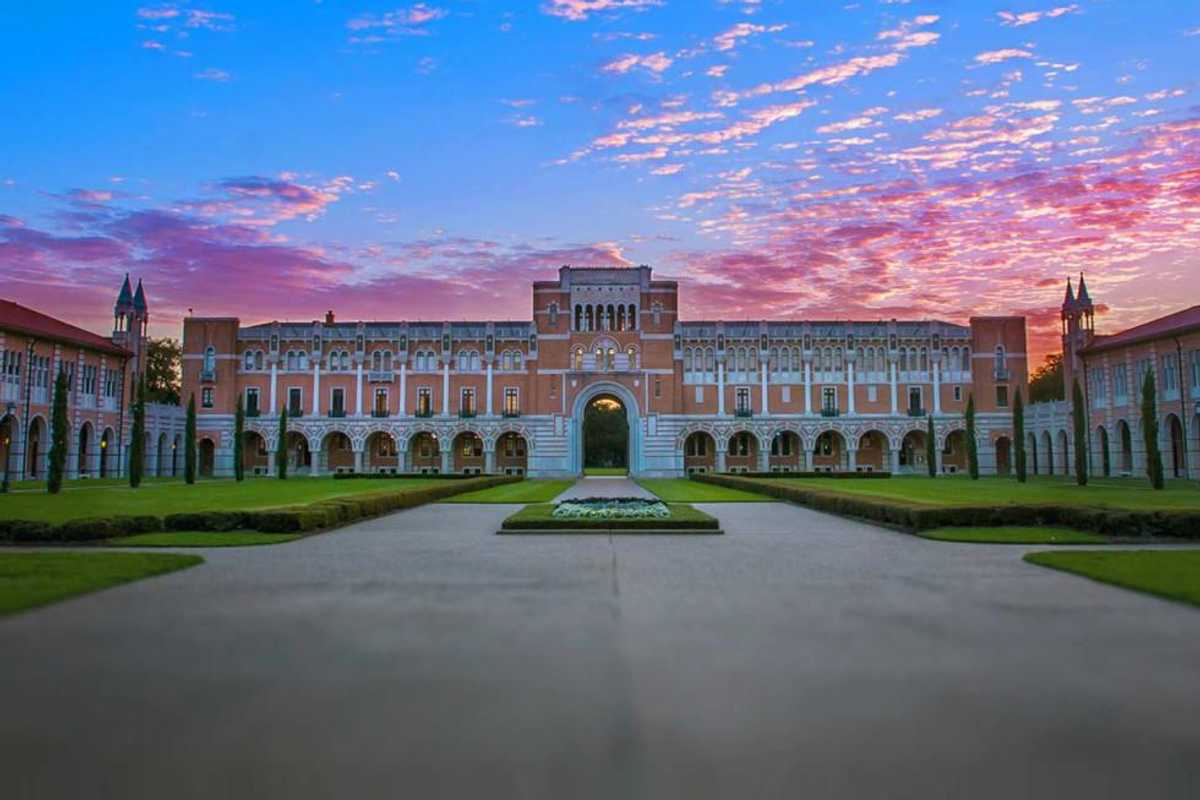
Houston’s Rice University will welcome students to its new Master of Artificial Intelligence (MAI) program next fall, the college announced last week.

The program, which will begin taking applications this fall, is geared toward students with a computer science background as well as working engineers, scientists and technologists as they pursue careers that create and deploy AI. It will be part of Rice’s Department of Computer Science.

The new graduate degree comes after Rice created its Bachelor of Science in AI program in 2025.

Students enrolled in the 30-credit-hour, non-thesis professional degree program will prepare for prospective jobs as AI architects, applied AI researchers and AI and machine learning engineers, according to a news release.

“AI is rapidly moving from research laboratories into the systems that shape how we work, learn and solve complex problems,” Luay Nakhleh, Dean of the George R. Brown School of Engineering and Computing, said in the release. “The MAI will give students the technical depth and practical experience to build these systems responsibly.”

The on-campus degree program will include coursework in AI foundations and traditional, hands-on learning over its three-semester duration. Students will have easy access to faculty and have the opportunity to collaborate in small cohorts. The program includes a required internship before completion.

Chris Jermaine, chair of Rice’s Department of Computer Science, says Houston is well-positioned to connect students with industries where AI is increasingly being used, including health care, energy, aerospace, finance and technology.

“The Master of Artificial Intelligence reflects the graduate education Rice is working to advance: rigorous, forward-looking and connected to the challenges graduates will encounter in their careers,” Jermaine said in the release. “Combining strong academic foundations with practical experience will prepare students to contribute thoughtfully and responsibly as AI continues to evolve.”

Other Texas universities offer similar degrees, like Texas A&M's online Master of Science in Artificial Intelligence, Baylor’s Master of Science in Artificial Intelligence (MSAI+), University of Houston Downtown’s Master of Science in Artificial Intelligence program, and University of Texas at Austin’s online master’s in AI.

MAI works as part of Rice’s Momentous strategic plan that incorporates responsible AI use, according to the university.