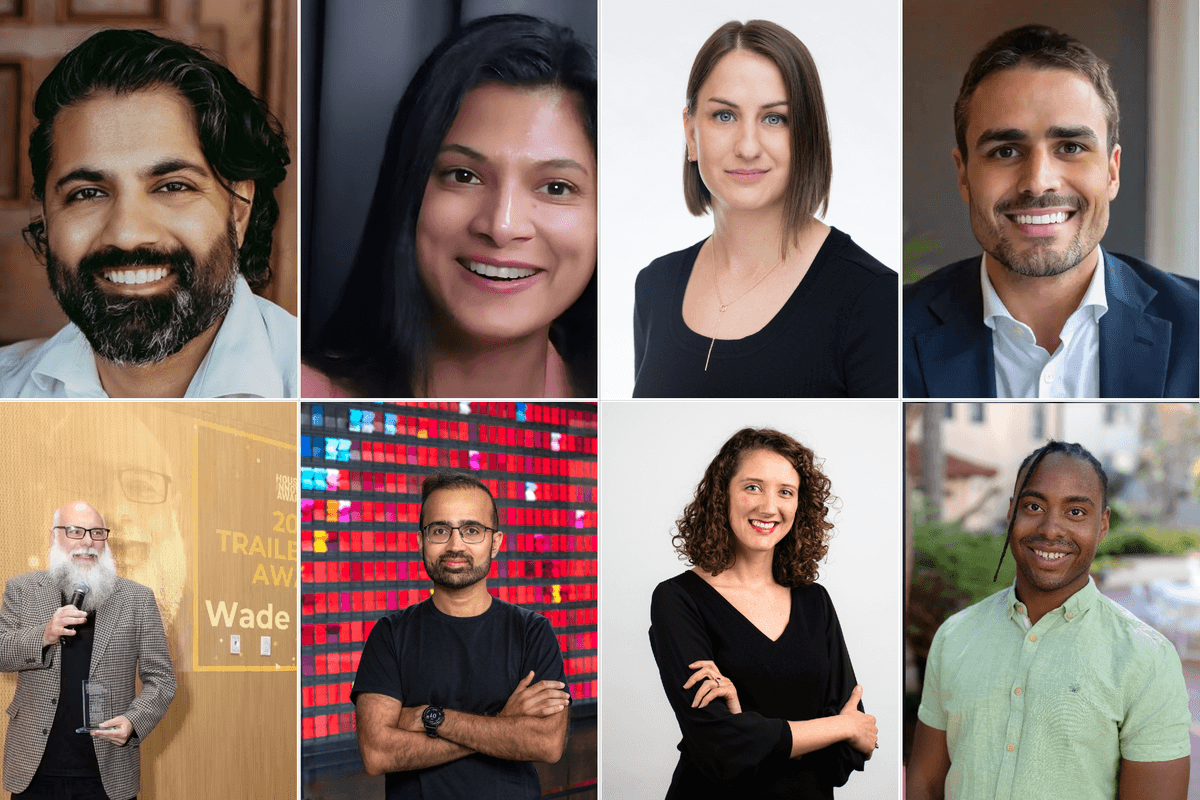
Vineet Gupta, Eva Harth, Dr. Raghu Kalluri, Todd Rosengart, Sanjoy Paul and Dr. Jochen Reiser have been named to the National Academy of Inventors' 2025 class of fellows. Photos via the institutions.

Six Houston scientists and innovation leaders have been named to the National Academy of Inventors’ newest class of fellows. The award is the highest professional distinction awarded to academic inventors by the NAI.

The 2025 class is made up of 169 fellows who hold more than 5,300 U.S. patents, according to the organization. The group hails from 127 institutions across 40 U.S. states.

The Houston-based inventors are leading fields from AI to chemistry to cancer research.

“NAI Fellows are a driving force within the innovation ecosystem, and their contributions across scientific disciplines are shaping the future of our world,” Paul R. Sanberg, president of the National Academy of Inventors, said in a news release. “We are thrilled to welcome this year’s class of Fellows to the Academy. They are truly an impressive cohort, and we look forward to honoring them at our 15th Annual Conference in Los Angeles next year.”

The 2025 list of Houston-based fellows includes:

  • Vineet Gupta, Vice President for Innovation, Technology Development and Transfer at the University of Texas Medical Branch
  • Eva Harth, chemistry professor at the University of Houston
  • Dr. Raghu Kalluri, Professor and Chairman of the Department of Cancer Biology at The University of Texas MD Anderson Cancer Center
  • Sanjoy Paul, Executive Director of Rice Nexus and AI Houston and Associate Vice President for Technology Development at Rice University
  • Dr. Jochen Reiser, President of the University of Texas Medical Branch and CEO of UTMB Health System
  • Todd Rosengart, Professor and Chair of the Department of Surgery at Baylor College of Medicine

"It is a great honor to be named a Fellow of the NAI. It is deeply gratifying to know that the work my students and I do — the daily push, often in small steps — is seen and recognized," Harth added in a news release from UH.

The 2025 fellows will be honored and presented with their medals by a senior official of the United States Patent and Trademark Office at the NAI Annual Conference this summer in Los Angeles.

SimpleSilo, created at Rice360, offers a low-cost, easy-to-source solution for infants born with gastroschisis. Photo courtesy Rice University

Houston team develops low-cost device to treat infants with life-threatening birth defect

infant innovation

A team of engineers and pediatric surgeons led by Rice University’s Rice360 Institute for Global Health Technologies has developed a cost-effective treatment for infants born with gastroschisis, a congenital condition in which intestines and other organs are developed outside of the body.

The condition can be life-threatening in economically disadvantaged regions without access to equipment.

The Rice-developed device, known as SimpleSilo, is “simple, low-cost and locally manufacturable,” according to the university. It consists of a saline bag, oxygen tubing and a commercially available heat sealer, while mimicking the function of commercial silo bags, which are used in high-income countries to protect exposed organs and gently return them into the abdominal cavity gradually.

Generally, a single-use bag can cost between $200 and $300. The alternatives that exist lack structure and require surgical sewing. This is where the SimpleSilo comes in.

“We focused on keeping the design as simple and functional as possible, while still being affordable,” Vanshika Jhonsa said in a news release. “Our hope is that health care providers around the world can adapt the SimpleSilo to their local supplies and specific needs.”

The study was published in the Journal of Pediatric Surgery, and Jhonsa, its first author, also won the 2023 American Pediatric Surgical Association Innovation Award for the project. She is a recent Rice alumna and is currently a medical student at UTHealth Houston.

Bindi Naik-Mathuria, a pediatric surgeon at UTMB Health, served as the corresponding author of the study. Rice undergraduates Shreya Jindal and Shriya Shah, along with Mary Seifu Tirfie, a current Rice360 Global Health Fellow, also worked on the project.

In laboratory tests, the device demonstrated a fluid leakage rate of just 0.02 milliliters per hour, which is comparable to commercial silo bags, and it withstood repeated disinfection while maintaining its structure. In a simulated in vitro test using cow intestines and a mock abdominal wall, SimpleSilo achieved a 50 percent reduction of the intestines into the simulated cavity over three days, also matching the performance of commercial silo bags. The team plans to conduct a formal clinical trial in East Africa.

“Gastroschisis has one of the biggest survival gaps from high-resource settings to low-resource settings, but it doesn’t have to be this way,” Meaghan Bond, lecturer and senior design engineer at Rice360, added in the news release. “We believe the SimpleSilo can help close the survival gap by making treatment accessible and affordable, even in resource-limited settings.”
Ad Placement 300x100
Ad Placement 300x600

CultureMap Emails are Awesome

Innovative Houston research leads our top health tech news of 2025

year in review

Editor's note: As 2025 comes to a close, we're looking back at the stories that defined Houston innovation this year. The Bayou City continued to grow as a health tech hub, bringing in a multibillion-dollar pharmaceutical development, playing home based to startups developing innovative treatment options and attracting leading researchers and professionals to the city. Here are the 10 most-read Houston health tech stories of the year:

Houston Nobel Prize nominee earns latest award for public health research

Dr. Peter Hotez with Dr. Maria Elena Bottazzi. Photo courtesy of TMC

Houston vaccine scientist Dr. Peter Hotez is no stranger to impressive laurels. In 2022, he was nominated for a Nobel Peace Prize for his low-cost COVID vaccine.

His first big win of 2025 was this year’s Hill Prize, awarded by the Texas Academy of Medicine, Engineering, Science and Technology (TAMEST). Hotez and his team were selected to receive $500,000 from Lyda Hill Philanthropies to help fund The Texas Virosphere Project, which aims to create a predictive disease atlas relating to climate disasters. Rice University researchers are collaborating with Hotez and his team on a project that combines climate science and metagenomics to access 3,000 insect genomes. The goal is to aid health departments in controlling disease and informing policy. Continue reading.

U.S. News ranks Houston hospital No. 1 in Texas for 14th year in a row

Houston Methodist is once again the top hospital in Texas. Photo via Houston Methodist

U.S. News & World Report's 2025 rankings of the best hospitals in Texas prove that Houston is in good hands.

The esteemed Houston Methodist Hospital was rated the No. 1 best hospital in Texas for the 14th consecutive year, and the No. 1 hospital in the metro area. Eleven more Houston-area hospitals earned spots among the statewide top 35. Continue reading.

Eli Lilly to build $6.5B pharmaceutical factory at Generation Park

Eli Lilly is expected to bring a $6.5 billion manufacturing facility to Houston by 2030. Rendering courtesy Greater Houston Partnership.

Pharmaceutical giant Eli Lilly and Co. plans to build a $6.5 billion manufacturing plant at Houston’s Generation Park. More than 300 locations in the U.S. competed for the factory.

The Houston site will be the first major pharmaceutical manufacturing plant in Texas, according to the Greater Houston Partnership. Lilly said it plans to hire 615 full-time workers for the 236-acre plant, including engineers, scientists and lab technicians. The company will collaborate with local colleges and universities to help build its talent pipeline. Continue reading.

How a Houston company is fighting anxiety, insomnia & Alzheimer’s through waveforms

Nexalin develops non-invasive devices that help reset networks in the brain associated with symptoms of anxiety and insomnia. Photo via Getty Images.

Houston-based Nexalin Technology is taking a medicine-free approach to target brain neurologically associated with mental illness. The company's patented, FDA-cleared frequency-based waveform targets key centers of the midbrain. Delivered via a non-invasive device, the treatment gently stimulates the hypothalamus and midbrain, helping to “reset networks associated with symptoms” of anxiety and insomnia.

Nexalin’s proprietary neurostimulation device moved forward with a clinical trial that evaluated its treatment of anxiety disorders and chronic insomnia in Brazil this year and enrolled the first patients in its clinical trial at the University of California, San Diego. Continue reading.

Houston doctor aims to revolutionize hearing aid industry with tiny implant

Houston Methodist's Dr. Ron Moses has created NanoEar, which he calls “the world’s smallest hearing aid.” Photo via Getty Images.

“What is the future of hearing aids?” That’s the question that led to a potential revolution.

Dr. Ron Moses, an ENT specialist and surgeon at Houston Methodist, is the creator of NanoEar, which he calls “the world’s smallest hearing aid.” NanoEar is an implantable device that combines the invisibility of a micro-sized tympanostomy tube with more power—and a superior hearing experience—than the best behind-the-ear hearing aid. Continue reading.

Houston scores $120M in new cancer research and prevention grants

The Cancer Prevention and Research Institute of Texas doled out 73 more grants to health care systems and companies in the state in November. Carter Smith/Courtesy of MD Anderson

The Cancer Prevention and Research Institute of Texas granted more than $120 million to Houston organizations and companies as part of 73 new awards issued statewide this fall. The funds are part of nearly $154 million approved by the CPRIT's governing board, bringing the organization's total investment in cancer prevention and research to more than $4 billion since its inception. A portion of the funding will go toward recruiting leading cancer researchers to Houston. Continue reading.

Digital Health Institute's new exec director aims to lead innovation and commercialization efforts

Pothik Chatterjee was named executive director of Rice University's and Houston Methodist's Digital Health Institute, effective May 1. Photo courtesy Rice University.

The Digital Health Institute, a joint venture between Rice University and Houston Methodist, appointed Pothik Chatterjee to the role of executive director this summer. Chatterjee’s role is to help grow the collaboration between the institutions, but the Digital Health Institute already boasts more than 20 active projects, each of which pairs Rice faculty and Houston Methodist clinicians. Once the research is in place, it’s up to Chatterjee to find commercial opportunities within the research portfolio. Those include everything from hospital-grade medical imaging wearables to the creation of digital twins for patients to help better treat them. Continue reading.

Innovation Labs @ TMC set to launch for early-stage life science startups

Innovation Labs @ TMC will open next year at the TMC Innovation Factory. Photo courtesy JLABS.

The Texas Medical Center announced its plans to launch its new Innovation Labs @ TMC in January 2026 to better support life science startups working within the innovation hub. The 34,000-square-foot space, located in the TMC Innovation Factory at 2450 Holcombe Blvd., will feature labs and life science offices and will be managed by TMC. The expansion will allow TMC to "open its doors to a wider range of life science visionaries." Continue reading.

6 Houston health tech startups making major advancements right now

Tatiana Fofanova and Dr. Desh Mohan, founders of Koda Health. Photo courtesy Koda Health.

The Health Tech Business category in our 2025 Houston Innovation Awards honored innovative startups within the health and medical technology sectors. Six forward-thinking businesses were named finalists for the 2025 award, ranging from an end-of-life care company to others developing devices and systems for heart monitoring, sleep apnea, hearing loss and more. Continue reading or see who won here.

Houston students develop cost-effective glove to treat Parkinson's symptoms

Rice University students Emmie Casey and Tomi Kuye used smartphone motors to develop a vibrotactile glove. Photo by Gustavo Raskosky/ Courtesy Rice University.

Two Rice undergraduate engineering students have developed a non-invasive vibrotactile glove that aims to alleviate the symptoms of Parkinson’s disease through therapeutic vibrations. Emmie Casey and Tomi Kuye developed the project with support from the Oshman Engineering Design Kitchen (OEDK). The team based the design on research from the Peter Tass Lab at Stanford University, which explored how randomized vibratory stimuli delivered to the fingertips could help rewire misfiring neurons in the brain—a key component of Parkinson’s disease. Continue reading.

Houston hailed as one of America's 10 best cities for startups

Startup Report

Houston's favorable economic climate is enticing new opportunities for entrepreneurship and growth, and now the city is being hailed as the 7th-best U.S. city for starting a business.

The recognition comes in CommercialCafe's recent "Best Cities for Startups" report, published December 10. The study analyzed large U.S. cities across two population categories – cities with more than 1 million residents and cities with populations between 500,000 and 1 million residents. The report analyzed relevant metrics such as office or coworking costs, Kickstarter funding success, startup density, and survival rates, among others.

Across the biggest U.S. cities with over a million residents, Phoenix, Arizona landed on top as the No. 1 best place to start a new business.

The report's findings revealed 10.6 percent of all businesses in Houston are startups that have been active for less than a year. These new businesses have a survival rate of 64.5 percent, meaning just under two-thirds of all startups in the city will still be running up to five years after they were first established.

Over the last five years, the number of new businesses established in Houston has grown nearly 15 percent. CommercialCafe said new businesses in cities with high startup growth rates tend to "attract top talent" which can eventually lead to securing "vital funding for expansion."

Independent professionals – also known as freelancers – are another crucial resource for new businesses that may need "specialized services" for a fixed amount of time, the report said. Houston's freelance workforce has grown about 9 percent from 2019-2023, and the analysis found there were 97,295 freelancers working in Houston in 2023, compared to 89,528 in 2019.

"Generally, cities in the South and Southwest have experienced strong growth during the surveyed period, in contrast to California cities like Los Angeles and San Diego, where the share of freelancers and gig workers has either stagnated or slightly declined," the report said.

Houston boasts the second-cheapest office space rent nationally, the report found. The average asking price for a 1,000-square-foot workspace (for five employees) in the city added up to $27,124 annually. For startups that want greater flexibility for their workers, the annual cost for a coworking space for the same number of employees in Houston came out to $13,200, which is the fourth-most affordable rate in the U.S.

Other Texas cities with attractive economic environments for startups

Texas, as a whole, is one of the strongest states for starting a new business. Other than Houston, San Antonio (No. 2), Dallas (No. 3), and Fort Worth (No. 4) were also recognized among the top 10 best places to start a business in the category of U.S. cities with more than a million residents.

Austin topped a separate ranking of best cities to start a business with 500,000 to 1 million residents.

"Specifically, the Texas capital was the frontrunner for indicators that looked at the overall share of startups within the local economy, as well as growth rates in five years (2019 to 2023)," the report said. "On top of that, Austin also topped the rankings for its percentage of college-educated residents and its consulting firms, which provide vital support for burgeoning enterprises."

The top 10 best cities to start a new business are:

  • No. 1 – Phoenix, Arizona
  • No. 2 – San Antonio, Texas
  • No. 3 – Dallas, Texas
  • No. 4 – Fort Worth, Texas
  • No. 5 – Jacksonville, Florida
  • No. 6 – San Diego, California
  • No. 7 – Houston, Texas
  • No. 8 – Philadelphia, Pennsylvania
  • No. 9 – Chicago, Illinois
  • No. 10 – Los Angeles, California
---

This article originally appeared on CultureMap.com.