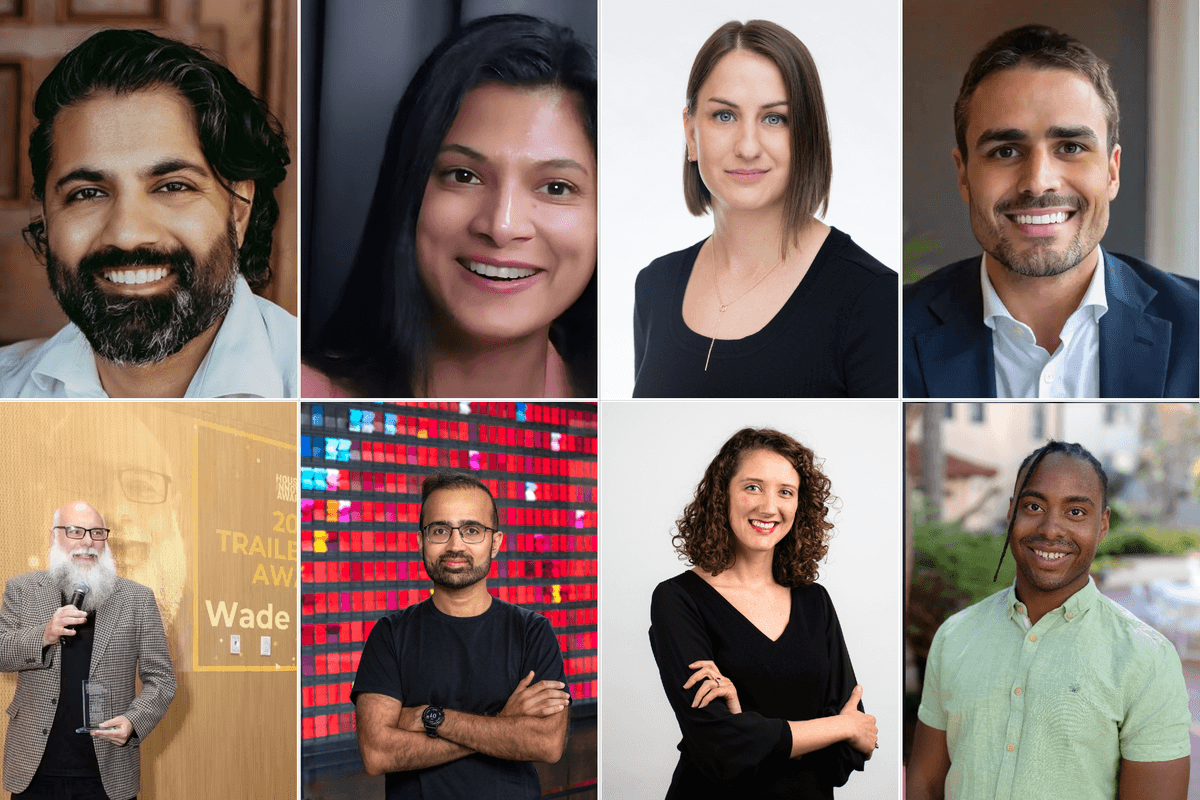
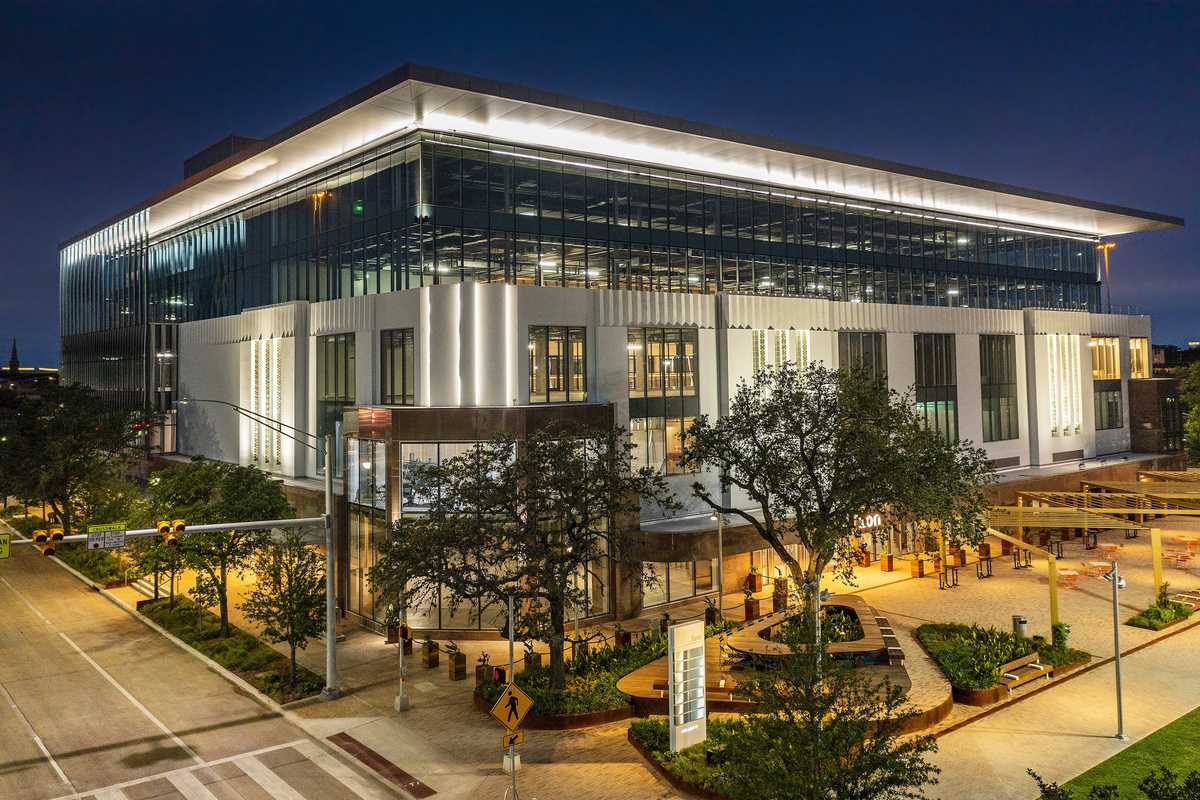
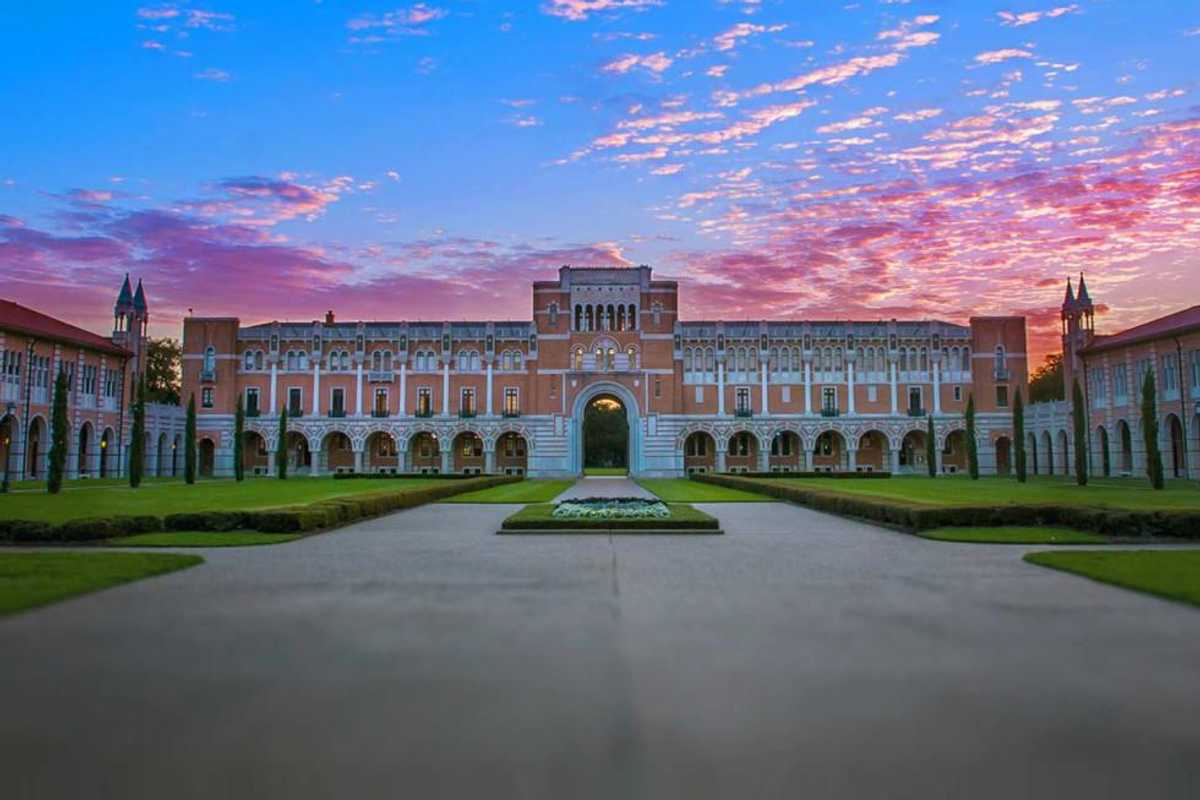
Check out these conferences, pitch competitions, networking, and more in the month of November. Photo via Getty Images

Hold onto your hats, Houston. If you thought October was a busy month for business events, November even more exciting and full of pitches, conferences, summits, and more. Here's a rundown of what all to throw on your calendar for November when it comes to innovation-related events.

This article will be updated as more business and tech events are announced.

FEATURED: November 9 — Houston Innovation Awards Gala

Find out what Houston startups and innovators go home with the big win at InnovationMap and Houston Exponential's gala. Learn more about this year's finalists by clicking here.

The event is Wednesday, November 9, at 6 pm, at the Ion. Click here to register.

November 1-3 — Urban Manufacturing Alliance's Houston Gathering

Learn about the unique challenges and opportunities within manufacturing in the current economy, as well as network with Houston manufacturing professionals.

The event is Tuesday, November 1, to Wednesday, November 3, at West Houston Institute. Click here to register.

November 2 — Greentown Labs Climatetech Summit

Hear from the climatetech industry's leaders at Greentown Labs' annual event. The morning features panels and pitches, followed by lunch, networking, and an expo. The summit continues on November 3 in Boston, and both days will be streamed for viewers.

The event is Wednesday, November 2, at 8 am, at Greentown Houston and streaming online. Click here to register.

November 4 — Enventure's 10-Year Anniversary

Join Enventure as we celebrate its 10th Anniversary — from the organization's accomplishments to a look toward what the future brings to Enventure.

The event is Friday, November 4, at 7 pm, at III by Wolfgang Puck. Click here to register.

November 5 — Tech Fest Live in-person Experience at the Ion

The Ion as partnered with Tech Fest Live to bring your family to an engaging Family Tech Day experience, designed with middle and high school students in mind.

The event is Saturday, November 5, at 9:30 am, at the Ion. Click here to register.

November 8 — Texas Life Science Forum

The Texas Life Science Forum, co-hosted by BioHouston and Rice Alliance, is the premier life science and healthtech event in Texas that brings together members from industry, emerging life science companies, academic and investors. Hear pitches from innovative and early stage life science companies, network and enjoy exciting panels, keynotes and speakers.

The event is Tuesday, November 8, at 8:30 am, at Rice University. Click here to register.

November 9 — The Future of Industrial Automation Lunch & Learn with Yokogawa

In this Lunch & Learn, Elbert van der Bijl (Director of Marketing & Solutions Consulting for Yokogawa North America), will talk about the journey from industrial automation to industrial autonomy (IA2IA). He will also speak about how new technologies are being embraced to be able to make this transition. The presentation will highlight some key developments like Open Process Automation (OPA), Artificial Intelligence (AI) and Machine Learning (ML), and mobile Robotics and how they will play a role in the future of Industrial Automation.

The event is Wednesday, November 9, at 11:30 am, at The Cannon-West Houston. Click here to register.

November 10 — Greater Houston Partnership's State of the Port

Join the Greater Houston Partnership at the annual State of the Port featuring Ric Campo, Chairman of the Port Commission of the Port of Houston Authority. Campo will discuss innovations taking place at Port Houston and Project 11. The highly anticipated Project 11 will deepen and widen the Houston Ship Channel and increase economic impact, jobs and address supply chain challenges.

The event is Thursday, November 10, at 10:30 am, at The Omni Riverway. Click here to register.

November 10 — BGV Pitch Tour Houston

The BGV Pitch Tour is coming to Houston November 10th in partnership with Omaze and the aid of our amazing 6 Change Agents to throw a BGV Pitch Competition. Thee BGV Change Agents are amazing Black and/or Brown women-identifying founders who are actively working to uplift and grow the city's ecosystem for Black and Brown founders in their area.

The event is Thursday, November 10, at 6 pm, at The Cannon-West Houston. Click here to register.

November 15 — Lilie's Community Celebration

Celebrate the end of the semester and take a peek into what all the Liu Idea Lab for Innovation and Entrepreneurship community has going on.

The event is Tuesday, November 15, at 6 pm, at the Lilie offices at Rice University. Click here to register.

November 17 — Rice Alliance Clean Energy Accelerator 2022 Demo Day

Rice Alliance Clean Energy Accelerator is hosting a Demo Day to showcase its Class 2 startups who are ready for investment, pilots and accelerating the energy transition.

The event is Thursday, November 17, at 1:30 pm, at the Ion. Click here to register.

November 19 — Pearland Innovation Hub Pitch Competition

Come attend this event open to the community to hear pitches from local small business owners, network, and learn about the Pearland Innovation Hub.

The event is Tuesday, November 17, at 4 pm, at Pearland City Hall. Click here to register.

November 30 — Commercial ZEV Event

This event by Houston-based Evolve is your chance to drive zero-emissions commercial vehicles and learn how you can convert your fleet to save on costs.

The event is Wednesday, November 30, at 8:30 am to 5 pm, at NRG Park. Click here to register.

Ad Placement 300x100
Ad Placement 300x600

CultureMap Emails are Awesome

New Rice Brain Institute partners with TMC to award inaugural grants

brain trust

The recently founded Rice Brain Institute has named the first four projects to receive research awards through the Rice and TMC Neuro Collaboration Seed Grant Program.

The new grant program brings together Rice faculty with clinicians and scientists at The University of Texas Medical Branch, Baylor College of Medicine, UTHealth Houston and The University of Texas MD Anderson Cancer Center. The program will support pilot projects that address neurological disease, mental health and brain injury.

The first round of awards was selected from a competitive pool of 40 proposals, and will support projects that reflect Rice Brain Institute’s research agenda.

“These awards are meant to help teams test bold ideas and build the collaborations needed to sustain long-term research programs in brain health,” Behnaam Aazhang, Rice Brain Institute director and co-director of the Rice Neuroengineering Initiative, said in a news release.

The seed funding has been awarded to the following principal investigators:

  • Kevin McHugh, associate professor of bioengineering and chemistry at Rice, and Peter Kan, professor and chair of neurosurgery at the UTMB. McHugh and Kan are developing an injectable material designed to seal off fragile, abnormal blood vessels that can cause life-threatening bleeding in the brain.
  • Jerzy Szablowski, assistant professor of bioengineering at Rice, and Jochen Meyer, assistant professor of neurology at Baylor. Szablowski and Meyer are leading a nonsurgical, ultrasound approach to deliver gene-based therapies to deep brain regions involved in seizures to control epilepsy without implanted electrodes or invasive procedures.
  • Juliane Sempionatto, assistant professor of electrical and computer engineering at Rice, and Aaron Gusdon, associate professor of neurosurgery at UTHealth Houston. Sempionatto and Gusdon are leading efforts to create a blood test that can identify patients at high risk for delayed brain injury following aneurysm-related hemorrhage, which could lead to earlier intervention and improved outcomes.
  • Christina Tringides, assistant professor of materials science and nanoengineering at Rice, and Sujit Prabhu, professor of neurosurgery at MD Anderson, who are working to reduce the risk of long-term speech and language impairment during brain tumor removal by combining advanced brain recordings, imaging and noninvasive stimulation.

The grants were facilitated by Rice’s Educational and Research Initiatives for Collaborative Health (ENRICH) Office. Rice says that the unique split-funding model of these grants could help structure future collaborations between the university and the TMC.

The Rice Brain Institute launched this fall and aims to use engineering, natural sciences and social sciences to research the brain and reduce the burden of neurodegenerative, neurodevelopmental and mental health disorders. Last month, the university's Shepherd School of Music also launched the Music, Mind and Body Lab, an interdisciplinary hub that brings artists and scientists together to study the "intersection of the arts, neuroscience and the medical humanities." Read more here.

Your data center is either closer than you think or much farther away

houston voices

A new study shows why some facilities cluster in cities for speed and access, while others move to rural regions in search of scale and lower costs. Based on research by Tommy Pan Fang (Rice Business) and Shane Greenstein (Harvard).

Key findings:

  • Third-party colocation centers are physical facilities in close proximity to firms that use them, while cloud providers operate large data centers from a distance and sell access to virtualized computing resources as on‑demand services over the internet.
  • Hospitals and financial firms often require urban third-party centers for low latency and regulatory compliance, while batch processing and many AI workloads can operate more efficiently from lower-cost cloud hubs.
  • For policymakers trying to attract data centers, access to reliable power, water and high-capacity internet matter more than tax incentives.

Recent outages and the surge in AI-driven computing have made data center siting decisions more consequential than ever, especially as energy and water constraints tighten. Communities invest public dollars on the promise of jobs and growth, while firms weigh long-term commitments to land, power and connectivity.

Against that backdrop, a critical question comes into focus: Where do data centers get built — and what actually drives those decisions?

A new study by Tommy Pan Fang (Rice Business) and Shane Greenstein (Harvard Business School) provides the first large-scale statistical analysis of data center location strategies across the United States. It offers policymakers and firms a clearer starting point for understanding how different types of data centers respond to economic and strategic incentives.

Forthcoming in the journal Strategy Science, the study examines two major types of infrastructure: third-party colocation centers that lease server space to multiple firms, and hyperscale cloud centers owned by providers like Amazon, Google and Microsoft.

Two Models, Two Location Strategies

The study draws on pre-pandemic data from 2018 and 2019, a period of relative geographic stability in supply and demand. This window gives researchers a clean baseline before remote work, AI demand and new infrastructure pressures began reshaping internet traffic patterns.

The findings show that data centers follow a bifurcated geography. Third-party centers cluster in dense urban markets, where buyers prioritize proximity to customers despite higher land and operating costs. Cloud providers, by contrast, concentrate massive sites in a small number of lower-density regions, where electricity, land and construction are cheaper and economies of scale are easier to achieve.

Third-party data centers, in other words, follow demand. They locate in urban markets where firms in finance, healthcare and IT value low latency, secure storage, and compliance with regulatory standards.

Using county-level data, the researchers modeled how population density, industry mix and operating costs predict where new centers enter. Every U.S. metro with more than 700,000 residents had at least one third-party provider, while many mid-sized cities had none.

ImageThis pattern challenges common assumptions. Third-party facilities are more distributed across urban America than prevailing narratives suggest.

Customer proximity matters because some sectors cannot absorb delay. In critical operations, even slight pauses can have real consequences. For hospital systems, lag can affect performance and risk exposure. And in high-frequency trading, milliseconds can determine whether value is captured or lost in a transaction.

“For industries where speed is everything, being too far from the physical infrastructure can meaningfully affect performance and risk,” Pan Fang says. “Proximity isn’t optional for sectors that can’t absorb delay.”

The Economics of Distance

For cloud providers, the picture looks very different. Their decisions follow a logic shaped primarily by cost and scale. Because cloud services can be delivered from afar, firms tend to build enormous sites in low-density regions where power is cheap and land is abundant.

These facilities can draw hundreds of megawatts of electricity and operate with far fewer employees than urban centers. “The cloud can serve almost anywhere,” Pan Fang says, “so location is a question of cost before geography.”

The study finds that cloud infrastructure clusters around network backbones and energy economics, not talent pools. Well-known hubs like Ashburn, Virginia — often called “Data Center Alley” — reflect this logic, having benefited from early network infrastructure that made them natural convergence points for digital traffic.

Local governments often try to lure data centers with tax incentives, betting they will create high-tech jobs. But the study suggests other factors matter more to cloud providers, including construction costs, network connectivity and access to reliable, affordable electricity.

When cloud centers need a local presence, distance can sometimes become a constraint. Providers often address this by working alongside third-party operators. “Third-party centers can complement cloud firms when they need a foothold closer to customers,” Pan Fang says.

That hybrid pattern — massive regional hubs complementing strategic colocation — may define the next phase of data center growth.

Looking ahead, shifts in remote work, climate resilience, energy prices and AI-driven computing may reshape where new facilities go. Some workloads may move closer to users, while others may consolidate into large rural hubs. Emerging data-sovereignty rules could also redirect investment beyond the United States.

“The cloud feels weightless,” Pan Fang says, “but it rests on real choices about land, power and proximity.”

---

This article originally appeared on Rice Business Wisdom. Written by Scott Pett.

Pan Fang and Greenstein (2025). “Where the Cloud Rests: The Economic Geography of Data Centers,” forthcoming in Strategy Science.

Houston climbs to top 10 spot on North American tech hubs index

tech report

Houston already is the Energy Capital of the World, and now it’s gaining ground as a tech hub.

On Site Selection magazine’s 2026 North American Tech Hub Index, Houston jumped to No. 10 from No. 16 last year. The index relies on data from Site Selection as well as data from CBRE, CompTIA and TeleGeography to rank the continent’s tech hotspots. The index incorporates factors such as internet connectivity, tech talent and facility projects for tech companies.

In 2023, the Greater Houston Partnership noted the region had “begun to receive its due as a prominent emerging tech hub, joining the likes of San Francisco and Austin as a major player in the sector, and as a center of activity for the next generation of innovators and entrepreneurs.”

The Houston-area tech sector employs more than 230,000 people, according to the partnership, and generates an economic impact of $21.2 billion.

Elsewhere in Texas, two other metros fared well on the Site Selection index:

  • Dallas-Fort Worth nabbed the No. 1 spot, up from No. 2 last year.
  • Austin rose from No. 8 last year to No. 7 this year.

San Antonio slid from No. 18 in 2025 to No. 22 in 2026, however.

Two economic development officials in DFW chimed in about the region’s No. 1 ranking on the index:

  • “This ranking affirms what we’ve long seen on the ground — Dallas-Fort Worth is a top-tier technology and innovation center,” said Duane Dankesreiter, senior vice president of research and innovation at the Dallas Regional Chamber. “Our region’s scale, talent base, and diverse strengths … continue to set DFW apart as a national leader.”
  • “Being recognized as the top North American tech hub underscores the strength of the entire Dallas-Fort Worth region as a center of innovation and next-generation technology,” said Robert Allen, president and CEO of the Fort Worth Economic Development Partnership.

While not directly addressing Austin’s Site Selection ranking, Thom Singer, CEO of the Austin Technology Council, recently pondered whether Silicon Hills will grow “into the kind of community that other cities study for the right reasons.”

“Austin tech is not a club. It is not a scene. It is not a hashtag, a happy hour, or any one place or person,” Singer wrote on the council’s blog. “Austin tech is an economic engine and a global brand, built by thousands of people who decided to take a risk, build something, hire others, and be part of a community that is still young enough to reinvent itself.”

South of Austin, Port San Antonio is driving much of that region’s tech activity. Occupied by more than 80 employers, the 1,900-acre tech and innovation campus was home to 18,400 workers in 2024 and created a local economic impact of $7.9 billion, according to a study by Zenith Economics.

“Port San Antonio is a prime example of how innovation and infrastructure come together to strengthen [Texas’] economy, support thousands of good jobs, and keep Texas competitive on the global stage,” said Kelly Hancock, the acting state comptroller.