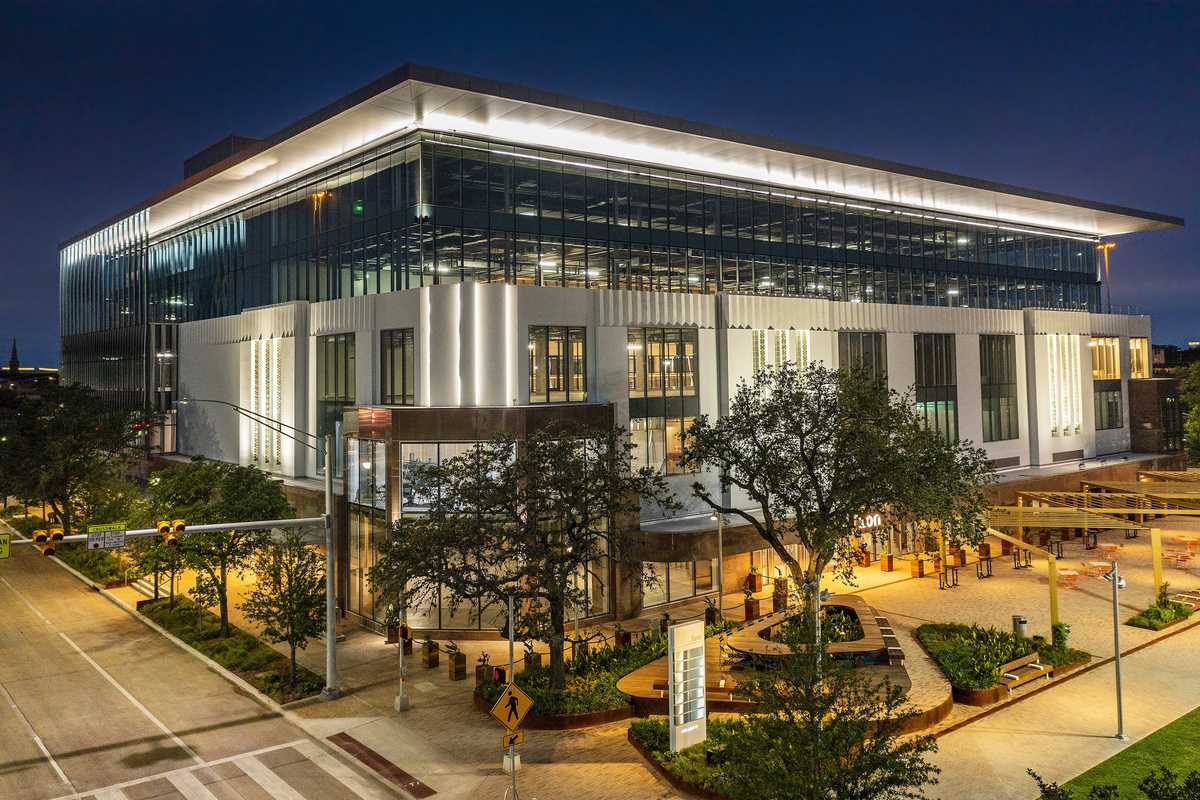
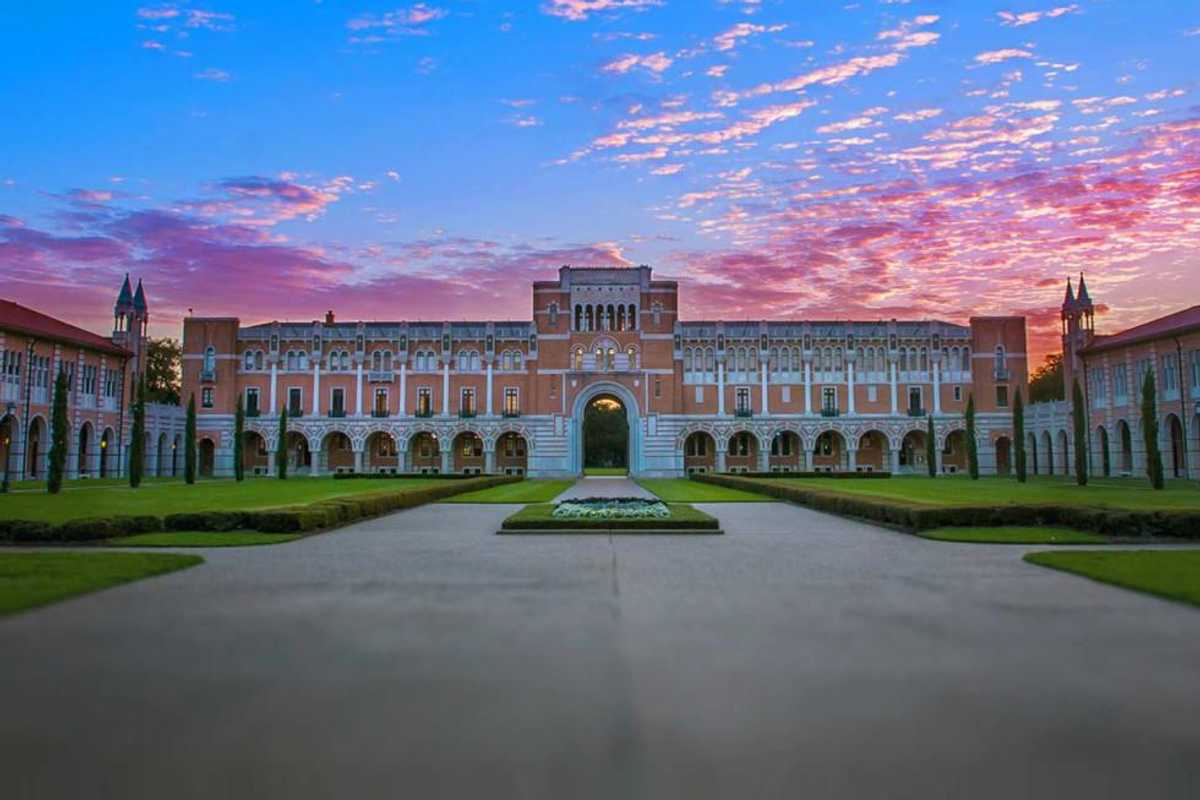
Rice University will lead a new U.S. Space Force-backed consortium to fast-track breakthrough remote sensing technologies. Photo via Getty Images

Rice University has signed an $8.1 million cooperative agreement to lead the U.S. Space Force University Consortium/Space Strategic Technology Institute 4 (SSTI).

The new entity will be known as the Center for Advanced Space Sensing Technologies (CASST) at Rice and will focus on developing innovative remote sensing technologies.

“This investment positions Rice at the forefront of the technologies that will define how we see, understand and operate in space,” Amy Dittmar, Howard R. Hughes Provost and executive vice president for academic affairs, said in a news release. “By bringing together advanced remote sensing, AI-driven analysis and cross-institutional expertise, CASST will help transform raw space data into real-time insight and expand the frontiers of scientific discovery.

The news comes shortly after the Texas Space Commission approved a nearly $14.2 million grant for the newly created Center for Space Technologies at Rice.

David Alexander, director of the Rice Space Institute, will lead CASST. Alexander is also an inaugural member of the Texas Aerospace Research and Space Economy Consortium and he serves on the boards of the Houston Spaceport Development Corporation, SpaceCom and the Sasakawa International Center for Space Architecture. The team also includes Rice professors and staff Kevin Kelly, Tomasz Tkaczyk, Kenny Evans, Kaden Hazzard, Mark Jernigan and Vinod Veedu, and collaborators from Houston-based Aegis Aerospace, University of California, Los Angeles, University of California, Santa Barbara and Georgia Institute of Technology.

In addition to bringing new space sensor innovation, the team will also work to miniaturize sensors while developing and implementing low-resource fabrication techniques, according to Rice. The researchers will also utilize AI and machine learning to analyze sensor data.

The U.S. Space Force uses space sensors to provide real-time information about space environments and assess potential threats. CASST is the fourth Space Strategic Technology Institute established by the USSF.

“Rice has helped shape the modern era of space research, and CASST marks a bold step into what comes next,” David Sholl, executive vice president for research at Rice, said in a news release. “As space becomes more contested and more essential to daily life, the ability to rapidly sense, interpret and act on what’s happening beyond Earth is critical. This center brings together the materials, engineering and data science innovations needed to deliver that capability."

The USSF University Consortium works with academic teams to develop breakthrough technologies and speed their transition into real-world applications for the U.S. Space Force.

The recent Rice award is part of $16 million over about three years. The USSF also signed a cooperative agreement with the University of Arizona in February.

The consortium has also helped facilitate several technological and commercial transitions over the last two years, including a $36 million commercial contract awarded to Axiom by Texas A&M University's in-space operations team and a follow-on $6 million contract to Axiom to build on technology developed by the University of Texas.


Ad Placement 300x100
Ad Placement 300x600

CultureMap Emails are Awesome

27 Houston companies make Fortune 500 for 2026, led by energy giants

Houston HQs

Houston is a giant among U.S. hubs for corporate headquarters.

The 2026 Fortune 500 lists 27 companies based in the Houston area, with many energy companies claiming top spots. Houston ties with Chicago for the second-most Fortune 500 headquarters, preceded only by New York City (53). Dallas-Fort Worth is home to 23 Fortune 500 headquarters.

Texas leads the nation for Fortune 500 headquarters (57), with California in the No. 2 spot and New York at No. 3.

“Texas is the undisputed headquarters of headquarters,” Gov. Greg Abbott said in a news release. “The world’s leading businesses invest with confidence in Texas because of our welcoming business climate, predictable regulatory environment, and skilled and growing workforce. People and businesses are choosing Texas because Texas works.”

The 2026 Fortune 500 ranks the largest U.S. corporations based on revenue in fiscal year 2025.

Here’s a rundown of the 27 Fortune 500 companies based in the Houston area.

  • No. 9 ExxonMobil
  • No. 21 Chevron
  • No. 29 Phillips 66
  • No.55 Sysco
  • No. 75 ConocoPhillips
  • No. 89 Enterprise Products Partners
  • No. 103 Plains GP Holdings
  • No. 133 Hewlett Packard Enterprise
  • No. 149 NRG Energy
  • No. 157 Quanta Services
  • No. 164 Baker Hughes
  • No. 173 Occidental Petroleum
  • No. 179 Waste Management
  • No. 201 EOG Resources
  • No. 204 Group 1 Automotive
  • No. 207 Halliburton
  • No. 223 Cheniere Energy
  • No. 236 Corebridge Financial
  • No. 262 Targa Resources
  • No. 266 Kinder Morgan
  • No. 388 Westlake
  • No. 435 CenterPoint Energy
  • No. 438 APA
  • No. 440 Comfort Systems USA
  • No. 455 NOV
  • No. 488 KBR
  • No. 496 Coterra Energy. Oklahoma City, Oklahoma-based Devon Energy and Houston-based Coterra Energy merged in early May, with the combined company retaining the Devon Energy name and the Houston headquarters.

The Greater Houston Partnership notes the Houston area soon will welcome its 28th Fortune 500 company. Expand Energy (formerly Chesapeake Energy), appearing at No. 362 on the 2026 list, says it’s moving its headquarters from Oklahoma City to Spring this year.

As the natural gas producer prepares to relocate to Texas, it’s hunting for a new leader. Nick Dell’Osso stepped down as president and CEO earlier this year. Board Chairman Michael Wichterich is interim president and CEO.

Dell’Osso became president and CEO of Oklahoma City-based Gulfport Energy effective May 28.

---

This article first appeared on EnergyCapitalHTX.com.

Elon Musk's SpaceX is about to make its debut on Wall Street

Money Moves

Elon Musk's rocket company SpaceX will make its debut on Wall Street Friday, June 12, and both institutional and retail investors are expected to gobble up the 555.6 million shares going up for sale at $135 apiece. Musk, already the world's richest man, could become its first trillionaire.

SpaceX is likely to become the biggest IPO ever, with proceeds of around $75 billion. SpaceX hopes to become the first company to send people to Mars. In fact, part of Musk’s future compensation depends on SpaceX eventually establishing a colony of at least 1 million people on the red planet.

Why SpaceX is going public now

In a video conference on Musk's social media platform X, he told JPMorgan CEO Jamie Dimon that people have suggested for the last 10 years that he take SpaceX public. He's doing it now because the company plans to put 100,000 next-generation Starlink satellites into orbit. Deploying AI data centers in space is a “massive new growth base and you need capital for that,” he said.

Going public provides access to the capital that SpaceX needs. But it also exposes it to more scrutiny from shareholders and more regulatory oversight. That includes filing quarterly financial reports, which critics say incentivizes short-term thinking over longer-term planning and creates unnecessary costs for a company. Securities regulators are currently soliciting public comment on a proposal to require public companies to file the financial reports only twice every year.

How the IPO impacts the company

Musk will hold the majority of a special class of shares, giving him control over decisions related to company strategy, finances and personnel. On the latter, because of his ownership of most of these Class B shares, the only person who can fire Musk as CEO is Musk.

The company credits Musk with being the “driving force” behind its growth, innovation and success. But what happens if Musk is no longer in the picture? SpaceX warns that the loss of Musk could disrupt its ability to execute its strategy as well as hurt its “reputation and relationships with customers, partners and other stakeholders.”

The company also warns that finding a replacement with the same skills and experience as Musk would be time-consuming, if not nearly impossible. As Wedbush Securities analyst Dan Ives wrote Wednesday, “At the end of the day Musk is SpaceX and SpaceX is Musk.”

What could make or break SpaceX

Currently in the test phase, the gigantic reusable Starship rocket is key to SpaceX realizing Musk's ambitions. Much of the commercial space business hinges on SpaceX developing Starship’s capability to be fully reusable and hearty enough for a quick turnaround between flights. If that doesn't happen, SpaceX warns that putting data centers and satellites in space will take longer and cost more money, meaning it risks customers bailing on the company.

Analysts say that by pioneering reusable rockets, SpaceX has established a clear lead on competitors such as Blue Origin, led by Amazon founder Jeff Bezos. The Starlink satellite business competes with, among others, AST SpaceMobile – which is relying on a SpaceX rocket to send its latest generation of satellites into orbit next week.

The prospectus filed last week says SpaceX’s biggest potential market is the sale of business-oriented artificial intelligence products designed to transform how people get work done. It’s an opportunity SpaceX predicts would be worth $22.7 trillion if it could somehow dominate rivals like Anthropic, OpenAI and Microsoft in a highly competitive industry. But the prospectus shows no clear path to profitability for the xAI business, which merged with SpaceX earlier this year.

Why Wall Street is paying attention

If the SpaceX IPO is as successful, the stock could quickly join the Nasdaq 100, a widely followed index that tracks the 100 largest non-financial companies in the composite. That's important because some popular funds, such as the $460 billion QQQ exchange-traded fund, mimic the index and will automatically buy whatever is listed in the index.

Nasdaq recently changed its rules to allow select companies to enter the Nasdaq 100 after just 15 trading days.

S&P Dow Jones Indices, on the other hand, is sticking to established and more traditional thresholds that will not allow SpaceX or other companies with gargantuan IPOs faster entry into its S&P 500 index. That means even high-profile companies will still need to wait for their stocks to trade a full 12 months before they can enter the index.

Companies want to be in the S&P 500 in particular because it's arguably the most important index on Wall Street, with trillions of dollars either mimicking it exactly or benchmarked against it. Vanguard's VOO fund that tracks the S&P 500 has roughly $950 billion invested in it, for example.

NASA unveils Artemis III astronauts at Johnson Space Center in Houston

To the moon

NASA on Tuesday, June 9, revealed the crew for its Artemis III mission, the next step in the space agency's plan to eventually land astronauts on the moon.

The announcement came two months after Artemis II's record-breaking trip around the moon that surpassed the distance record of Apollo 13.

NASA's Randy Bresnik, Frank Rubio, Andre Douglas and the European Space Agency's Luca Parmitano won't fly to the moon or land on the surface. Instead, they’ll orbit Earth while practicing docking their Orion capsule with two lunar landers.

“To the Artemis III crew, we wish you Godspeed on the journey ahead,” said NASA administrator Jared Isaacman.

Elon Musk’s SpaceX and Jeff Bezos’ Blue Origin are racing to deliver the lunar landers. The two-week demo is targeted for 2027. Blue Origin suffered a recent setback when its massive rocket exploded during an engine-firing test on the launch pad in Florida, shaking nearby homes and illuminating the sky with an orange fireball.

NASA's Jeremy Parsons said the setback is a learning opportunity and that the space agency is confident Blue Origin's rocket will be ready in time.

NASA's Artemis program aims to return astronauts to the moon's surface for the first time since the 1970s. A recent revamp of the program announced by Isaacman aims to fast-track it similarly to the Apollo era, adding the upcoming spaceflight around Earth before eyeing a lunar landing in 2028.

“We are certainly humbled as a crew to be able to be your crew that executes this Artemis III mission in space,” said Bresnik, Artemis III commander.

Added Douglas, mission specialist: “My brain — it is going a mile a minute right now. But my heart, it is so warm. It is so full."

In May, NASA awarded hundreds of millions of dollars in contracts to four companies, including Blue Origin, to build landers, rovers and drones for a future moon base. Isaacman said the goal of the moon base is to lay the foundation for a Mars expedition.