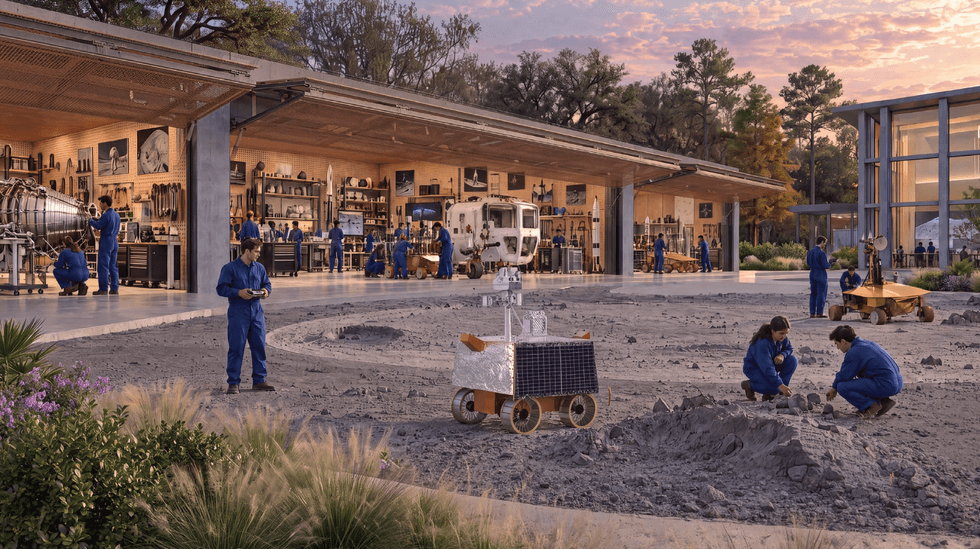

Activate Houston has named eight fellows to its 2026 cohort. Photos courtesy Activate

Hardtech-focused organization Activate has named 50 new members to its 2026 cohort of scientists, which includes eight startups joining Activate Houston.

Activate aims to support scientists at "the outset of their entrepreneurial journey." It partners with U.S.-based funders and research institutions to support its fellows in developing high-impact technology. Its fellows receive a living stipend, research and development funding, connections from Activate's robust network of mentors and access to a curriculum specific to the program for two years.

This year's fellows represent 41 companies from 22 U.S. cities and 11 states.

“This cohort clearly demonstrates that the next industry-defining companies won't choose between modern technology and deep science; they'll be built by combining both,” Cyrus Wadia, CEO of Activate, said in the announcement. “These are the scientists and engineers turning our most urgent global challenges into the companies that will deliver a more sustainable future.”

The Houston fellows are working across the energy, space, AI infrastructure and agriculture sectors. They include:

  • Sophie Clare Broun, founder of Anning Corporation, which is producing clean hydrogen by stimulating naturally occurring geologic deposits
  • Kathy Andersen, founder of Brint Tech, which builds optical sensing systems that quantify hydrogen for infrastructure operators
  • Dorsa Talebi, founder of Kinetiq Drive, which builds rare-earth-free, contact-free electric motors with wireless rotors for small appliances and heavy industry alike
  • Neethu Pottackal, founder of Nivera, which is developing natural, edible coatings made from agricultural byproducts to reduce food waste and extend the shelf life of fresh food
  • Jonathan Huffman, founder of Orbital Arc, which is shrinking spacecraft propulsion to a microchip powerful enough for deep space
  • Tim Lee, founder of Renesin, which develops advanced materials for faster, more efficient AI hardware
  • Joshua Livingston, founder of Selerra Separations, which is developing high-performance membranes that cut the cost and energy consumption of water treatment
  • Wenli Jiang, founder of SwieNitro Recovery, which is developing technology that converts nitrogen-rich waste streams into valuable fertilizer

"Home to the largest concentration of engineers in the United States and a dense ecosystem of Fortune 100 and Fortune 500 companies, Houston is uniquely positioned for scientists tackling large-scale industrial challenges. Activate Houston fellows are connected to the city's deep networks in energy, chemicals, and materials," Activate said in the announcement.

Activate named its inaugural Houston cohort in 2024. It has other hubs in Boston, New York, and Berkley, California—where Activate is headquartered. The organization also offers a virtual and remote cohort, known as Activate Anywhere. Nationally, it has supported 346 fellows and 276 companies since 2015.

Activate Houston is led by managing director Jeremy Pitts, who co-founded Greentown Labs in Boston. It is based out of the Ion. The latest cohort is Activate Houston's third. Read more about the last year's cohort here.
Ad Placement 300x100
Ad Placement 300x600

CultureMap Emails are Awesome

Texas-based CrowdStrike to acquire Zscaler in mega $44 billion deal

Tech Talk

CrowdStrike is buying cloud security company Zscaler in an all-stock deal worth about $43.9 billion, the companies said November 23, in a major acquisition that combines two of the cybersecurity industry's biggest names.

The all-stock deal arrives after a string of high-profile hacks hit banks, supermarket fridges and crypto platforms, forcing the White House to shake up its cybersecurity leadership and raising alarms with officials around the world.

Cybersecurity experts have warned that artificial intelligence is being used to turbocharge cyberattacks by making it quicker and easier to find software flaws.

“Security used to be about keeping the adversary out," George Kurtz, CEO of Austin-based CrowdStrike, said in a statement. “Today, safety is required to let AI in.”

Reports of advanced artificial intelligence models deploying agents working on their own to break into other organizations have also raised alarms.

“In the AI era, Zero Trust security has become non-negotiable, and AI agents are rapidly becoming the new weakest link," Zscaler CEO Jay Chaudhry said.

CrowdStrike's focus has been on so-called endpoint security, with services to protect laptops, mobile devices and desktop computers. Santa Clara, California-based Zscaler, meanwhile, specializes in cloud-based network protection.

Zscaler shareholders will get 1.135 shares of CrowdStrike for each Zscaler share they own, under the deal's terms, which represent a 34% premium to Zscaler's closing price on Friday.

Shares of CrowdStrike tumbled more than 7% before the opening bell Monday. Shares of Zscaler rose 20%.

Existing CrowdStrike shareholders will own about 84.1% of the combined company, while existing Zscaler shareholders will hold the remaining 15.9%.

CrowdStrike and Zscaler were already working together in a partnership that included 2,000 shared customers. The deal would expand the combined company's market by more than $185 billion by 2029.

The transaction is expected to close in the second half of CrowdStrike's fiscal 2028 year, which begins in February.

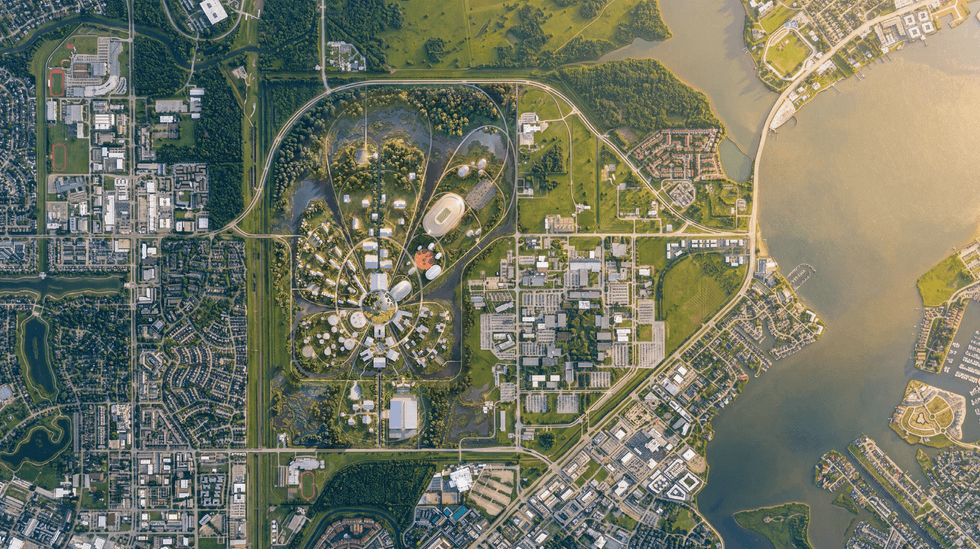
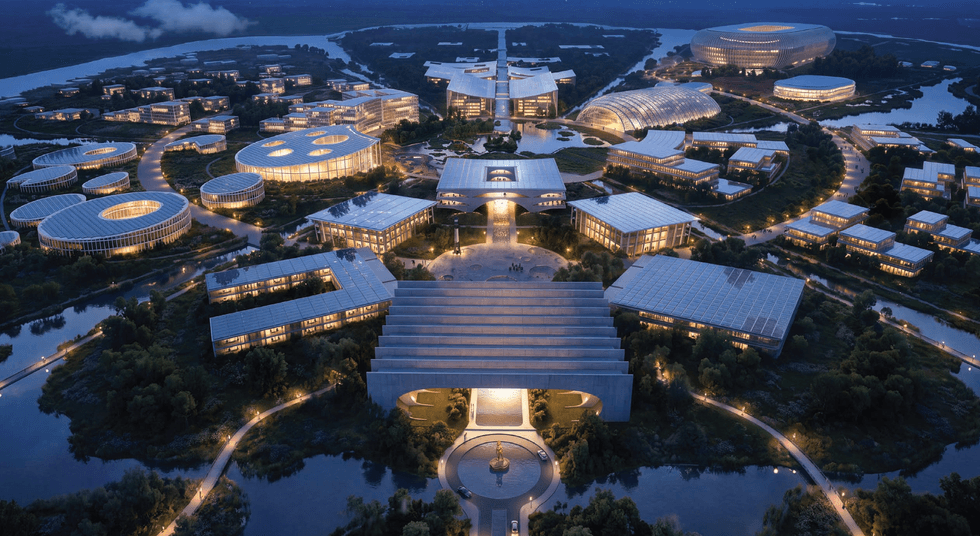
Texas officially bids to make Houston home of U.S. Space Academy

space race

Texas has officially submitted its proposal to have Houston be the home of the United States Space Academy (USSA).

“Texas has long been home to critical training missions for our nation’s military and for advancing human spaceflight,” Gov. Greg Abbott said in a news release. “Our universities, research institutions, and commercial space industry give the United States an extraordinary foundation for educating its next generation of space leaders.”

The Texas Space Commission (TSC) confirmed Texas filed an official response to NASA’s Request for Information (RFI) for the new academy. NASA’s plans include groundbreaking on the USSA in 2027, with enrollment planned for the inaugural class of 300 students in 2028 and a goal of transitioning to a permanent campus by 2031.

For students, the learning model could “link classroom and laboratory instruction with supervised research and team projects in spacecraft engineering, robotics, and mission operations,” according to the release. The academy will help students prepare for careers in national security space, civil and commercial careers, and also teach them to apply what they’ve learned to real-world mission trials.

Currently, Houston hosts America’s Mission Control and astronaut corps at NASA’s Johnson Space Center. In addition to JSC, Houston also hosts major aerospace startups, such as Axiom Space, Venus Aerospace and Intuitive Machines, as well as the Houston Spaceport at Ellington Airport and the new Texas A&M University Space Institute.

Texas boasts aerospace, aviation and civilian-defense industries that employ 160,000 workers across 2,200 establishments, according to the Texas Economic Development & Tourism Office. In the Houston area alone, there are 500 companies in the aerospace and aviation space. Academically, the state also has universities that are innovating in aerospace, energy, tech and beyond, including Rice University, the University of Houston, the Texas A&M system and the University of Texas system.

In August, President Trump signed an executive order to create the Presidential Commission on the United States Space Academy, which will guide the establishment of the NASA-led federal effort. The following month, Abbot appointed the seven-member team to help bring the USSA to Texas, which is being led by State Rep. Greg Bonnen from Friendswood. The squad also includes Houston ties in former NASA astronaut and current senior vice president of Houston-based Intuitive Machines Jack Fischer, another former NASA astronaut and current director of the Texas A&M Space Institute Nancy Curry-Gregg (a UH graduate), and associate director of the Texas A&M Space Institute Robert Ambrose.

“Houston makes the most sense as the location for this incredible learning ecosystem to teach and train our next generation of spacefaring Americans,” Bonnen added in a news release. “Texas offers NASA the opportunity to educate students where human spaceflight is practiced every day. Nowhere else in the world can a student walk from their classroom to Mission Control or the Astronaut Corps Office, much less any of the many companies building hardware for payloads. NASA and the White House have an amazing proposal from Texas to consider.”

The state legislature will convene in January regarding the efforts of the Texas Space Commission.

“I fully support establishing the proposed United States Space Academy in the Lone Star State to prepare future generations for interstellar travel through rigorous education, world-class training, and commitment to public service, “ Governor-elect Gina Hinojosa added in a statement. “ As I am preparing to take office, my commitment is to carry this effort forward by implementing the well-developed proposal led by State Rep. Greg Bonnen with support from the Texas Space Commission to advance the Academy’s mission.”'

View a video of the plans proposed by the TSC here.

Renderings courtesy Texas Space Commission

Meta selects UTHealth for AI-powered medicine partnership

medical innovation

UTHealth Houston is one of five universities partnering with Meta to utilize AI models on various medical research capacities. Meta announced the partnership late last month.

“Through our collaboration with Meta, we aim to bring next-generation open-weight AI models into healthcare to accelerate scientific discovery and improve lives,” Xiaoqian Jiang, associate vice president for medical AI, chair of the Department of Health Data Science and Artificial Intelligence at McWilliams School of Biomedical Informatics at UTHealth Houston, said in a Meta news blog.

“Our goal is to make the benefits of AI more widely accessible, advancing research and care with rigorous privacy protection,” he added.

The partnership also comes with $250,000 for research funding from Meta. The other four universities in the partnership include Caltech, Ohio State University, Louisiana State University and Indiana University.

As the debate over widespread implementation of AI rages, one area where it has proved useful is in medical research. AI can be extremely useful in summarizing data from recent findings; analyzing large sets of patient or genetic information; and accelerating hypothetical models. With rigorous oversight and careful curation, AI models can significantly speed up medical research.

That’s where Meta's open-weight models like Muse Glimmer and Muse Spark come in. Jiang will be using Muse Glimmer for drug discovery and bioinformatics research, relying on Glimmer’s autonomous, multi-step agentic workflow paradigms to evaluate efficiency and accuracy across healthcare systems.

A major problem in modern healthcare is that patient data is often spread across multiple systems in different formats. Glimmer can streamline this, with Jiang focusing particularly on glioblastoma patients.

Glioblastoma is an aggressive form of brain tumor that has roughly a 10 percent survival rate over five years. Because it expands microscopically through the brain in fast-growing branches, tumors can spread quickly and require whole teams to treat. Analyzing data across providers and testing facilities in a rapid, concise way is essential to research and can be made far easier with AI modeling.

Projects from other selected universities focus on using AI for disease detection, improving surgical outcomes and making healthcare more accessible. Read about them here.