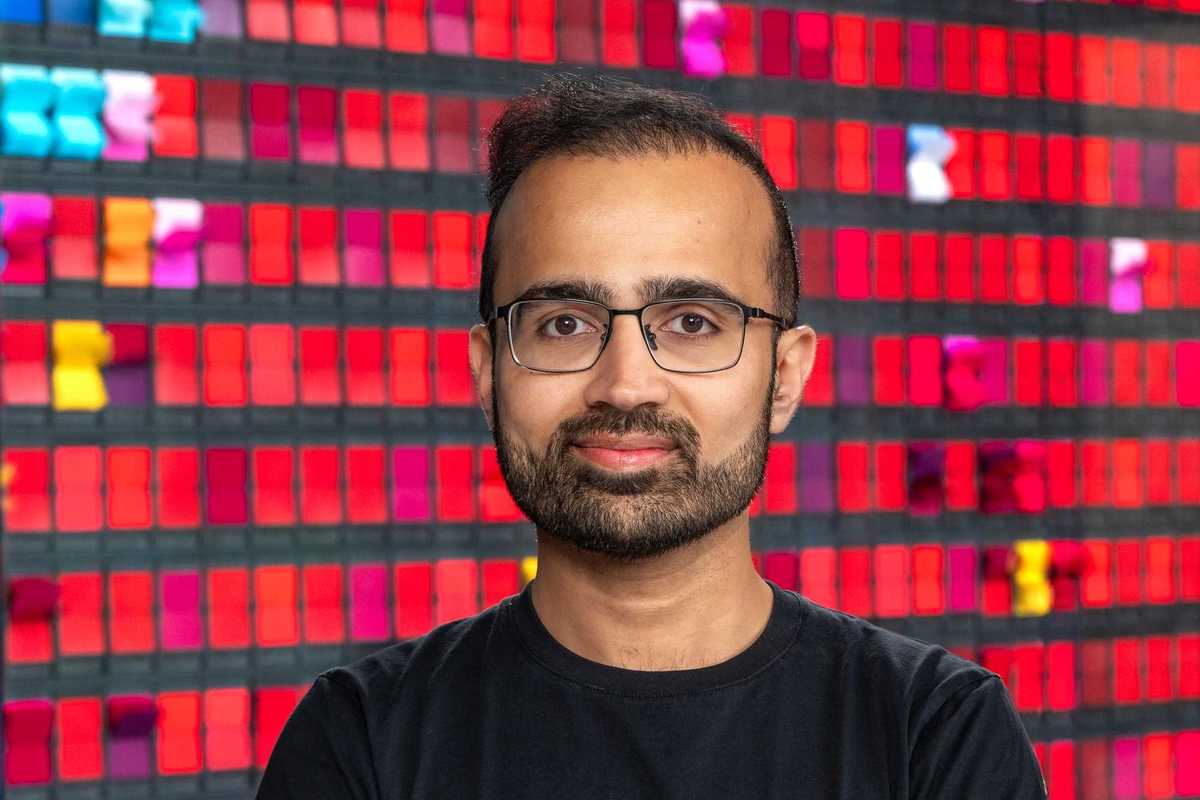
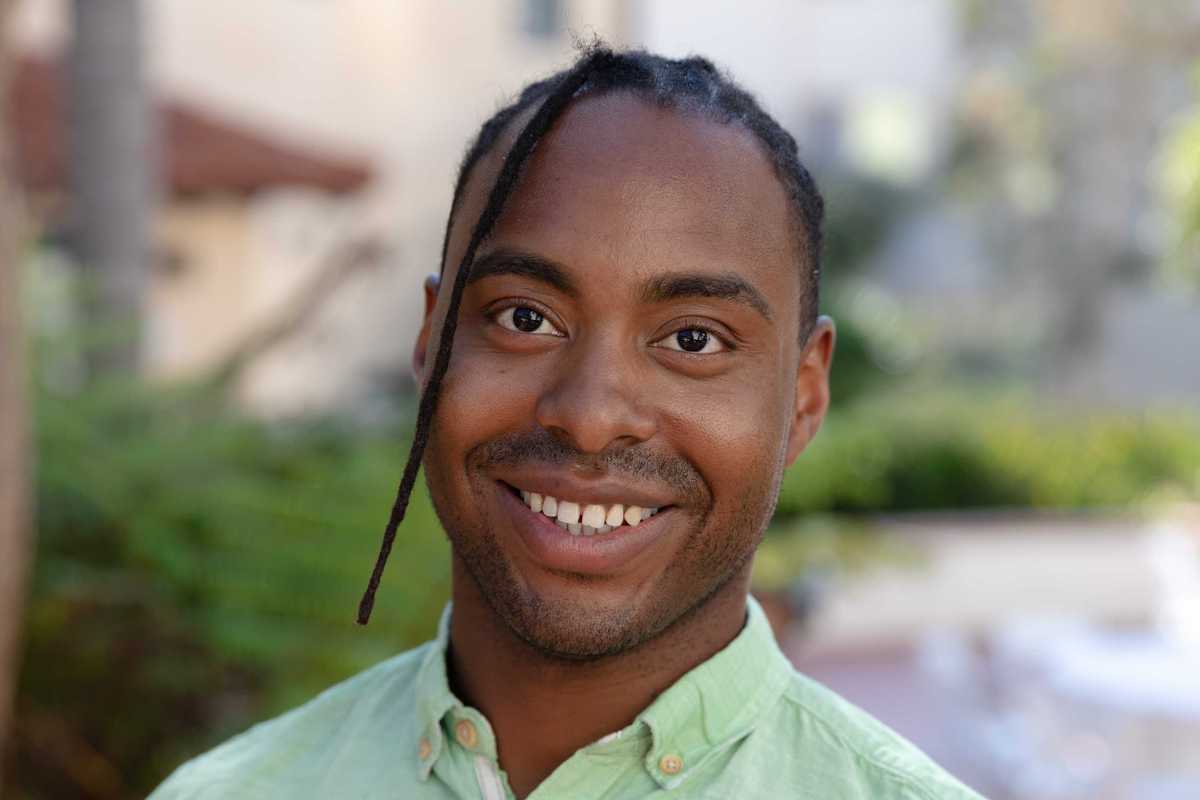
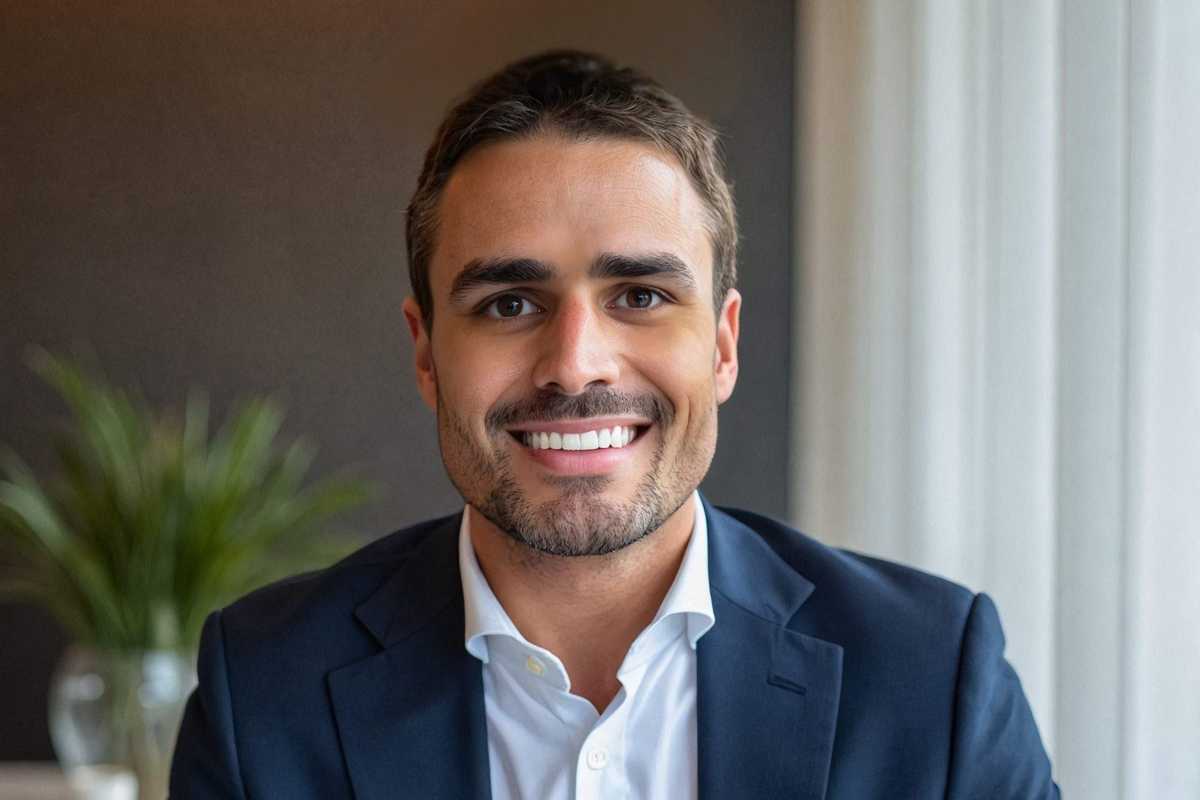
The University of Houston has more faculty named to this year’s senior member class of the National Academy of Inventors than any other Texas institution. Photos courtesy UH.

The University of Houston is now home to seven new senior members of the National Academy of Inventors.

The distinction honors active faculty, scientists and administrators from NAI member institutions that have demonstrated innovation and produced technologies that have “brought, or aspire to bring, real impact on the welfare of society,” according to the NAI. The members have also succeeded in patents, licensing and commercialization, and educating and mentoring.

According to UH, its seven new members represent the largest group from any single Texas institution this year, bringing the university's total senior member count to 46.

UH faculty also represented three of Houston's four new senior members in 2025. Six Houstonians were also named to the NIA's class of fellows late last year.

“This recognition affirms what we see every day at the University of Houston—bold, collaborative innovation focused on improving lives," Ramanan Krishnamoorti, vice president of energy at UH, said in a news release. "Having seven faculty members named Senior Members reflects our momentum and a culture where discovery moves beyond the lab into solutions that strengthen communities and drive economic growth.”

UH’s new senior members include:

  • Haleh Ardebili, endowed professor of mechanical and aerospace engineering and assistant vice president for Entrepreneurship and Startup Ecosystem. Ardebili develops flexible lithium batteries and holds four patents
  • Vemuri Balakotaiah, distinguished university chair and professor of chemical and biomolecular engineering. Balakotaiah holds is patents, with five pending, and develops mathematical models for the clean energy research.
  • Jakoah Brgoch, professor of chemistry. Brgoch develops next-generation inorganic materials and holds four patents.
  • Jose L. Contreras-Vidal, distinguished professor in electrical and computer engineering and director of UH’s NSF neurotechnology research center. Conreras-Vidal develops brain-machine interface technologies. He holds five patents, with two technologies advancing through clinical trials.
  • Preethi Gunaratne, professor in the department of biology and biochemistry and director of the UH Sequencing Core in UH’s College of Natural Sciences and Mathematics. Gunaratne holds five patents in biology and energy technologies and has made significant large-scale genome discoveries.
  • Jae-Hyun Ryou, professor of mechanical and aerospace engineering. Ryou holds 13 patents and has develops innovative semiconductor materials and devices for flexible electronics.
  • Yingcai Zheng, professor in applied geophysics and director of the UH Rock Physics Lab. Zheng's work focuses on energy production, geothermal development and carbon management strategies. He holds two patents.

Other Texas institutions also had strong showings this year. Additional new Texas senior members from NAI institutions include:

Texas A&M University

  • Guillermo Aguilar
  • Stavros Kalafatis
  • Narendra Kumar
  • Heng Pan
  • Xingyong Song
  • Yubin Zhou

Texas State University

  • Bahram Asiabanpour
  • Martin Burtscher
  • Nihal Dharmasiri
  • Alexander Kornienko
  • Ted Lehr
  • Christopher Rhodes

The University of Texas at Arlington

  • Brian H. Dennis
  • Nicholas Gans
  • Frederick M. MacDonnell
  • Charles Philip Shelor
  • Liping Tang

The University of Texas at San Antonio

  • Robert De Lorenzo
  • Marc Feldman
  • Daohong Zhou

The University of Texas at El Paso

  • XiuJun Li
  • Yirong Lin
  • David Roberson

Texas Tech University Health Sciences Center

  • Thomas John Abbruscato
  • Annette Louise Sobel
  • Sanjay K. Srivastava

Texas Tech University

  • Gerardo Games
  • Dy Dinh Le

Baylor University

  • David Jack

The University of Texas Rio Grande Valley

  • Upal Roy

This year's class is the largest since the NAI launched its senior member recognition program in 2018. The new senior members come from 82 NAI institutions ad hoe more than over 2,000 U.S. patents. Accoring to the NAI, it has 945 senior members who hold more than 11,000 U.S. patents today.

“This year’s senior member class is a truly impressive cohort. These innovators come from a variety of fields and disciplines, translating their technologies into tangible impact,” Paul R. Sanberg, president of NAI, added in a news release. “I commend them on their incredible pursuits and I’m honored to welcome them to the Academy.”

The Senior Member Induction Ceremony will honor the 2026 class at NAI’s Annual Conference June 1-4 in Los Angeles.

Houston's Welch Foundation has awarded more than 80 grants to support chemical research and careers in Texas for 2025. Photo via Getty Images

Houston foundation grants $27M to support Texas chemistry research

fresh funding

Houston-based The Welch Foundation has doled out $27 million in its latest round of grants for chemical research, equipment and postdoctoral fellowships.

According to a June announcement, $25.5 million was allocated for the foundation's longstanding research grants, which provide $100,000 per year in funding for three years to full-time, regular tenure or tenure-track faculty members in Texas. The foundation made 85 grants to faculty at 16 Texas institutions for 2025, including:

  • Michael I. Jacobs, assistant professor in the chemistry and biochemistry department at Texas State University, who is investigating the structure and thermodynamics of intrinsically disordered proteins, which could "reveal clues about how life began," according to the foundation.
  • Kendra K. Frederick, assistant professor in the biophysics department at The University of Texas Southwestern Medical Center, who is studying a protein linked to Parkinson’s disease.
  • Jennifer S. Brodbelt, professor in chemistry at The University of Texas at Austin, who is testing a theory called full replica symmetry breaking (fullRSB) on glass-like materials, which has implications for complex systems in physics, chemistry and biology.

Additional funding will be allocated to the Welch Postdoctoral Fellows of the Life Sciences Research Foundation. The program provides three-year fellowships to recent PhD graduates to support clinical research careers in Texas. Two fellows from Rice University and Baylor University will receive $100,000 annually for three years.

The Welch Foundation also issued $975,000 through its equipment grant program to 13 institutions to help them develop "richer laboratory experience(s)." The universities matched funds of $352,346.

Since 1954, the Welch Foundation has contributed over $1.1 billion for Texas-nurtured advancements in chemistry through research grants, endowed chairs and other chemistry-related ventures. Last year, the foundation granted more than $40.5 million in academic research grants, equipment grants and fellowships.

“Through funding basic chemical research, we are actively investing in the future of humankind,” Adam Kuspa, president of The Welch Foundation, said the news release. “We are proud to support so many talented researchers across Texas and continue to be inspired by the important work they complete every day.”

Headed to SXSW 2025? Here's what to do. Photo courtesy of SXSW

9 innovation & networking events for Houstonians to attend at SXSW 2025

A Houstonian's Guide to SXSW

South by Southwest, Austin's signature hybrid music, film and interactive festival, returns to the Texas capital this month, running March 7 through 15.

In the business and innovation sector, the festival fuses together SXSW Edu for educators at the beginning of the week and SXSW Interactive, which is one of the largest gatherings in the world of innovators, technologists, artists, startups, investors and policy-makers. SXSW is a powerful international magnet for creators and the people who serve them.

I started coming to Austin for SXSW in 1999, a few years after the Interactive portion (nicknamed "Spring Break for Nerds") launched and when the entire conference of 6,000 attendees fit into the Austin Convention Center. Back then, you could rub shoulders with famous bloggers who challenged established tech journalists in the hallways, multimedia artists handing out bootleg CD-ROMS, and hard-core geeks setting web standards and laws related to technology that we enjoy today.

SXSW, like Austin itself, has grown up quite a bit in the last two decades and has fended off the common Austin refrain of "It was better X years ago," as everything has become more commercial, less "authentic" and more expensive. SXSW officially sells tickets or badges for $2295.00 at the Platinum level (with cheaper options as well) providing access to stand in lines with hundreds of your friends for the most popular keynotes and panels.

One critical tradition of SXSW and part of the relentless motivation to "Keep Austin Weird" is the dozens of unofficial side events that pop up during the event all across the city. These unofficial events and activations typically provide networking opportunities fueled by the draw of internet-famous speakers, free food, and free alcohol. As SXSW has grown exponentially, it still seems to retain its charm and quirkiness as not quite a music festival, like Bonnaroo or Lollapalooza, nor a film festival like Sundance or Tribeca, and certainly not a traditional tech conference like CES. I like to think of it as a Carnival with many things to do and see but without a specific agenda or outcome. Since COVID and the financial market retraction, these parties and happy hours have become a lot more restrained, but they still exist if you know where to look.

This article is designed to guide you through the highlights, both official and unofficial, of SXSW with a focus on professional business development with a strong bent toward networking with tech startups. Here's what not to miss.

Friday, March 7

Equitech Texas Welcome Breakfast
9–11 a.m.
Inn Cahoots, 1221 E 6th St.
A breakfast gathering of people involved with Impact Investing and Equity Tech, led by Laurie Felker Jones

Startup Superconnector featuring Practice Pitch
11 a.m.–4 p.m.
Funded House,
315 Lavaca St.
This is a "Pop Up Pitch" event designed to help startups with their investor pitches by putting them in the same room with investors and professional service providers.

Startup Crawl at SXSW 2025
5 p.m. for Backstage VIP
6–9 p.m.
Capital Factory, 701 Brazos St., Suite 1600

Startup Crawl is arguably the most important unofficial event during SXSW where hundreds of startups showcase their offerings in a huge trade show, party format.

Saturday, March 8

The Red ThreadX
607 W. Third Street, 29th Floor
Curated content, strategic connections and actionable insights for military and defense-oriented businesses

SXSW 2025: Dolphin Tank
8–10:30 a.m.
FQ Lounge: Waller Creek Boathouse, 74 Trinity St.
In partnership with Amazon and The Female Quotient, this event is dedicated to championing women entrepreneurs.

Sunday, March 9

2025 TXST SXSW Lab: The Bobcat Den
1:30–8:00 p.m.
The Bobcat Den @ SXSW, Q-Branch 200 E. Sixth St., Suite 310
PROMO CODE: MICHAELBESTVIP
The TXST SXSW Lab: The Bobcat Den is a dynamic, all-day event that showcases Texas State University’s cutting-edge research, industry collaborations, and student innovation.

Monday, March 10

Founded in Texas - For Women Founders
9 a.m.–12:30 p.m.
Brown Advisory, 200 W. Sixth St., Suite 1700
Project W, The Artemis Fund, HearstLab and Brown Advisory have joined forces to bring you Founded in Texas, an investor feedback session designed to support Texas-based women who are founders of B2B and B2B2C technology companies.

Inaugural Texas House
11:00 a.m. on Monday, March 10, until 11:59 p.m. on Tuesday March 11
315 Lavaca St.
More than ever, Texans are leading at the frontiers of technology, entrepreneurship, and culture. See the full agenda

Tuesday, March 11

Super Connectors Meet Up
4–5 p.m.
Hilton Austin Downtown, 500 E. Fourth St., Room 412
*Badge-only event
"Superconnectors," tor those who seem hyper-connected to large networks of people, are naturally drawn to SXSW. They thrive in a creative and innovative environment, affording them countless opportunities to meet interesting people. Meet some here.

---

This information and more can be found at Marc Nathan's VIP Insider’s Guide to SXSW.


Ad Placement 300x100
Ad Placement 300x600

CultureMap Emails are Awesome

Houston startup is off to the races with its innovative running shoes

running start

Despite Houston’s reputation as a sneaker town, there are few actual shoe companies headquartered in the Bayou City. One that is up and running is Veloci Running, an innovative enterprise that combines the founder’s history as a track runner for Rice University with the realities of running in a changing world.

Tyler Strothman started running cross country growing up in Wisconsin and Indiana before moving to Texas to attend Rice in 2020. Naturally, his college life was altered significantly by the COVID-19 pandemic. Unfortunately, Strothman contracted the virus, leading to pneumonia and causing him to consider other plans for his future.

One thing that stood out from Strothman’s running career was how bad his shoes fit.

“Traditional shoes narrowed in, cramped the front of my feet, and it was causing foot pain,” he said in a video interview. “But any other shoes that were shaped to better fit the natural foot shape were more barefoot (style)—they were more minimalist overall. And that was hurting my calf and Achilles. It was pulling on it, kind of like a rubber band.”

Strothman decided to start Veloci and went on to win the annual Liu Idea Lab for Innovation and Entrepreneurship's H. Albert Napier Rice Launch Challenge in 2025. The win secured $50,000 in startup money, which Strothman used to immediately launch his new runner-centered shoe design with himself as the CEO at the age of 24.

Along for the jog was Strothman’s college friend, Austin Escamilla, who serves as chief operating officer. Escamilla believed in Strothman’s vision, but the project immediately ran into snags beyond Veloci’s control, particularly with manufacturing in Asia.

“It was quite a year to start a shoe business, especially dealing with tariffs and global economic trade tensions,” he said in the same video interview. “We've luckily had some really good partners and really solid advisors throughout the journey who've either done it or had some good feedback and advice. It certainly takes a village, but every day is different. So, it's fun to come into work every day and problem solve.”

The flagship Veloci shoe is the Ascent, which comes in both men’s and women’s sizes. It combines the wide toe cage that Strothman wanted with extra support cushion for a softer, easier run. They retail at $180. Strothman has personally been testing them for a year, noticing reduced lower leg pain when he runs.

At the same time, Veloci has attended to some of the more unique running problems in Houston and other hot, Southern states. A combination of heat and humidity makes for a very soggy shoe if not designed with such environments in mind. The Ascent is built to be very open and breathable, allowing hot air to flow and keeping sweat from building up. These various comfort improvements have made the Ascent Strothman’s favorite running shoe.

“I put on more pairs of this Veloci shoe than I have in my other running shoes in the last seven years,” he said

Currently, Veloci is still a very niche brand. Since the company launched last year, they’ve sold roughly 10,000 pairs. Those sales come either directly through their website or from specialty running stores, most of which are located around the Houston area, like Clear Creek Running Company in League City.

Building community around the shoe through these specialty retailers has been a prime marketing strategy. Part of the $50,000 grant went to a custom van that Veloci can take to various 5Ks, runs and events to get people interested in the brand. The personal touch has helped news of Veloci spread through the running world.

“We went to many run clubs throughout the last year,” said Escamillia. “We've been to pretty much every one of the major run clubs at least once or twice. Folks who try on the shoes, love them, become fans and post and repost…. The marketing side's been a lot of fun.”

Intuitive Machines lands $180M NASA contract for lunar delivery mission

to the moon

NASA has awarded Intuitive Machines a $180.4 million Commercial Lunar Payload Services (CLPS) award to deliver science and technology to the moon.

This is the fifth CLPS award the Houston spacetech company has received from NASA, according to a release. It will be the first mission to utilize Intuitive Machines' larger cargo lunar lander, Nova-D.

Known as IM-5, the mission is expected to deliver seven payloads to Mons Malapert, a ridge near the Lunar South Pole, which is a "compelling location for future communications, navigation, and surface infrastructure," according to the release.

“We believe our space infrastructure provides the scalability and flexibility needed to support an increased cadence of new Artemis missions and advance national objectives. This CLPS award accelerates our expansion efforts as we build, connect, and operate the systems powering that infrastructure,” Steve Altemus, CEO of Intuitive Machines, said in the release. “We look forward to working closely with NASA to deliver mission success on IM-5 and to provide sustained operations and persistent connectivity in the cislunar environment and across the solar system.”

The delivery will include the Australian Space Agency’s lunar rover, known as Roo-ver, and another lunar rover from Honeybee Robotics, a part of Jeff Bezos' Blue Origin. Intuitive Machines will also deliver chemical analysis instruments, radiation detectors and other technologies, as well as a capsule named Sanctuary that shows examples of human achievements.

Intuitive Machines previously completed its IM-1 and IM-2 missions, which put the first commercial lunar lander on the moon and achieved the southernmost lunar landing, respectively.

Its IM-3 mission is expected to deliver international payloads to the moon's Reiner Gamma this year. It’s IM-4 mission, funded by a $116.9 million CLPS award, is expected to deliver six science and technology payloads to the Moon’s South Pole in 2027.

The company also announced a $175 million equity investment to fuel growth earlier this month.

TotalEnergies exits U.S. offshore wind sector in $1B federal deal

Energy News

TotalEnergies, a French company whose U.S. headquarters is in Houston, has agreed to redirect nearly $930 million in capital from two offshore wind leases on the East Coast to oil, natural gas and liquefied natural gas (LNG) production.

In its agreement with the U.S. Department of the Interior, TotalEnergies has also promised not to develop new offshore wind projects in the U.S. “in light of national security concerns,” according to a department press release.

Federal agency hails ‘landmark agreement’

The Department of the Interior called the deal a “landmark agreement” that will steer capital “from expensive, unreliable offshore wind leases toward affordable, reliable natural gas projects that will provide secure energy for hardworking Americans.”

Renewable energy advocates object to what they believe is the Trump administration’s mischaracterization of offshore wind projects.

Under the Department of the Interior agreement, the federal government will reimburse TotalEnergies on a dollar-for-dollar basis for the leases, up to the amount that the energy company paid.

“Offshore wind is one of the most expensive, unreliable, environmentally disruptive, and subsidy-dependent schemes ever forced on American ratepayers and taxpayers,” Interior Secretary Doug Burgum said in the announcement. “We welcome TotalEnergies’ commitment to developing projects that produce dependable, affordable power to lower Americans' monthly bills while providing secure U.S. baseload power today — and in the future.”

TotalEnergies cites U.S. policy in move away from U.S. wind power

In the news release, Patrick Pouyanné, chairman and CEO of TotalEnergies, says the company was “pleased” to sign the agreement to support the Trump administration’s energy policy.

“Considering that the development of offshore wind projects is not in the country’s interest, we have decided to renounce offshore wind development in the United States, in exchange for the reimbursement of the lease fees,” Pouyanné says.

TotalEnergies redirects capital to LNG, oil, and natural gas

TotalEnergies will use the $928 million it spent on the offshore wind leases for development of a joint venture LNG plant in the Rio Grande Valley, as well as for production of upstream oil in the Gulf of Mexico and for production of shale gas.

“These investments will contribute to supplying Europe with much-needed LNG from the U.S. and provide gas for U.S. data center development. We believe this is a more efficient use of capital in the United States,” Pouyanné says.

TotalEnergies paid $133.3 million for an offshore wind lease at the Carolina Long Bay project off the coast of North Carolina and $795 million in 2022 for a lease covering a 1,545-megawatt commercial offshore wind facility off the coast of New Jersey.

“TotalEnergies’ studies on these leases have shown that offshore wind developments in the United States, unlike those in Europe, are costly and might have a negative impact on power affordability for U.S. consumers,” TotalEnergies said in a company-issued press release. “Since other technologies are available to meet the growing demand for electricity in the United States in a more affordable way, TotalEnergies considers there is no need to allocate capital to this technology in the U.S.”

Since 2022, TotalEnergies has invested nearly $12 billion to promote the development of oil, LNG, and electricity in the U.S. In 2025, TotalEnergies was the No. 1 exporter of LNG from the U.S.

Industry groups push back on offshore wind pullback

The American Clean Energy Association has pushed back on the Trump administration’s characterization of offshore wind projects.

“The offshore wind industry creates thousands of high-quality, good-paying jobs, and is revitalizing American manufacturing supply chains and U.S. shipyards,” Jason Grumet, the association’s CEO, said in December after the Trump administration paused all leases for large-scale offshore wind projects under construction in the U.S. “It is a critical component of our energy security and provides stable, domestic power that helps meet demand and keep costs low.”

Grumet added that President Trump’s “relentless attacks on offshore wind undermine his own economic agenda and needlessly harm American workers and consumers.” He called for passage of federal legislation that would prevent the White House “from picking winners and losers” in the energy sector and “placing political ideology” above Americans’ best interests.

The National Resources Defense Council offered a similar response to the offshore wind leases being paused.

“In its ongoing effort to prop up waning fossil fuels interests, the administration is taking wilder and wilder swings at the clean energy projects this economy needs,” said Pasha Feinberg, the council’s offshore wind strategist. “Investments in energy infrastructure require business certainty. This is the opposite. If the administration thinks the chilling impacts of this action are limited to the clean energy sector, it is sorely mistaken.”

---

This article originally appeared on EnergyCapitalHTX.com.