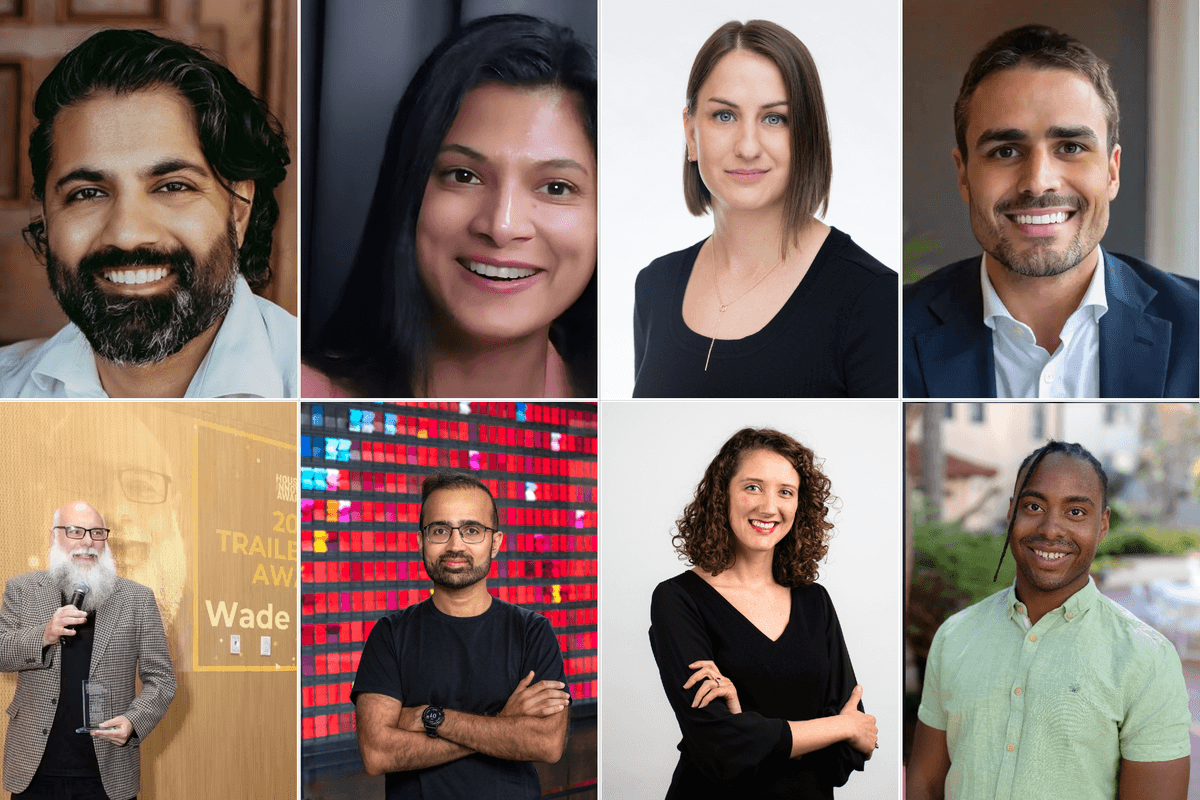
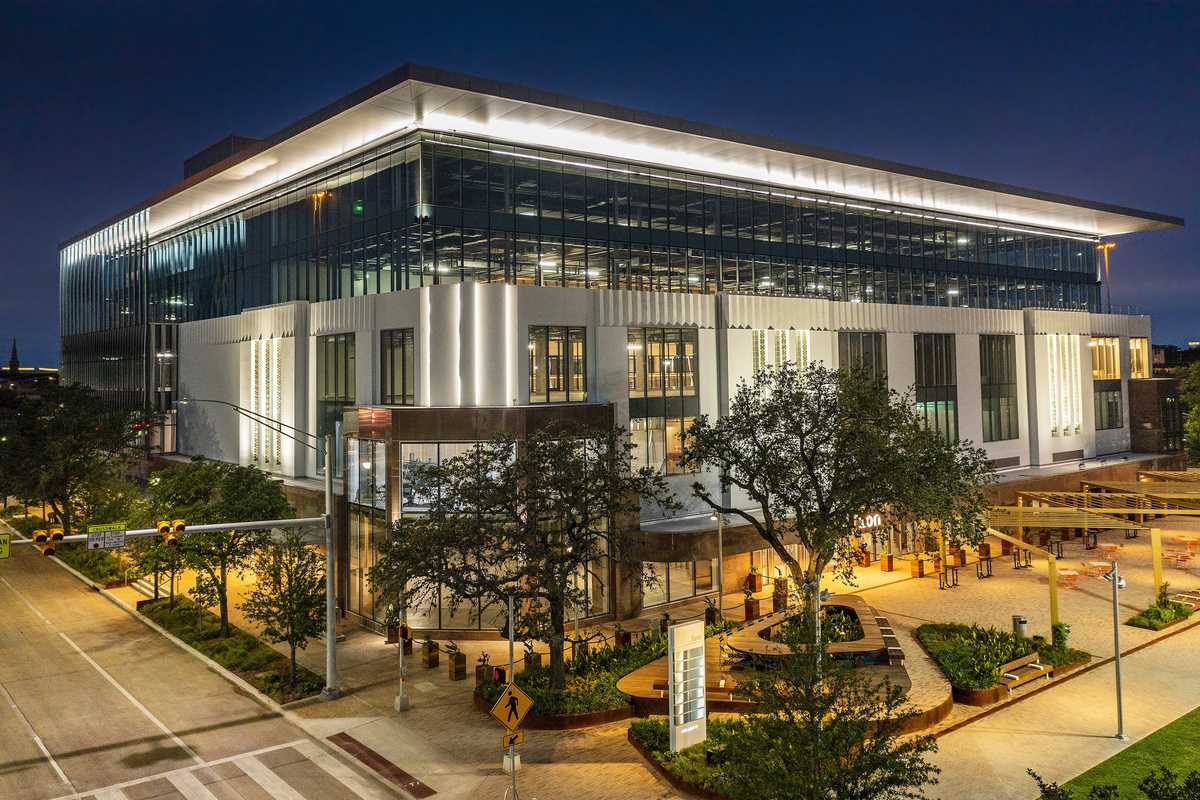
The Texas Brain Economy Summit will be June 9-10 at Helix Park. Photo via braincapitalhtx.com.

The Center for Houston’s Future and UTMB are bringing the Texas Brain Economy Summit back to Houston this summer to continue to position the region as a global leader in brain health.

The summit, held June 9-10 at the Texas Medical Center's Helix Park, will bring together more than 500 executives, researchers, policymakers and innovators from around the world to discuss the global brain economy.

Attendees can expect to hear from leaders of global institutions, including the World Economic Forum, U.S. Chamber of Commerce, McKinsey Health Institute, Global Brain Economy Initiative, Davos Alzheimer’s Collaborative, Business Collaborative for Brain Health (UsAgainstAlzheimer’s), Rice University, Memorial Hermann, MD Anderson and many others.

Day 1 of the conference will focus on "Enabling Human Flourishing & Economic Growth." Day 2 will focus on "Scaling Innovation & AI Solutions in the Brain Economy."

Keynotes will be delivered by:

  • Lexi Branson, vice president of health policy at the U.S. Chamber of Commerce
  • Kana Enomoto, director of the McKinsey Health Institute
  • Megan Henshall, founder of Google Experience Institute (Xi)
  • Ryan Howard, co-lead of Google Experience Institute (Xi)
  • Dr. Hani Jneid, John Sealy Distinguished Centennial Chair in Cardiology and vice president of cardiovascular operations at UTMB
  • Steve Kean, president and CEO of the Greater Houston Partnership
  • Dan Patrick, Lieutenant Governor of Texas
  • Jochen Reiser, president of UTMB
  • Thomas Seitz, senior partner of the McKinsey Health Institute

Other significant speakers include:

  • Rym Ayadi, founder and president of the Euro-Mediterranean Economists Association (EMEA) and co-founder of the Brain Capital Alliance
  • Arthur Evans, CEO and executive vice president of the American Psychological Association
  • David Gow, president and CEO of the Center for Houston’s Future (Gow is the founder and chairman of Gow Media, InnovationMap's parent company)
  • Bill McKeon, president and CEO of the Texas Medical Center
  • Jeff Merritt, head of urban transformation at the World Economic Forum
  • Joanne Pike, president and CEO of the Alzheimer’s Association
  • George Vradenburg, founding chairman of Davos Alzheimer’s Collaborative and co-founder, chairman and CEO of Us Against Alzheimer’s

The event is supported through Project Metis, which was launched by the Center for Houston’s Future last year. Led by Rice Brain Institute, The University of Texas Medical Branch's Moody Brain Health Institute and Memorial Hermann’s comprehensive neurology care department, the initiative aims to advance the understanding, prevention and treatment of the brain. It was developed on the heels of Texas voters overwhelmingly approving a ballot measure to launch the $3 billion, state-funded Dementia Prevention and Research Institute of Texas (DPRIT).

“Texas voters, by approving the state-funded Dementia Prevention Institute, have shown a strong commitment to brain health, as scientific advances continue daily. [Project Metis] aims to harness the Houston region’s unique strengths: its concentration of leading medical and academic institutions, a vibrant innovation ecosystem, and a history of entrepreneurial leadership in health and life sciences,” Gow said at the time.

Learn more about The Texas Brain Economy Summit and purchase tickets here.

Ad Placement 300x100
Ad Placement 300x600

CultureMap Emails are Awesome

Houston brain health co. secures $6.5M for rare disease study

neuro funding

Houston-based Goldenrod Therapeutics, part of Fannin Partners' portfolio, has announced the initial close of a $6.5 million series seed preferred stock round.

The round was led by Ataxia Ventures and an affiliate of Fannin, according to a news release.

Goldenrod Therapeutics plans to use the funding to support manufacturing, formulation optimization, IND-enabling studies and a Phase I study of its drug to treat brain inflammation, known as 11h.

The study will consider how 11h, which blocks the enzyme PDE4, could treat Friedreich’s ataxia (FA), a rare genetic disease that affects movement, speech and balance. To date, other PDE4 inhibitors have proven to regulate neuroinflammation and neuronal signaling, but have had adverse gastrointestinal side effects or have not reached enough of the central nervous system, according to Goldenrod.

The company says its 11h is expected to have "broad applicability" with limited emetric side effects.

“Our 11h program is a next-generation, orally bioavailable, brain-penetrant PDE4 inhibitor, where researchers overcame longstanding limitations associated with earlier PDE4 inhibitors," Dr. Dev Chatterjee, CEO of Goldenrod, said in the news release. "We believe this creates the potential for a best-in-class therapy for Friedreich’s Ataxia and a potential foundation for development across multiple neurodegenerative and neuroinflammatory disorders.”

11h was first developed at the University of Nebraska Medical Center (UNeMed). Houston-based Fannin Partners in-licensed the product 2020 and landed SBIR Phase I funding to support its initial development for opioid use disorder soon after.

Goldenrod has also received funding to study 11h's effectiveness for multiple sclerosis, methamphetamine addiction and cocaine addiction.

Goldenrod says it is developing 11h to target a variety of neurological and inflammatory conditions, including Alzheimer's disease, multiple sclerosis, ALS, substance use disorders, Batten disease, pain and traumatic brain injury.

27 Houston companies make Fortune 500 for 2026, led by energy giants

Houston HQs

Houston is a giant among U.S. hubs for corporate headquarters.

The 2026 Fortune 500 lists 27 companies based in the Houston area, with many energy companies claiming top spots. Houston ties with Chicago for the second-most Fortune 500 headquarters, preceded only by New York City (53). Dallas-Fort Worth is home to 23 Fortune 500 headquarters.

Texas leads the nation for Fortune 500 headquarters (57), with California in the No. 2 spot and New York at No. 3.

“Texas is the undisputed headquarters of headquarters,” Gov. Greg Abbott said in a news release. “The world’s leading businesses invest with confidence in Texas because of our welcoming business climate, predictable regulatory environment, and skilled and growing workforce. People and businesses are choosing Texas because Texas works.”

The 2026 Fortune 500 ranks the largest U.S. corporations based on revenue in fiscal year 2025.

Here’s a rundown of the 27 Fortune 500 companies based in the Houston area.

  • No. 9 ExxonMobil
  • No. 21 Chevron
  • No. 29 Phillips 66
  • No.55 Sysco
  • No. 75 ConocoPhillips
  • No. 89 Enterprise Products Partners
  • No. 103 Plains GP Holdings
  • No. 133 Hewlett Packard Enterprise
  • No. 149 NRG Energy
  • No. 157 Quanta Services
  • No. 164 Baker Hughes
  • No. 173 Occidental Petroleum
  • No. 179 Waste Management
  • No. 201 EOG Resources
  • No. 204 Group 1 Automotive
  • No. 207 Halliburton
  • No. 223 Cheniere Energy
  • No. 236 Corebridge Financial
  • No. 262 Targa Resources
  • No. 266 Kinder Morgan
  • No. 388 Westlake
  • No. 435 CenterPoint Energy
  • No. 438 APA
  • No. 440 Comfort Systems USA
  • No. 455 NOV
  • No. 488 KBR
  • No. 496 Coterra Energy. Oklahoma City, Oklahoma-based Devon Energy and Houston-based Coterra Energy merged in early May, with the combined company retaining the Devon Energy name and the Houston headquarters.

The Greater Houston Partnership notes the Houston area soon will welcome its 28th Fortune 500 company. Expand Energy (formerly Chesapeake Energy), appearing at No. 362 on the 2026 list, says it’s moving its headquarters from Oklahoma City to Spring this year.

As the natural gas producer prepares to relocate to Texas, it’s hunting for a new leader. Nick Dell’Osso stepped down as president and CEO earlier this year. Board Chairman Michael Wichterich is interim president and CEO.

Dell’Osso became president and CEO of Oklahoma City-based Gulfport Energy effective May 28.

---

This article first appeared on EnergyCapitalHTX.com.

Elon Musk's SpaceX is about to make its debut on Wall Street

Money Moves

Elon Musk's rocket company SpaceX will make its debut on Wall Street Friday, June 12, and both institutional and retail investors are expected to gobble up the 555.6 million shares going up for sale at $135 apiece. Musk, already the world's richest man, could become its first trillionaire.

SpaceX is likely to become the biggest IPO ever, with proceeds of around $75 billion. SpaceX hopes to become the first company to send people to Mars. In fact, part of Musk’s future compensation depends on SpaceX eventually establishing a colony of at least 1 million people on the red planet.

Why SpaceX is going public now

In a video conference on Musk's social media platform X, he told JPMorgan CEO Jamie Dimon that people have suggested for the last 10 years that he take SpaceX public. He's doing it now because the company plans to put 100,000 next-generation Starlink satellites into orbit. Deploying AI data centers in space is a “massive new growth base and you need capital for that,” he said.

Going public provides access to the capital that SpaceX needs. But it also exposes it to more scrutiny from shareholders and more regulatory oversight. That includes filing quarterly financial reports, which critics say incentivizes short-term thinking over longer-term planning and creates unnecessary costs for a company. Securities regulators are currently soliciting public comment on a proposal to require public companies to file the financial reports only twice every year.

How the IPO impacts the company

Musk will hold the majority of a special class of shares, giving him control over decisions related to company strategy, finances and personnel. On the latter, because of his ownership of most of these Class B shares, the only person who can fire Musk as CEO is Musk.

The company credits Musk with being the “driving force” behind its growth, innovation and success. But what happens if Musk is no longer in the picture? SpaceX warns that the loss of Musk could disrupt its ability to execute its strategy as well as hurt its “reputation and relationships with customers, partners and other stakeholders.”

The company also warns that finding a replacement with the same skills and experience as Musk would be time-consuming, if not nearly impossible. As Wedbush Securities analyst Dan Ives wrote Wednesday, “At the end of the day Musk is SpaceX and SpaceX is Musk.”

What could make or break SpaceX

Currently in the test phase, the gigantic reusable Starship rocket is key to SpaceX realizing Musk's ambitions. Much of the commercial space business hinges on SpaceX developing Starship’s capability to be fully reusable and hearty enough for a quick turnaround between flights. If that doesn't happen, SpaceX warns that putting data centers and satellites in space will take longer and cost more money, meaning it risks customers bailing on the company.

Analysts say that by pioneering reusable rockets, SpaceX has established a clear lead on competitors such as Blue Origin, led by Amazon founder Jeff Bezos. The Starlink satellite business competes with, among others, AST SpaceMobile – which is relying on a SpaceX rocket to send its latest generation of satellites into orbit next week.

The prospectus filed last week says SpaceX’s biggest potential market is the sale of business-oriented artificial intelligence products designed to transform how people get work done. It’s an opportunity SpaceX predicts would be worth $22.7 trillion if it could somehow dominate rivals like Anthropic, OpenAI and Microsoft in a highly competitive industry. But the prospectus shows no clear path to profitability for the xAI business, which merged with SpaceX earlier this year.

Why Wall Street is paying attention

If the SpaceX IPO is as successful, the stock could quickly join the Nasdaq 100, a widely followed index that tracks the 100 largest non-financial companies in the composite. That's important because some popular funds, such as the $460 billion QQQ exchange-traded fund, mimic the index and will automatically buy whatever is listed in the index.

Nasdaq recently changed its rules to allow select companies to enter the Nasdaq 100 after just 15 trading days.

S&P Dow Jones Indices, on the other hand, is sticking to established and more traditional thresholds that will not allow SpaceX or other companies with gargantuan IPOs faster entry into its S&P 500 index. That means even high-profile companies will still need to wait for their stocks to trade a full 12 months before they can enter the index.

Companies want to be in the S&P 500 in particular because it's arguably the most important index on Wall Street, with trillions of dollars either mimicking it exactly or benchmarked against it. Vanguard's VOO fund that tracks the S&P 500 has roughly $950 billion invested in it, for example.