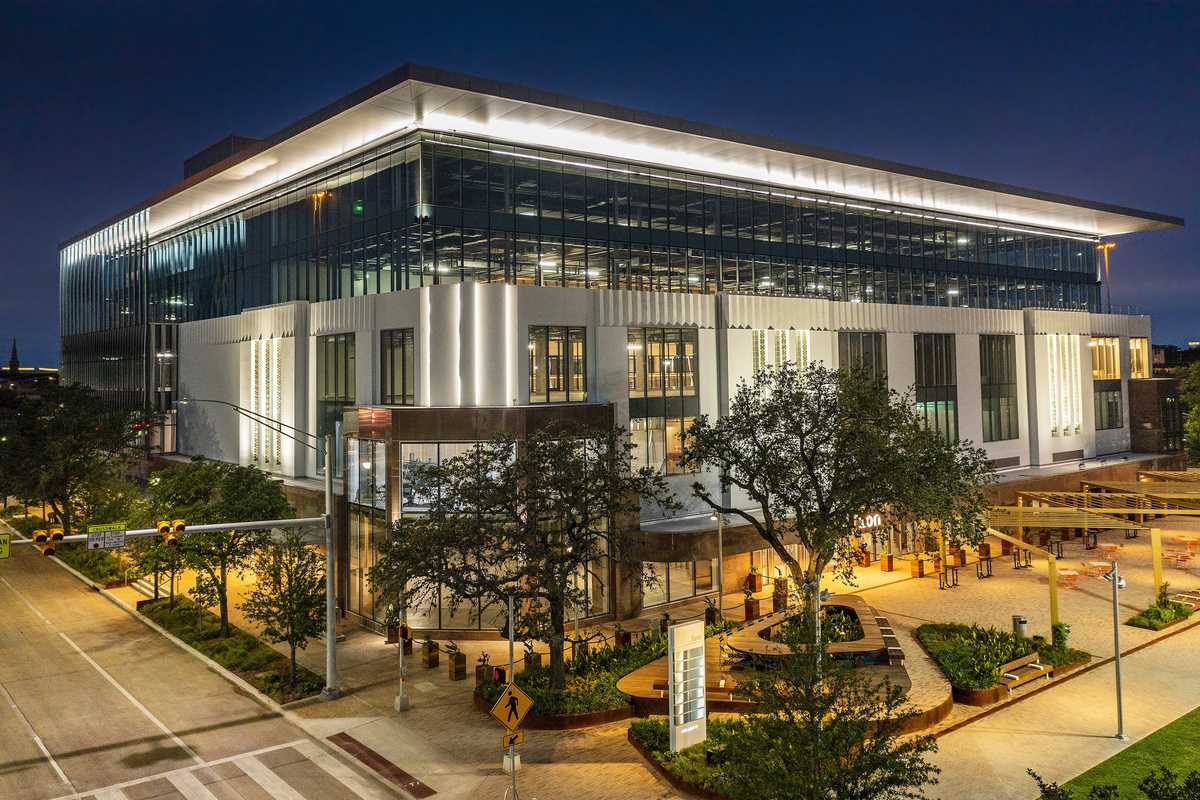
Houston will be home to one of Meta's new America’s Workforce Academies. Photo via datacenters.atmeta.com

Meta and Associated Builders and Contractors have entered into a partnership to invest $115 million in training programs for the construction of AI data centers, with a portion of the project launching in Houston.

The companies announced June 8 that they would open America’s Workforce Academies at ABC chapter training centers in Houston; Indianapolis; Baton Rouge, Louisiana; and Columbus, Ohio.

The academies will offer career readiness and safety training, plus five weeks of hands-on education. Participants who complete the program will be granted a job offer from contractors working on Meta projects.

“The AI revolution is bringing change but also historic opportunities,” Dina Powell McCormick, Meta president and vice-chairman, said in a news release. “Skilled workers electrified rural America one pole at a time. They manned the factories that built the arsenal that won World War II. Now a new generation will pour the foundations and lay the fiber that secures American strength in this new age.”

Overall, the Meta and ABC aim for the academies to build a more sustainable pipeline of skilled construction workers and ensure safety and job readiness for the surging number of data center projects underway.

“This new program is an innovative talent solution that is a critical part of addressing the construction industry’s ongoing workforce shortage and creates an accelerated, new-entrant strategy for job seekers ... The sustained demand for data center construction technicians means the industry needs an all-of-the-above approach to address this shortage and grow the construction talent pool,” Michael Bellaman, ABC president and CEO, added in the release.

In Texas, Meta, the parent company of Facebook and Instagram, has launched or broken ground on data centers in El Paso, Fort Worth and Temple. The company announced in March that it planned to grow its El Paso Data center by 1 gigawatt, representing more than a $10 billion investment.

Apart from Meta, Texas has attracted data center development to power other giants like Google and Amazon in recent years. In turn, Texas has been predicted to become the biggest data center market. Commercial real estate services provider JLL reported this spring that the state could topple Northern Virginia as the world’s largest data-center market by 2030. Similarly, CBRE predicted that Houston's data center capacity could double by 2028. Read more here.

Houstonians are concerned about data centers' high energy demands and the area’s power grid reliability, according to a new report. Photo courtesy UH

New UH survey reveals concerns over AI data center growth in Houston

data findings

A new report out of the University of Houston shows that area residents remain wary of the long-term effects of operating data centers.

The recent survey from the University of Houston’s latest SPACE City Panel, conducted by the Center for Public Policy at the Hobby School of Public Affairs, shows that while 85 percent of Houston-area residents use AI, nearly 63 percent oppose the construction of AI data centers within 1 mile of their homes.

Respondents’ concerns centered around data centers’ high energy demand and the area’s power grid reliability. According to the survey, 32 percent of residents who oppose local data center projects would be more likely to support the centers if they relied on renewable energy over fossil fuels.

“Respondents understand that AI can bring economic and educational benefits, but they are also concerned about the physical infrastructure needed to fuel AI, especially data centers,” Soran Mohtadi, post-doctoral fellow at the Hobby School and a researcher on the report, said in a news release. “This physical infrastructure demands more electricity and water, leading to environmental impacts.”

Experts estimate that 6.5 gigawatts of data center capacity will be added to the Texas grid by 2030. And Houston’s data center capacity is predicted to more than double by 2028.

The Electric Reliability Council of Texas also projects electricity demand could reach 218 gigawatts by 2031, which would be more than double the record peak set in August 2023. Data centers are expected to account for 86 gigawatts of that new demand.

Survey respondents also said they are concerned about the state's future water supply, given the large amounts of water that data centers need to stay cool.

In terms of who’s responsible for that issue, 57.6 percent of respondents said they put the onus on Texas lawmakers, while 31.5 percent say tech companies should be responsible.

Additionally, more than 75 percent of respondents believed that data center developers and technology companies—not residents—should bear the cost of infrastructure upgrades to support data centers.

“Every decision legislators make has implications on residents’ everyday lives and local infrastructure now and in the future,” Maria P. Perez Arguelles, lead researcher on the report and research assistant professor at the Hobby School, added in the news release. “This issue is going to become more important in years to come, so this is just the beginning.”

Read the full report here.

Ad Placement 300x100
Ad Placement 300x600

CultureMap Emails are Awesome

Houston named the No.1 emerging city for biopharma in inaugural report

Biopharma Leader

Houston is ranked No.1 on the first-ever Next 10 U.S. Biopharma Clusters report published by Genetic Engineering & Biotechnology News (GEN).

The report, which ranks the best emerging hubs for life science activities, considered patents, NIH funding, lab space, venture capital investments, and the number of jobs in regions in cities, states and “clusters” across the U.S. GEN touts Houston as the top city for the biopharma industry due to a surge in funding, job creation, medical innovations and startup success.

Here’s how Houston ranked in the report’s different categories;

  • No. 1 for NIH funding with 2,262 awards totaling more than $1.25 billion
  • No. 2 for emerging regions for jobs, with 28,000 jobs
  • No. 2 for lab space, with roughly 8 million square feet in the market
  • No. 6 for patents, with 2,760 patent families

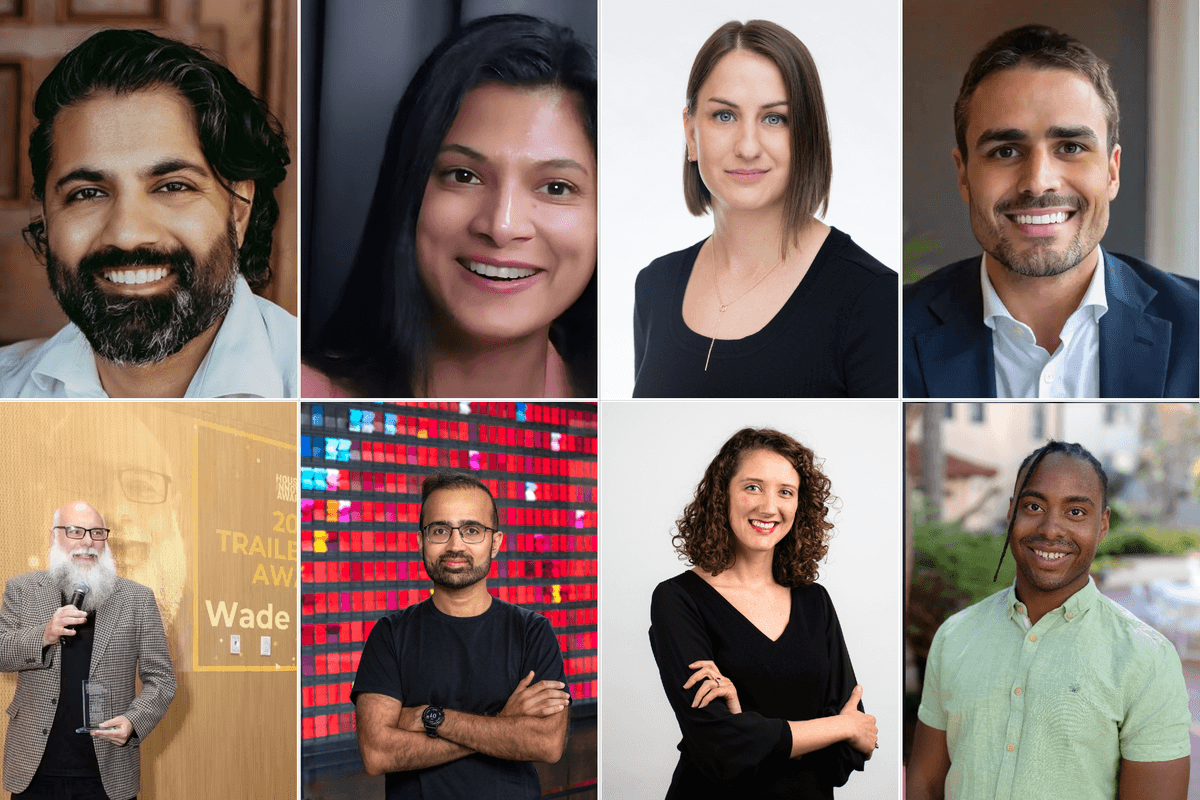
According to BioHouston chairman Jeff Wade, Houston secured half a billion dollars in venture capital funding in 2025 and 2026 to date.

The report called out major biopharm news out of Houston in the last few months, including Bristol Myers Squibb selecting Houston for its $1 billion, 600,000-square-foot manufacturing site and Eli Lily selecting Houston for its $6.5 billion, 236-acre manufacturing site. Both facilities will be located within Generation Park, a 4,300-acre, master-planned commercial district near Lake Houston.

Houston startups like CrossBridge Bio and Duracyte were also mentioned in the report. CrossBridge, which develops antibody-drug conjugates for cancer, was acquired by Eli Lily in April for $300 million. Duracyte, a “living pharmacy” company, was launched out of Rice University’s biotech venture studio RBL LLC this spring and is backed by up to a $45 million Advanced Research Projects Agency for Health (ARPA-H) award.

The startup is working to commercialize its Hybrid Advanced Molecular Manufacturing Regulator (HAMMR) technology, a rechargeable, implantable device that can sense biological signals, monitor tumor environments and adjust therapeutic output in real time.

“There’s a lot of great talent, but the unique advantage that we have is we are able to benefit from a lot of unique clinical infrastructure and clinician insights,” Omid Veiseh, Duracyte co-founder and managing partner of RBL LLC, told GEN. “There are a lot of clinicians here who are eager to partner on investigator-initiated trials.”

The report also touted Houston’s Texas Medical Center, home to the University of Texas MD Anderson Cancer Center and Baylor College of Medicine, and international partnerships like the recently expanded TMC Korea BioBridge.

Other cities to make the list include:

  • No. 2 Minneapolis-St. Paul
  • No. 3 Denver-Boulder
  • No. 4 St. Louis
  • No. 5 Dallas-Fort Worth

States to make the list include:

  • No. 1 Ohio (including Cincinnati, Cleveland, and Columbus)
  • No. 2 Indiana (including Indianapolis)
  • No. 3 Florida (including Jacksonville and Miami-Fort Lauderdale)
  • No. 4 Georgia (including Atlanta and Augusta)
  • No. 5 Wisconsin (including Madison and Kenosha)

Regional state clusters to watch include:

  • Phoenix
  • Pittsburgh
  • Greater Richmond, Virginia
  • South Carolina
  • Utah

See the full report here.

Major Texas-based airlines ground humanoid robots as passengers

In The Air

Two major airlines based in Texas are drawing a hard line between human and humanoid: American Airlines and Southwest Airlines won’t permit human-like or animal-like robots to board flights as passengers.

Fort Worth-based American and Dallas-based Southwest recently adopted bans on robotic passengers after two incidents in which human-like robots joined flesh-and-blood passengers on Southwest flights.

In May, Aaron Mehdizadeh, owner of The Robot Studio rental company in Dallas, was heading from Las Vegas to Dallas Love Field with 3.5-foot-tall Stewie, according to CBS News Texas. Rather than shipping Stewie as cargo, Mehdizadeh bought the robot its own seat using a type of ticket often purchased for fragile items such as wedding dresses and equipment.

But because Stewie was technically a carry-on item, the robot wasn’t supposed to occupy a seat, according to eWeek. Crew members wound up disconnecting Stewie’s battery and relocating the robot to a window seat before takeoff.

Mehdizadeh pushed back on Southwest’s stance regarding the battery, telling CBS News Texas that Stewie’s power supply is a standard battery that’s similar to one for a laptop.

Stewie isn’t the only robot making mischief in the skies. In May, a 70-pound, human-like robot named Bebop caused a stir on a Southwest flight from Oakland, California, to San Diego.

The robot prompted a nearly one-hour flight delay after crew members realized it violated restrictions on large carry-ons and raised concerns about the battery, San Francisco TV station KGO reported. Dallas-based Elite Event Robotics owns Bebop.

Southwest seized Bebop’s lithium-ion battery, but the airline did let Bebop take the San Diego-bound flight.

Southwest’s new robot policy prohibits human-like or animal-like robots from riding in an airplane cabin or as checked baggage, no matter their size or purpose. All other robots, including toys, must fit in a carry-on size bag and comply with battery restrictions, the airline says.

In a statement sent to CultureMap, a Southwest spokeswoman says the airline “has taken a strong stance on this issue and has led the U.S. airline industry with our battery policy.”

“The robot policy is a further evolution of a [safety] journey we have been on for several months. This move was not in response to any single incident,” the spokeswoman adds. “To eliminate confusion, the policy applies to all similar devices, regardless of size.”

Lithium-ion batteries can overheat, catch on fire, or explode on airplanes.

American’s new robot policy, which took effect Monday, August 17, is similar to Southwest’s. The policy prohibits human-like and animal-like robots from sitting in a purchased seat, being stored in an overhead bin or traveling as checked baggage. The ban applies to U.S., international, and regional flights.

“While there have been no known events involving this type of robot on any American flight, this policy was developed following a comprehensive review of safety risks associated with these devices, including the large lithium-ion batteries that power them,” the airline said in an internal memo obtained by the View From the Wing travel blog.

American gate agents have been told not to allow a passenger accompanied by a robot to board a plane or to let a robot travel as a checked item, the memo say.

If a robot is discovered after check-in, American employees are supposed to follow the Federal Aviation Administration’s “undeclared dangerous goods” procedures. These procedures cover hazardous shipments like lithium-ion batteries, explosives, flammable liquids, and compressed gases that lack required warning labels or shipping documents.

---

This article originally appeared on CultureMap.com.

Texas A&M, UH rise in global rankings of universities attracting the most attention

visibility report

Houston and Texas universities had a strong showing on the 2026-27 Global University Visibility (GUV) Rankings compiled by D.C.-based higher ed market research firm American Caldwell.

Texas A&M ranked No. 6 on the list—the top rank of any Texas university. Meanwhile, the University of Houston ranked No. 52, a 15-spot jump from its previous ranking.

The GUV rankings rate colleges that garner the most global attention via news coverage, social media influence, website traffic, YouTube views, and general public interest. GUV evaluated over 1,200 universities across 193 United Nations-recognized countries.

Texas A&M, with its No. 6 global ranking, also claimed the No. 5 spot among U.S. institutions. The university climbed 21 spots from its previous rank.

“News mentions were a driver of Texas A&M’s movement in this year’s rankings, and earned media remains one of the strongest signals of relevance,” Tim Doty, associate vice president for earned media at Texas A&M, said in a news release. “Much of that visibility begins with our faculty and research experts, whose work helps explain, solve and give context to issues people care about. When Texas A&M experts appear in news stories about research, discovery, national security, agriculture, health, engineering, service and the future of Texas, audiences see the university not only as large or well known, but as useful, relevant and necessary to the conversations shaping our state and country.”

In the “Public Interest” category, UH also claimed a top 10 global ranking at No.6. UH touts its overall GUV rankings success to Guggenheim Fellowships, MacArthur “Genius” grants, National Academy membership, studies like researchers breaking the superconductivity temperature record, and success on the football field and basketball courts.

“Across the board, there is no question that the University of Houston is a brand on the rise,” Shawn Lindsey, interim vice president for marketing and communications, said in a news release. “People are seeing our story, hearing about the amazing things happening at UH and actively seeking us out to learn more. We are seeing it in record-high student applications, we are seeing increases in trademark licensing revenue, our faculty are earning global accolades. It’s an exciting time to be a Houston Cougar.”

Other Texas institutions to make the top 250 on the list include:

  • No. 22 The University of Texas at Austin
  • No. 104 University of Texas at Dallas
  • No. 159 Texas Tech University
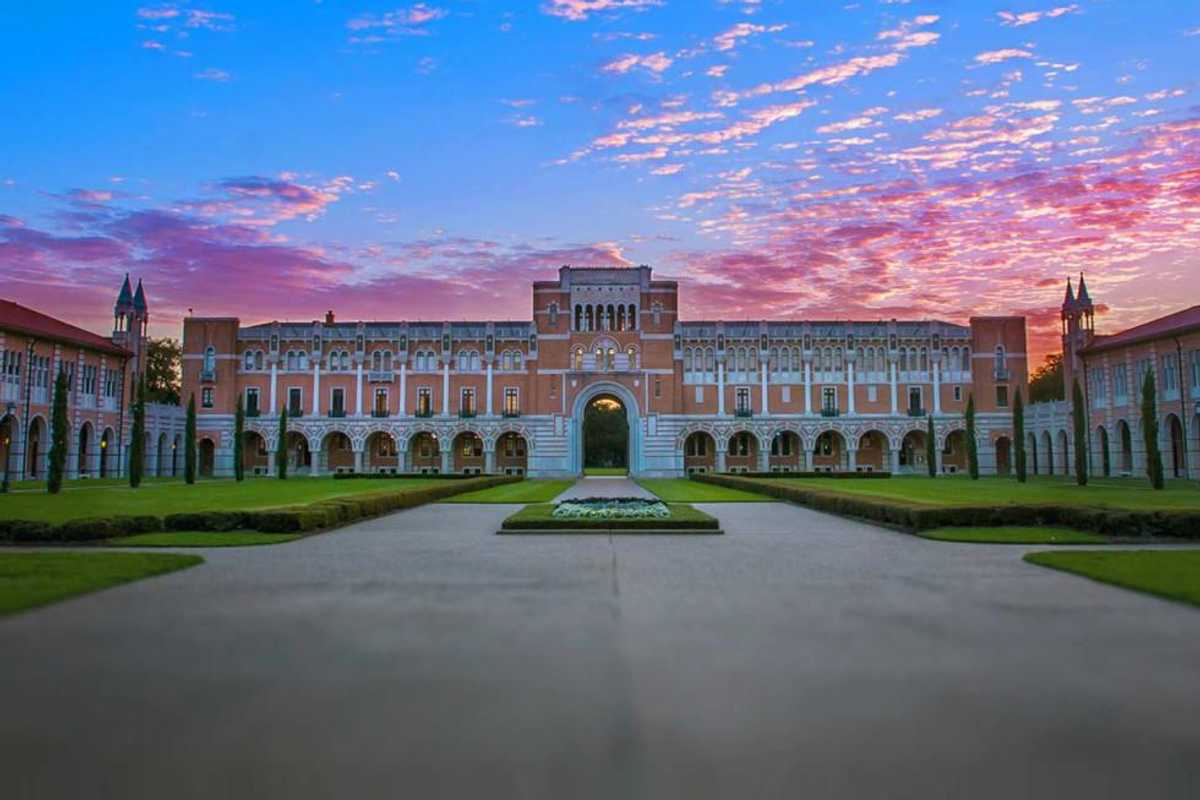
  • No. 178 Rice University
  • No. 191 University of North Texas
  • No. 248 Texas State University

For the fourth year in a row, Harvard University secured the top spot on the list, followed by MIT, Stanford University and Purdue University. The University of Oxford was the top non-U.S. institution at No. 5.

See the full list here.