This week's roundup of Houston innovators includes Angela Wilkins of Starling Medical, Sean Kelly of Amperon, and Laureen Meroueh of Hertha Metals. Photos courtesy

Editor's note: Every week, I introduce you to a handful of Houston innovators to know recently making headlines with news of innovative technology, investment activity, and more. This week's batch includes a podcast with a health tech data scientist, a CEO celebrating an international expansion, and a founder who won a big DOE prize.

Angela Wilkins, chief data scientist at Starling Medical

Angela Wilkins joins the Houston Innovators Podcast to discuss the intersection of data and health care. Photo courtesy

When most people hear about Houston startup Starling Medical, they might think about how much potential the medical device company has in the field of urinalysis diagnostics. But that's not quite where Angela Wilkins's head went.

Wilkins explains on the Houston Innovators Podcast that when she met the company's co-founders, Hannah McKenney and Drew Hendricks, she recognized them as very promising startup leaders taking action on a real health care problem. Starling's device can collect urine and run diagnostics right from a patient's toilet.

"It was one of those things where I just thought, 'They're going to get a bunch of data soon,'" Wilkins says. "The opportunity is just there, and I was really excited to come on and build their AI platform and the way they are going to look at data."

For about a year, Wilkins supported the startup as an adviser. Now, she's working more hands on as chief data officer as the company grows. Read more.

Sean Kelly, CEO and co-founder of Amperon
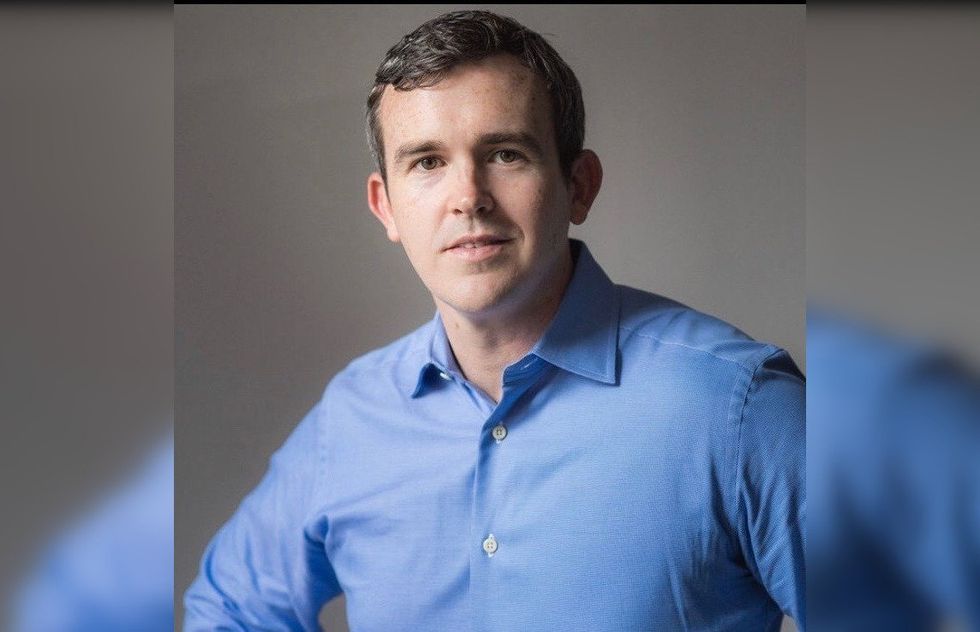
Amperon officially expanded in Europe. Photo via LinkedIn

Houston-based, AI-powered electricity forecasting and analytics services company Amperon Holdings is live in Europe. The expansion, which Co-Founder and CEO Sean Kelly previously told InnovationMap about, is official, the company announced this month. In addition to the expansion, Amperon announced Jon Ecker as general manager, Europe, and Kelsey Hultberg as executive vice president, communications, and chief of staff.

Now, European companies that buy and sell energy in the renewable energy producers, financial institutions, and utilities markets can leverage Amperon's platform of AI and machine learning technologies to access short- and long-term forecasts for their individual meters and generation assets.

“As a warmer-than-expected June ushers in a hot summer, and increasing uncertainty looms for the calmer fall months due to the influx of wind and solar generation, we are eager to assist our European customers in navigating the power market volatility caused by heat waves, extreme weather events, and shifts in power usage across the region,” Kelly says in a news release. Read more.

Laureen Meroueh, founder of Hertha Metals
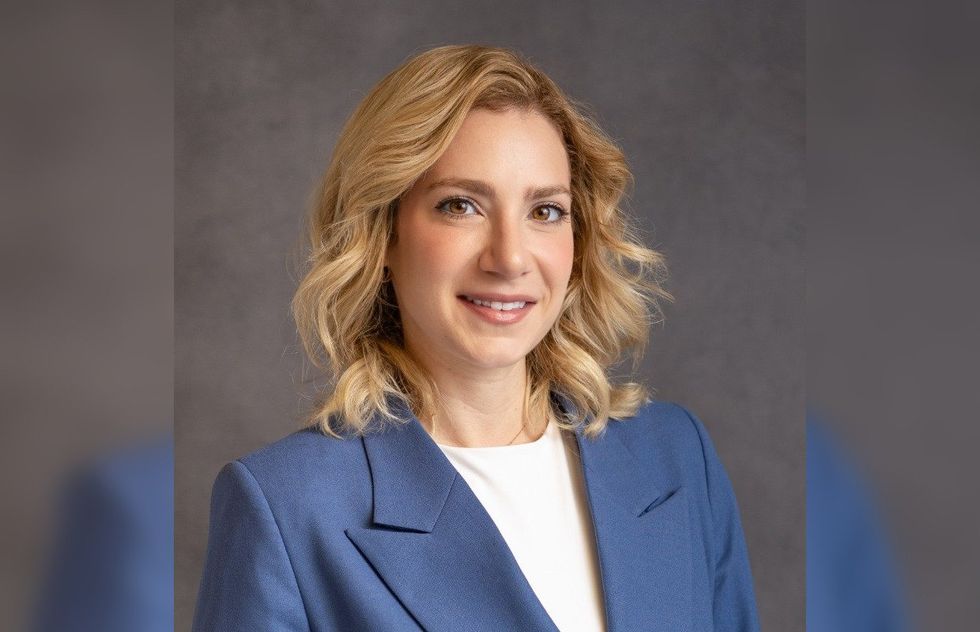
Hertha Metals, based in Conroe, won first place at the 2024 Summer Energy Program for Innovation Clusters (EPIC) Startup Pitch Competition. Photo via LinkedIn

Four startups from across the country won over $160,000 in cash prizes from the U.S. Department of Energy’s Office of Technology Transitions earlier this month, and a Houston-area company claimed the top prize.

Hertha Metals, based in Conroe, won first place at the 2024 Summer Energy Program for Innovation Clusters (EPIC) Startup Pitch Competition. The program honors and supports clean energy innovators nominated by clean technology business incubators.

Hertha Metals was founded by Laureen Meroueh, a mechanical engineer and materials scientist, in 2022. Read more.

Angela Wilkins joins the Houston Innovators Podcast to discuss the intersection of data and health care. Photo courtesy

Houston data scientist joins medical device startup amid AI evolution in the sector

HOUSTON INNOVATORS PODCAST EPISODE 241

When most people hear about Houston startup Starling Medical, they might think about how much potential the medical device company has in the field of urinalysis diagnostics. But that's not quite where Angela Wilkins's head went.

Wilkins explains on the Houston Innovators Podcast that when she met the company's co-founders, Hannah McKenney and Drew Hendricks, she recognized them as very promising startup leaders taking action on a real health care problem. Starling's device can collect urine and run diagnostics right from a patient's toilet.

"It was one of those things where I just thought, 'They're going to get a bunch of data soon,'" Wilkins says. "The opportunity is just there, and I was really excited to come on and build their AI platform and the way they are going to look at data."

For about a year, Wilkins supported the startup as an adviser. Now, she's working more hands on as chief data officer as the company grows.


Wilkins, who serves as a mentor and adviser for several startups, has a 20-year career in Houston across all sides of the innovation equation, working first at Baylor College of Medicine before co-founding Mercury Data Science — now OmniScience. Most recently she served as executive director of the Ken Kennedy Institute at Rice University.

This variety in her resume makes her super connective — a benefit to all the startups she works with, she explains. The decision to transition to a startup team means she gets to work hands on in building a technology — while bringing in her experience from other institutions.

"I think I've really learned how to partner with those institutions," she says on the show. "I've really learned how to make those bridges, and that's a big challenge that startups face."

"When we talk about the Houston innovation ecosystem, it's something we should be doing better at because we have so many startups and so many places that would like to use better technology to solve problems," she continues.

Wilkins has data and artificial intelligence on the mind in everything she does, and she even serves on a committee at the state level to learn and provide feedback on how Texas should be regulating AI.

"At the end of the day, the mission is to put together a report and strategy on how we think Texas should think about AI," she explains. "It's beyond just using an algorithm, they need infrastructure."

Colorado is the first state to pass legislation surrounding AI, and Wilkins says all eyes are on how execution of that new law will go.

"We should have technology that can be double checked to make sure we're applying it in a way that's fair across all demographics. It's obvious that we should do that — it's just very hard," she says.

Want to work for one of the top startups in Houston? Some of the best in Houston are hiring. Photo by Tima Miroshnichenko from Pexels

Looking for a job? These 2023 Houston Innovation Awards finalists are hiring

calling all applicants

More than half of this year's startup finalists in the Houston Innovation Awards are hiring — who's looking for a job at one of the best startups in Houston?

When submitting their applications for the 2023 Houston Innovation Awards, which is taking place November 8 at Silver Street Studios, every startup was asked if it's hiring. Twenty-seven of the 35 startup honorees said yes, ranging from over 20 to just one positions open at each company.

Click here to secure your tickets to see which of these growing startups win.

Here's a look at which of the top startups in Houston are seeking new team members.

Double-digit growth

When it comes to the awards finalists looking to scale their team by 10 or more new hires, five finalists are growing rapidly.

Medical practice software platform RepeatMD, fresh off a $40 million raise — which included participation from Houston-based Mercury — is reportedly growing its team. The company, which has 115 employees already, is looking for over 20 new hires.

Female-owned business Feelit Technologies, which is using nanotechnology for preventive maintenance to eliminate leaks, fires and explosions, increase safety and reduce downtime, has 50 employees, and only three of which are in Houston – for now. The company hopes to grow its team by 12 to 15 employees in Houston alone.

Square Robot, an energy industry-focused robotics company that recently grew its presence in Houston, is hiring 10 to 30 new team members. It has 24 employees already in Houston.

Solugen, an alternative chemicals business, has around 140 of its 200 employees in Houston. The company, which has raised over $600 million to date, is hiring an additional 10 to 15 new hires.

Additionally, Blue People, also a finalist in last year's awards, is hiring 25 new employees. The company was founded in 2015 in Mexico and relocated its primary operations to Houston in 2020. Blue People, which develops software innovation for its clients, has over 150 employees — 10 of whom, including C-level executives, are based in Houston. Some of the company's new hires will be based in town.

Steady growth

Four Houston startups are hiring within the six to 10 team member range — all with fairly significant employee counts already.

A finalist in last year's awards too, Venus Aerospace, a hypersonics company on track to fly reusable hypersonic flight platforms by 2024, is again growing its team. With 48 on-site employees and 23 working remotely, Venus's team will add another five to 10 employees.

Syzygy Plasmonics, a deep decarbonization company that builds chemical reactors designed to use light instead of combustion to produce valuable chemicals like hydrogen and sustainable fuels, has 112 employees in Houston and plans to hire another eight to its team.

Lastly, Fervo Energy, which recently raised $10 million, has 63 full-time employees (34 in Houston, 29 outside of Houston) and looking to hire seven more.

Seeking selectively

The following awards finalists are looking to grow their teams by just a handful or so — between one and five — of new hires:

  • ALLY Energy, helping energy companies and climate startups find, develop, and retain great talent.
  • CaseCTRL, an AI-powered surgery scheduling and coordination software for optimized procedures.
  • CellChorus, using AI to evaluate immune cell function and performance to improve the development and delivery of therapeutics.
  • FluxWorks, making frictionless gearboxes for missions in any environment.
  • Helix Earth Technologies, decarbonizing the built environment and heavy industry.
  • Hope Biosciences, a clinical stage biotechnology company focused on the development and delivery of adult stem cell based therapeutics.
  • Innovapptive, empowering the deskless workers in operations, maintenance and warehouses by unlocking the power of SAP through mobility.
  • INOVUES, re-energizing building facades through its non-invasive window retrofit innovations, making building smarter, greener, and healthier for a better and sustainable future.
  • Koda Health, , a tech-enabled care coordination service to improve serious illness care planning and drive savings for value-based care at scale.
  • Molecule, an energy/commodity trading risk management software that provides users with an efficient, reliable, responsive platform for managing trade risk.
  • Rhythm Energy, 100 percent renewable electricity service for residential customers in Texas.
  • Starling Medical, bringing the future of a proactive and predictive home-based healthcare system to patients today through passive AI powered at home urine screening.
  • Taurus Vascular, pioneering a new era of aortic aneurysm treatment by developing minimally invasive catheter solutions to drive better long-term patient outcomes.
  • Tierra Climate, decarbonizing the power grid faster by helping grid-scale batteries monetize their environmental benefits and change their operational behavior to abate more carbon.
  • UpBrainery Technologies, an innovative educational technology company that provides personalized and adaptive learning experiences to learners
  • Utility Global, a technology company converting a range of waste gases into sustainable hydrogen and syngas.
  • Voyager Portal, helping commodity shippers identify root causes of demurrage, reduce risk and streamline the entire fixture process.

Rice University and Houston Methodist have teamed up to fund life science research — and more Houston innovation news you need to know. Image courtesy of Rice

Houston health startups make most promising list, clean energy co. wins award, and more news

short stories

Houston startup news has still been full speed ahead, despite the year coming to a close, and there might be some headlines you may have missed.

In this roundup of short stories within Houston startups and tech, a climatetech leader steps down, two digital health companies have been recognized internationally, and more.

Two Houston startups land on most-promising health tech list

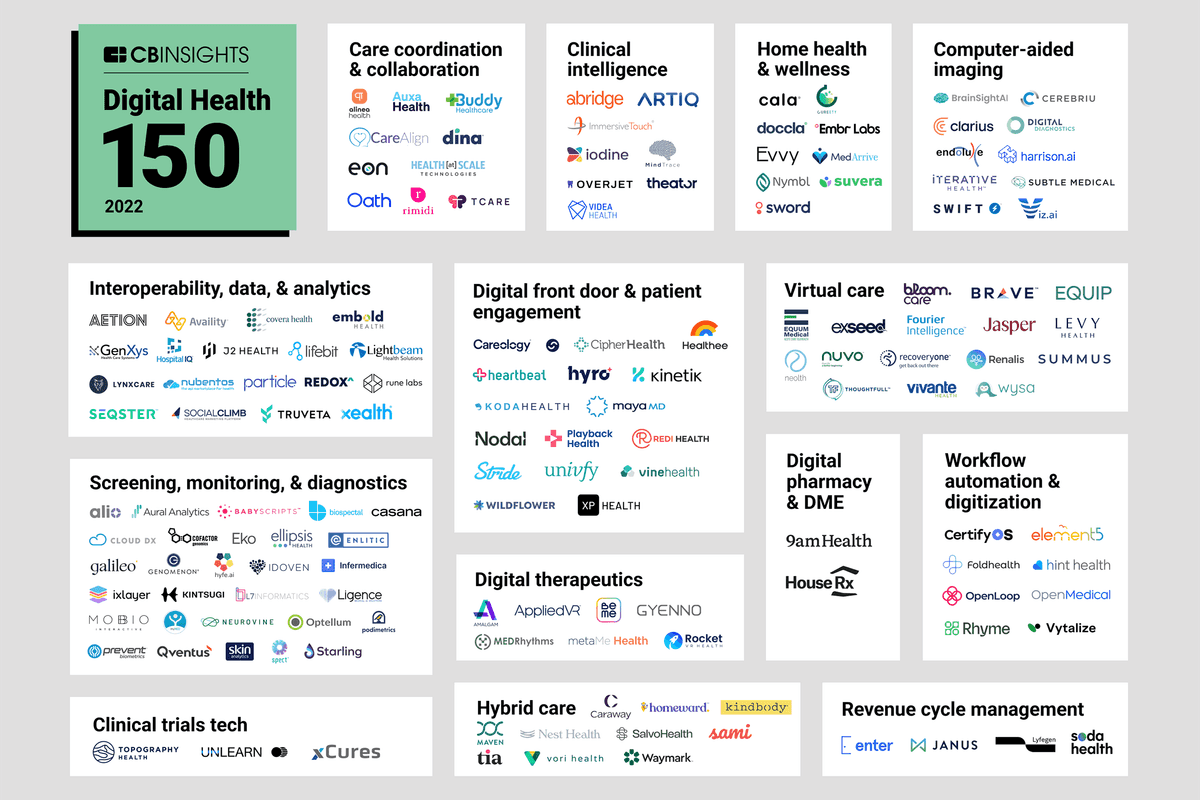
Houston has some representation on this year's Digital Health 150. Image via CB Insights

CB Insights released The Digital Health 150, an annual ranking of the 150 most promising digital health startups in the world, last week and two Houston companies made the cut. Houston-based companies Koda Health and Starling Medical were two of the eight Texas startups on the list.

Founded in 2020, Koda Health is a B2B Enterprise SaaS solution that guides patients through the process of proactive healthcare planning and document authentication. The company has been expanding its service across the country this year following a seed round of funding in February.

"Each year, 150 winners are selected from a pool of over 13,000 companies," Koda's CEO and Co-Founder Tatiana Fofanova tells InnovationMap. "Honorees have quickly become industry titans and household names, so we were honored — and frankly, surprised! — to be recognized in this year's group of honorees.

"I've personally taken inspiration from the Digital Health 150 for years now ± these are people and companies we've emulated and aspired to — so to see the Koda Health logo on there was incredibly affirming," she continues.

Starling Medical is using AI and telehealth enabled medical devices to enable millions with bladder dysfunctions to be able to urinate safely and conveniently again. The company has been named most promising by the Rice Alliance as well, and a top 10 company by MassChallenge.

Optellum, a United Kingdom-based company focused on lung cancer diagnostics, also made the list. They have their United States-based operations in Houston. Additionally, seven startups on the list — Babyscripts, Cerebriu, Iterative Health, Kintsugi, Mindtrace, Redox, and Lightbeam — have ties to TMC.

This is the fourth annual Digital Health 150, and this new cohort has already raised approximately $5.6 billion in aggregate funding across 378 deals since 2017, according to CB Insights.

Houston startup snags win at the 'Oscars' of energy industry

Syzygy Plasmonics was recognized for being an outstanding energy transition company. Photo via LinkedIn

At the 24th annual Platts Global Energy Awards gala, S&P Global Commodity Insights honored industry excellence across 19 categories. Described as the "Oscars" of energy, the program "recognizes corporate and individual innovation, leadership, and performance in the energy and petrochemicals industry," according to a news release.

"We are proud to recognize the leadership and innovation of this year's finalists and winners of the Platts Global Energy Awards," says Saugata Saha, president of S&P Global Commodity Insights, in the release. "These companies have demonstrated a commitment to excellence while serving customers and enabling a balanced energy transition, a key area of focus for the industry and our teams at S&P Global Commodity Insights."

Houston-based alternative energy company, Syzygy Plasmonics, took home a win for the "Energy Transition Technology of the Year Award." Syzygy, which recently raised a $76 million series C round, has a technology that harnesses the power of light to energize chemical reactions — rather than the traditional process that is fueled by heat. The Syzygy approach reduces feedstock waste and produces fewer emissions when powered by renewable electricity.

Greentown Labs CEO steps down

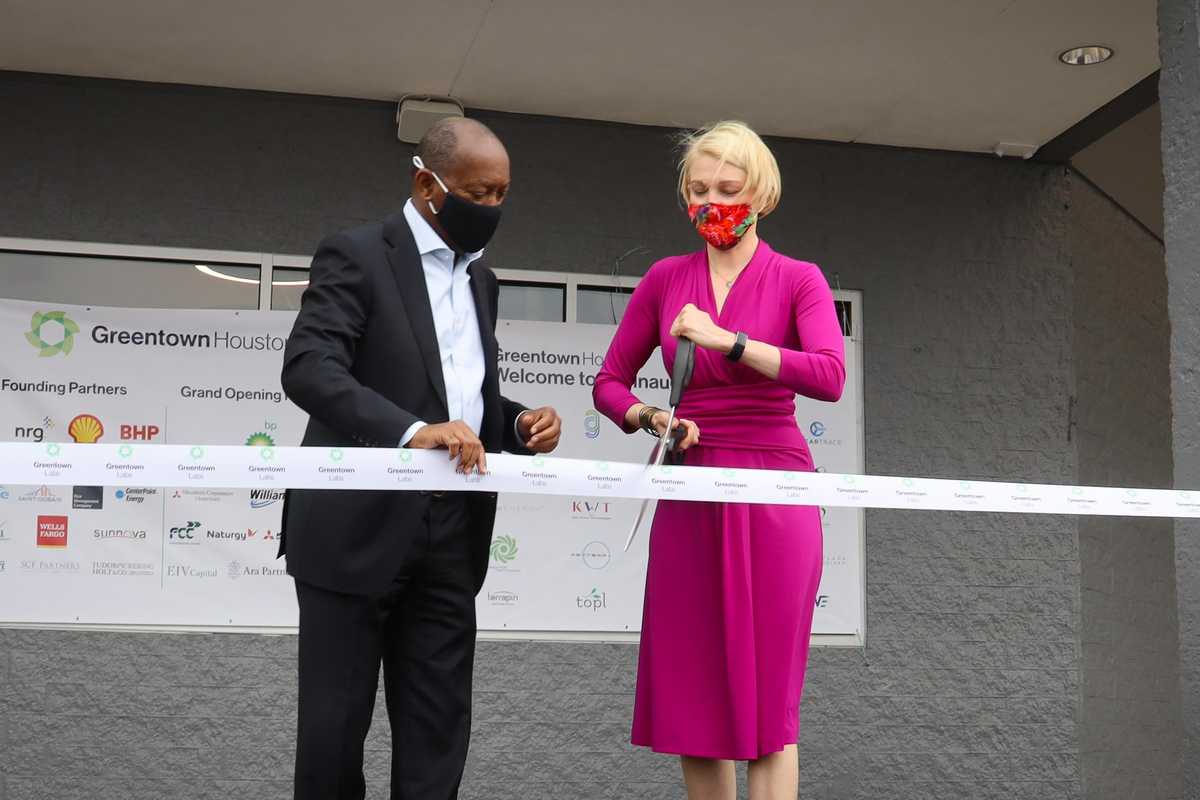
In her capacity as Greentown Labs CEO, Emily Reichert cut the ribbon on Greentown Houston over a year and a half ago. Photo by Lee Bond/Greentown Labs

The leader of Somerville, Massachusetts-based Greentown Labs, which has its only other location in Houston, has stepped down after a decade at the helm of the climatetech incubator.

In an email to the Greentown Labs community, Emily Reichert confirmed that she has stepped down as CEO and will remain involved as "CEO Emeritus." The organization's CFO, Kevin Taylor, has picked up more leadership responsibilities in the interim.

"As I hand the baton off to the next leader of Greentown Labs, I’m confident in our community’s ability to continue making an enormous impact deploying climatetech solutions and our team’s ability to continue growing Greentown to be an ever-more-impactful space for climatetech entrepreneurs and collaborators," Reichert says in the email.

Rice backs new research collaborations with Houston Methodist

Rice University and Houston Methodist have again teamed up to support life science research. Photo via rice.edu

Two Houston organizations — Rice University and the Houston Methodist Academic Institute — have created a seed grant program and awarded grants for research in robotics, imaging, cardiovascular bioengineering, and more. Twenty multi-year projects will be supported by both Houston Methodist and Rice, according to a news release.

It's the third collaborative program between the two organizations in less than two years.

“Our collaborations with Houston Methodist will impact human health and wellness, foster new research opportunities and advance our understanding of diseases," says Rice Provost Amy Dittmar in a news release.

The projects within the nursing category have not been announced, but the awards for the other categories have been named online.

Want to work for one of the top startups in Houston? These ones are hiring. Photo by Tima Miroshnichenko from Pexels

Here's which of the InnovationMap Awards finalists are hiring

growing biz

After scouring Houston for the best of the Houston innovation ecosystem and evaluating dozens of companies, InnovationMap has announced the finalists in its inaugural awards. But which of these companies are growing their teams?

Turns out, almost all of them have open positions — some planning to double their teams over the next year. In fact, the 28 companies that make up our cohort of finalists are looking for over 250 new employees — some have these positions open now and others are seeking these new team members over the next 12 months.

Let's look at how many new hires these top startups are looking for.

Biggest gains

The InnovationMap Awards finalist with the loftiest hiring goal is Liongard, which is a finalist in the People's Choice: Startup of the Year category. Liongard — a platform that helps IT companies automatically discover, document, and audit their customers' IT systems — is looking to fill 70 positions over the next year. The company, founded in 2015, has just over 100 employees now.

The startup finalist with the second highest hiring goals is Nanotech, a material science company with a mission to fireproof the world and reduce energy consumption. Nanotech is looking to hire over 40 new employees in the next 12 months, which would almost triple its current staff of 15. Founded in 2019 by Mike Francis, the company is a finalist in both the Energy Transition and People's Choice categories.

Another People's Choice finalist, GoCo, and its all-in-one employee management platform, is currently looking to grow its team by adding 20 new employees to its staff of 53. The company was founded in 2015 and has since raised over $12 million in VC funding.

Also looking to grow their team by 20 new hires is Hello Alice — a small business owner's passport through entrepreneurship that helps with networking, raising capital, and accessing growth tools. The company, co-founded by Carolyn Rodz, is up for an award in the BIPOC-Founded, Female-Founded, and People's Choice categories.

GoExpedi, whose founder and CEO Timothy Neal is a finalist in the Top Founder Under 40 category, currently has 17 positions open at the moment and is looking to add those new hires into its team of over 150 employees. The e-commerce, supply chain, and analytics company is streamlining procurement for industrial and energy MRO (maintenance, repair and operations).

While Female-Founded Business finalist RingOn — a wearable GPS tracker that is also a panic button that's designed for school kids and with an impact-driven mission of ending child trafficking — is only currently looking for six new hires, the company is expecting to hiring another 15 new employees next year. Right now, the company's employee count is at three.

Steady growth

A few of the awards finalists are sporting hiring goals in the seven to 12 new staffers range. Space Tech finalist NANCO Aero, which is developing package- and person-carrying air vehicles, is hiring a dozen new employees — a big goal considering the company currently has just four employees.

Enercross LLC, automation software for the energy industry, is a finalist in the Energy Transition category and is looking to add 11 new people to its team of 42. Meanwhile Sports Tech finalist sEATz — a mobile ordering and delivery platform for food, drinks, and merchandise at large events — is looking to about double its team of 10 over the few months.

Health Tech finalist Medical Informatics Corp. is the creator of Sickbay, which features web-based applications that transform data into actionable information to help care teams make better, faster decisions. The company has seven open positions to grow its team of 36.

Seeking selectively

The following InnovationMap Awards finalists are looking to grow their teams with between two and six new hires:

  • Allotrope Medical — creator of StimSite, a device that improves surgical safety and efficiency in millions of operations performed every year.
  • CaseCTRL — using artificial intelligence and automation to streamline surgical scheduling.
  • Cemvita Factory — engineering microbes that eat CO2 and produce valuable chemicals.
  • Cheers Health — creating products that are designed to support your liver and help you feel better after consuming alcohol.
  • Cognitive Space — providing a scalable satellite constellation management solution to the space industry.
  • Data Gumbo — creator of an interconnected industrial smart contract network secured and powered by blockchain.
  • DonateStock — simplifying the process of donating stock and helping nonprofits solicit, process, and manage stock donations.
  • FitLift — a wearable device and mobile platform that tracks motion and gives real-time feedback on lifting technique, allowing trainers, and athletes to drive results.
  • LAMIK Beauty — a tech-enabled clean color cosmetics company focusing on women of all diverse backgrounds
  • Molecule Software — creator of a leading cloud-native energy trading software.
  • re:3D Inc. — producer of large, affordable industrial 3D printers, and services that can print with new or recycled filament, pellets, or flake.
  • Saranas — creator of the Early Bird, the first and only FDA-approved bleed detection system for endovascular procedures.
  • Starling Medical — using AI and telehealth enabled medical devices to enable millions with bladder dysfunctions to be able to urinate safely and conveniently again.
  • Topl — impact monetization engine that enables digital and sustainable transformation across value chains and empowers the monetization of impact verified on the Topl Blockchain.
  • Zibrio Inc. — a fall prevention solution that empowers both clinicians and patients for better outcomes.

Find out which of these employers take home the win at the September 8 event at The Cannon - West Houston. Honorees, sponsors, judges, and their guests will celebrate in person, and the rest of the innovation community is invited to tune in to the livestream. Click here to RSVP.

Sponsorships are still available! If you are interested in partnering with InnovationMap as a sponsor of this event, send an email to awards@innovationmap.com.

And the finalists for the inaugural InnovationMap Awards are... Graphic via Gow Media

InnovationMap names 28 Houston startup finalists for inaugural awards

who will take home the win?

Who are Houston's rising stars across energy transition, sports tech, health, and more? InnovationMap set out on a quest to discover that for its inaugural awards. Ahead of the September 8 event, we're revealing the finalists across all categories.

Eight judges evaluated over 100 applications across eight categories for the 2021 InnovationMap Awards presented by Techwave. This year's judges included: Juliana Garaizar, head of the Houston incubator and vice president of innovation at Greentown Labs; Alex Gras, managing director at The Cannon; Rajasekhar Gummadapu, co-founder and CEO of Techwave; Natalie Harms, editor of InnovationMap; Serafina Lalany, interim president at Houston Exponential; Jon Nordby, managing director at MassChallenge; Emily Reiser, senior manager of innovation community engagement at the Texas Medical Center; and Grace Rodriguez, CEO and executive director of Impact Hub Houston.

The winners will be announced and celebrated — along with this year's previously announced Trailblazer Award recipient, Barbara Burger of Chevron Technology Ventures — at the September 8 event at The Cannon - West Houston. Honorees, sponsors, judges, and their guests will celebrate in person, and the rest of the innovation community is invited to tune in to the livestream. Click here to RSVP.

Sponsorships are still available! If you are interested in partnering with InnovationMap as a sponsor of this event, send an email to awards@innovationmap.com.

Without further adieu, here are this year's finalists:

BIPOC-Founded Business Finalists

The finalists for the BIPOC-Founded Business Award category, honoring innovative tech companies founded or co-founded by BIPOC representation, are:

  • Allotrope Medical — creator of StimSite, a device that improves surgical safety and efficiency in millions of operations performed every year.
  • Hello Alice — a small business owner's passport through entrepreneurship that helps with networking, raising capital, and accessing growth tools.
  • LAMIK Beauty — a tech-enabled clean color cosmetics company focusing on women of all diverse backgrounds
  • Molecule Software — creator of a leading cloud-native energy trading software.

Female-Founded Business Finalists

The finalists for the Female-Founded Business Award category presented by Veritex Community Bank, honoring innovative tech companies founded or co-founded by women, include:

  • DonateStock — simplifying the process of donating stock and helping nonprofits solicit, process, and manage stock donations.
  • Hello Alice — a small business owner's passport through entrepreneurship that helps with networking, raising capital, and accessing growth tools.
  • re:3D Inc. — producer of large, affordable industrial 3D printers, and services that can print with new or recycled filament, pellets, or flake.
  • RingOn — wearable GPS tracker that is also a panic button that's designed for school kids and with an impact-driven mission of ending child trafficking.
  • Topl — impact monetization engine that enables digital and sustainable transformation across value chains and empowers the monetization of impact verified on the Topl Blockchain.
  • Zibrio Inc. — a fall prevention solution that empowers both clinicians and patients for better outcomes.

Health Care Business Finalists

The finalists for the Health Care Business Award category presented by Gray Reed, which honors health care businesses with an innovative solution within life sciences, include:

  • Allotrope Medical — creator of StimSite, a device that improves surgical safety and efficiency in millions of operations performed every year.
  • Medical Informatics Corp. — creator of Sickbay, which features web-based applications that transform data into actionable information to help care teams make better, faster decisions.
  • Saranas — creator of the Early Bird, the first and only FDA-approved bleed detection system for endovascular procedures.
  • Starling Medical — using AI and telehealth enabled medical devices to enable millions with bladder dysfunctions to be able to urinate safely and conveniently again.

Energy Transition Business Finalists

The finalists for the Energy Transition Business category, which honors energy business with innovative solutions within renewables, climatetech, clean energy, and beyond, are:

  • Cemvita Factory — engineering microbes that eat CO2 and produce valuable chemicals.
  • Data Gumbo — creator of an interconnected industrial smart contract network secured and powered by blockchain.
  • Enercross LLC — automation software for the energy industry.
  • Nanotech — a material science company with a mission to fireproof the world and reduce energy consumption.
  • re:3D Inc. — producer of large, affordable industrial 3D printers, and services that can print with new or recycled filament, pellets, or flake.
  • Renewell Energy — converting idle oil and gas wells into flexible energy storage.

Sports Tech Business Finalists

The finalists for the Sports Tech Business category, which is honoring a sports tech business with an innovative solution within sports are:

  • FitLift — a wearable device and mobile platform that tracks motion and gives real-time feedback on lifting technique, allowing trainers, and athletes to drive results.
  • Mainline — an esports tournament management system, tournament organizer, and event production company.
  • sEATz — a mobile ordering and delivery platform for food, drinks, and merchandise at large events.

Space Tech Business Finalists

The finalists for the Space Tech Business category, which is honoring an aerospace business with an innovative solution within space exploration. are:

  • Cemvita Factory — engineering microbes that eat CO2 and produce valuable chemicals.
  • Cognitive Space — providing a scalable satellite constellation management solution to the space industry.
  • NANCO Aero — developing package- and person-carrying air vehicles.

Top Founder Under 40 Finalists

The finalists for the Top Founder Under 40 category, which honors an innovative founder younger than 40 by Sept. 8, 2021, are:

  • Pamela Singh of CaseCTRL — using artificial intelligence and automation to streamline surgical scheduling.
  • Timothy Neal of GoExpedi — an e-commerce, supply chain, and analytics company that is streamlining procurement for industrial and energy MRO (maintenance, repair and operations).
  • Kim Roxie of LAMIK Beauty — a tech-enabled clean color cosmetics company focusing on women of all diverse backgrounds.
  • Emma Fauss of Medical Informatics Corp. — creator of Sickbay, which features web-based applications that transform data into actionable information to help care teams make better, faster decisions.
  • Emily Cisek of The Postage — a legacy planning platform using tech to make afterlife decision making easier.

People’s Choice: Startup of the Year Finalists

The finalists for the People's Choice: Startup of the Year category, which will each present a 60-second live elevator pitch at the event on September 8, are:

    • Cheers Health — creating products that are designed to support your liver and help you feel better after consuming alcohol.
    • GoCo — all-in-one employee management platform.
    • Hello Alice — a small business owner's passport through entrepreneurship that helps with networking, raising capital, and accessing growth tools.
    • Liongard — a platform that helps Information Technology companies automatically discover, document, and audit their customers' IT systems.
    • Nanotech — a material science company with a mission to fireproof the world and reduce energy consumption.
    • re:3D Inc. — producer of large, affordable industrial 3D printers, and services that can print with new or recycled filament, pellets, or flake.
    • Topl — impact monetization engine that enables digital and sustainable transformation across value chains and empowers the monetization of impact verified on the Topl Blockchain.

    Ad Placement 300x100
    Ad Placement 300x600

    CultureMap Emails are Awesome

    Houston lab explores how AI bots can help the elderly

    AI for aging

    The University of Houston’s Empathetic Lifespan AI & Robotics for Aging (ELARA) Lab is currently conducting research into how AI bots may be able to help the elderly live more social and independent lives through several ongoing initiatives.

    The lab officially launched last month as part of the Gerald D. Hines College of Architecture & Design under the leadership of Assistant Professor Chorong Park. Part of the lab’s mission is tackling ongoing problems with aging, such as dealing with disabilities and social isolation. Researchers’ current work is focused on designing a new AI companion bot specifically tailored to the needs of older people.

    “We need to take all the needs of older adults seriously,” Park said in a news release. “They won't use the robot if they don't feel at ease or if they feel they are being constantly watched.”

    The field testing of new AI bots in this population hopes to overcome several traditional obstacles in technology use among the elderly. A study by Park shows that many older people have a fear of overt surveillance when using advanced AI. There is also ageism to consider. Most new technologies are designed with younger and employed buyers in mind, not retirees who may need help remembering daily tasks or accessing important information.

    “The more older adults are excluded from technology development, the worse those technology gaps will become,” Park said. “AI and the majority of technologies are created for younger people, so my research method integrates older adults directly into the design process.”

    ELARA recently collaborated with the Mamie George Community Center in Richmond, Texas, to track seniors’ response to desktop AI bots like Emo and Cupboo. Researchers also had participants use air-dry modeling clay to create their ideal robotic companion.

    While the eventual AI bot may be able to help the elderly feel less isolated and more supported, there are concerns to consider. A study published in the Asian Journal of Psychology charted the development of delusional thinking in a 72-year-old woman who became convinced the empathic-response bot was in love with her. The rise of “AI psychosis” has the potential to exacerbate mental health problems, particularly in socially isolated people, which a quarter of Americans over the age of 65 are.

    ELARA’s research is focused on creating “pet-like” AI models with enhanced trust cues. If it can overcome the dangers of socially isolated people relying on AI for companionship, it could be a big step forward for independent aging.

    SpaceX IPO set to be biggest ever and could make Elon Musk a trillionaire

    IPO News

    SpaceX says it plans to raise up to $75 billion when it goes public this month, setting the stage for the largest-ever stock market debut and putting Elon Musk on course to becoming the world's first trillionaire.

    The company, formally known as Space Exploration Technologies Corp., said Wednesday it will sell 555.6 million shares at $135 a piece in an initial public offering. The estimated proceeds would easily top the $26 billion raised by oil giant Saudi Aramco in 2019. The offering would also give SpaceX a market value of $1.77 trillion. Only six companies in the S&P 500 are currently worth more, with Nvidia tops at $5.2 trillion.

    Besides the size of the offering and the expected proceeds, SpaceX's amended prospectus updates details about how much control of the company Musk will have. As SpaceX's CEO, chief technical officer and chairman, Musk's voting power will come primarily through his ownership of 5.22 billion Class B shares, which give the holder 10 votes for every share held. According to the filing, Musk would have 82.4% of the voting power in the company.

    Forbes currently values Musk's net worth at $826 billion and his stake in SpaceX at $542 billion. The estimated value of his SpaceX holdings was based on an overall value for the company of $1.25 trillion. Based on those numbers, a $1.77 trillion valuation for SpaceX would boost Musk's net worth by $223 billion, making him a trillionaire. However, much of Musk's worth is in stock that he has yet to cash in.

    Even as it makes a bid for a blockbuster market debut, SpaceX is currently losing billions of dollars a year. The filing shows that the company lost $2.6 billion from operations last year on $18.7 billion in revenue, and the losses kept piling up at the start of this year, too.

    Fantastical plans

    Time will tell how SpaceX fares on the market. Musk's plans for the company are as fantastical as the money he hopes raise in the sale.

    Colorful, even frightening in parts, the IPO document strikes a contrast with the typically dry, technical prose in IPO documents, detailing plans to use proceeds from the sale to help put men on the moon again and perhaps even Mars. In one section, it talks of a need to build "a permanent human colony" on the red planet with "at least one million inhabitants" as existential threats loom that could consign man to "the same fate as the dinosaurs."

    Musk has almost equally ambitious plans for his other publicly traded company, Tesla. His goal is to transform the maker of electric vehicles into a producer of robotaxis and humanoid robots. Dan Ives of Wedbush Securities wrote in a research note that he expects Tesla and SpaceX to merge next year.

    AI plays a key role

    Key to the success of both companies — and any merged entity — is artificial intelligence. In its IPO filing, SpaceX says it sees potential revenue from AI of up to $26.5 trillion. But that depends on another lofty Musk ambition — putting data centers in space, which is not technologically possible at the moment.

    Transforming his space company into a primarily AI-focused company will be a challenge for Musk, who started xAI in 2023 with 11 other co-founders who have all since left. Some were recruited away by rivals.

    Its main AI product, the chatbot Grok, is "less impressive than anything that we see from any other major player in the space, whether that's OpenAI, or Anthropic, or (Google's) Gemini," said IDC analyst Arnal Dayaratna.

    Dayaratna said that doesn't mean SpaceX doesn't have potential as a major AI player, thanks in part to its computing partnership with Anthropic and Musk's recent deal that gave SpaceX the rights to buy AI coding tool Cursor for $60 billion later this year. Folding in Cursor's capabilities would give SpaceX access to the coveted business customers now using Anthropic's Claude or OpenAI's ChatGPT.

    SpaceX plans to use the net proceeds from the IPO to fund the expansion of infrastructure for its AI and rocket businesses, and to beef up the constellation of satellites that power Starlink Mobile, among other investments.

    The company plans to list on the Nasdaq under the symbol "SPCX" and could begin trading as soon as the end of next week.

    And SpaceX isn't the only colossal market debut investors are now bracing for. Earlier this week, Anthropic submitted a confidential filing with the U.S. Securities and Exchange Commission to officially start its own IPO clock.

    OpenAI has not yet reported filing the initial SEC paperwork, but an IPO from the ChatGPT maker is widely expected.

    "This listing represents the first major test for public markets after years of muted IPO activity with SpaceX paving the way for AI giants Anthropic and OpenAI to follow soon after," Ives wrote.

    ___

    Associated Press Technology Writer Matt O'Brien contributed.

    New UH survey reveals concerns over AI data center growth in Houston

    data findings

    A new report out of the University of Houston shows that area residents remain wary of the long-term effects of operating data centers.

    The recent survey from the University of Houston’s latest SPACE City Panel, conducted by the Center for Public Policy at the Hobby School of Public Affairs, shows that while 85 percent of Houston-area residents use AI, nearly 63 percent oppose the construction of AI data centers within 1 mile of their homes.

    Respondents’ concerns centered around data centers’ high energy demand and the area’s power grid reliability. According to the survey, 32 percent of residents who oppose local data center projects would be more likely to support the centers if they relied on renewable energy over fossil fuels.

    “Respondents understand that AI can bring economic and educational benefits, but they are also concerned about the physical infrastructure needed to fuel AI, especially data centers,” Soran Mohtadi, post-doctoral fellow at the Hobby School and a researcher on the report, said in a news release. “This physical infrastructure demands more electricity and water, leading to environmental impacts.”

    Experts estimate that 6.5 gigawatts of data center capacity will be added to the Texas grid by 2030. And Houston’s data center capacity is predicted to more than double by 2028.

    The Electric Reliability Council of Texas also projects electricity demand could reach 218 gigawatts by 2031, which would be more than double the record peak set in August 2023. Data centers are expected to account for 86 gigawatts of that new demand.

    Survey respondents also said they are concerned about the state's future water supply, given the large amounts of water that data centers need to stay cool.

    In terms of who’s responsible for that issue, 57.6 percent of respondents said they put the onus on Texas lawmakers, while 31.5 percent say tech companies should be responsible.

    Additionally, more than 75 percent of respondents believed that data center developers and technology companies—not residents—should bear the cost of infrastructure upgrades to support data centers.

    “Every decision legislators make has implications on residents’ everyday lives and local infrastructure now and in the future,” Maria P. Perez Arguelles, lead researcher on the report and research assistant professor at the Hobby School, added in the news release. “This issue is going to become more important in years to come, so this is just the beginning.”

    Read the full report here.