


Several Houston startups won kudos and more at recent competitions — plus more Houston innovation news. Photo via Getty Images

What's the latest in news for the Houston innovation ecosystem? So glad you asked. Here's some local startup and tech news you might have missed.

In this roundup of short stories within Houston innovation, an energy transition startup snagged $100,000 in a recent competition, four space health researchers were named to a Houston program, a Houston tech startup was tapped by Google for its recent cohort, and more.

Cemvita Factory wins $100,000 in clean energy competition
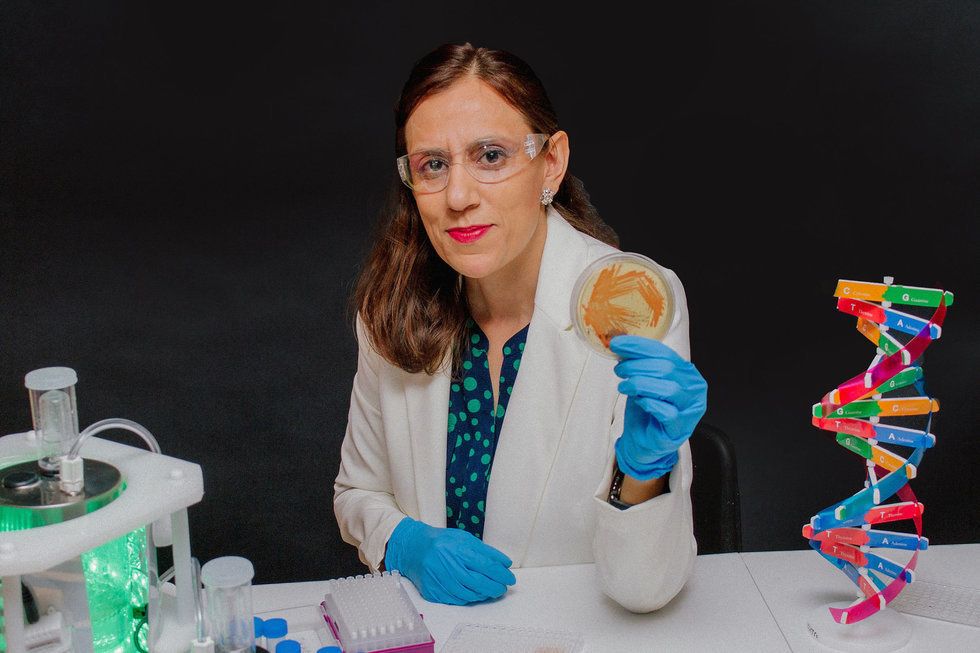
Cemvita Factory has secured wins in two recent startup competitions. Photo courtesy of Cemvita

A Houston company has been named the the $100,000 cash winner of an inaugural competition.

The GS Beyond Energy Innovation Challenge from Cleantech.org named Cemvita Factory as the big winner — out of six finalists. Another Houston company, Amperon Inc. , came in second place, followed by Skycool Systems in third place. The third Houston startup named to the finals, Veloce Energy, was named the crowd's favorite. The three Houston finalists were announced in June.

"Our top three startups face many challenges on the path to accelerating the energy transition, and we are honored to be a part of their journey. Startuplandia is a rough and tumble world, and it was a very close competition. Congrats to Moji Karimi and the Cemvita Factory team. Can't wait to see what you do next," says Neal Dikeman, chairman of Cleantech.org and a partner at one of the prize sponsors, Energy Transition Ventures, in a news release. "And a huge thanks to our accelerator and incubator partners. We look forward to working with everyone again in the future."

Cemvita Factory was also named the winner of The Ion's Houston Startup Showcase a few weeks ago.

Google taps Houston startup for latest cohort

Google has named DOSS to its Black Founders Accelerator. Photo via Pexels

A Houston startup has made it into the Google for Startups Accelerator: Black Founders cohort. DOSS, a digital, voice-activated real estate tool, was selected for the second cohort of the accelerator.

Bobby Bryant leads the company as founder and CEO. DOSS is joined by 10 other startups — including two other Texas companies, Dallas-based Zirtue and Fêtefully.

"Being a digital real estate search and transactional marketplace, this is a perfect opportunity for DOSS to have direct access to Google Engineers and Developers. This is a startup founder's dream to work with Google," Bryant writes in a LinkedIn post.

The program concludes with a showcase on Thursday, October 21 from 11:30 am to 1:00 pm.

Space health organization selects four fellows

These four fellows will continue their space health research with the support of TRISH. Photo via Pexels

Houston-based Translational Research Institute for Space Health, known as TRISH, at Baylor College of Medicine has named four scientists to receive postdoctoral fellowship awards to further their career in space health. Each fellow will work on a two-year project that "addresses challenges to astronaut health during deep space exploration missions," according to a news release. The fellows also become part of the TRISH Academy of Bioastronautics, a forum for postdoctoral researchers working on TRISH research projects.

"The space industry needs a strong pool of highly-trained scientists focused on human health to return us to the moon," says Zélia Worman, TRISH scientific program manager and lead for postdoctoral career development, in the release. "TRISH has selected four postdoctoral fellows who are ready for the challenge. We are proud to welcome these outstanding scientists to our Academy of Bioastronautics and work with them to launch their career in space health and reach for the Moon and Mars safely."

The postdoctoral fellows are:

  • Kaylin Didier of the University of Wisconsin, Madison — focused on ionizing radiation and immune responses: exploring sex differences
  • James Jahng of Stanford University, California — focused on countermeasure development against myocardial mitochondrial stress by space radiation exposure
  • Heather McGregor of the University of Florida, Gainesville — focused on investigating planta somatosensory noise as a countermeasure for balance and locomotion impairments in simulated lunar and Martian gravity
  • Mallika Sarma of Johns Hopkins University, Baltimore, Maryland — focused on stress response and neurovestibular compensation and the potential ameliorative effects of team support

Houston energy consortium names winners in startup competition

Energy tech founders pitched at the Society of Petroleum Engineers' summit. Photo via Getty Images

The Innovation and Entrepreneurship Summit from the Society of Petroleum Engineers-Gulf Coast Section concluded with a startup pitch event earlier this month. Three startups were recognized at the Shark Tank-style competition.

  • The judges selected Houston-based SaaS startup InerG as the winner.
  • The People's Choice winner was New Jersey-based Anax Power.
  • North Carolina-based Revolution Turbine was the runner-up, according to the judges, as well as received honorable mention from the People's Choice portion of the competition.
The judges of the event — or the "sharks" — included Plug and Play Director Payal Patel, Montrose Lane Managing Partner Ryan Gurney, CSL Ventures Vice President Abhinav Jain, and SCF Ventures Managing Director Hossam Eldadawy.

Capital Factory is calling for all female founders

Attention female founders — Capital Factory has a competition you need to know about. Photo via Getty Images

Austin-based Capital Factory's Texas Fund, in partnership with Beam Angel Network, Seven Seven Six Fund, and Golden Seeds (Houston), has announced a $100,000 Investment Challenge for its 4th Annual Women In Tech Summit on October 4. Capital Factory is looking for five technology startup finalists to pitch to a panel of advisors and judges made up of successful investors, entrepreneurs, and industry leaders. The prize on the line? A $100,000 investment and membership into Capital Factory.

Any software, hardware, or CPG startup in Texas with a female founder or co-founder can apply to participate. The finalists will all be fast tracked into the Capital Factory portfolio, access to the Capital Factory Mentor network and coworking space, and up to $250,000 in potential total hosting credits from AWS, Google Cloud, Microsoft Azure and other major hosting providers. Capital Factory will receive: 1 percent common stock grant as advisor equity (separate from the investment) and the right to invest up to $250,000 in the next round of funding.

One winner will receive a $100,000 cash investment on a SAFE or Convertible Note using Capital Factory's term sheet and your most recent funding valuation, or a qualified term sheet provided by the company. The deadline is September 12. Submit your application

Check out these workshops, networking events, pitch events, and other goings on in Houston and online this month. Photo via Getty Images

10 can't-miss Houston business and innovation events in July

where to be

This month, Houstonians have yet another good batch of online innovation events — from Zoom panels to virtual conferences — and you and your tech network need to know about them.

Here's a roundup of virtual events not to miss this month — like demo days, workshops, conventions, and more.

Note: This post might be updated to add more events.

July 7 — gBETA Summer 2021 Pitch Night

Pitch Night is a celebration of gBETA Houston's latest cohort. Pitch Night is an exclusive reception during which participating companies have the opportunity to pitch to an audience of entrepreneurs, mentors, investors and community members.

The event is on Wednesday, July 7, at 5:30 pm. It's free and happening at The Cannon (1334 Brittmoore Rd) and online. Click here to register.

July 8 — Esperson Coworking Powered by The Cannon Soft Opening

The Cannon is operating new coworking space in Downtown Houston in the Esperson Building. Celebrate the soft opening with networking in the new space.

The event is on Thursday, July 8, at 3 pm. It's free and happening at the Esperson Building (808 Travis St.). Click here to register.

July 14 — People & Culture - Talent strategy is core to any business, so how do you make sure an external hire will succeed?

Did you know that more than half of external new hires fail within their first 18 months. The reason behind it: the expectations and competencies are misaligned with the recruitment process, which then are also not connected with onboarding and performance KPIs after the process is completed. The event will explore the process from end to end, diving into the main issues that lead to mistakes in executive searches. After you learn our DIY model, you can apply to external hires in levels.

The event is on Wednesday, July 14, at 11 am. It's free and happening online. Click here to register.

July 14-15 — Innovation & Entrepreneurship Summit

The Society of Petroleum Engineers' 2021 program addresses how firms are navigating the current economics of the energy industry, alternative energy partnerships, carbon innovation, resiliency in innovation, and concludes with our interactive and competitive Shark-Tank event, highlighting delivery of the next entrepreneurial solutions.

The Innovation and Entrepreneurship Summit is your premier opportunity to build connections and to pursue new solutions within the Energy industry.

The event is on Wednesday, July 14, through Thursday, July 15. Tickets begin at $80. The conference will be held at Norris Conference Center, CityCentre (816 Town & Country Blvd., Suite 210). Click here to register.

July 15 — Solving Startup Challenges at the Corvaverse

Do you have a specific startup challenge or problem you can't seem to solve? Join The Cannon and Corva for lunch and breakout sessions with industry leaders and advisors who will be sharing tips on solutions. Additionally, you will hear from Corva's CEO, Ryan Dawson, who will share his journey. It's going to be an eventful, collaborative and fun time that you don't want to miss.

The event is on Thursday, July 15, at noon. It's free and happening at The Cannon West Houston (1334 Brittmoore Rd.). Click here to register.

July 17-18 — Comicpalooza 

The greatest pop-culture festival returns with celebrities, shopping, and pop culture activities that will unite, inspire, and entertain.

The event is on Saturday, July 17, through Sunday, July 18. Passes start at $54 and the festival is happening at George R. Brown Convention Center (1001 Avenida De Las Americas). Click here to register.

July 21 —  How to Invest in Space

Join Houston Angel Network for a discussion with key thought leaders in the public and private space industry about how to invest in space.

The event is on Wednesday, July 21, at 11:30 am. It's $25 to attend and happening online. Click here to register.

July 23 — HAN Summer Social

Join the Houston Angel Network and Houston Exponential for investor and founder networking over drinks.

The event is on Friday, July 23, at 5 pm. It's free to HAN members and $25 for everyone else. It's happening at Buffalo Bayou Brewing Co. (2101 Summer St.). Click here to register.

July 28 — Understanding Financial Statements

Frost Bank's VP of Commercial Banking will help entrepreneurs learn how to analyze their cash flow to strengthen their business strategy.

The event is on Wednesday, July 28, at 11:30 am. It's free and happening online. Click here to register.

July 28 — Houston Startup Showcase

Hear a select group of local tech startups pitch their company, share their current status, and tell us where they're headed next at this monthly event hosted by The Ion.

The event is on Wednesday, July 28, at 6 pm. It's free and happening online. Click here to register.


Ad Placement 300x100
Ad Placement 300x600

CultureMap Emails are Awesome

Houston unicorn closes $421M to fuel first phase of flagship energy project

Heating Up

Houston geothermal unicorn Fervo Energy has closed $421 million in non-recourse debt financing for the first phase of its flagship Cape Station project in Beaver County, Utah.

Fervo believes Cape Station can meet the needs of surging power demand from data centers, domestic manufacturing and an energy market aiming to use clean and reliable power. According to the company, Cape Station will begin delivering its first power to the grid this year and is expected to reach approximately 100 megwatts of operating capacity by early 2027. Fervo added that it plans to scale to 500 megawatts.

The $421 million financing package includes a $309 million construction-to-term loan, a $61 million tax credit bridge loan, and a $51 million letter of credit facility. The facilities will fund the remaining construction costs for the first phase of Cape Station, and will also support the project’s counterparty credit support requirements.

Coordinating lead arrangers include Barclays, BBVA, HSBC, MUFG, RBC and Société Générale, with additional participation from Bank of America, J.P. Morgan and Sumitomo Mitsui Trust Bank, Limited, New York Branch.

“As demand for firm, clean, affordable power accelerates, EGS (Enhanced Geothermal Systems) is set to become a core energy asset class for infrastructure lenders,” Sean Pollock, managing director, project Finance at RBC Capital Markets, said in a news release. “Fervo is pioneering this step change with Cape Station, a vital contribution to American energy security that RBC is proud to support.”

The oversubscribed financing marks Cape Station’s shift from early-stage and bridge funding to a long-term, non-recourse capital structure, according to the news release.

“Non-recourse financing has historically been considered out of reach for first-of-a-kind projects,” David Ulrey, CFO of Fervo Energy, said in a news release. “Cape Station disrupts that narrative. With proven oil and gas technology paired with AI-enabled drilling and exploration, robust commercial offtake, operational consistency, and an unrelenting focus on health and safety, we have shown that EGS is a highly bankable asset class.”

Fervo continues to be one of the top-funded startups in the Houston area. The company has raised about $1.5 billion prior to the latest $421 million. It also closed a $462 million Series E in December.

According to Axios Pro, Fervo filed for an IPO that would value the company between $2 billion and $3 billion in January.

---

This article first appeared on EnergyCapitalHTX.com.

Houston food giant Sysco to acquire competitor in $29 billion deal

Mergers & Acquisitions

Sysco, the nation's largest food distributor, will acquire supplier Restaurant Depot in a deal worth more than $29 billion.

The acquisition would create a closer link between Sysco and its customers that right now turn to Restaurant Depot for supplies needed quickly in an industry segment known as “cash-and-carry wholesale.”

Sysco, based in Houston, serves more than 700,000 restaurants, hospitals, schools, and hotels, supplying them with everything from butter and eggs to napkins. Those goods are typically acquired ahead of time based on how much traffic that restaurants typically see.

Restaurant Depot offers memberships to mom-and-pop restaurants and other businesses, giving them access to warehouses stocked with supplies for when they run short of what they've purchased from suppliers like Sysco.

It is a fast growing and high-margin segment that will likely mean thousands of restaurants will rely increasingly on Sysco for day-to-day needs.

Restaurant Depot shareholders will receive $21.6 billion in cash and 91.5 million Sysco shares. Based on Sysco’s closing share price of $81.80 as of March 27, 2026, the deal has an enterprise value of about $29.1 billion.

Restaurant Depot was founded in Brooklyn in 1976. The family-run business then known as Jetro Restaurant Depot, has become the nation's largest cash-and-carry wholesaler.

The boards of both companies have approved the acquisition, but it would still need regulatory approval.

Shares of Sysco Corp. tumbled 13% Monday to $71.26, an initial decline some industry analysts expected given the cost of the deal.

Houston researcher builds radar to make self-driving cars safer

eyes on the road

A Rice University researcher is giving autonomous vehicles an “extra set of eyes.”

Current autonomous vehicles (AVs) can have an incomplete view of their surroundings, and challenges like pedestrian movement, low-light conditions and adverse weather only compound these visibility limitations.

Kun Woo Cho, a postdoctoral researcher in the lab of Rice professor of electrical and computer engineering Ashutosh Sabharwal, has developed EyeDAR to help address such issues and enhance the vehicles’ sensing accuracy. Her research was supported in part by the National Science Foundation.

The EyeDAR is an orange-sized, low-power, millimeter-wave radar that could be placed at streetlights and intersections. Its design was inspired by that of the human eye. Researchers envision that the low-cost sensors could help ensure that AVs always pick up on emergent obstacles, even when the vehicles are not within proper range for their onboard sensors and when visibility is limited.

“Current automotive sensor systems like cameras and lidar struggle with poor visibility such as you would encounter due to rain or fog or in low-lighting conditions,” Cho said in a news release. “Radar, on the other hand, operates reliably in all weather and lighting conditions and can even see through obstacles.”

Signals from a typical radar system scatter when they encounter an obstacle. Some of the signal is reflected back to the source, but most of it is often lost. In the case of AVs, this means that "pedestrians emerging from behind large vehicles, cars creeping forward at intersections or cyclists approaching at odd angles can easily go unnoticed," according to Rice.

EyeDAR, however, works to capture lost radar reflections, determine their direction and report them back to the AV in a sequence of 0s and 1s.

“Like blinking Morse code,” Cho added. “EyeDAR is a talking sensor⎯it is a first instance of integrating radar sensing and communication functionality in a single design.”

After testing, EyeDAR was able to resolve target directions 200 times faster than conventional radar designs.

While EyeDAR currently targets risks associated with AVs, particularly in high-traffic urban areas, researchers also believe the technology behind it could complement artificial intelligence efforts and be integrated into robots, drones and wearable platforms.

“EyeDAR is an example of what I like to call ‘analog computing,’” Cho added in the release. “Over the past two decades, people have been focusing on the digital and software side of computation, and the analog, hardware side has been lagging behind. I want to explore this overlooked analog design space.”