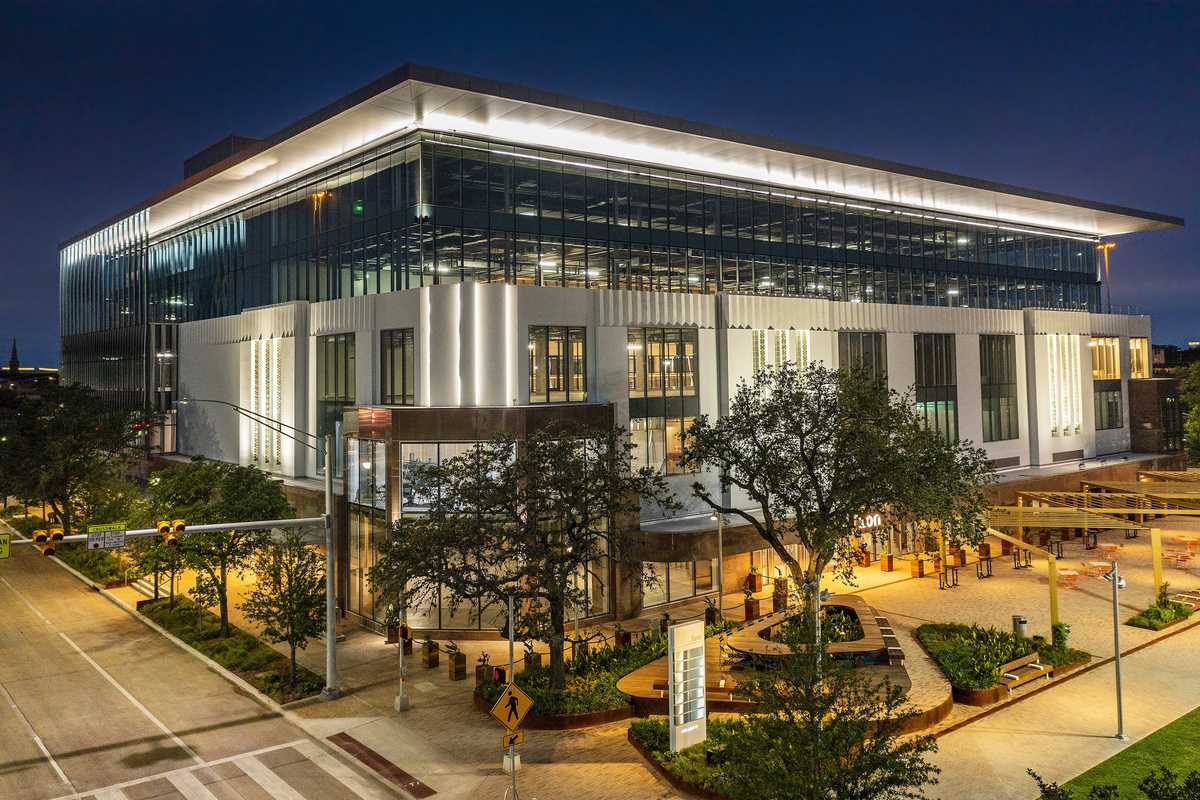
WalletHub assigns Texas a No. 13 ranking for innovation among the states. Photo via Getty Images

During a SXSW reception March 12 at the Governor’s Mansion in Austin, Gov. Greg Abbott hailed Texas as the No. 1 state for innovation. Personal finance website WalletHub doesn’t see it that way, though.

A new study from WalletHub assigns Texas a No. 13 ranking for innovation among the states and the District of Columbia. D.C. comes out on top, followed by Massachusetts, California, Colorado and Washington. Mississippi appears at the bottom of the list.

Texas earns an innovation score of 49.56, compared with 69.13 for top-ranked D.C. In two broad categories, Texas ranks 12th for human capital and 13th for innovation environment.

To identify the top places for innovation, WalletHub evaluated the 50 states and D.C. by reviewing 25 key indicators of innovation friendliness. The indicators include:

  • Share of STEM professionals.
  • Forecast for Share of STEM professionals
  • Forecast for STEM jobs
  • Eighth-grade math and science performance
  • Concentration of tech companies
  • R&D spending per capita
  • Share of science and engineering graduates age 25 and over
  • Average internet speed
  • Venture capital funding per capita

“The most innovative states are especially attractive to people who have majored in science, technology, engineering and math, or STEM, as they offer abundant career opportunities and investment dollars, both for jobs at existing companies and for startups,” WalletHub analyst Chip Lupo said in the report.

“These states also instill young students with the skills they need to succeed in the current workforce, skills which are useful whether or not they pursue a STEM career,” he added.

Texas zeroes in on semiconductor industry

On the innovation front, Abbott and other state leaders have focused intently on growing the state’s semiconductor industry, which generates roughly $30 billion to $60 billion in economic activity per year. Texas ranks among the top states for semiconductor manufacturing, with major operations in North Texas and Central Texas.

To bolster the industry, Abbott signed the Texas CHIPS Act into law in 2023. The law established the Texas Semiconductor Innovation Fund, which issues grants for semiconductor research, design and manufacturing, and the Texas Semiconductor Innovation Consortium, which advises the governor and state legislators on matters related to the semiconductor sector.

Among the consortium’s appointed representatives are:

  • Joe Elabd, vice chancellor for research at the Texas A&M University System
  • David Staack, deputy vice chancellor for research at the Texas A&M University System
  • Ramanan Krishnamoorti, vice president for energy and innovation at the University of Houston
  • Magesh Rajan, vice president for research and innovation at Prairie View A&M University

Semiconductor companies with a presence in the Houston area include chip manufacturer NVIDIA, which is building an AI supercomputer factory in Houston; Labtopia, a tech staffing firm that does business in the semiconductor sector; Microchip USA, a distributor of semiconductors and other electronic components that opened an office in Kingwood last year; and Infineon Technologies, which designs, develops, and manufactures semiconductors.

The Greater Houston Partnership touts the Houston area’s track record as an innovation hub.

“As a home to world-changing innovations and a talented labor pool, Houston has been an attractive region for innovation and startups across all key industries for years,” the partnership says, “and as a major player as a center of activity for the next generation of innovators and entrepreneurs.”

Houston fuels energy innovation

As for energy innovation in the Houston area, Abbott last month announced a 455-megawatt, $617 million natural gas plant that Houston-based NRG Energy is building at its Greens Bayou facility in north Harris County is now a designated project under the Texas Jobs, Energy, Technology, and Innovation (JETI) program. JETI offers economic incentives for qualifying projects.

The NRG plant is expected to begin generating power for the Electric Reliability Council of Texas (ERCOT) in 2028.

Other energy innovators in the Houston area include Chevron, ExxonMobil, Occidental’s 1PointFive subsidiary, Schneider Electric, Shell, AB Energy USA, Fervo Energy, Solugen and Syzygy Plasmonics.

One promising area for energy innovation in Houston is carbon capture, utilization, and sequestration (CCUS). A new study from the Houston Energy Transition Initiative (HETI) and Deloitte Consulting says the Houston area is positioned to take a leading role in the development of CCUS, thanks to the region’s chemical and refining industries, energy infrastructure, energy-heavy workforce and access to global markets.

“With supportive policy, continued innovation, and strong industry partnerships, we can accelerate [CCUS] deployment, create new low-carbon value chains, and ensure Houston remains at the forefront of the global energy transition,” said Jane Stricker, HETI’s executive director and senior vice president of energy transition.

Axiom Space chief astronaut Michael López-Alegría (left) trains with Axiom’s new “Project Astronaut,” Emiliano Ventura. Photo courtesy of Axiom Space.

Axiom Space launches semiconductor and astronaut training initiatives

space projects

Axiom Space, a Houston-based commercial spaceflight and space infrastructure company, has launched initiatives in two very different spheres — semiconductors and astronaut training.

On the semiconductor front, Axiom has signed a memorandum of understanding with Japanese chemical company Resonac Corp. to collaborate on semiconductor R&D and manufacturing projects carried out in space. Among Resonac’s products are materials used in chip manufacturing.

Axiom said the deal “paves the way toward leveraging microgravity to advance next-generation chip technologies and accelerate the in-space manufacturing market.”

Under the agreement, Axiom and Resonac will explore the potential production of semiconductor materials and chip packaging in microgravity and low-Earth-orbit environments.

“The unique environment of space offers immense potential for advancing semiconductor materials, especially in crystal growth,” Masato Fukushima, Resonac’s chief technology officer, said in a news release.

The deal will also extend Resonac’s work with Axiom on the development of molding compounds that can reduce “soft errors” when semiconductor devices are exposed to space radiation.

“Our collaboration with Resonac underscores how Axiom Space is enabling global corporations from around the world to leverage space to drive manufacturing innovation across critical technology sectors such as semiconductors,” Axiom astronaut Koichi Wakata, the company’s chief technology officer, said.

In the astronaut training arena, Axiom has tapped Portuguese physiologist Emiliano Ventura as its first “Project Astronaut.” Ventura will apply his expertise in human performance to a pilot program aimed at testing six-month astronaut training protocols.

“His goal is to participate in a future mission and explore, with scientific depth and curiosity, how the human body adapts to microgravity, contributing fresh insights to the current body of research in space physiology,” Axiom said.

Ventura has helped several Axiom crewmembers with physiological needs before and after missions aboard the International Space Station.

Axiom said Ventura’s pilot program will study astronauts’ physiological responses to microgravity during spaceflight. The program eventually will benefit Axiom astronauts heading to the world’s first commercial space station, which is being built by Axiom.

Michael López-Alegria, Axiom’s chief astronaut, said he and the company’s two other astronauts will train with Ventura. The Project Astronaut initiative “strengthens our commitment to enabling safe, effective, and inspiring commercial space missions while supporting scientific objectives worldwide.” López-Alegria said.
Ad Placement 300x100
Ad Placement 300x600

CultureMap Emails are Awesome

Key energy leaders to converge in Houston for CERAWeek 2026

where to be

CERAWeek returns this month, March 23-27, and will once again bring leading energy executives and government officials to Houston.

The 44th annual event will again host U.S. Secretary of Energy Chris Wright and U.S. Secretary of the Interior Doug Burgum.

Wright will participate in a plenary session focused on energy policy with Daniel Yergin, conference chair and vice chairman of S&P Global, on March 23. The following day, he will be featured in the Celebrating 10 Years of U.S. LNG reception with Jack Fusso, president and CEO, of Cheniere Energy. Both events are part of the Executive Conference track.

Burgum will participate in a leadership dialogue plenary session with Yergin on March 25. It is also part of the Executive Conference track. Burgum is also chairman of the National Energy Dominance Council, established by President Trump in 2025.

Top energy executives, many of whom are based in Houston, will also be featured prominently at the week-long event. Other speakers include:

  • Bill Blevins, director of grid coordination for the Electric Reliability Council of Texas (ERCOT)
  • Trevor Best, CEO of Syzygy Plasmonics
  • Marie Contour Carrere, executive director of the Rice Sustainability Institute
  • Ryan DuChanois, co-founder and CEO of Solidec
  • Reginald DesRoches, president of Rice University
  • Georgina Campbell Flatter, CEO of Greentown Labs
  • Jim Fitterling, chair and CEO of Dow Inc.
  • Vicki Hollub, CEO of Occidental Petroleum Corp.
  • Renu Katon, chancellor and president of the University of Houston
  • Ryan Lance, chairman and CEO of ConocoPhillips
  • Olivier Le Peuch, CEO of SLB
  • Patrick Pouyanné, chairman and CEO of TotalEnergies SE
  • Adrian Tromel, chief innovation officer and interim VP for Innovation at Rice University
  • Bobby Tudor, founder and CEO of Artemis Energy Partners and chairman of HETI
  • Wael Sawan, CEO of Shell plc
  • Lorenzo Simonelli, chairman and CEO of Baker Hughes Co.
  • Mike Wirth, chairman and CEO of Chevron Corp.
  • Jeremy Pitts, managing director of Activate Houston
  • And many others

This year, CERAWeek will center around the theme of Convergence and Competition: Energy, Technology and Geopolitics.

"Change is inescapable," Yergin said in a news release. "The global energy landscape—and to a large extent the entire global economy—is being fundamentally reshaped by the dual forces of convergence and competition. The race for AI is fusing the energy and technology industries like never before, bringing into sharp relief the need to align energy expansion with sustainable economic growth."

"Yet, the potential for collaboration and innovation is increasingly matched by the risk for collision and conflict in a world marked by geopolitical rivalry, tariffs and fragmented supply chains," he continued. "Reconciling an increasingly complex world with the growing demand for energy that is stable, secure and affordable is a complex reality that CERAWeek 2026 will tackle when global energy leaders meet in Houston."

Key topics of discussion will include:

  • Politics, Economics, Trade and Supply Chains
  • Policy, Regulations and Stakeholders
  • Oil Value Chain
  • Power, Renewables, Generation and Grid
  • AI and Digital
  • Minerals and Mining
  • Electrification Technologies
  • Investment and Financing
  • Chemicals and Materials
  • Business Strategies
  • The Innovation Ecosystem
  • Managing Emissions
  • Low-Carbon Fuels and Mobility
  • Climate and Sustainability
  • Workforce Strategy

The CERAWeek Innovation Agora track, which is the program's deeper dive into technology and innovation, will feature thought leadership on "AI, decarbonization, low carbon fuels, cybersecurity, hydrogen, nuclear, mining and minerals, mobility, automation and more," according to the release.

Agora Hubs will return this year and be divided into three zones: new energies, carbon and climate, and AI. The hubs will feature amphitheater-style sessions and panels. Agora Pods will allow energy startups to showcase their ideas in 20- to 30-minute presentations.

Additionally, CERAWeek will introduce a new program this year on Friday, March 27. Known as Look Forward, it will focus on economics, politics and technology.

See the full agenda for the week here. Find more information and register for the event here.

---

This article originally appeared on our sister site, EnergyCapitalHTX.com.

Uber rolls out women-only ride preferences to Houston users

Women Preferences

Houston women riders and drivers can now be matched to other women on the Uber app. The ride-hailing giant has expanded its pilot program nationwide in response to customer safety concerns.

“When women riders and drivers told us they wanted more control over how they ride and earn, we listened,” wrote Uber in a blog post announcing the move. “That feedback led to Women Preferences, features designed to give women the choice to ride with other women. Since our first pilots last summer, we’ve heard just how much that choice matters — from feeling more comfortable in the back seat to more confident behind the wheel.”

According to Uber, passengers can request to be matched with a woman driver by requesting an on-demand ride, scheduling a trip in advance, or setting a preference within the ride app. If wait times are longer than anticipated, the rider can opt to be paired with a driver of any sex.

Uber says it began offering the rides in 2019, after women in Saudi Arabia gained the right to drive. Since then, it has rolled out the program in Europe, Latin America, Australia, and Africa — although in some countries, only drivers can make the match.

The move forward on Women Preferences comes despite a pair of lawsuits aimed at Uber and its main competitor, Lyft. According to Time reporting, the plaintiff’s lawyers argue that women-only rides unfairly limit the volume of rides for male drivers and reinforce gender stereotypes about men.

Lyft rolled out its similar program, Women + Connect, in 2023. The initiative is slightly more expansive than Uber’s preferences, allowing both women and nonbinary people to participate.

---

This article originally appeared on CultureMap.com.

6 Houston entrepreneurs land on coveted Inc. Female Founders 500 list

the future is female

Six Houston female entrepreneurs and innovators were named to the 2026 Female Founders 500 list.

The annual list compiled by Inc. Magazine recognizes female founders based in the U.S. who have built businesses that have moved their industries forward. The group collectively generated approximately $12.3 billion in 2025 revenue and $12.2 billion in funding to date, according to Inc. Five Houstonians were named to the list last year.

"Each year, we are increasingly amazed by the extraordinary leaders on our Inc. Female Founders 500 list," Bonny Ghosh, editorial director at Inc., said in a news release. "The honorees on this year's list include innovators in AI, beauty and wellness trendsetters winning devoted fans, and nonprofit leaders making a real impact in their communities. Together, they're showing all of us what trailblazing female leadership looks like."

The Houston founders are:

  • Sassie Duggleby, CEO and co-founder of Houston space tech and engine company Venus Aerospace. Duggleby also serves on the Texas Space Commission board of directors.
  • Stephanie Murphy, CEO and executive chairman of Aegis Aerospace, which provides space services, spaceflight product development, and engineering services. Murphy also serves as chair of the Texas Aerospace Research and Space Economy Consortium Executive Committee.
  • Laureen Meroueh, CEO and founder of Hertha Metals, which has developed a cost-effective and energy-efficient process that converts low-grade iron ore of any format directly into molten steel or high-purity iron in a single step.
  • LaToshia Norwood, managing partner of L'Renee & Associates (LRA), a full-service project management consulting firm.
  • Lauren Rottet, president and founding principal of Rottet Studio, an international architecture and design firm focused on corporate, lifestyle and hospitality projects
  • Nina Magon, founder and CEO of Nina Magon Studio / Nina Magon Consumer Products, a residential and commercial interior design company. She also co-founded KA Residences earlier this year.

"Grateful to be recognized again on the Inc. Female Founders 500," Duggleby said in a LinkedIn post. "The best part of building Venus Aerospace has been working with an incredible team pushing the boundaries of flight—and helping bring more women into aerospace along the way.

Meroueh, whose company emerged from stealth last year, voiced a similar push for bringing more women into the fold.

"We've seen a 7x jump in female-led IPOs over the last decade, from just two in 2014 (less than 1% of all IPOs) to 14 in 2024 (nearly 9% of all IPOs). Progress is happening," Meroueh shared in a LinkedIn post. "Yet, less than 1% of venture funding in hard tech goes to female-founded companies. But as my friend Ana Kraft says, the right man for the job may be a woman."

Twenty-nine Texas female founders made this list, including Amber Venz Box, founder of the Dallas-based LTK shopping platform, and Cheryl Sew Hoy, CEO and founder of Austin-based Tiny Health, a fast-growing at-home microbiome health platform. See the full list of winners here.