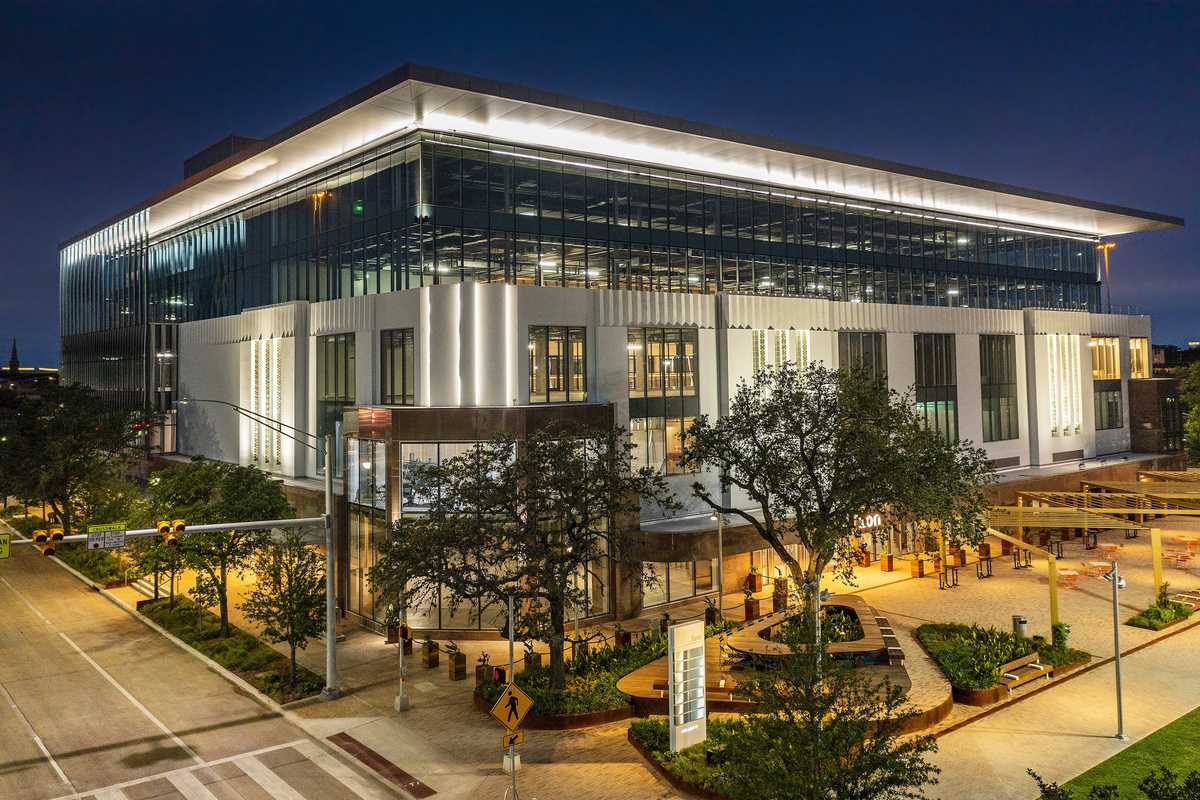
This Houston company has rolled out its expansion plans following a $20 million series A. Photo via ridekolors.com

A Houston-based company that's using tech and data to provide its intercity bus network has announced $26 million in funding.

Kolors has announced the close of its $20 million series A financing round led by UP.Partners with participation from Maniv Mobility, Toyota Ventures, K5 Global, Mazapil — plus contribution from existing investors Tuesday Capital, Garret Camp's Expa, Chris Sacca's Lowercase, Moving Capital, MGV, Brainstorm Ventures, Bling Capital and Amplifica. The round, which brings the company's total investment raised to $26 million, will allow Kolors to grow in Mexico, expand into new Latin American markets, and enable cross-border US travel.

The company has created a "smart-bus-platform," which is defined as being a combination of airline and ridesharing style technology. The service includes attendants superpowered by technology, according to a news release.

"Kolors is redefining the experience of intercity travel. We are thrilled to see Kolors advancing in Mexico and bringing its phenomenal service to other parts of Latin America in the coming months this year," says Ally Warson, partner of UP.Partners. "Kolors is thinking about the next phase for intercity bus travel and intends to design an ecosystem that prioritizes the passenger while providing more profitable and climate-friendly outcomes for bus operators."

The company's business model doesn't include owning its own fleet of vehicles, instead partnering with small and medium-sized bus operators. These partners are only responsible for driving the bus — Kolors does everything else, including route optimization, virtual stops, scheduling, pricing, marketing, sales, customer service, and more.

"Kolors is disrupting a mode of transportation that's often overlooked but relied upon by billions of people worldwide," says Jim Adler, founding managing director of Toyota Ventures, in the release. "There's a huge opportunity to advance intercity bus travel with higher efficiency, cleaner energy , and superior passenger experience. Kolors is at the forefront of this transformation."

Service is at the forefront for Kolors, says Rodrigo Martínez, founder and CEO of the company. Passengers can expect on-board WiFi services and snacks and drinks — plus a completely redesigned in-cabin experience is in the works, per the release.

"As a third-generation bus operator, I know intercity bus travel is the lifeblood of LATAM," says Martínez in the release. "The opportunity to provide our passengers with an elevated bus platform will bring a better and affordable travel experience. Our buses run on data and our learnings have already enabled us to devise an effective strategy to address and reduce emissions across the global intercity transportation industry."

Efficiency is also on the roadmap for Kolors, which was founded by Martinez and Anca Gardea in 2020 amid the pandemic. According to the U.S. Department of Energy, 85 percent of transportation sector emissions are related to the surface transportation system, the release states. Kolors is working toward a fleet of electric vehicles.

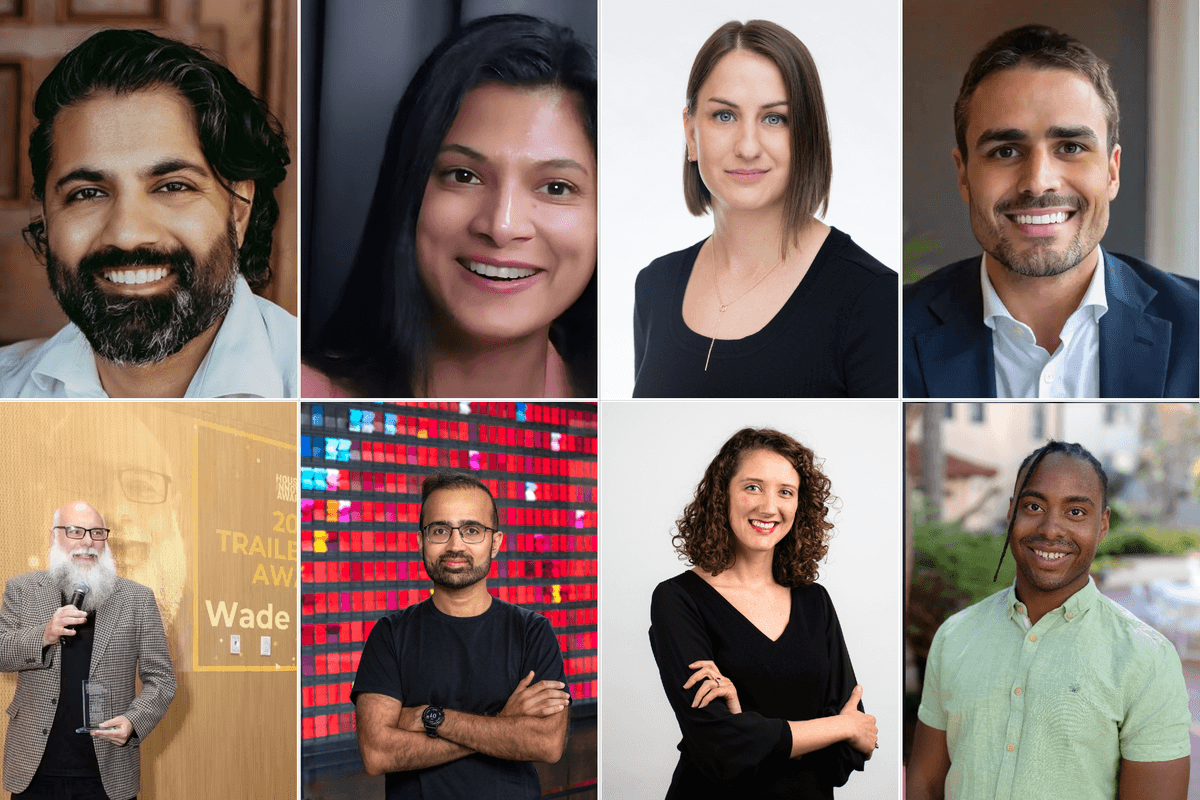
"We have followed Kolors since the beginning, and considering they started at the height of the pandemic, the growth they've had is astounding. Transporting millions of passengers in such a short period of time speaks volumes about their tenacity and potential as a team and company, says Jake Wieseneck, principal at Maniv Mobility, in the release.

Ad Placement 300x100
Ad Placement 300x600

CultureMap Emails are Awesome

Key energy leaders to converge in Houston for CERAWeek 2026

where to be

CERAWeek returns this month, March 23-27, and will once again bring leading energy executives and government officials to Houston.

The 44th annual event will again host U.S. Secretary of Energy Chris Wright and U.S. Secretary of the Interior Doug Burgum.

Wright will participate in a plenary session focused on energy policy with Daniel Yergin, conference chair and vice chairman of S&P Global, on March 23. The following day, he will be featured in the Celebrating 10 Years of U.S. LNG reception with Jack Fusso, president and CEO, of Cheniere Energy. Both events are part of the Executive Conference track.

Burgum will participate in a leadership dialogue plenary session with Yergin on March 25. It is also part of the Executive Conference track. Burgum is also chairman of the National Energy Dominance Council, established by President Trump in 2025.

Top energy executives, many of whom are based in Houston, will also be featured prominently at the week-long event. Other speakers include:

  • Bill Blevins, director of grid coordination for the Electric Reliability Council of Texas (ERCOT)
  • Trevor Best, CEO of Syzygy Plasmonics
  • Marie Contour Carrere, executive director of the Rice Sustainability Institute
  • Ryan DuChanois, co-founder and CEO of Solidec
  • Reginald DesRoches, president of Rice University
  • Georgina Campbell Flatter, CEO of Greentown Labs
  • Jim Fitterling, chair and CEO of Dow Inc.
  • Vicki Hollub, CEO of Occidental Petroleum Corp.
  • Renu Katon, chancellor and president of the University of Houston
  • Ryan Lance, chairman and CEO of ConocoPhillips
  • Olivier Le Peuch, CEO of SLB
  • Patrick Pouyanné, chairman and CEO of TotalEnergies SE
  • Adrian Tromel, chief innovation officer and interim VP for Innovation at Rice University
  • Bobby Tudor, founder and CEO of Artemis Energy Partners and chairman of HETI
  • Wael Sawan, CEO of Shell plc
  • Lorenzo Simonelli, chairman and CEO of Baker Hughes Co.
  • Mike Wirth, chairman and CEO of Chevron Corp.
  • Jeremy Pitts, managing director of Activate Houston
  • And many others

This year, CERAWeek will center around the theme of Convergence and Competition: Energy, Technology and Geopolitics.

"Change is inescapable," Yergin said in a news release. "The global energy landscape—and to a large extent the entire global economy—is being fundamentally reshaped by the dual forces of convergence and competition. The race for AI is fusing the energy and technology industries like never before, bringing into sharp relief the need to align energy expansion with sustainable economic growth."

"Yet, the potential for collaboration and innovation is increasingly matched by the risk for collision and conflict in a world marked by geopolitical rivalry, tariffs and fragmented supply chains," he continued. "Reconciling an increasingly complex world with the growing demand for energy that is stable, secure and affordable is a complex reality that CERAWeek 2026 will tackle when global energy leaders meet in Houston."

Key topics of discussion will include:

  • Politics, Economics, Trade and Supply Chains
  • Policy, Regulations and Stakeholders
  • Oil Value Chain
  • Power, Renewables, Generation and Grid
  • AI and Digital
  • Minerals and Mining
  • Electrification Technologies
  • Investment and Financing
  • Chemicals and Materials
  • Business Strategies
  • The Innovation Ecosystem
  • Managing Emissions
  • Low-Carbon Fuels and Mobility
  • Climate and Sustainability
  • Workforce Strategy

The CERAWeek Innovation Agora track, which is the program's deeper dive into technology and innovation, will feature thought leadership on "AI, decarbonization, low carbon fuels, cybersecurity, hydrogen, nuclear, mining and minerals, mobility, automation and more," according to the release.

Agora Hubs will return this year and be divided into three zones: new energies, carbon and climate, and AI. The hubs will feature amphitheater-style sessions and panels. Agora Pods will allow energy startups to showcase their ideas in 20- to 30-minute presentations.

Additionally, CERAWeek will introduce a new program this year on Friday, March 27. Known as Look Forward, it will focus on economics, politics and technology.

See the full agenda for the week here. Find more information and register for the event here.

---

This article originally appeared on our sister site, EnergyCapitalHTX.com.

Texas ranks as the No. 13 most innovative state in 2026 study

innovative states

During a SXSW reception March 12 at the Governor’s Mansion in Austin, Gov. Greg Abbott hailed Texas as the No. 1 state for innovation. Personal finance website WalletHub doesn’t see it that way, though.

A new study from WalletHub assigns Texas a No. 13 ranking for innovation among the states and the District of Columbia. D.C. comes out on top, followed by Massachusetts, California, Colorado and Washington. Mississippi appears at the bottom of the list.

Texas earns an innovation score of 49.56, compared with 69.13 for top-ranked D.C. In two broad categories, Texas ranks 12th for human capital and 13th for innovation environment.

To identify the top places for innovation, WalletHub evaluated the 50 states and D.C. by reviewing 25 key indicators of innovation friendliness. The indicators include:

  • Share of STEM professionals.
  • Forecast for Share of STEM professionals
  • Forecast for STEM jobs
  • Eighth-grade math and science performance
  • Concentration of tech companies
  • R&D spending per capita
  • Share of science and engineering graduates age 25 and over
  • Average internet speed
  • Venture capital funding per capita

“The most innovative states are especially attractive to people who have majored in science, technology, engineering and math, or STEM, as they offer abundant career opportunities and investment dollars, both for jobs at existing companies and for startups,” WalletHub analyst Chip Lupo said in the report.

“These states also instill young students with the skills they need to succeed in the current workforce, skills which are useful whether or not they pursue a STEM career,” he added.

Texas zeroes in on semiconductor industry

On the innovation front, Abbott and other state leaders have focused intently on growing the state’s semiconductor industry, which generates roughly $30 billion to $60 billion in economic activity per year. Texas ranks among the top states for semiconductor manufacturing, with major operations in North Texas and Central Texas.

To bolster the industry, Abbott signed the Texas CHIPS Act into law in 2023. The law established the Texas Semiconductor Innovation Fund, which issues grants for semiconductor research, design and manufacturing, and the Texas Semiconductor Innovation Consortium, which advises the governor and state legislators on matters related to the semiconductor sector.

Among the consortium’s appointed representatives are:

  • Joe Elabd, vice chancellor for research at the Texas A&M University System
  • David Staack, deputy vice chancellor for research at the Texas A&M University System
  • Ramanan Krishnamoorti, vice president for energy and innovation at the University of Houston
  • Magesh Rajan, vice president for research and innovation at Prairie View A&M University

Semiconductor companies with a presence in the Houston area include chip manufacturer NVIDIA, which is building an AI supercomputer factory in Houston; Labtopia, a tech staffing firm that does business in the semiconductor sector; Microchip USA, a distributor of semiconductors and other electronic components that opened an office in Kingwood last year; and Infineon Technologies, which designs, develops, and manufactures semiconductors.

The Greater Houston Partnership touts the Houston area’s track record as an innovation hub.

“As a home to world-changing innovations and a talented labor pool, Houston has been an attractive region for innovation and startups across all key industries for years,” the partnership says, “and as a major player as a center of activity for the next generation of innovators and entrepreneurs.”

Houston fuels energy innovation

As for energy innovation in the Houston area, Abbott last month announced a 455-megawatt, $617 million natural gas plant that Houston-based NRG Energy is building at its Greens Bayou facility in north Harris County is now a designated project under the Texas Jobs, Energy, Technology, and Innovation (JETI) program. JETI offers economic incentives for qualifying projects.

The NRG plant is expected to begin generating power for the Electric Reliability Council of Texas (ERCOT) in 2028.

Other energy innovators in the Houston area include Chevron, ExxonMobil, Occidental’s 1PointFive subsidiary, Schneider Electric, Shell, AB Energy USA, Fervo Energy, Solugen and Syzygy Plasmonics.

One promising area for energy innovation in Houston is carbon capture, utilization, and sequestration (CCUS). A new study from the Houston Energy Transition Initiative (HETI) and Deloitte Consulting says the Houston area is positioned to take a leading role in the development of CCUS, thanks to the region’s chemical and refining industries, energy infrastructure, energy-heavy workforce and access to global markets.

“With supportive policy, continued innovation, and strong industry partnerships, we can accelerate [CCUS] deployment, create new low-carbon value chains, and ensure Houston remains at the forefront of the global energy transition,” said Jane Stricker, HETI’s executive director and senior vice president of energy transition.

Uber rolls out women-only ride preferences to Houston users

Women Preferences

Houston women riders and drivers can now be matched to other women on the Uber app. The ride-hailing giant has expanded its pilot program nationwide in response to customer safety concerns.

“When women riders and drivers told us they wanted more control over how they ride and earn, we listened,” wrote Uber in a blog post announcing the move. “That feedback led to Women Preferences, features designed to give women the choice to ride with other women. Since our first pilots last summer, we’ve heard just how much that choice matters — from feeling more comfortable in the back seat to more confident behind the wheel.”

According to Uber, passengers can request to be matched with a woman driver by requesting an on-demand ride, scheduling a trip in advance, or setting a preference within the ride app. If wait times are longer than anticipated, the rider can opt to be paired with a driver of any sex.

Uber says it began offering the rides in 2019, after women in Saudi Arabia gained the right to drive. Since then, it has rolled out the program in Europe, Latin America, Australia, and Africa — although in some countries, only drivers can make the match.

The move forward on Women Preferences comes despite a pair of lawsuits aimed at Uber and its main competitor, Lyft. According to Time reporting, the plaintiff’s lawyers argue that women-only rides unfairly limit the volume of rides for male drivers and reinforce gender stereotypes about men.

Lyft rolled out its similar program, Women + Connect, in 2023. The initiative is slightly more expansive than Uber’s preferences, allowing both women and nonbinary people to participate.

---

This article originally appeared on CultureMap.com.