
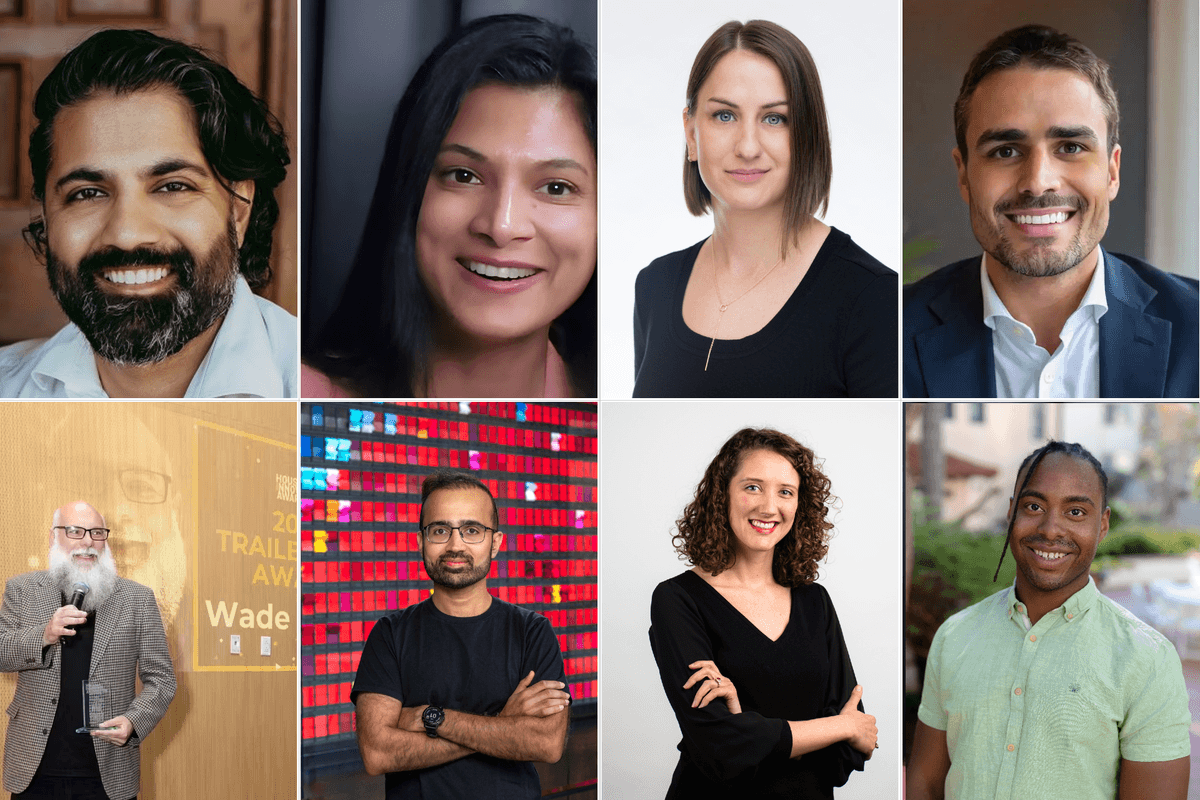
Participants in the Napier Rice Lanch Challenge took home a total of $115,000 in equity-free funding, with cancer diagnostics startup Bionostic leading the pack. Photo courtesy Rice University

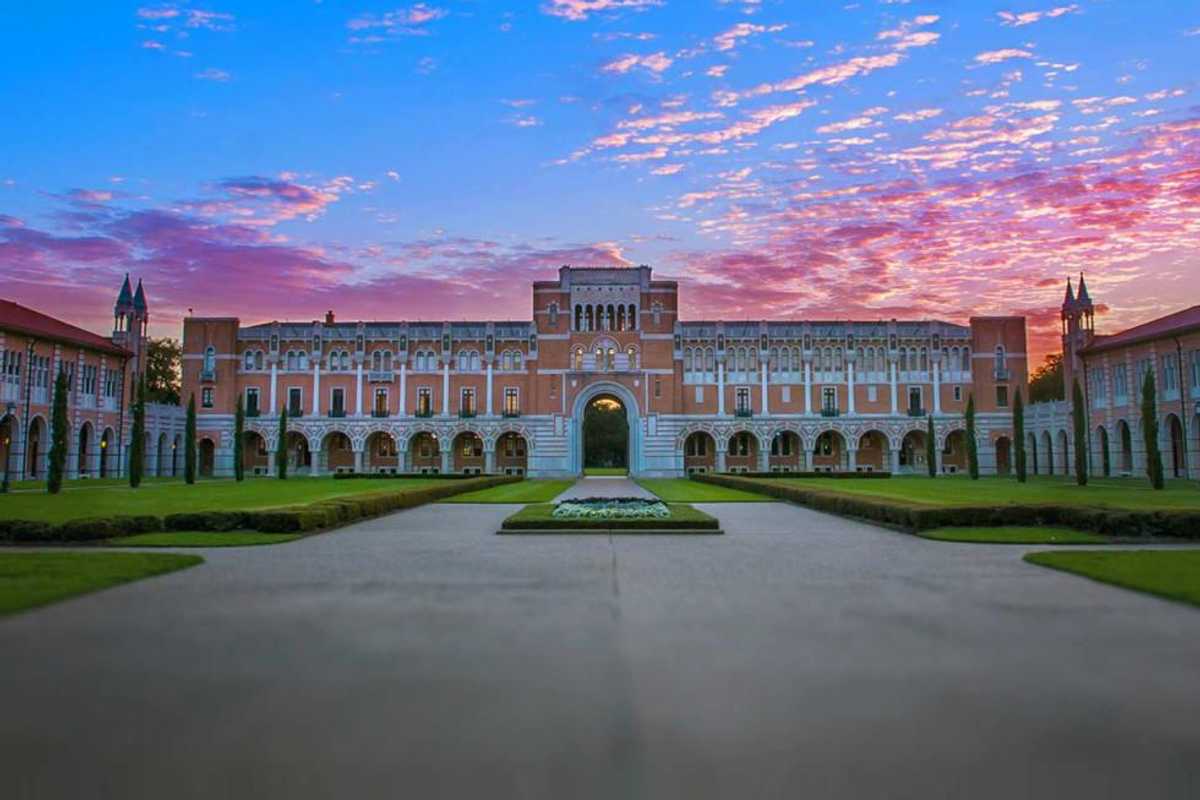
Rice University student-founded companies took home a total of $115,000 in equity-free funding at the annual Liu Idea Lab for Innovation and Entrepreneurship's H. Albert Napier Rice Launch Challenge last week.

2025 Rice Innovation Fellow Alexandria Carter won the top prize and $50,000 for her startup Bionostic. The startup offers personalized diagnostics for cancer patients by using 3D culturing through its Advanced Tumor Landscape Analysis System (ATLAS) platform.

Carter is working toward her PhD in bioengineering in Professor Michael King's laboratory. She recently completed the Rice Innovation Fellows program and plans to commercialize ATLAS, according to a news release from Rice.

Actile Technologies, founded by another former Rice Innovation Fellow, Barclay Jumet, won second place and $25,000. The company is developing and commercializing textile-integrated technologies. InnovationMap first covered Jumet's wearable technology back in 2023.

Kairos took home the third-place prize and $15,000, plus the $2,000 audience choice award and the $5,000 undergraduate business award. Founded last year by Sanjana Kavula and Adhira Tippur, Kairos is an AI-powered patient intake platform built specifically for independent dental practices.

The NRLC features top startups founded by undergraduate, graduate and MBA students at Rice each year. The top three finishers were named among a group of five finalists earlier this year, which also included HAAST Autonomous and Project Kestrel.

HAAST is developing an unmanned aircraft for organ transport, while Kestrel uses machine learning to organize bird photographers’ photo collections.

Teams presented multiple five-minute pitches throughout the application process over Zoom and in-person before the five finalists presented at the NRLC Championships April 21 at the Rice Memorial Center. Each finalist walked away with an equity-free investment.


Other awards went to:

UnitCode

  • $5,000 MBA Venture Award

HAAST Autonomous

  • $2,500 Chan-Kang Family Prize for Bold Ambition
  • $1,000 Healthcare Innovations Prize

Telstar Networks

  • $2,500 Outstanding Undergraduate Startup Award

Multiplay

  • $1,500 Frank Liu Jr. Prize for Creative Innovation in Music, Fashion, & the Arts

Butterfly Books

  • $1,500 Social Impact Award

SOOZ

  • $1,000 Interdisciplinary Innovation Prize sponsored by OURI

Dooly

  • $1,000 Consumer Goods Prize

Project Kestrel

  • $1,000 AI Prize

Veloci Running won the NRLC last year for its naturally shaped running shoe. Founder and CEO Tyler Strothman recently told InnovationMap that the company has gone on to sell roughly 10,000 pairs of its flagship Ascent shoe, designed to relieve lower leg tightness and absorb impact. Read more here.

Ad Placement 300x100
Ad Placement 300x600

CultureMap Emails are Awesome

UH expands Medical Center footprint with $77M research facility

breaking ground

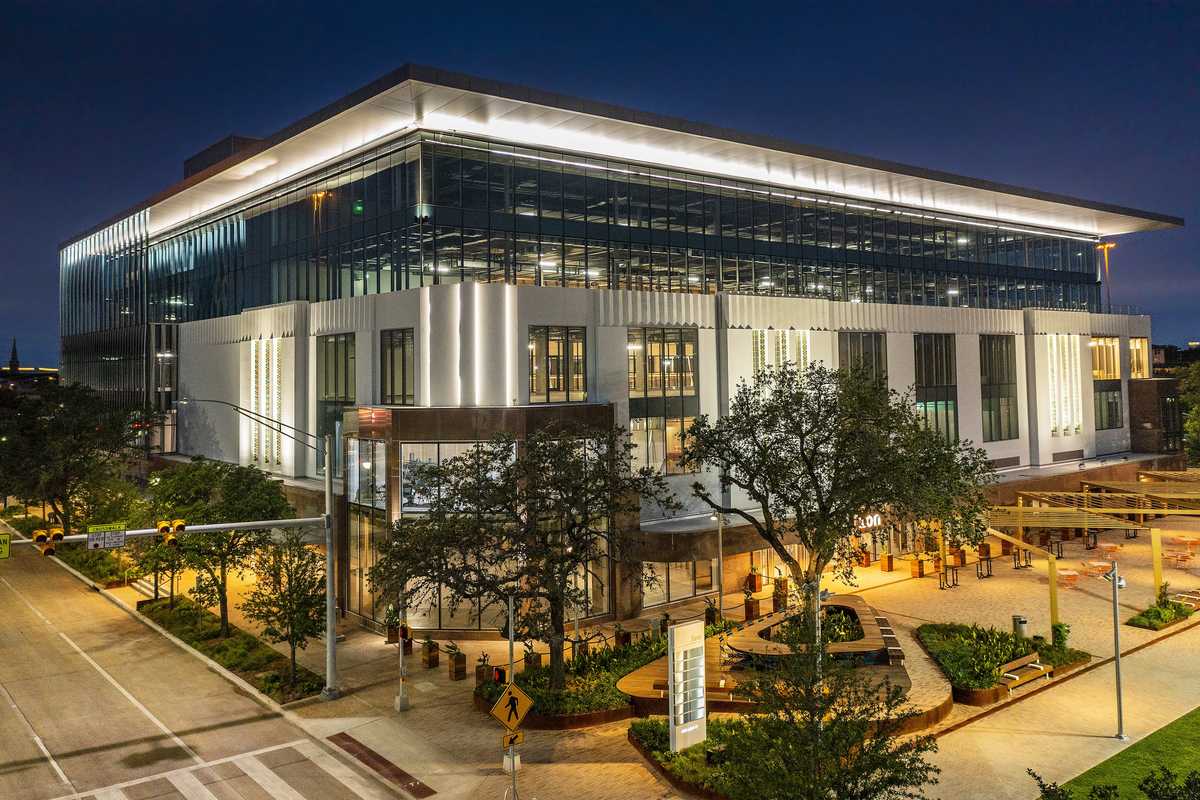
The University of Houston broke ground on a brand new $77.5 million Medical Research Building last week that will host clinical trials and a virtual reality behavioral health suite, among other laboratories. Designed by SmithGroup, it will be the second building on the UH Medical Center campus after the Fertitta College of Medicine opened in 2022.

“The Medical Research Building was designed to foster collaboration and discovery while creating a welcoming environment for students, researchers and the community,” Kalman Nagy, higher education studio design leader for SmithGroup, said in a news release. “As the second building on the University of Houston’s medical campus, we wanted to create a strong connection to the College of Medicine and the surrounding woodlands, with outdoor terraces, shared learning spaces and natural views that inspire interaction and innovation.”

Located just behind the Fertitta building at 5150 Medical Service Drive, the 57,000-square-foot building will house wet laboratories, computational research spaces and specialized facilities for clinical research. The virtual reality behavioral health suite will use immersive technology to deliver care through manufactured audio and visual environments. It’s part of the college’s vision for developing new medical advancements in the heart of Houston’s medical community. The groundbreaking comes on the heels of the launch of the university's cross-disciplinary academic venture, UH Health, this summer.

“This groundbreaking marks an important next step in the growth of the Fertitta College of Medicine and UH Health,” Dr. Jonathan McCullers, vice president for health affairs at UH, added in the release. “We are building the research capacity to match our ambitions—bringing together scientists, physicians and experts from across the University to accelerate discovery and turn promising ideas into solutions that improve people’s lives.”

UH’s journey to establish a significant presence alongside the University of Texas and Baylor in the Medical Center started in 2009 when it became an official full institutional member. The university launched its plans for the Fertitta building in 2013, and is pursuing Health Science Center designation from the Texas Legislature in the next year’s session.

“The research that will take place here will directly benefit our community,” UH President Renu Khator added. “Diseases do not recognize disciplinary silos, and neither should our research. This building will bring together experts from across UH to break down those barriers, work across disciplines and tackle some of our most complex health challenges.”

The building is slated to open in 2028.

Houston ranks among 15 U.S. hot spots for women in tech

Ranking It

Houston is soaring among the best places in the U.S. for women in tech, a new report says. Houston ranked No. 15 nationwide in SmartAsset's new report, "Best and Worst Cities for Women in Tech — 2026 Study," which compared the 50 biggest U.S. cities across four metrics:

  • Gender pay gap — women's median earnings as a percentage of men’s median earnings in tech
  • The share of all tech workers that are women
  • The overall concentration of employment for tech workers, defined as "tech workers as a share of the local workforce"
  • Women tech workers’ median earnings, adjusted for regional price parity
For the purpose of the study, tech workers are defined as "city residents employed in computer and mathematical occupations." The study's findings show that fewer than 9,500 tech workers in Houston are women, or 25.6 percent of the total tech workforce in the city. In total, tech workers in general make up less than 3 percent of the Houston workforce.Despite the high ranking, women tech workers in Houston have a sizeable gap to cross to receive equal pay compared to their male counterparts in the same industry. Women tech workers make just over $97,000 in median earnings after adjusting for regional price parity, which is only 93 percent of what male tech workers make, SmartAsset found.

There are only two U.S. cities where women in tech earn more than what their male counterparts: Miami and Memphis, Tennessee. Women tech workers in Miami make an adjusted $88,650 in median earnings, or 101.7 percent of what men in tech make. In Memphis, women make $84,718 in adjusted earnings, or 101.5 percent of what men in tech earn.

The findings also assert that women remain underrepresented in the nation's overall tech sector, despite making up nearly half of the total workforce. Only 22.6 percent of the country's tech labor force is made up of women, according to the Equal Employment Opportunity Commission."Opportunities for women in tech can vary considerably by location, and these differences shape access to jobs, career advancement and earning potential," the report's author wrote. "In some places, women account for a larger share of tech workers, face narrower pay gaps and enjoy a stronger local labor market. In others, they may encounter a more challenging career environmentThe six other Texas cities that earned spots in the report are Austin (No. 6), Fort Worth (No. 26), Dallas (No. 32), Arlington (No. 38), San Antonio (No. 42), and El Paso (No. 49).

The top 10 best U.S. cities for women in tech are:

  • No. 1 – San Jose, California
  • No. 2 – Seattle, Washington
  • No. 3 – San Francisco, California
  • No. 4 – Atlanta, Georgia
  • No. 5 – Baltimore, Maryland
  • No. 6 – Austin, Texas
  • No. 7 – Oakland, California
  • No. 8 – Portland, Oregon
  • No. 9 – Boston, Massachusetts
  • No. 10 – Minneapolis, Minnesota
---

This article first appeared on CultureMap.com.