Another pharma giant will build a massive manufacturing facility in Houston. Rendering courtesy Bristol Myers Squibb Co.

New Jersey-based pharmaceutical giant Bristol Myers Squibb Co. has officially named Houston as the home of its new state-of-the-art manufacturing site.

The 60,000-square-foot facility represents a $2.3 billion investment, according to a news release. It is expected to create 500 skilled jobs and will be located in Houston's Generation Park.

BMS first announced that it was considering Houston among 16 other cities for the facility in May. The new hub will manufacture small molecule, biologic and antibody-drug conjugates and is part of a $40 billion commitment to invest in the United States over five years. Construction is slated to begin next year, with the facility coming online in 2030.

"We're building the domestic manufacturing capabilities needed to deliver the next generation of medicines and support future scientific breakthroughs. Houston and the state of Texas offer the talent, infrastructure, and partnership needed to help bring that vision to life," Christopher Boerner, CEO and board chair of BMS, said in the release.

The new facility will feature a modular, multi-modal design, which will allow the company to reconfigure and add to its manufacturing capabilities over time. BMS says it expects the facility to "(grow) in scale and capability well beyond its opening configuration."

"Our decision to build this state-of-the-art manufacturing campus in Houston, Texas, reflects our confidence in the region’s ability to support a world-class, digitally advanced supply operation,” Karin Shanahan, EVP and chief supply chain and operations officer of BMS, added in the release. “This facility is designed to deliver the speed, quality, and reliability that patients depend on, combining flexible, modular manufacturing with advanced digital capabilities to ensure consistent supply across multiple modalities. It strengthens our ability to operate with resilience and positions us to reliably deliver medicines to patients today while adapting future demands.”

Texas Gov. Greg Abbott shared that the state has granted BMS a $4.89 million Texas Enterprise Fund (TEF) grant for the project. TEF grants, administered by the Texas Economic Development & Tourism Office, support business relocation or expansion projects that create "new, good-paying jobs in the community and attract significant new capital investment to the state." The development is also a qualified project under the Texas Jobs, Energy, Technology, and Innovation (JETI) program.

“Texas is a global hub for life sciences, where today’s innovations shape the future of healthcare,” Abbott said in a news release. “This $2.3 billion investment by Bristol Myers Squibb in the dynamic biotech ecosystem in Houston is a testament to the depth of our skilled workforce and the pipeline of talent coming through our nation-leading technical colleges and research universities. With lower operating costs and easy access to markets across the U.S. and the world, Texas drives affordability for consumers.”

"Bristol Myers Squibb’s announcement is a tremendous win for Texas and the Houston region, further reinforcing our position as a premier destination for life sciences and advanced manufacturing,” added Greater Houston Partnership President and CEO Steve Kean.

Last fall, Eli Lilly and Co. selected Generation Park, a 4,300-acre, master-planned commercial district near Lake Houston, for its $6.5 billion manufacturing plant. More than 300 locations in the U.S. competed for the factory. Read more here.
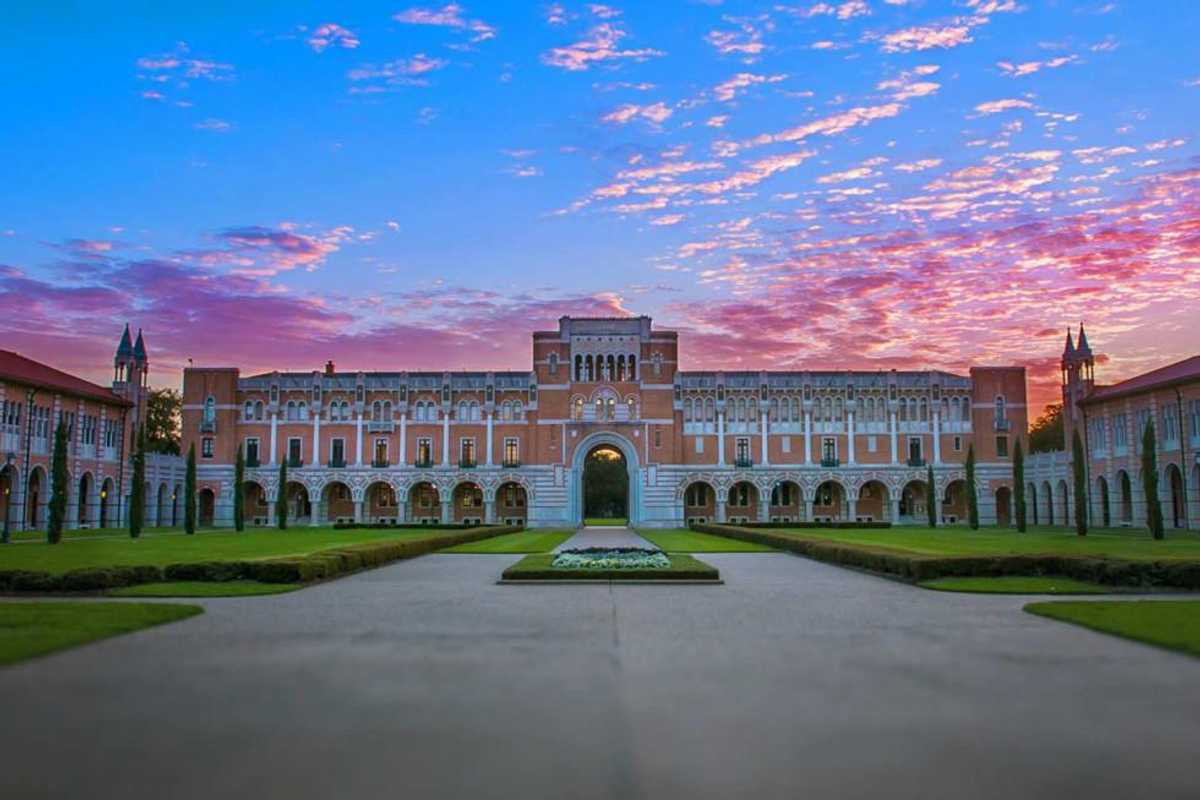

Eli Lilly is expected to bring a $6.5 billion manufacturing facility to Houston by 2030. Rendering courtesy Greater Houston Partnership.

Eli Lilly to build $6.5B pharmaceutical factory at Generation Park

coming soon

Pharmaceutical giant Eli Lilly and Co. plans to build a $6.5 billion manufacturing plant at Houston’s Generation Park. More than 300 locations in the U.S. competed for the factory.

The Houston site will be the first major pharmaceutical manufacturing plant in Texas, according to the Greater Houston Partnership.

Lilly said it plans to hire 615 full-time workers for the 236-acre plant, including engineers, scientists and lab technicians. The company will collaborate with local colleges and universities to help build its talent pipeline.

The plant will also generate an estimated 4,000 construction jobs.

Lilly said every dollar it spends in the Houston area will contribute an additional $4 to the local economy.

“This is a transformative moment for the Houston region and our life sciences industry,” Steve Kean, president and CEO of the Greater Houston Partnership, said in a release. “The Lilly project represents one of the largest for-profit life sciences investments in Texas history and is a powerful endorsement of Houston’s growing position as a global hub for innovation, advanced manufacturing, and biomedical excellence.”

The factory, expected to go online by 2030, will make small-molecule medicines for fields such as oncology, immunology and neuroscience. Perhaps most notably, the site will manufacture orforglipron, Lilly's first oral small-molecule GLP-1 medicine for treatment of obesity and type 2 diabetes. The drug is currently undergoing clinical trials.

“Our new Houston site will enhance Lilly’s ability to manufacture orforglipron at scale and, if approved, help fulfill the medicine’s potential as a metabolic health treatment for tens of millions of people worldwide who prefer the ease of a pill that can be taken without food and water restrictions,” David Ricks, chairman and CEO of Lilly, said in a release.

The company said it chose Generation Park, a 4,300-acre, master-planned commercial district near Lake Houston, because of factors such as financial incentives, access to utilities and transportation, and the region’s business-friendly environment. Generation Park is home to campuses for San Jacinto College and Lone Star College.

The plant will be outfitted with machine learning, AI, advanced data analytics, digital automation, and similar tools to streamline operations, Lilly said.

Ad Placement 300x100
Ad Placement 300x600

CultureMap Emails are Awesome

Houston researchers develop breakthrough device that could bypass spinal injuries

breakthrough research

Scientists at Houston Methodist have announced a significant leap forward for spinal cord injury recovery.

The researchers have developed a device that essentially bypasses spinal injuries, allowing signals from previously “lost” functions to reach the brain, a new study published in Nature Communications shows.

“Most current technologies try to improve whatever function remains after a spinal cord injury,” Dr. Damiano Barone, assistant professor of neurosurgery in the Department of Neurosurgery at Houston Methodist and co-lead on the study, said in a news release. “Our goal is different. Rather than fixing the injury itself, we want to bypass it completely and create an alternative route for signals to travel.”

The study involved a single ultrathin circumferential electrode array made to conform around the spinal cord without penetrating neural tissue, which was implanted into rodent and pig models with spinal injuries. The electrode array was able to interpret motor, sensory and autonomic signals around the injury. Think of it as a set of detours that restore road access to isolated towns after a disaster destroys the highway instead of just rebuilding the highway.

Over the course of three days, the arrays detected signals of intended movement from low-frequency spinal oscillations with more than 94 percent accuracy. This worked across species and was replicated in feasibility studies on human cadavers.

This research could serve as a new foundation for neuroprosthetic implants that could restore connectivity to the 2.5 million people worldwide suffering from spinal injuries that result in loss of ability. Future development could result in everything from restored organ function to mobility, according to Houston Methodist.

George Malliaras, the Prince Professor of Technology in the Department of Engineering at the University of Cambridge, who co-led the study, sees it as a fundamental restructuring of the science of spinal trauma.

“This could represent a paradigm change in how we think about spinal cord injuries,” Malliaras said. “Instead of starting from the idea that what is lost is gone forever, this approach asks whether we can restore function by carrying the signal around the injury.”

Further work involving laboratory models will need to be completed before launching human trials.

Grants from the National Institutes of Health, Houston Methodist Katz Investigator Award, Helaers Research Award and the Engineering and Physical Sciences Research Council helped support the study. Other collaborators on the study include Salim Hadwe, Ruben Serrano, George Psaltakis, Margaux Forner, Chaeyeon Lee, Sydney Swedick, Moleca Ghnnam, Tawfique Hasan and Alejandro Carnicer-Lombarte from the University of Cambridge; and Anton Banta and Xueer Zhang from Houston Methodist.

Abbott assembles expert team to help lure U.S. Space Academy to Texas

space race

State Rep. Greg Bonnen of Friendswood has been tapped to lead a new team that will promote Texas as the future home of the U.S. Space Academy.

Bonnen, a neurosurgeon, chairs Houston Physicians’ Hospital and the powerful Texas House Appropriations Committee. His House district is close to NASA’s Johnson Space Center.

Gov. Greg Abbott appointed the seven-member team. Last month, President Trump signed an executive order establishing the Presidential Commission on the U.S. Space Academy. Commission members, who held their first meeting this month, will recommend a permanent location for the academy.

Texas officials are pushing a site near Johnson Space Center to host the academy. Alabama, Colorado and Florida are among Texas’ competitors.

In a joint statement, U.S. Sen. Ted Cruz and U.S. Rep. Brian Babin, both of Texas, issued a statement backing the state’s bid for the academy. Cruz lives in Houston. Babbin lives in Woodville, about 55 miles south of Beaumont.

“America’s space program is built across the country, but Texas is where the pieces come together,” the lawmakers said. “We are ready to lead the next generation of space pioneers and look forward to showing why Texas is the right home for the U.S. Space Academy.”

The academy’s curriculum will include technical education, leadership development and public service components. Graduates will be set up for careers in the U.S. military, civil service, and aerospace sectors.

The Abbott-appointed team will work with the Texas Space Commission to prepare the state’s proposal for the academy.

In addition to Bonnen, team members with ties to Houston include:

  • Robert Ambrose, who grew up in Houston. He worked at Johnson Space Center before becoming associate director of the Texas A&M Space Institute.
  • Former NASA astronaut Nancy Curry-Gregg, director of the Texas A&M Space Institute. She earned a doctoral degree from the University of Houston and previously worked at Johnson Space Center.
  • Former NASA astronaut Jack Fischer, senior vice president of Houston-based Intuitive Machines. The company builds spacecraft, delivers payloads to the moon and launches satellites.

“Texas is the home of America’s human spaceflight program,” Abbott said in a release. “No state can match what Texas brings to this mission.”

“NASA’s Johnson Space Center, world-class universities, a premier commercial space industry, major military installations, and an unmatched aerospace workforce give Texas every asset the United States Space Academy requires,” the governor added.