It's time to vote for Houston's Startup of the Year. Graphic via Gow Media

We're just two weeks away from the 2025 Houston Innovation Awards, and while our expert panel of judges will determine the winners in most categories, one award is up to you.

Voting is now open for our people's choice award: 2025 Startup of the Year. Six exceptional finalists are in the running for the title, and your votes will determine the winner.

From rugged humanoid robots to next-generation sustainable materials, each of these startups is making an impact on the innovation ecosystem in Houston — and beyond.

Read about our Startup of the Year finalists and their missions below, then cast your vote. You can vote once per day through November 12, so make your voice heard.

The winner, along with winners in all other categories, will be revealed live at our event on November 13 at Greentown Labs. Tickets to the 2025 Houston Innovation Awards are available now — get yours today.

Eclipse Energy

Eclipse Energy, previously known as Gold H2, is a climatetech startup converting end-of-life oil fields into low-cost, sustainable hydrogen sources. The company completed its first field trial this summer, which demonstrated subsurface bio-stimulated hydrogen production. Eclipse Energy says Its technology could yield up to 250 billion kilograms of low-carbon hydrogen.

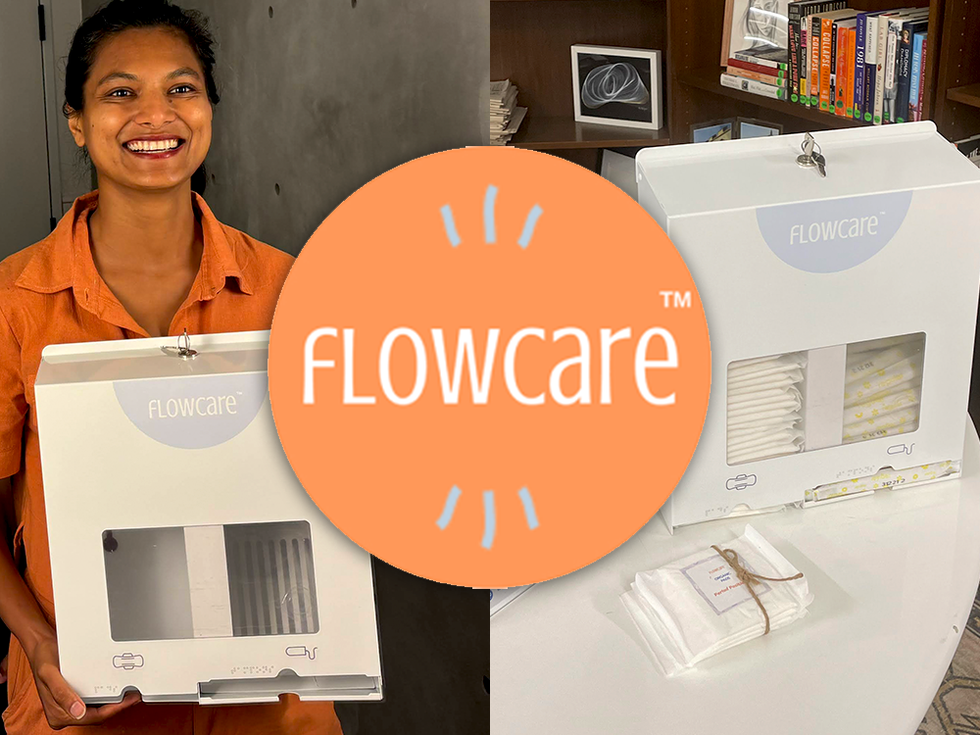
FlowCare

FlowCare is developing a period health platform that integrates smart dispensers, education, and healthcare into one system to make free, high-quality, organic period products more accessible. FlowCare is live at prominent Houston venues, including Discovery Green, Texas Medical Center, The Ion, and, most recently, Space Center Houston, helping make Houston a “period positivity” city.

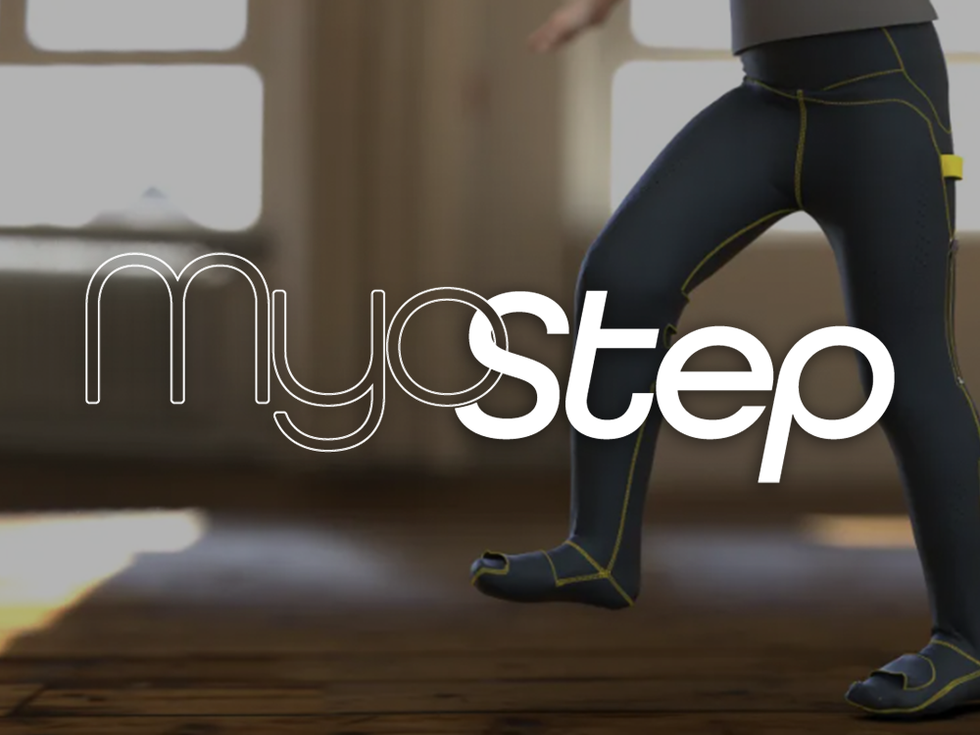
MyoStep

MyoStep is a next-generation, lightweight, soft exoskeleton developed at University of Houston for children with cerebral palsy. The soft skeleton aims to address motor impairments that impact their ability to participate in physical activities, self-care, and academics, via an affordable, child-friendly solution that empowers mobility and independence.

Persona AI

Persona AI is a humanoid robotics startup that is creating rugged, autonomous robots for skilled, heavy industry work for various "4D" (dull, dirty, dangerous, and declining) jobs. In May, the company announced a memorandum of understanding with HD Korea Shipbuilding & Offshore Engineering, HD Hyundai Robotic, and Vazil Company to create and deploy humanoid robots for complex welding tasks in shipyards. The project will deliver prototype humanoids by the end of 2026.

Rheom Materials

Rheom Materials is a next-generation startup developing biobased materials for a more sustainable future. Its two flagship offerings are Shorai, a sustainable leather alternative that is usable for apparel, accessories, car interiors, and more, and Benree, an alternative to plastic without the carbon footprint.

Solidec

Solidec is a chemical manufacturing company developing autonomous generators that extract molecules from water and air and convert them into pure chemicals and fuels that are free of carbon emissions. The technology eliminates the need for transport, storage, and permitting.

---

The Houston Innovation Awards program is sponsored by Houston City College Northwest, Houston Powder Coaters, FLIGHT by Yuengling, and more to be announced soon. For sponsorship opportunities, please contact sales@innovationmap.com.

Calling all Houstonians — help InnovationMap decide on this year's People's Choice: Startup of the Year winner. Graphic via Gow Media

People's Choice: Pick your startup of the year for the 2024 Houston Innovation Awards

you decide

It's firmly voting season in Houston, and in addition to deciding the nation's next political leaders, the local innovation ecosystem is being called to weigh in on one category for the Houston Innovation Awards.

This year's People's Choice: Startup of the Year voting is officially open online. Read about each company below, then click here to cast your vote. You may vote once per day up until Nov. 8 when the portal closes. The winner will be named at the Nov. 14 event — click here to secure your ticket to see who wins in this and the other dozen categories.

Corrolytics

Founded by CEO Anwar Sadek, this minority-owned startup uses its patented electrochemical technology to detect and monitor corrosion. Unlike others in the market, Corrolytics allows for on-site, real-time, accurate detection of corrosion, helping to safeguard industrial assets and prolong their lifespans.

Last month, Corrolytics, which is also a finalist in the Minority-Founded Business category, was named among the most promising energy tech startups at the Rice Alliance for Technology and Entrepreneurship's Energy Tech Venture Forum and won the People's Choice Award. It was part of the Rice Alliance Clean Energy Accelerator earlier this year.

What significant milestone(s) has your company reached this year?

We launched our comprehensive in-lab services in Q4 of 2023, generating $100,000 in revenue. By 2024, we tripled our revenue, confirming our early product-market fit while serving four major customers in the energy sector. With the ruggedization and scalable design of our test kit now complete, we’re set to begin field trials in the next quarter. Additionally, Corrolytics has secured a Joint Development Agreement with a leading oil and gas service provider, extending our reach across the global energy market.

What advice do you wish you could tell yourself before you started your company?

Embrace the challenges early on, as they are invaluable learning opportunities. Focus on building a strong network, especially with mentors and industry leaders who can guide you through the unknowns. Lastly, be prepared for the unexpected, stay adaptable and never underestimate the importance of a clear mission that inspires both your team and your customers.

Why did you choose Houston for your company's headquarters and how has your experience been growing a company here?

Houston is the energy capital of the world, providing unparalleled access to major industry players, talent and resources. The city's strong focus on innovation and its thriving clean energy ecosystem has been a perfect fit for Corrolytics. Growing the company here has been an amazing experience—Houston’s vibrant startup community, world-class accelerators like the Rice Alliance, and its strategic location have accelerated our growth and opened doors to invaluable partnerships. Houston truly offers the ideal environment for scaling a cleantech startup like ours and advancing the future of sustainable energy.

FlowCare

FlowCare is focused on addressing menstrual inequity by providing flagship dispensers stocked with free, 100 percent organic pads and tampons for schools and businesses, while raising awareness about the issues that impacks millions.

The startup was founded in January and is led by Founder and CEO Tanu Jain.

What significant milestone(s) has your company reached this year?

Here’s a summary of the significant milestones FlowCare has reached this year:

  • Building a supportive community: We’ve established a vibrant community of FlowCare cheerleaders and advisors who are passionate about our mission.
  • Newsletter Success: Our newsletter, launched just two months ago, now reaches 2,000 people each month with an impressive 50 percent to 60 percent open rate. We’ve also been moved by the personal stories of period struggles shared by our readers.
  • Competition Achievements: We secured fourth place in the Houston Community College Business Plan Competition, winning $1,000 and raising awareness about period product accessibility. FlowCare also earned a top four finish out of 200 participants in the TiE Dallas Global Pitch Competition.
  • Successful Pilot at ION: We’ve commenced a paid pilot with ION, receiving heartfelt text messages from women expressing how FlowCare has positively impacted their day and alleviated embarrassment by providing period products in restrooms."

What advice do you wish you could tell yourself before you started your company?

Expect the journey to be challenging and more time-consuming than anticipated. You’ll face financial struggles and setbacks, but remember to stay patient and resilient. Embrace the journey and find joy in the small victories along the way. Build a network of supportive individuals who believe in your mission and can help you navigate the tough times. You’ll experience self-doubt and imposter syndrome, but remember, even high-profile leaders experience these feelings. Stay focused on your mission and trust in your ability to make a difference.

Why did you choose Houston for your company's headquarters and how has your experience been growing a company here?

I chose Houston for FlowCare’s headquarters because it’s home to me—having grown up here, it felt natural to build my company in a place I know and love. My experience growing the company here has been incredibly positive. Houston boasts a strong and supportive community with a robust network of individuals who are always willing to help. As an entrepreneur, having access to people who are willing to spend time with you, offer guidance, and introduce you to the right connections is invaluable. The local support has been a key factor in keeping us going towards the mission of period equity.

InnoVent Renewables

InnoVent Renewables is a circular economy business that has developed a proprietary net-zero process that converts waste tires, plastics, and biomass into fuels and chemicals. It estimates that it will reduce emissions by 80 million pounds when its production facility is operating.

InnoVent was founded by chemical-engineer-turned-CEO Vibhu Sharma in 2023. It has plans for aggressive growth across North America and Latin America.

What significant milestone(s) has your company reached this year?

We started our business in July 2023, raised a "friends and family" round, which was oversubscribed, and we carry no debt. We went from concept to the commissioning stage in 14 months and will start full commercial operations in Q4 2024.

What advice do you wish you could tell yourself before you started your company?

Always raise more cash than you think you will need. We raised a friends and family round and then had to tap that network again to get some additional funds to account for some add-ons and escalations.

Why did you choose Houston for your company's headquarters and how has your experience been growing a company here?

Houston is a remarkably affordable city with exceptional talent and expertise in engineering, design, renewables, and oil and gas processes. In addition, we were able to tap an excellent and experienced advisory board that has been guiding us. Houston is well connected with the rest of the world, as well as easy access to Monterrey, Mexico, where our tire facility is located.

MendIt

MendIt Inc. was founded in 2019 to help quickly and easily connect users with small businesses and non-profits that can mend and repair clothing sustainably.

It is led by CEO and founder Kaitlyn Allen and was a member of the gBETA Houston accelerator in 2023.

What significant milestone(s) has your company reached this year?

We are finally in the feasibility phase of our (stealth) B2B offering for brands and are excited that the initial results are positive and are pointing to scalability. We are currently in the process of contracting to provide our solution for two initial B2B customers.

What advice do you wish you could tell yourself before you started your company?

Seek product-market fit from the beginning (rather than product-problem fit), and don’t invest so much before that is demonstrated.

Why did you choose Houston for your company's headquarters and how has your experience been growing a company here?

We founded MendIt in Houston because it is our hometown and where we lived. It’s been interesting growing a non-energy-related company because so many of the resources are focused on that sector, and at the same time we get to stand out as the only “tech” startup focused on fashion and textile sustainability.

Passport Journeys

Passport Journeys is a teletherapy app that's specifically designed for mother-daughter pairs. The app launched on Mother's Day 2023 and provides users with personalized therapies, journal opportunities, interactive worksheets and intentional bonding activities.

The company is led by founder and CEO Lacey Tezino.

What significant milestone(s) has your company reached this year?

This year, we’ve achieved several significant milestones: We filed for a trademark to protect our brand, applied for our first NIH SBIR grant to secure funding for our innovative teletherapy app, and launched a nonprofit arm to provide free therapy to those in need, demonstrating our commitment to both innovation and community support.

What advice do you wish you could tell yourself before you started your company?

I would advise myself to secure funding and the sustainability plan for the first five years before leaving the big corporate job.

Why did you choose Houston for your company's headquarters and how has your experience been growing a company here?

We chose Houston for our company’s headquarters due to its vibrant and diverse community, robust health care and tech sectors, and supportive entrepreneurial ecosystem. Growing our company here has been a rewarding experience, marked by strong local partnerships, access to a large talent pool, and a dynamic business environment that fosters innovation and collaboration. The city’s emphasis on healthcare and technology aligns well with our mission, providing a solid foundation for our growth and impact.

TrueLeap

Ed-tech startup TrueLeap Inc. aims to address the global education gap by providing affordable, scalable digital tools to educators in emerging markets through its e-learning platform.

Founded in 2022, it raised $610,000 in a pre-seed round earlier this year, which was over its target of $500,000. It's led by co-founders Sandip Bordoloi, who serves as CEO, and Sunny Zhang, the company's Chief Evangelist. Dario Calogero, founder and CEO of Maya Investments Limited, which led the round, was recently named to the company's board of directors.

True Leap is being developed out of Born Global Ventures, a Houston venture studio focused on advancing immigrant-founded technology, of which Zhang is a founding partner. It serves educators in schools in the United States, India, the Democratic Republic of Congo and other countries.

What significant milestone(s) has your company reached this year?

Advancing our mission to make education accessible to underserved communities worldwide, we have reached the following milestones:

1. New country entry into Ghana by partnering with International Business and Opportunity Network (IBON)
2. Expanded implementation in the DRC by partnering with the Catholic School Association
3. New product launch enabled global educators and institutions to create and distribute high-quality content to prepare global talents for success.

What advice do you wish you could tell yourself before you started your company?

Just do it.

Why did you choose Houston for your company's headquarters and how has your experience been growing a company here?

We chose Houston for its diversity and international connections, which align with our mission to expand access to education worldwide. The city's supportive startup scene, access to top talent, and thriving innovation ecosystem have made it an ideal place to grow TrueLeap.


Pick your 2024 Houston Startup of the Year.

Ad Placement 300x100
Ad Placement 300x600

CultureMap Emails are Awesome

Houston researcher secures $1.7M to develop drug for aggressive form of breast cancer

cancer research

A University of Houston researcher has joined a $3.2 million effort to develop a new drug designed to attack a cancer-driving protein commonly found in triple-negative breast cancer.

Triple-negative breast cancer (TNBC) is one of the most difficult-to-treat forms of cancer and accounts for 10 percent to 15 percent of all breast cancer cases. The disease gets its name because tumors associated with it test negative for estrogen receptors, progesterone receptors and excess HER2 protein, making it difficult to target. Due to this, TNBC is often treated with general chemotherapy, which can come with negative side effects and drug resistance, according to UH.

UH College of Pharmacy research associate professor Wei Wang is developing a drug that can target the disease more specifically. The drug will target MDM2, a protein often overproduced in TNBC that also contributes to faster tumor growth.

Wang is working on a team led by Wei Li, director of the University of Tennessee Health Science Center College of Pharmacy’s Drug Discovery Center. She has received $1.7 million to support the research.

Wang and UH professor of pharmacology and toxicology Ruiwen Zhang have discovered a compound that can break down MDM2. In early laboratory models, the compound has shown the ability to shrink tumors.

Wang and Zhang will focus on understanding how the treatment works and monitoring its effectiveness in models that closely mirror human disease.

“We will study how the drug targets MDM2 and evaluate the most promising drug candidates to determine effective dosing, understand how the drug behaves in the body, compare it with existing treatments and assess early safety,” Wang said in a news release.

Li’s team at the University of Tennessee will be working on the chemistry and drug design end of the project.

“This work could lead to an entirely new class of therapies for triple-negative breast cancer,” Li added in the release. “We’re hopeful that by directly removing the MDM2 protein from cancer cells, we can help more patients respond to treatment regardless of their tumor type.”

10+ Houston innovation leaders in the spotlight at SXSW 2026

where to be

Houston's innovation scene will be well represented at South by Southwest (SXSW) this month.

The week-long, Austin-based conference and festival will spotlight some of the Bayou City's leaders in health care, energy, space and more. The event kicks off today, March 12, and runs through March 18. The SXSW Innovation Conference will feature keynotes, workshops, mentoring sessions and more throughout various venues in the city.

Here's who to see and when and where to find them:

March 12

Aileen Allen, venture partner at Mercury Fund

Mentor Session from 4-5:15 p.m. at Hilton Austin Downtown

Allen will host a mentoring session focused on funding, marketing, advertising, PR and the future of work.

March 13

Heath Butler, partner at Mercury Fund

SXSW Pitch-Smart Cities, Transportation, Manufacturing & Logistics from 2:30-3:30 p.m. at the J.W. Marriott

Butler will judge five innovative startups as they pitch their solutions to advance smart cities, enhance transportation systems, modernize manufacturing, transform logistics, and strengthen government infrastructure and civic operations.

Jonathan Cirtain, CEO and president of Axiom Space

The Clock is Ticking for Space - Replacing the ISS from 4-5 p.m. at the J.W. Marriott

Cirtain will discuss Axiom's pursuit of building the world’s first commercial space station.

March 14

Jesse Martinez, founder and CEO of LSA Global

SXSW Pitch-Intelligent Systems, Robotics, & Multisensory Technology from 10-11 a.m. at the J.W. Marriott

Martinez will judge five innovative startups as they pitch their technologies that aim to enhance the way people connect, communicate and share unique life experiences with those around them in a digital ecosystem.

Jennifer Schmitt, head of operations at Rhythm Energy

Powering Texas with Reliable Integrated High-Demand Energy from 10-11 a.m. at Marlow

Schmitt will join a panel to discuss how EirGrid, the state-owned electric power transmission operator in Ireland, is pioneering solutions as the country works toward 80 percent renewable integration by 2030.

Saki Sasagawa, director of business development for JETRO Houston

Now is Japan's Time: Leading the Future with Deep Tech from 10-11 a.m. at the J.W. Marriott

Sasagawa joins a panel that will share real-time insights from diverse perspectives on the forefront of Japan’s deep tech and IP businesses.

March 15

Bosco Lai, CEO and co-founder of Little Place Labs

SXSW Pitch Alumni: Where Are They Now? from 10-11 a.m. at the J.W. Marriott

Lai joins a panel of four former SXSW Pitch winners to share how they leveraged the platform to take their startups to the next level.

Tara Karimi, cofounder and chief science and sustainability officer at Cemvita

South by South America: The Rise of Southern Brazil Tech from 2:30-3:30. p.m. at The Line

Karimi will participate in a panel to discuss how Rio Grande do Sul, Brazil's southernmost state, is attracting elite talent and AI infrastructure and share insights on navigating the next wave of South American tech growth.

March 16

Dr. Pavitra P. Krishnamani, emergency medicine physician at The University of Texas MD Anderson Cancer Center

Viva La Revolution: How the Digital Age is Transforming Wellness from 11:30 a.m.-12:30 p.m. at Hilton Austin Downtown

Krishnamani will discuss the latest advancements and policies that can accelerate the digital age of health care, such as wearables, telehealth and artificial intelligence.

March 18

Charlie Childs, co-founder and CEO of Intero Biosystems

Spinning Out: What It Takes to Build a University Startup from 2:30-3:30 p.m. at The Line

Childs will join founders who spun their companies out of the University of Michigan to share the real story of navigating IP, early capital, team building, market validation and the “valley of death.”

Dr. James Allison, regental chair of immunology and director of The Allison Institute at The University of Texas MD Anderson Cancer Center

Dr. Padmanee Sharma, professor in the Department of Genitourinary Medical Oncology, Division of Cancer Medicine at The University of Texas MD Anderson Cancer Center

Beyond Checkpoints: Immunotherapy’s Next Act from 2:30-3:30 p.m. at the J.W. Marriott

Allison and Sharma will sit down with 21-year-old, Stage 4 cancer survivor Sharon Belvin and Time Magazine journalist Alice Park will discuss the future of immunotherapy and what challenges remain.

Last year, Houston startups Little Places Labs and Helix Earth won top prizes in their respective categories at the prestigious SXSW Pitch event, held this year from March 13-14. No Houston startups were named finalists to compete in this year's event.

NASA revamps Artemis moon landing program by modeling it after Apollo

To the moon

NASA is revamping its Artemis moon exploration program to make it more like the fast-paced Apollo program half a century ago, adding an extra practice flight before attempting a high-risk lunar landing with a crew in two years.

The overhaul in the flight lineup came just days after NASA’s new moon rocket returned to its hangar for more repairs, and a safety panel warned the space agency to scale back its overly ambitious goals for humanity’s first lunar landing since 1972.

Artemis II, a lunar fly-around by four astronauts, is off until at least April because of rocket problems.

The follow-up mission, Artemis III, had been targeting a landing near the moon’s south pole by another pair of astronauts in about three years. But with long gaps between flights and concern growing over the readiness of a lunar lander and moonwalking suits, NASA’s new administrator Jared Isaacman announced that mission would instead focus on launching a lunar lander into orbit around Earth in 2027 for docking practice by astronauts flying in an Orion capsule.

The new plan calls for a moon landing — potentially even two moon landings — by astronauts in 2028.

“Everybody agrees. This is the only way forward,” Isaacman said.

The hydrogen fuel leaks and helium flow problems that struck the Space Launch System rocket on the pad at NASA's Kennedy Space Center in February also plagued the first Artemis test flight without a crew in 2022.

Another three-year gap was looming between Artemis II and the moon landing by astronauts as originally envisioned, Isaacman said.

Isaacman stressed that “it should be incredibly obvious” that three years between flights is unacceptable. He'd like to get it down to one year or even less.

Isaacman, a tech billionaire who bought his own trips to orbit and performed the world’s first private spacewalk, took the helm at NASA in December.

During NASA’s storied Apollo program, he said, astronauts’ first flight to the moon was followed by two more missions before Neil Armstrong and Buzz Aldrin landed on the moon. What's more, he added, the Apollo moonshots followed one another in quick succession, just as the earlier Projects Mercury and Gemini had rapid flight rates, sometimes coming just a few months apart.

Twenty-four Apollo astronauts flew to the moon from 1968 through 1972, with 12 of them landing.

“No one at NASA forgot their history books. They knew how to do this," Isaacman said. “Now we're putting it in action.”

To pick up the pace and reduce risk, NASA will standardize its Space Launch System rockets moving forward, Isaacman said. These are the massive rockets that will launch astronauts to the moon aboard Orion capsules. At the same time, Elon Musk's SpaceX and Jeff Bezos' Blue Origin are speeding up their work on the landers needed to get the astronauts from lunar orbit down to the surface.

Isaacman said next year will see an Orion crew rendezvousing in orbit around Earth with SpaceX's Starship, Blue Origin's Blue Moon or both landers. It's similar to the methodical approach that worked so well during Apollo in the late 1960s, he noted. Apollo 8, astronauts' first flight to the moon, was followed by two more missions before Armstrong and Aldrin aimed for the lunar surface.

“We should be getting back to basics and doing what we know works,” he said.

The Aerospace Safety Advisory Panel recommended that NASA revise its objectives for Artemis III “given the demanding mission goals.” It’s urgent the space agency do that, the panel said, if the United States hopes to safely return astronauts to the moon. Isaacman said the revised Artemis flight plan addresses the panel's concerns and is supported by industry and the Trump administration.