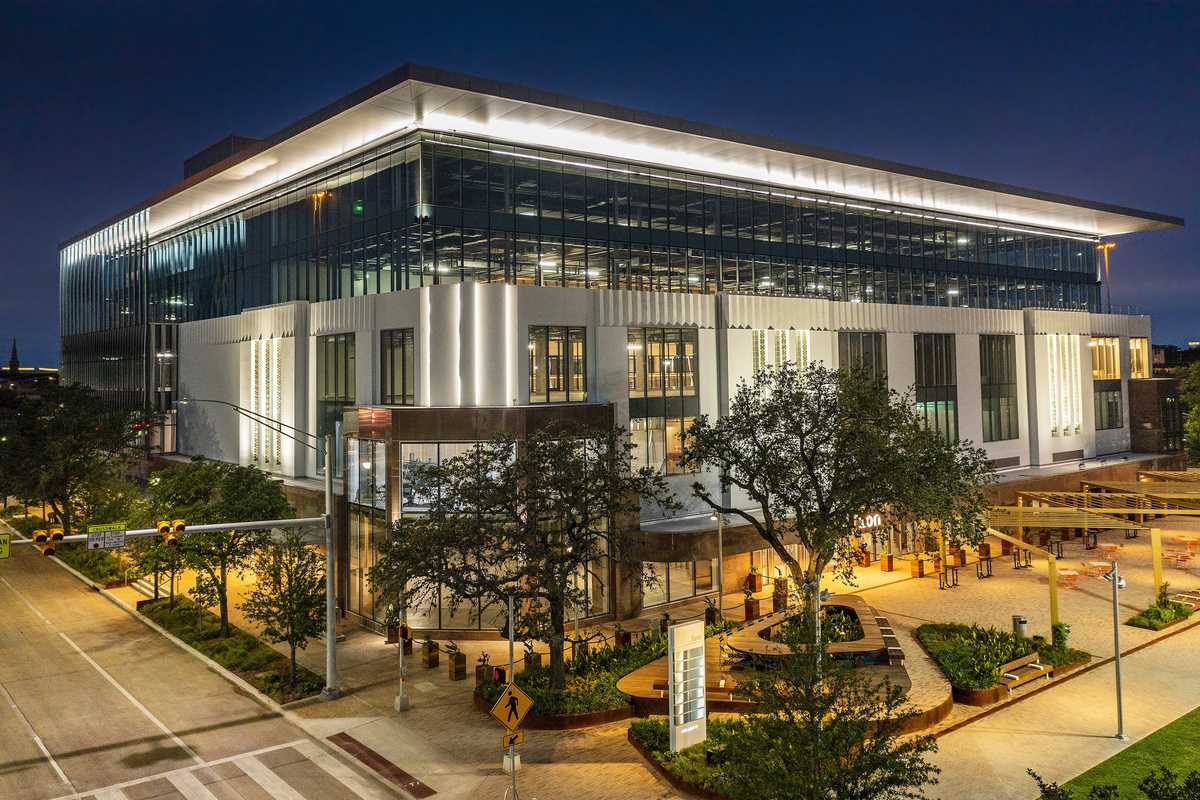
Houston's top startups by valuation range from e-commerce startups to a geothermal pioneer. Photo via Getty Images

The Greater Houston Partnership has released its list of the 10 most valuable startups that are fueling the city’s growth and entrepreneurial energy, including industry giants like Axiom Space and Fervo Energy.

Currently, Houston hosts more than 1,300 startups in industries such as energy, life sciences, manufacturing and aerospace, according to the GHP. The list ranks its top 10 startups by valuation based on the company’s last private funding round, reflected in Pitchbook data, as of Oct. 20 of this year.

The top 10 list includes:

10. NXTClean Fuels

Valuation: $530 million

NXTClean Fuels builds biofuel refineries that produce renewable fuel by using feedstocks like cooking oil and recycled organic materials.

9. Homebase

Valuation: $660 million

HR tech company Homebase provides employee management software that helps manage and optimize timesheets, payroll and more, with over over 100,000 small businesses and 2 million hourly workers using its product.

8. Zolve

Valuation: $800 million

Zolve is a banking platform that provides customers with access to financial products that aim to be accessible, flexible, and affordable than other financial platforms.

7. Stramsen Biotech

Valuation: $807 million

Stramsen Biotech develops plant-based drug therapies that target both infectious and noninfectious diseases, which include cancer, diabetes, HIV, kidney disease and neurological issues.

6. Octagos

Valuation: $843 million

Healthtech company Octagos has developed a remote cardiac monitoring software driven by AI that helps consolidate patient data in real-time, assisting healthcare professionals in providing quicker, easier and more accurate care.

5. Fervo Energy

Valuation: $1.4 billion

Pioneering geothermal company Fervo Energy combines horizontal drilling and fiber-optic sensing to produce electricity. The company is developing its flagship Cape Station geothermal power project in Utah. The first phase of the project will supply 100 megawatts of power beginning in 2026

4.Cart.com

Valuation: $1.7 billion

Cart.com is an e-commerce giant and logistics solutions provider that was founded in 2020 and obtained unicorn status within just three years.

3. Axiom Space

Valuation: $2.1 billion

Axiom Space is one of the anchor tenants at the Houston Spaceport, and has completed four missions of sending commercial astronauts to the ISS since 2022. In 2027, the company expects to see the first section of its private space station, Axiom Station, launched into low-earth orbit.

2. Solugen

Valuation: $2.175 billion

Solugen replaces petroleum-based products with plant-derived substitutes through its Bioforge manufacturing platform.

1. HighRadius

Valuation: $3.2 billion

HighRadius uses advanced technology to automate and manage accounts receivable processes for businesses worldwide.

The GHP also released its State of Houston’s Tech and Innovation Landscape, which mapped Houston’s digital and innovation sectors. Read the full report here.


Ad Placement 300x100
Ad Placement 300x600

CultureMap Emails are Awesome

Johnson Space Center and UT partner to expand research, workforce development

onward and upward

NASA’s Johnson Space Center in Houston has forged a partnership with the University of Texas System to expand collaboration on research, workforce development and education that supports space exploration and national security.

“It’s an exciting time for the UT System and NASA to come together in new ways because Texas is at the epicenter of America’s space future. It’s an area where America is dominant, and we are committed as a university system to maintaining and growing that dominance,” Dr. John Zerwas, chancellor of the UT System, said in a news release.

Vanessa Wyche, director of Johnson Space Center, added that the partnership with the UT System “will enable us to meet our nation’s exploration goals and advance the future of space exploration.”

The news release noted that UT Health Houston and the UT Medical Branch in Galveston already collaborate with NASA. The UT Medical Branch’s aerospace medicine residency program and UT Health Houston’s space medicine program train NASA astronauts.

“We’re living through a unique moment where aerospace innovation, national security, economic transformation, and scientific discovery are converging like never before in Texas," Zerwas said. “UT institutions are uniquely positioned to partner with NASA in building a stronger and safer Texas.”

Zerwas became chancellor of the UT System in 2025. He joined the system in 2019 as executive vice chancellor for health affairs. Zerwas represented northwestern Ford Bend County in the Texas House from 2007 to 2019.

In 1996, he co-founded a Houston-area medical practice that became part of US Anesthesia Partners in 2012. He remained active in the practice until joining the UT System. Zerwas was chief medical officer of the Memorial Hermann Hospital System from 2003 to 2008 and was its chief physician integration officer until 2009.

Zerwas, a 1973 graduate of the Houston area’s Bellaire High School, is an alumnus of the University of Houston and Baylor College of Medicine.

Texas booms as No. 3 best state to start a business right now

Innovation Starts Here

High employment growth and advantageous entrepreneurship rates have led Texas into a triumphant No. 3 spot in WalletHub's ranking of "Best and Worst States to Start a Business" for 2026.

Texas bounced back into the No. 3 spot nationally for the first time since 2023. After dropping into 8th place in 2024, the state hustled into No. 4 last year.

Ever year, WalletHub compares all 50 states based on their business environment, costs, and access to financial resources to determine the best places for starting a business. The study analyzes 25 relevant metrics to determine the rankings, such as labor costs, office space affordability, financial accessibility, the number of startups per capita, and more.

When about half of all new businesses don't last more than five years, finding the right environment for a startup is vital for long-term success, the report says.

Here's how Texas ranked across the three main categories in the study:

  • No. 1 – Business environment
  • No. 11 – Access to resources
  • No. 34 – Business costs

The state boasts the 10th highest entrepreneurship rates nationwide, and it has the 11th-highest share of fast-growing firms. WalletHub also noted that more than half (53 percent) of all Texas businesses are located in "strong clusters," which suggests they are more likely to be successful long-term.

"Clusters are interconnected businesses that specialize in the same field, and 'strong clusters' are ones that are in the top 25 percent of all regions for their particular specialization," the report said. "If businesses fit into one of these clusters, they will have an easier time getting the materials they need, and can tap into an existing customer base. To some degree, it might mean more competition, though."

Texas business owners should also keep their eye on Houston, which was recently ranked the 7th best U.S. city for starting a new business, and it was dubbed one of the top-10 tech hubs in North America. Workers in Texas are the "third-most engaged" in the country, the study added, a promising attribute for employers searching for the right place to begin their next business venture.

"Business owners in Texas benefit from favorable conditions, as the state has the third-highest growth in working-age population and the third-highest employment growth in the country, too," the report said.

The top 10 best states for starting a business in 2026 are:

  • No. 1 – Florida
  • No. 2 – Utah
  • No. 3 – Texas
  • No. 4 – Oklahoma
  • No. 5 – Idaho
  • No. 6 – Mississippi
  • No. 7 – Georgia
  • No. 8 – Indiana
  • No. 9 – Nevada
  • No. 10 – California
---

This article originally appeared on CultureMap.com.