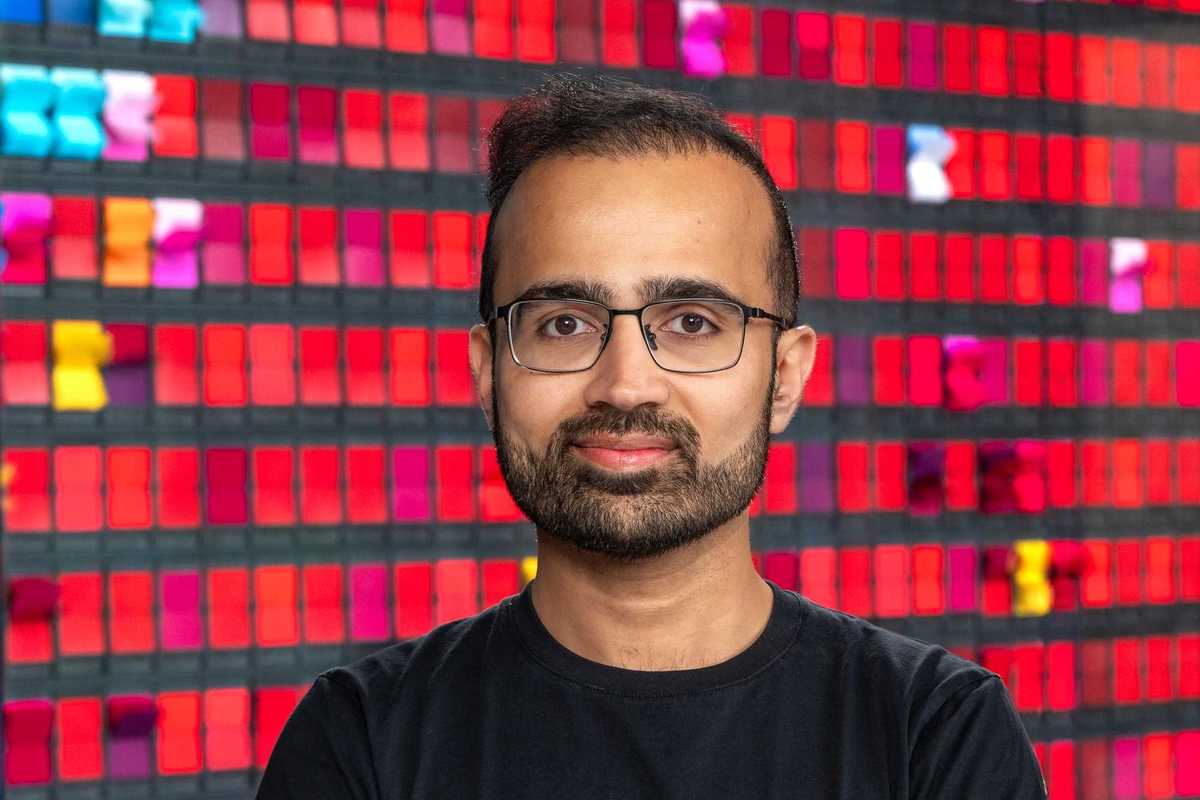
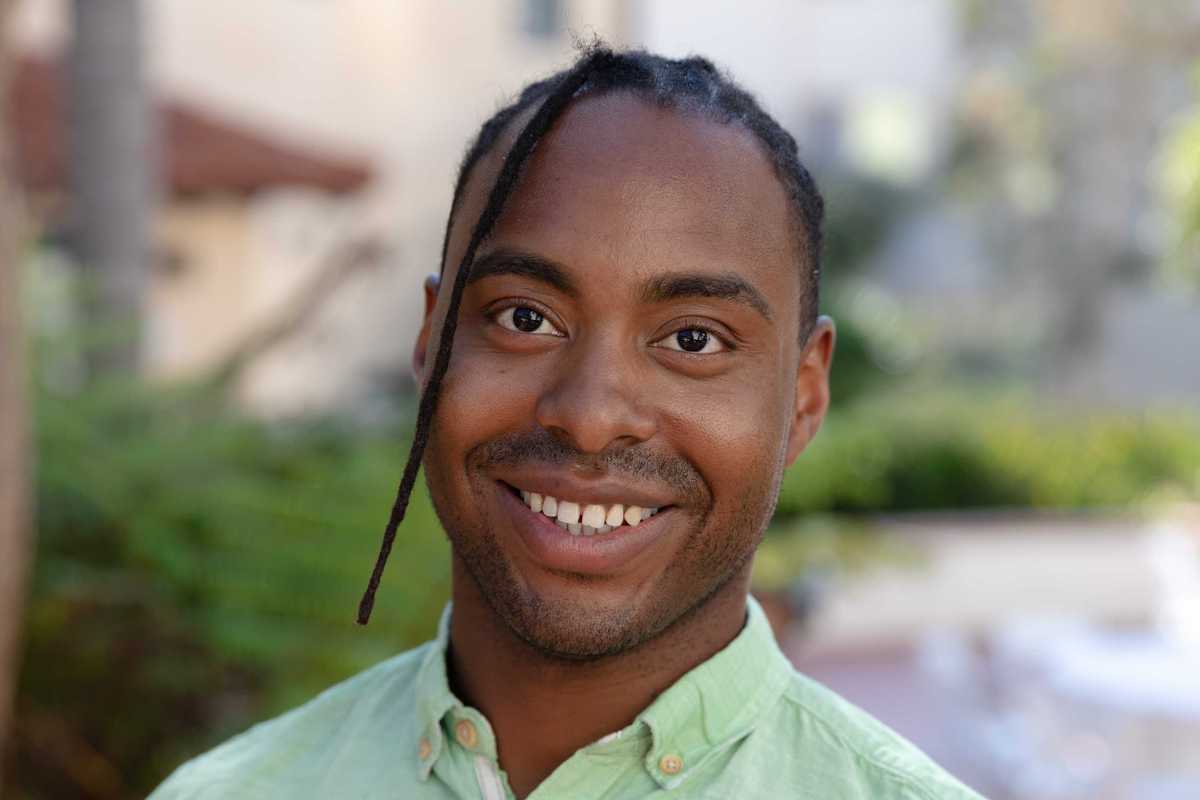
The new Rice Brain Institute brings together engineering, natural sciences and social sciences to better understand the brain. Photo courtesy Rice University.

Rice University has announced the creation of a new interdisciplinary center known as the Rice Brain Institute (RBI).

The new hub will aim to use engineering, natural sciences and social sciences to research the brain and reduce the burden of neurodegenerative, neurodevelopmental and mental health disorders.

“The Rice Brain Institute reflects Rice’s strength in collaboration without boundaries,” Rachel Kimbro, dean of the School of Social Sciences, said in a news release. “Our researchers are not only advancing fundamental science but they’re also ensuring that knowledge reaches society in ways that promote human flourishing.”

RBI researchers will work in thematic clusters focusing on neurodegeneration, mental health, brain injury and neurodevelopment. The clusters will work toward goals such as significantly improving key brain health outcomes, reducing mortality and mental health disorders and improving quality of life for patients living with brain injuries and neurodevelopmental disorders, according to Rice.

The institute will focus on “engineering-driven innovation,” rather than traditional neuroscience, to design tools that can measure, model and modulate brain activity based around Rice’s expertise in soft robotics, neuroimaging, data science and artificial intelligence—making it unique among peer organizations, according to Rice.

Additionally, RBI will be structured around three collaborative Rice “pillars”:

  • The Neuroengineering Initiative, launched in 2018, brings together neuroscience, engineering, and related fields experts
  • The Neuroscience Initiative, a new initiative that brings together cell biologists, neurobiologists, biochemists, chemists and physicists to explore fundamental mechanisms of the brain and nervous system
  • The Brain and Society Initiative, also a new initiative, considers brain research within the broader social and policy landscape

Rice’s Neuroengineering Initiative has already garnered more than $78 million in research funding, according to Rice, and has established major partnerships, like the Rice-Houston Methodist Center for Neural Systems Restoration.

“Rice is uniquely equipped to bridge and connect scientific understanding of the brain and behavior sciences with the technologies and policies that shape our world,” Amy Dittmar, the Howard R. Hughes Provost and executive vice president for academic affairs, added in the news release. “By uniting faculty in neuroengineering, neuroscience and psychological sciences, this interdisciplinary hub embodies the kind of bold, nimble collaboration that allows Rice to turn discovery into societal impact to save lives and enhance human flourishing.”

The formation of the RBI coincides with recent support of the Dementia Prevention Research Institute of Texas (DPRIT), which landed voter approval earlier this week and aims to make Texas the center for dementia research via brain-health tech. According to the World Economic Forum, brain disorders and mental health disorders cost the global economy an estimated $5 trillion per year and could be as high as $16 trillion by 2030.

“Few areas of research have as direct and profound an impact on human well-being as brain health,” Rice President Reginald DesRoches added in the news release. “As rates of Alzheimer’s, dementia and other neurological diseases rise in our country and around the world, universities have a responsibility to lead the discovery of solutions that preserve memory, movement and quality of life. We all know someone who has been affected by a brain-related health issue, so this research is personal to all of us.”

Ad Placement 300x100
Ad Placement 300x600

CultureMap Emails are Awesome

Axiom Space launches Japanese subsidiary, names leadership

Axiom Space is setting up a Japanese subsidiary to tap into billions of dollars worth of business opportunities in the vast Asia-Pacific region. The company’s new office in Japan will open July 1.

“For the Asia-Pacific region, an Axiom Space presence in Japan means a long-term, direct path to low-Earth orbit for research, for industry, for astronauts, and a partner committed to building that future together with Japan,” Jonathan Cirtain, president and CEO of Axiom Space, said in a news release.

Asia-Pacific spaceflight leaders include Japan, China, India and South Korea.

Until committing to the Asia-Pacific subsidiary, Axiom focused primarily on the U.S. market for space exploration equipment, technology and services. Axiom is building the successor to the International Space Station (ISS), and it provides human spaceflight services and develops next-generation spacesuits.

Fortune Business Insights estimates the Asia-Pacific market for space technology was valued at $155.3 billion in 2025.

“The region is rapidly expanding due to rapidly expanding government space programs, increasing private sector participation, and rising demand for satellite services across densely populated regions,” says Fortune Business Insights, a market research firm.

The region’s combination of strategic investments, market demand and emerging entrepreneurial systems positions Asia-Pacific “for the fastest growth in the global market,” Fortune Business Insights says.

The market research firm pegs the U.S. market for space technology at $251.8 billion in 2025, making it the world’s largest player in that sector.

Veteran Japanese astronaut Koichi Wakata will lead Axiom Space Japan as chief technology officer in the Asia-Pacific region. The Japanese subsidiary will work with government agencies, research institutions, and industrial partners in Japan to expand hardware development and manufacturing, microgravity research and orbital computing.

Wakata was the Japanese space agency’s first program manager for ISS and the station’s first Japanese commander. He also contributed to the construction of ISS, including the Japanese experiment module Kibo. Wakata retired from the Japanese agency, JAXA, in March 2024.

“Japan intends to remain a leading nation in human space exploration post-ISS, and Japanese industry and academia are ready to play a central role in the commercial era,” Axiom Space said in the release. “Axiom Space Japan is how the company will meet that ambition with a long-term, on-the-ground presence.”

Houston investment firm closes $105M energy venture fund

seeing green

Houston-based investment firm Veriten has announced the initial close of its second flagship energy venture fund with more than $105 million in capital commitments.

Fund II will build on Veriten’s initial fund and aim to support “scalable technology solutions for energy, power and industrial applications,” according to a company news release.

"Our differentiated network, research-driven process, and first principles approach to investing are having an impact across multiple verticals including traditional energy, electrification, and industrial technology. Fund II builds on that platform,” John Sommers, partner, investments at Veriten, added in the release. “In this environment, the differentiator isn't capital – it's all about connectivity, deep sector expertise, and an economically-driven approach. As new technologies and approaches develop at breakneck speed, the need for more reliable, affordable energy and power continues to grow dramatically. The current backdrop accentuates the need for Veriten's solution."

Veriten is supported by over 50 strategic partnerships in the energy, power, industrial and technology sectors, including major players like Halliburton and Phillips 66.

"Veriten continues to build a differentiated platform at the intersection of energy, technology and industry expertise," Jeff Miller, chairman and CEO of Halliburton, said in the release. "We were early believers in the team and their ability to identify practical solutions to real challenges across the energy value chain. As all industries increasingly adopt digital tools, automation and AI-enabled technologies to improve performance and execution, we are proud to partner with Veriten again to help accelerate high-impact solutions across the broader energy landscape."

Veriten closed its debut fund, NexTen LP, of $85 million in committed capital in October 2023. It was launched in January 2022 by Maynard Holt, co-founder and former CEO of the energy investment bank Tudor, Pickering, Holt & Co.

It has invested in Houston-based AI-powered electricity analytics provider Amperon and led a $12 million Seed 2 funding round for Houston-based Helix Technologies to scale manufacturing of its energy-efficient commercial HVAC add-on earlier this year. In the past year it has contributed to funding rounds for San Francisco-based Armada and Calgary-based Veerum.

Veriten also named Nick Morriss as its new managing director earlier this month. Morriss most recently served as vice president of business development at next-generation nuclear technology company Natura Resources and spent nearly 20 years at NOV Inc.

---

This article originally appeared on our sister site, EnergyCapitalHTX.com.

Here's how Houston ranks among the best U.S. cities to start a career

New Horizons

College graduates staying in Houston are in the right place to be, according to a new WalletHub study. Houston has emerged on a new list of the 100 best places in America for starting a career.

Houston ranked 51st out of 182 U.S. cities based on its quality of life and vast opportunities for new college graduates transitioning into the workforce. The study compared each city based on 25 relevant metrics, like the availability of entry-level jobs, each city's annual job growth rate, workforce diversity, median annual income, housing affordability, and others.

Atlanta, Orlando, and Austin respectively comprised the top three best places to start a career.

Houston ranked 48th overall for its quality of life, and appeared No. 51 for its professional opportunities for new college graduates. Whether its starting a new business or entering a high-earning job field, Houston has many more opportunities than the vast majority of other cities on the list.

"The best cities for starting a career not only have a lot of job opportunities but also provide substantial income growth potential and satisfying work conditions," said WalletHub analyst Chip Lupo. "It’s also important to consider factors such as how fun a city is to live in or how good of a place it is for raising a family, to ensure life satisfaction outside of your career."

Other Texas hotspots for early career professionals
Austin boasts the best quality of life out of all 182 cities in the report, and the 10th best professional opportunities. The state capital also outperformed all other U.S. cities with the highest monthly average starting salaries for early career workers after being adjusted for the city's cost of living. Austin also offers the 15th highest number of entry level jobs per capita, the report said.

In a separate comparison of the cities with the largest share of residents aged 25 to 34, Austin ranked No. 5 nationally.

"In addition, Austin’s median annual household income is the 10th-highest in the nation, providing strong earning potential for those starting a career or a business," the report said. "Austin is also the sixth best city for singles, offering a vibrant social scene alongside strong career opportunities for young professionals."

Elsewhere in Texas, Dallas ranked as the second-best city in Texas for new grads to start a career and 12th nationally. Additional cities that made it into the top 100 best U.S. cities for early career professionals include Plano (No. 32), Irving (No. 42), Fort Worth (No. 64), Amarillo (No. 73), and San Antonio (No. 85).

The top 10 best cities for starting a career are:

  • No. 1 – Atlanta, Georgia
  • No. 2 – Orlando, Florida
  • No. 3 – Austin, Texas
  • No. 4 – Tampa, Florida
  • No. 5 – Miami, Florida
  • No. 6 – Charleston, South Carolina
  • No. 7 – Pittsburgh
  • No. 8 – Knoxville, Tennessee
  • No. 9 – Salt Lake City, Utah
  • No. 10 – Columbia, South Carolina
---

This article first appeared on CultureMap.com.