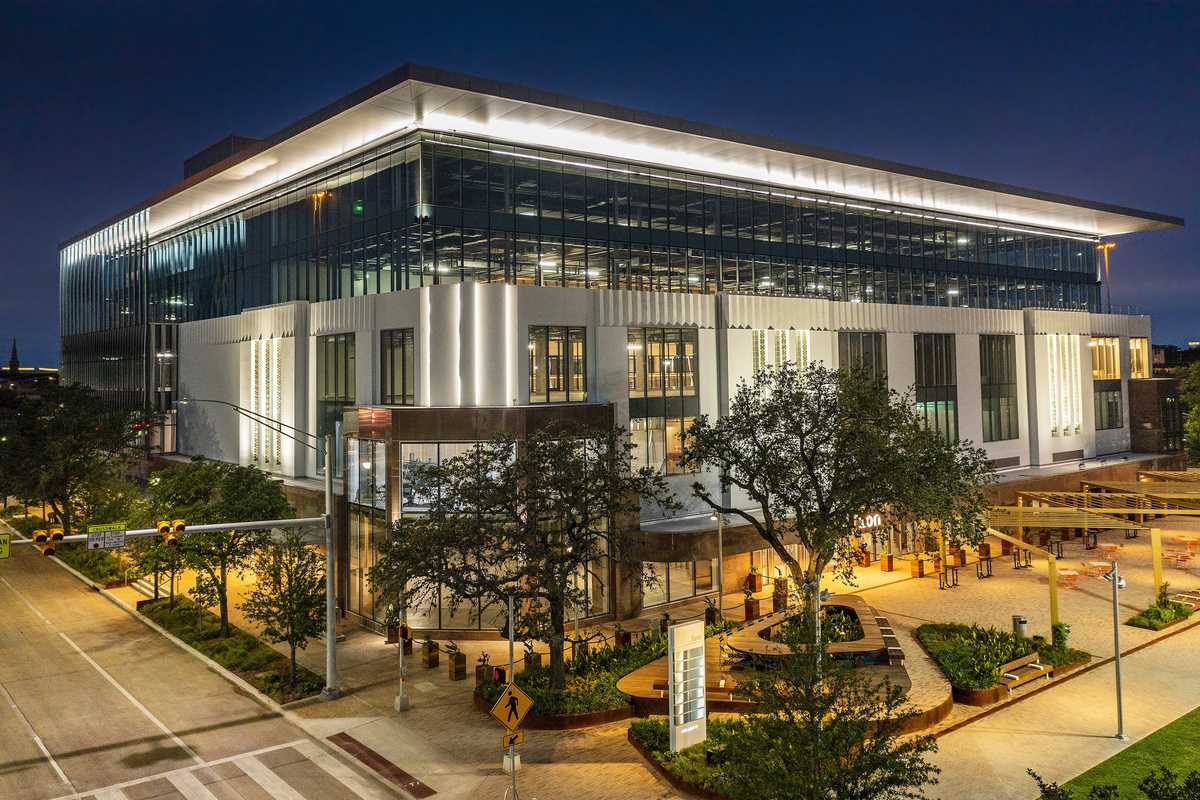
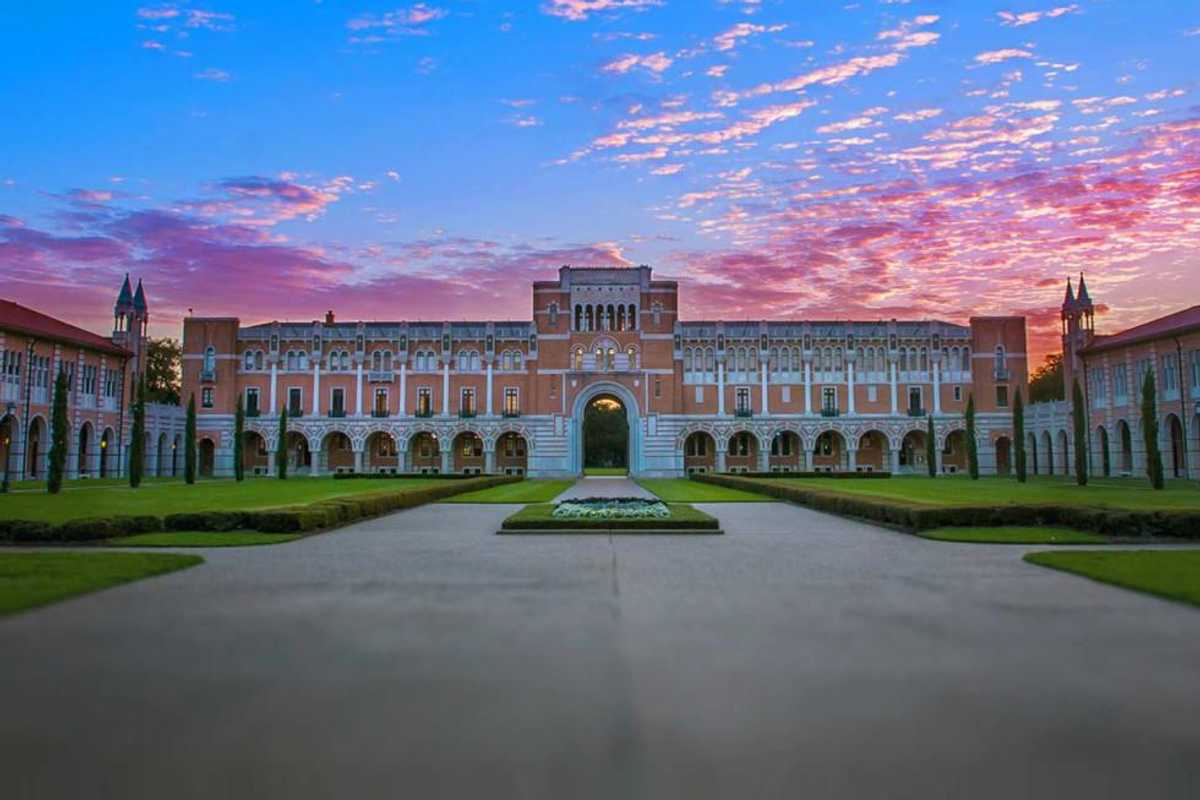
Participants in the Napier Rice Lanch Challenge took home a total of $115,000 in equity-free funding, with cancer diagnostics startup Bionostic leading the pack. Photo courtesy Rice University

Rice University student-founded companies took home a total of $115,000 in equity-free funding at the annual Liu Idea Lab for Innovation and Entrepreneurship's H. Albert Napier Rice Launch Challenge last week.

2025 Rice Innovation Fellow Alexandria Carter won the top prize and $50,000 for her startup Bionostic. The startup offers personalized diagnostics for cancer patients by using 3D culturing through its Advanced Tumor Landscape Analysis System (ATLAS) platform.

Carter is working toward her PhD in bioengineering in Professor Michael King's laboratory. She recently completed the Rice Innovation Fellows program and plans to commercialize ATLAS, according to a news release from Rice.

Actile Technologies, founded by another former Rice Innovation Fellow, Barclay Jumet, won second place and $25,000. The company is developing and commercializing textile-integrated technologies. InnovationMap first covered Jumet's wearable technology back in 2023.

Kairos took home the third-place prize and $15,000, plus the $2,000 audience choice award and the $5,000 undergraduate business award. Founded last year by Sanjana Kavula and Adhira Tippur, Kairos is an AI-powered patient intake platform built specifically for independent dental practices.

The NRLC features top startups founded by undergraduate, graduate and MBA students at Rice each year. The top three finishers were named among a group of five finalists earlier this year, which also included HAAST Autonomous and Project Kestrel.

HAAST is developing an unmanned aircraft for organ transport, while Kestrel uses machine learning to organize bird photographers’ photo collections.

Teams presented multiple five-minute pitches throughout the application process over Zoom and in-person before the five finalists presented at the NRLC Championships April 21 at the Rice Memorial Center. Each finalist walked away with an equity-free investment.


Other awards went to:

UnitCode

  • $5,000 MBA Venture Award

HAAST Autonomous

  • $2,500 Chan-Kang Family Prize for Bold Ambition
  • $1,000 Healthcare Innovations Prize

Telstar Networks

  • $2,500 Outstanding Undergraduate Startup Award

Multiplay

  • $1,500 Frank Liu Jr. Prize for Creative Innovation in Music, Fashion, & the Arts

Butterfly Books

  • $1,500 Social Impact Award

SOOZ

  • $1,000 Interdisciplinary Innovation Prize sponsored by OURI

Dooly

  • $1,000 Consumer Goods Prize

Project Kestrel

  • $1,000 AI Prize

Veloci Running won the NRLC last year for its naturally shaped running shoe. Founder and CEO Tyler Strothman recently told InnovationMap that the company has gone on to sell roughly 10,000 pairs of its flagship Ascent shoe, designed to relieve lower leg tightness and absorb impact. Read more here.
Ad Placement 300x100
Ad Placement 300x600

CultureMap Emails are Awesome

UH lands $4M NIH grant to study early signs of autoimmune disease

NIH funding

The University of Houston recently received a $4 million National Institutes of Health grant to support a 10-year longitudinal study to identify the earliest biological markers of autoimmune disease.

Led by Chandra Mohan, the Hugh Roy and Lillie Cranz Cullen Endowed Professor of Biomedical Engineering, the study aims to examine what causes Systemic Autoimmune Rheumatic Diseases (SARDs) and to identify targets for future treatments. The study will be carried out in collaboration with Dr. Karen Costenbader at Harvard Medical School, Boston.

SARDs include conditions like rheumatoid arthritis, systemic lupus erythematosus, Sjögren’s syndrome and systemic sclerosis—all are considered chronic diseases currently without a cure. Autoimmune diseases affect over 30 million people globally, according to UH.

SARDs occur when the body’s immune system attacks healthy, non-threatening tissues and organs. According to UH, in these diseases, the body often attacks nuclear antigens, creating anti-nuclear autoantibodies, which can be early detection signs for SARDs in more than 50 percent of patients, Mohan says.

Researchers will study blood samples and environmental exposure over the 10 years to better understand anti-nuclear autoantibodies.

“Collectively, these studies will help identify the genetic, environmental and cellular factors that are operative at the two steps of SARD development, namely the emergence of anti-nuclear autoantibodies and disease onset,” Mohan said in a news release. “ More importantly, these studies will highlight functional molecular pathways and mechanisms that may be operative at each step."

Mohan predicts that looking at SARDs’ shared characteristics, rather than each disease individually, could help identify more treatment methods.

“Individual SARDs have been examined in silos without an attempt to discern shared underlying features at the molecular level,” he added in the release. “Current understanding of the initial (and likely shared) origins of SARDs is only rudimentary but urgently needed to develop means for prevention and treatment.”

Earlier this year, UH also received an $11 million NIH grant to conduct a first-of-its-kind study of early language development in children ages 18 to 24 months. Read more here.

New Texas Stock Exchange officially begins trading in Dallas

Welcome to Y'all Street

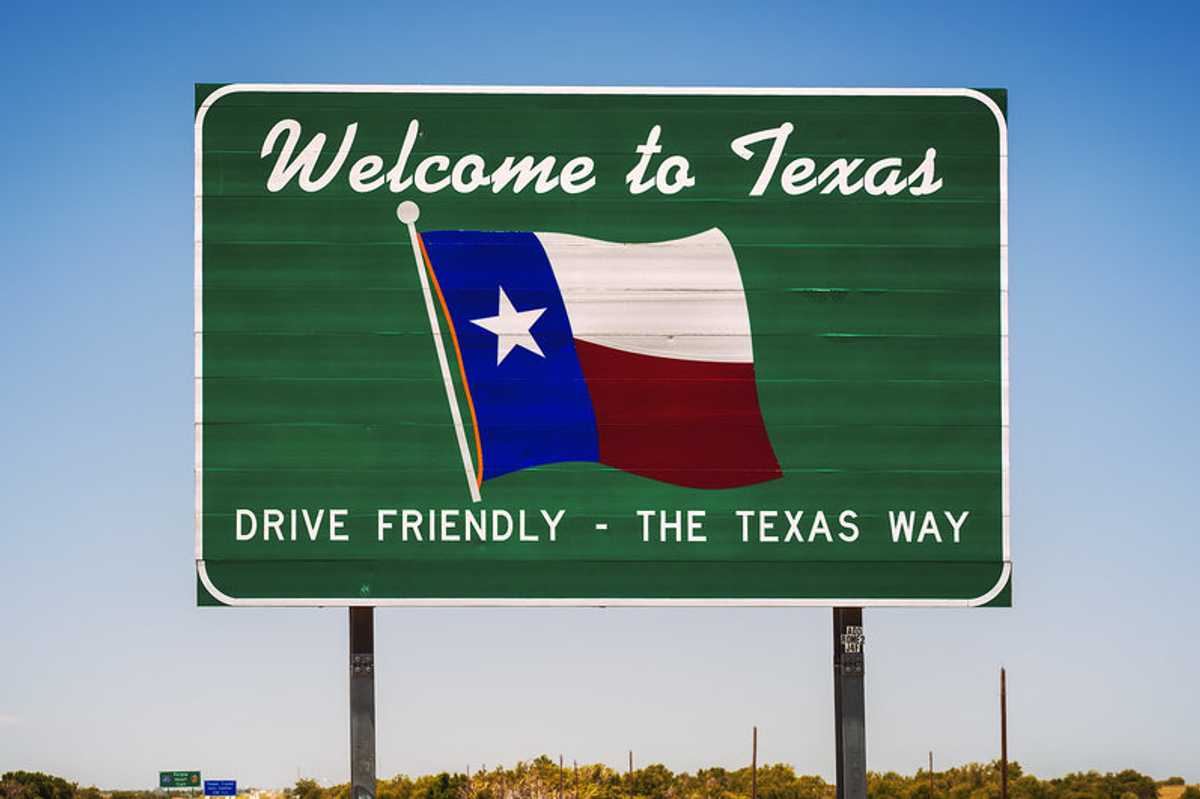
Two-step aside, New York Stock Exchange and Nasdaq. The Dallas-based Texas Stock Exchange, nicknamed Y’all Street, just kicked off live trading with five stocks — and lots of Lone Star ambition.

“The Texas Stock Exchange aims to revitalize competition for [stock] issuers, establish the premier venue for listings, and create a world-class trading platform for all market participants,” the exchange says in a fact sheet.

The exchange — whose Texas-influenced nickname is a nod to New York City’s Wall Street — has collected at least $275 million in investments. The roughly 90 financial backers of TXSE include Bank of America, BlackRock, Charles Schwab, Citadel Securities, Dell Family Office, Fortress, Goldman Sachs, and JPMorgan Chase.

Representatives of TXSE couldn’t be reached for comment. On its website, the exchange calls itself “the most well-capitalized equities exchange to ever be approved” by the U.S. Securities and Exchange Commission (SEC).

Not to be outdone, NYSE has launched Dallas-based NYSE Texas and Nasdaq has expanded its presence in Dallas.

Y’all Street adds to Dallas-Fort Worth’s rising status as a major hub for financial services, with The Wall Street Journal naming North Texas the country’s second biggest financial hub after New York City.

“A homegrown national exchange means more jobs, more investment, and more growth opportunities for businesses and communities across the Lone Star State,” Gabriela von zur Muehlen, senior vice president and chief policy officer at the Texas Association of Business, told The Texas Tribune.

Bulent Temel, an associate professor of practice in economics at the University of Texas at San Antonio, told Texas Standard that TXSE “is going to boost the credibility of the Texas economy.”

Texas’ estimated gross domestic product (GDP), a yardstick for the size of an economy, climbed to a record-setting $2.9 trillion in 2025, making it the state with the second highest GDP after California. DFW’s estimated GDP in 2023 stood at $744.6 billion, eclipsing the GDP of many countries.

“The center of gravity for American capitalism is now headquartered in the Boom Belt,” Abbott proclaimed in April, referring to an 11-state region (including Texas) in the South and Southeast that’s seeing tremendous economic and population growth. “The Texas Stock Exchange is the natural extension of that capitalism. It ensures that capital markets will reflect the quadrant that is driving American growth.”

---

This article originally appeared on CultureMap.com.