It's time to vote for Houston's Startup of the Year. Graphic via Gow Media

We're just two weeks away from the 2025 Houston Innovation Awards, and while our expert panel of judges will determine the winners in most categories, one award is up to you.

Voting is now open for our people's choice award: 2025 Startup of the Year. Six exceptional finalists are in the running for the title, and your votes will determine the winner.

From rugged humanoid robots to next-generation sustainable materials, each of these startups is making an impact on the innovation ecosystem in Houston — and beyond.

Read about our Startup of the Year finalists and their missions below, then cast your vote. You can vote once per day through November 12, so make your voice heard.

The winner, along with winners in all other categories, will be revealed live at our event on November 13 at Greentown Labs. Tickets to the 2025 Houston Innovation Awards are available now — get yours today.

Eclipse Energy

Eclipse Energy, previously known as Gold H2, is a climatetech startup converting end-of-life oil fields into low-cost, sustainable hydrogen sources. The company completed its first field trial this summer, which demonstrated subsurface bio-stimulated hydrogen production. Eclipse Energy says Its technology could yield up to 250 billion kilograms of low-carbon hydrogen.

FlowCare
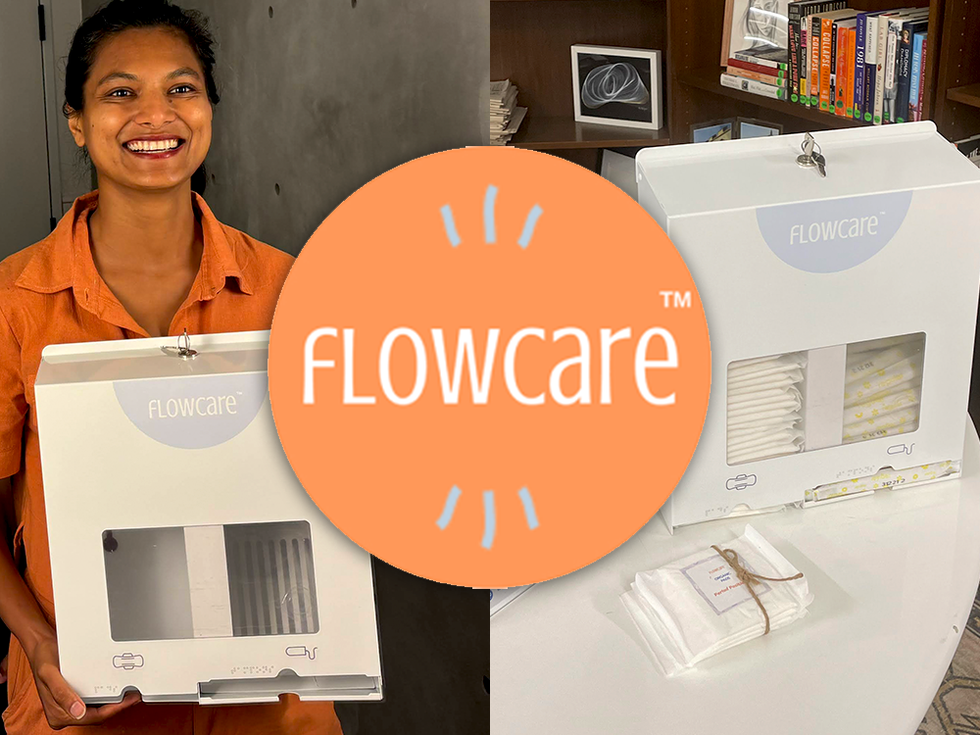
FlowCare is developing a period health platform that integrates smart dispensers, education, and healthcare into one system to make free, high-quality, organic period products more accessible. FlowCare is live at prominent Houston venues, including Discovery Green, Texas Medical Center, The Ion, and, most recently, Space Center Houston, helping make Houston a “period positivity” city.

MyoStep
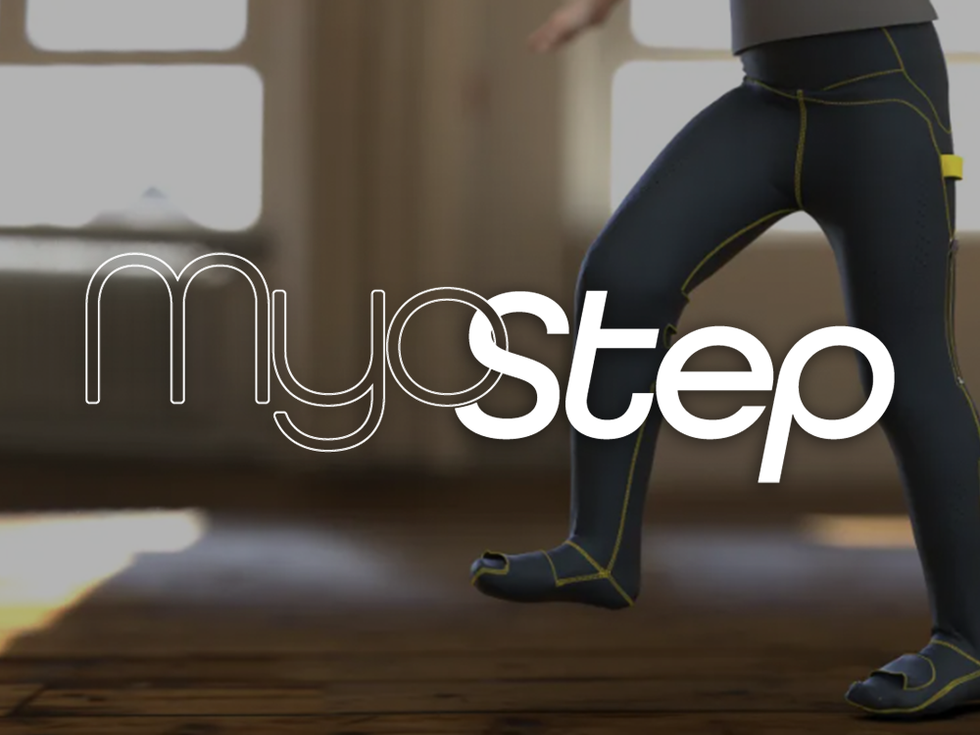
MyoStep is a next-generation, lightweight, soft exoskeleton developed at University of Houston for children with cerebral palsy. The soft skeleton aims to address motor impairments that impact their ability to participate in physical activities, self-care, and academics, via an affordable, child-friendly solution that empowers mobility and independence.

Persona AI
Persona AI is a humanoid robotics startup that is creating rugged, autonomous robots for skilled, heavy industry work for various "4D" (dull, dirty, dangerous, and declining) jobs. In May, the company announced a memorandum of understanding with HD Korea Shipbuilding & Offshore Engineering, HD Hyundai Robotic, and Vazil Company to create and deploy humanoid robots for complex welding tasks in shipyards. The project will deliver prototype humanoids by the end of 2026.

Rheom Materials
Rheom Materials is a next-generation startup developing biobased materials for a more sustainable future. Its two flagship offerings are Shorai, a sustainable leather alternative that is usable for apparel, accessories, car interiors, and more, and Benree, an alternative to plastic without the carbon footprint.

Solidec
Solidec is a chemical manufacturing company developing autonomous generators that extract molecules from water and air and convert them into pure chemicals and fuels that are free of carbon emissions. The technology eliminates the need for transport, storage, and permitting.

---

The Houston Innovation Awards program is sponsored by Houston City College Northwest, Houston Powder Coaters, FLIGHT by Yuengling, and more to be announced soon. For sponsorship opportunities, please contact sales@innovationmap.com.


UH BRAIN and TIRR Memorial Hermann have developed the MyoStep soft exoskeleton to address motor impairments caused by cerebral palsy. Photo courtesy UH.

Houston team develops innovative soft skeleton for kids with cerebral palsy

health tech

A team from the NSF University of Houston Building Reliable Advances and Innovation in Neurotechnology (UH BRAIN) Center and TIRR Memorial Hermann has introduced the MyoStep soft exoskeleton for children with cerebral palsy, according to a news release from UH.

The soft skeleton aims to address motor impairments caused by cerebral palsy that impact children’s ability to participate in physical activities, self-care and academics.

“The MyoStep project represents a significant advancement in the field of pediatric mobility aids, particularly for children with cerebral palsy,” Jose Luis Contreras-Vidal, director of UH BRAIN and the Hugh Roy and Lillie Cranz Cullen Distinguished Professor of Electrical and Computer Engineering, said in a news release.

The next-generation lightweight, soft exoskeleton was funded by the IEEE Electron Devices Society (EDS) Award.

The MyoStep is made to be lightweight and discreetly fit under clothes. It includes a wireless sensor network embedded inside the smart and flexible fabrics that is the backbone of the suit and collects and sends real-time data about the user’s movements It also includes safety features with temperature monitoring and emergency shut-off mechanisms.

“By integrating cutting-edge technologies such as artificial muscles, smart fabrics, and a comprehensive sensor network, MyoStep offers a promising solution to the challenges faced by existing exoskeletons,” Contreras-Vidal said in a news release.

Cerebral palsy is a neurological disorder that impacts motor skills. It occurs in one to four out of every 1,000 births worldwide.

“What makes the MyoStep project so compelling is that it’s not just about the technology: it’s about restoring confidence, function, and hope,” Dr. Gerard Francisco, a clinical partner on the technology, The Wulfe Family Chair of Physical Medicine and Rehabilitation at UTHealth Houston and medical officer at TIRR Memorial Hermann, said in a news release. “This kind of innovation has the potential to dramatically improve quality of life, helping children move through the world with greater ease and dignity.”

Ad Placement 300x100
Ad Placement 300x600

CultureMap Emails are Awesome

UH receives $2.6M gift to support opioid addiction research and treatment

drug research

The estate of Dr. William A. Gibson has granted the University of Houston a $2.6 million gift to support and expand its opioid addiction research, including the development of a fentanyl vaccine that could block the drug's ability to enter the brain.

The gift builds upon a previous donation from the Gibson estate that honored the scientist’s late son Michael, who died from drug addiction in 2019. The original donation established the Michael C. Gibson Addiction Research Program in UH's department of psychology. The latest donation will establish the Michael Conner Gibson Endowed Professorship in Psychology and the Michael Conner Gibson Research Endowment in the College of Liberal Arts and Social Sciences.

“This incredibly generous gift will accelerate UH’s addiction research program and advance new approaches to treatment,” Daniel O’Connor, dean of the College of Liberal Arts and Social Sciences, said in a news release.

The Michael C. Gibson Addiction Research Program is led by UH professor of psychology Therese Kosten and Colin Haile, a founding member of the UH Drug Discovery Institute. Currently, the program produces high-profile drug research, including the fentanyl vaccine.

According to UH, the vaccine can eliminate the drug’s “high” and could have major implications for the nation’s opioid epidemic, as research reveals Opioid Use Disorder (OUD) is treatable.

The endowed professorship is combined with a one-to-one match from the Aspire Fund Challenge, a $50 million grant program established in 2019 by an anonymous donor. UH says the program has helped the university increase its number of endowed chairs and professorships, including this new position in the department of psychology.

“Our future discoveries will forever honor the memory of Michael Conner Gibson and the Gibson family,” O’Connor added in the release. “And I expect that the work supported by these endowments will eventually save many thousands of lives.”

CenterPoint and partners launch AI initiative to stabilize the power grid

AI infrastructure

Houston-based utility company CenterPoint Energy is one of the founding partners of a new AI infrastructure initiative called Chain Reaction.

Software companies NVIDIA and Palantir have joined CenterPoint in forming Chain Reaction, which is aimed at speeding up AI buildouts for energy producers and distributors, data centers and infrastructure builders. Among the initiative’s goals are to stabilize and expand the power grid to meet growing demand from data centers, and to design and develop large data centers that can support AI activity.

“The energy infrastructure buildout is the industrial challenge of our generation,” Tristan Gruska, Palantir’s head of energy and infrastructure, says in a news release. “But the software that the sector relies on was not built for this moment. We have spent years quietly deploying systems that keep power plants running and grids reliable. Chain Reaction is the result of building from the ground up for the demands of AI.”

CenterPoint serves about 7 million customers in Texas, Indiana, Minnesota and Ohio. After Hurricane Beryl struck Houston in July 2024, CenterPoint committed to building a resilient power grid for the region and chose Palantir as its “software backbone.”

“Never before have technology and energy been so intertwined in determining the future course of American innovation, commercial growth, and economic security,” Jason Wells, chairman, president and CEO of CenterPoint, added in the release.

In November, the utility company got the go-ahead from the Public Utility Commission of Texas for a $2.9 billion upgrade of its Houston-area power grid. CenterPoint serves 2.9 million customers in a 12-county territory anchored by Houston.

A month earlier, CenterPoint launched a $65 billion, 10-year capital improvement plan to support rising demand for power across all of its service territories.

---

This article originally appeared on our sister site, EnergyCapitalHTX.com.

Houston researchers develop material to boost AI speed and cut energy use

ai research

A team of researchers at the University of Houston has developed an innovative thin-film material that they believe will make AI devices faster and more energy efficient.

AI data centers consume massive amounts of electricity and use large cooling systems to operate, adding a strain on overall energy consumption.

“AI has made our energy needs explode,” Alamgir Karim, Dow Chair and Welch Foundation Professor at the William A. Brookshire Department of Chemical and Biomolecular Engineering at UH, explained in a news release. “Many AI data centers employ vast cooling systems that consume large amounts of electricity to keep the thousands of servers with integrated circuit chips running optimally at low temperatures to maintain high data processing speed, have shorter response time and extend chip lifetime.”

In a report recently published in ACS Nano, Karim and a team of researchers introduced a specialized two-dimensional thin film dielectric, or electric insulator. The film, which does not store electricity, could be used to replace traditional, heat-generating components in integrated circuit chips, which are essential hardware powering AI.

The thinner film material aims to reduce the significant energy cost and heat produced by the high-performance computing necessary for AI.

Karim and his former doctoral student, Maninderjeet Singh, used Nobel prize-winning organic framework materials to develop the film. Singh, now a postdoctoral researcher at Columbia University, developed the materials during his doctoral training at UH, along with Devin Shaffer, a UH professor of civil engineering, and doctoral student Erin Schroeder.

Their study shows that dielectrics with high permittivity (high-k) store more electrical energy and dissipate more energy as heat than those with low-k materials. Karim focused on low-k materials made from light elements, like carbon, that would allow chips to run cooler and faster.

The team then created new materials with carbon and other light elements, forming covalently bonded sheetlike films with highly porous crystalline structures using a process known as synthetic interfacial polymerization. Then they studied their electronic properties and applications in devices.

According to the report, the film was suitable for high-voltage, high-power devices while maintaining thermal stability at elevated operating temperatures.

“These next-generation materials are expected to boost the performance of AI and conventional electronics devices significantly,” Singh added in the release.