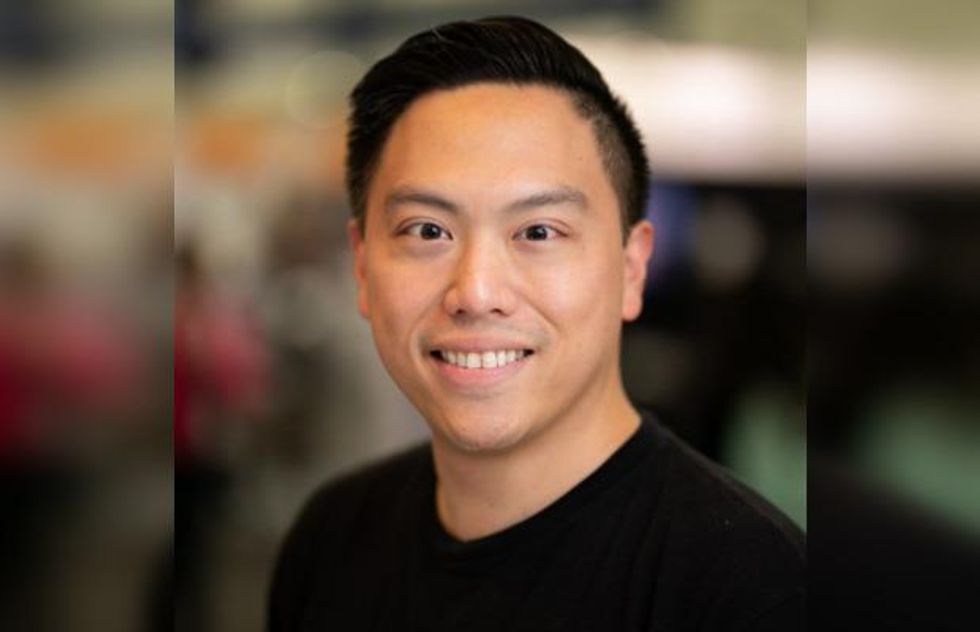
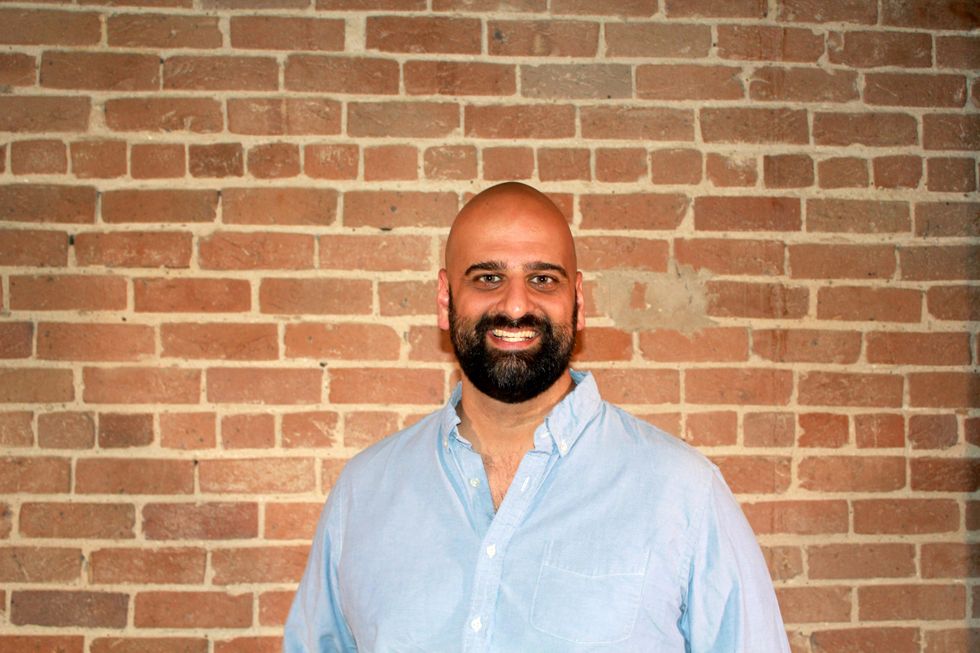
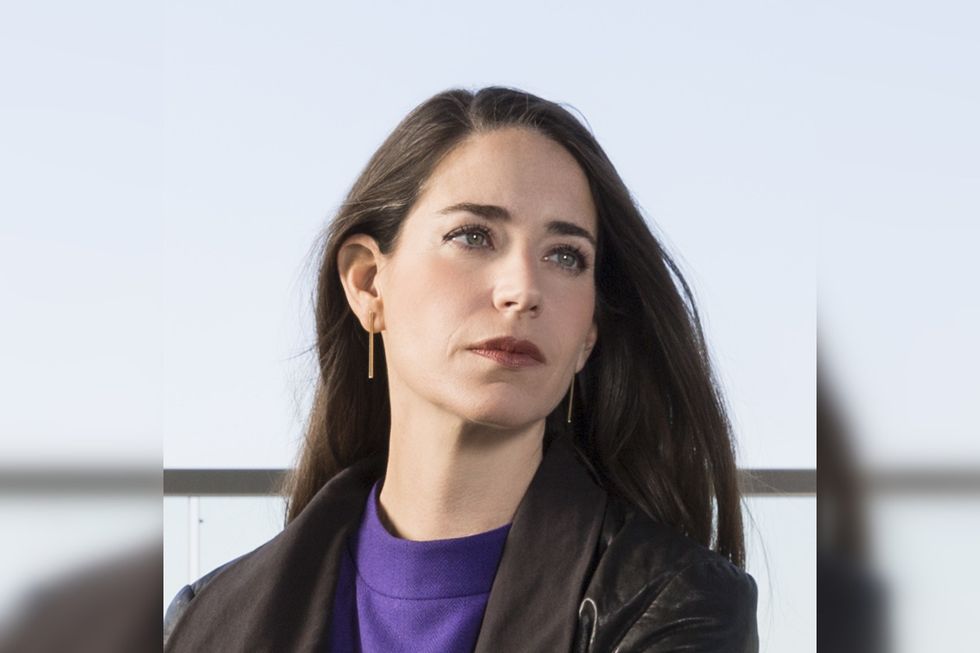
Sameer Soleja is the founder and CEO of Molecule, which just closed its series B round. Photo courtesy of Molecule Software

Houston-based energy trading risk management (ETRM) software company Molecule has completed a successful series B round for an undisclosed amount, according to a July 16 release from the company.

The raise was led by Sundance Growth, a California-based software growth equity firm.

Sameer Soleja, founder and CEO of Molecule, said in the release that the funding will allow the company to "double down on product innovation, grow our team, and reach even more markets."

Molecule closed a $12 million Series A round in 2021, led by Houston-based Mercury Fund, and has since seen significant growth. The company, which was founded in 2012, has expanded its customer base across the U.S., U.K., Europe, Canada and South America, according to the release.

Additionally, it has launched two new modules of its software platform. Its Hive module, which debuted in 2022, enables clients to manage their energy portfolio and renewable credits together in one scalable platform. It also introduced Elektra, an add-on for the power market to its platform, which allows for complex power market trading.

"Four years ago, we committed to becoming the leading platform for energy trading," Soleja said in the release. "Today, our customers are managing complex power and renewable portfolios across multiple jurisdictions, all within Molecule.”

Molecule is also known for its data-as-a-lake platform, Bigbang, which enables energy ETRM and commodities trading and risk management (CTRM) customers to automatically import trade data from Molecule and then merge it with various sources to conduct queries and analysis.

“Molecule is doing something very few companies in energy tech have done: combining mission-critical depth with cloud-native, scalable technology,” Christian Stewart, Sundance Growth managing director, added in the statement.

“Sameer and his team have built a platform that’s not only powerful, but user-friendly—a rare combination in enterprise software. We’re thrilled to partner with Molecule as they continue to grow and transform the energy trading and risk management market.”

---

This article originally appeared on EnergyCapitalHTX.com.

Sameer Soleja, founder and CEO of Molecule, has expanded his company's platform. Photo courtesy of Molecule Software

Houston energy tech startup expands platform with new data tools

growing gains

Houston startup Molecule Software hopes to get a big bang out of its new platform for the energy and commodities markets.

The data-as-a-lake platform, Bigbang, is available as an add-on for current Molecule customers. It enables energy trading and risk management (ETRM) and commodities trading and risk management (CTRM) customers to automatically import trade data from Molecule, and then merge it with various sources to conduct queries and analysis.

Molecule sells Bigbang at a monthly rate through either a yearly or multiyear contract.

“We’re seeing a growing need in the energy and commodities trading space for a turnkey data lake, as indicated by our own customers. They need real-time and automated data streaming from key systems, the ability to query the data quickly and easily, and access to the data using the analytics tools they know well,” says Sameer Soleja, founder and CEO of Molecule.

Founded in 2012, Molecule specializes in cloud-based trading and risk management software for the energy and commodities sectors. Among the business segments that use Molecule’s software are electricity, natural gas, crude and refined products, chemicals, agricultural commodities, metals, and cryptocurrency.

“Energy and commodities markets have been undergoing a seismic shift, driven by two key factors: increasing price volatility across all commodities and a global energy transition stemming from the challenges of climate change,” Molecule says in a news release. “Given these market trends, near real-time data access and advanced trading analytics are essential for effective portfolio risk management.”

In 2021, Molecule closed a $12 million series A funding round led by Houston-based VC firm Mercury Fund. Seven years earlier, Molecule received a $1.1 million seed round from Mercury and the Houston Angel Network.

In a 2021 interview with the Houston Innovators Podcast, Soleja described how Molecule helps its customers assemble scattered data.

“The way to think about the product is if you have a brokerage account — like Robinhood, or something like that — you see how much stock you have and how much you’ve made or lost,” Soleja said.

“For companies that are trading electricity, crude oil, natural gas, and other commodities and agricultural products, they also want to see how much of each thing they have and how much they’ve made or lost. But they don’t just get to log into their brokerage account and figure it out. That’s in a lot of different places.”

The four finalists in the BIPOC-Founded Business category for the inaugural InnovationMap Awards share their best advice for their fellow founders. Photos courtesy

Overheard: 4 Houston BIPOC startup founders share their advice ahead of InnovationMap Awards

eavesdropping in Houston

Keep reading...Show less
Want to work for one of the top startups in Houston? These ones are hiring. Photo by Tima Miroshnichenko from Pexels

Here's which of the InnovationMap Awards finalists are hiring

growing biz

After scouring Houston for the best of the Houston innovation ecosystem and evaluating dozens of companies, InnovationMap has announced the finalists in its inaugural awards. But which of these companies are growing their teams?

Turns out, almost all of them have open positions — some planning to double their teams over the next year. In fact, the 28 companies that make up our cohort of finalists are looking for over 250 new employees — some have these positions open now and others are seeking these new team members over the next 12 months.

Let's look at how many new hires these top startups are looking for.

Biggest gains

The InnovationMap Awards finalist with the loftiest hiring goal is Liongard, which is a finalist in the People's Choice: Startup of the Year category. Liongard — a platform that helps IT companies automatically discover, document, and audit their customers' IT systems — is looking to fill 70 positions over the next year. The company, founded in 2015, has just over 100 employees now.

The startup finalist with the second highest hiring goals is Nanotech, a material science company with a mission to fireproof the world and reduce energy consumption. Nanotech is looking to hire over 40 new employees in the next 12 months, which would almost triple its current staff of 15. Founded in 2019 by Mike Francis, the company is a finalist in both the Energy Transition and People's Choice categories.

Another People's Choice finalist, GoCo, and its all-in-one employee management platform, is currently looking to grow its team by adding 20 new employees to its staff of 53. The company was founded in 2015 and has since raised over $12 million in VC funding.

Also looking to grow their team by 20 new hires is Hello Alice — a small business owner's passport through entrepreneurship that helps with networking, raising capital, and accessing growth tools. The company, co-founded by Carolyn Rodz, is up for an award in the BIPOC-Founded, Female-Founded, and People's Choice categories.

GoExpedi, whose founder and CEO Timothy Neal is a finalist in the Top Founder Under 40 category, currently has 17 positions open at the moment and is looking to add those new hires into its team of over 150 employees. The e-commerce, supply chain, and analytics company is streamlining procurement for industrial and energy MRO (maintenance, repair and operations).

While Female-Founded Business finalist RingOn — a wearable GPS tracker that is also a panic button that's designed for school kids and with an impact-driven mission of ending child trafficking — is only currently looking for six new hires, the company is expecting to hiring another 15 new employees next year. Right now, the company's employee count is at three.

Steady growth

A few of the awards finalists are sporting hiring goals in the seven to 12 new staffers range. Space Tech finalist NANCO Aero, which is developing package- and person-carrying air vehicles, is hiring a dozen new employees — a big goal considering the company currently has just four employees.

Enercross LLC, automation software for the energy industry, is a finalist in the Energy Transition category and is looking to add 11 new people to its team of 42. Meanwhile Sports Tech finalist sEATz — a mobile ordering and delivery platform for food, drinks, and merchandise at large events — is looking to about double its team of 10 over the few months.

Health Tech finalist Medical Informatics Corp. is the creator of Sickbay, which features web-based applications that transform data into actionable information to help care teams make better, faster decisions. The company has seven open positions to grow its team of 36.

Seeking selectively

The following InnovationMap Awards finalists are looking to grow their teams with between two and six new hires:

  • Allotrope Medical — creator of StimSite, a device that improves surgical safety and efficiency in millions of operations performed every year.
  • CaseCTRL — using artificial intelligence and automation to streamline surgical scheduling.
  • Cemvita Factory — engineering microbes that eat CO2 and produce valuable chemicals.
  • Cheers Health — creating products that are designed to support your liver and help you feel better after consuming alcohol.
  • Cognitive Space — providing a scalable satellite constellation management solution to the space industry.
  • Data Gumbo — creator of an interconnected industrial smart contract network secured and powered by blockchain.
  • DonateStock — simplifying the process of donating stock and helping nonprofits solicit, process, and manage stock donations.
  • FitLift — a wearable device and mobile platform that tracks motion and gives real-time feedback on lifting technique, allowing trainers, and athletes to drive results.
  • LAMIK Beauty — a tech-enabled clean color cosmetics company focusing on women of all diverse backgrounds
  • Molecule Software — creator of a leading cloud-native energy trading software.
  • re:3D Inc. — producer of large, affordable industrial 3D printers, and services that can print with new or recycled filament, pellets, or flake.
  • Saranas — creator of the Early Bird, the first and only FDA-approved bleed detection system for endovascular procedures.
  • Starling Medical — using AI and telehealth enabled medical devices to enable millions with bladder dysfunctions to be able to urinate safely and conveniently again.
  • Topl — impact monetization engine that enables digital and sustainable transformation across value chains and empowers the monetization of impact verified on the Topl Blockchain.
  • Zibrio Inc. — a fall prevention solution that empowers both clinicians and patients for better outcomes.

Find out which of these employers take home the win at the September 8 event at The Cannon - West Houston. Honorees, sponsors, judges, and their guests will celebrate in person, and the rest of the innovation community is invited to tune in to the livestream. Click here to RSVP.

Sponsorships are still available! If you are interested in partnering with InnovationMap as a sponsor of this event, send an email to awards@innovationmap.com.

And the finalists for the inaugural InnovationMap Awards are... Graphic via Gow Media

InnovationMap names 28 Houston startup finalists for inaugural awards

who will take home the win?

Who are Houston's rising stars across energy transition, sports tech, health, and more? InnovationMap set out on a quest to discover that for its inaugural awards. Ahead of the September 8 event, we're revealing the finalists across all categories.

Eight judges evaluated over 100 applications across eight categories for the 2021 InnovationMap Awards presented by Techwave. This year's judges included: Juliana Garaizar, head of the Houston incubator and vice president of innovation at Greentown Labs; Alex Gras, managing director at The Cannon; Rajasekhar Gummadapu, co-founder and CEO of Techwave; Natalie Harms, editor of InnovationMap; Serafina Lalany, interim president at Houston Exponential; Jon Nordby, managing director at MassChallenge; Emily Reiser, senior manager of innovation community engagement at the Texas Medical Center; and Grace Rodriguez, CEO and executive director of Impact Hub Houston.

The winners will be announced and celebrated — along with this year's previously announced Trailblazer Award recipient, Barbara Burger of Chevron Technology Ventures — at the September 8 event at The Cannon - West Houston. Honorees, sponsors, judges, and their guests will celebrate in person, and the rest of the innovation community is invited to tune in to the livestream. Click here to RSVP.

Sponsorships are still available! If you are interested in partnering with InnovationMap as a sponsor of this event, send an email to awards@innovationmap.com.

Without further adieu, here are this year's finalists:

BIPOC-Founded Business Finalists

The finalists for the BIPOC-Founded Business Award category, honoring innovative tech companies founded or co-founded by BIPOC representation, are:

  • Allotrope Medical — creator of StimSite, a device that improves surgical safety and efficiency in millions of operations performed every year.
  • Hello Alice — a small business owner's passport through entrepreneurship that helps with networking, raising capital, and accessing growth tools.
  • LAMIK Beauty — a tech-enabled clean color cosmetics company focusing on women of all diverse backgrounds
  • Molecule Software — creator of a leading cloud-native energy trading software.

Female-Founded Business Finalists

The finalists for the Female-Founded Business Award category presented by Veritex Community Bank, honoring innovative tech companies founded or co-founded by women, include:

  • DonateStock — simplifying the process of donating stock and helping nonprofits solicit, process, and manage stock donations.
  • Hello Alice — a small business owner's passport through entrepreneurship that helps with networking, raising capital, and accessing growth tools.
  • re:3D Inc. — producer of large, affordable industrial 3D printers, and services that can print with new or recycled filament, pellets, or flake.
  • RingOn — wearable GPS tracker that is also a panic button that's designed for school kids and with an impact-driven mission of ending child trafficking.
  • Topl — impact monetization engine that enables digital and sustainable transformation across value chains and empowers the monetization of impact verified on the Topl Blockchain.
  • Zibrio Inc. — a fall prevention solution that empowers both clinicians and patients for better outcomes.

Health Care Business Finalists

The finalists for the Health Care Business Award category presented by Gray Reed, which honors health care businesses with an innovative solution within life sciences, include:

  • Allotrope Medical — creator of StimSite, a device that improves surgical safety and efficiency in millions of operations performed every year.
  • Medical Informatics Corp. — creator of Sickbay, which features web-based applications that transform data into actionable information to help care teams make better, faster decisions.
  • Saranas — creator of the Early Bird, the first and only FDA-approved bleed detection system for endovascular procedures.
  • Starling Medical — using AI and telehealth enabled medical devices to enable millions with bladder dysfunctions to be able to urinate safely and conveniently again.

Energy Transition Business Finalists

The finalists for the Energy Transition Business category, which honors energy business with innovative solutions within renewables, climatetech, clean energy, and beyond, are:

  • Cemvita Factory — engineering microbes that eat CO2 and produce valuable chemicals.
  • Data Gumbo — creator of an interconnected industrial smart contract network secured and powered by blockchain.
  • Enercross LLC — automation software for the energy industry.
  • Nanotech — a material science company with a mission to fireproof the world and reduce energy consumption.
  • re:3D Inc. — producer of large, affordable industrial 3D printers, and services that can print with new or recycled filament, pellets, or flake.
  • Renewell Energy — converting idle oil and gas wells into flexible energy storage.

Sports Tech Business Finalists

The finalists for the Sports Tech Business category, which is honoring a sports tech business with an innovative solution within sports are:

  • FitLift — a wearable device and mobile platform that tracks motion and gives real-time feedback on lifting technique, allowing trainers, and athletes to drive results.
  • Mainline — an esports tournament management system, tournament organizer, and event production company.
  • sEATz — a mobile ordering and delivery platform for food, drinks, and merchandise at large events.

Space Tech Business Finalists

The finalists for the Space Tech Business category, which is honoring an aerospace business with an innovative solution within space exploration. are:

  • Cemvita Factory — engineering microbes that eat CO2 and produce valuable chemicals.
  • Cognitive Space — providing a scalable satellite constellation management solution to the space industry.
  • NANCO Aero — developing package- and person-carrying air vehicles.

Top Founder Under 40 Finalists

The finalists for the Top Founder Under 40 category, which honors an innovative founder younger than 40 by Sept. 8, 2021, are:

  • Pamela Singh of CaseCTRL — using artificial intelligence and automation to streamline surgical scheduling.
  • Timothy Neal of GoExpedi — an e-commerce, supply chain, and analytics company that is streamlining procurement for industrial and energy MRO (maintenance, repair and operations).
  • Kim Roxie of LAMIK Beauty — a tech-enabled clean color cosmetics company focusing on women of all diverse backgrounds.
  • Emma Fauss of Medical Informatics Corp. — creator of Sickbay, which features web-based applications that transform data into actionable information to help care teams make better, faster decisions.
  • Emily Cisek of The Postage — a legacy planning platform using tech to make afterlife decision making easier.

People’s Choice: Startup of the Year Finalists

The finalists for the People's Choice: Startup of the Year category, which will each present a 60-second live elevator pitch at the event on September 8, are:

    • Cheers Health — creating products that are designed to support your liver and help you feel better after consuming alcohol.
    • GoCo — all-in-one employee management platform.
    • Hello Alice — a small business owner's passport through entrepreneurship that helps with networking, raising capital, and accessing growth tools.
    • Liongard — a platform that helps Information Technology companies automatically discover, document, and audit their customers' IT systems.
    • Nanotech — a material science company with a mission to fireproof the world and reduce energy consumption.
    • re:3D Inc. — producer of large, affordable industrial 3D printers, and services that can print with new or recycled filament, pellets, or flake.
    • Topl — impact monetization engine that enables digital and sustainable transformation across value chains and empowers the monetization of impact verified on the Topl Blockchain.

    Ad Placement 300x100
    Ad Placement 300x600

    CultureMap Emails are Awesome

    Houston unicorn closes $421M to fuel first phase of flagship energy project

    Heating Up

    Houston geothermal unicorn Fervo Energy has closed $421 million in non-recourse debt financing for the first phase of its flagship Cape Station project in Beaver County, Utah.

    Fervo believes Cape Station can meet the needs of surging power demand from data centers, domestic manufacturing and an energy market aiming to use clean and reliable power. According to the company, Cape Station will begin delivering its first power to the grid this year and is expected to reach approximately 100 megwatts of operating capacity by early 2027. Fervo added that it plans to scale to 500 megawatts.

    The $421 million financing package includes a $309 million construction-to-term loan, a $61 million tax credit bridge loan, and a $51 million letter of credit facility. The facilities will fund the remaining construction costs for the first phase of Cape Station, and will also support the project’s counterparty credit support requirements.

    Coordinating lead arrangers include Barclays, BBVA, HSBC, MUFG, RBC and Société Générale, with additional participation from Bank of America, J.P. Morgan and Sumitomo Mitsui Trust Bank, Limited, New York Branch.

    “As demand for firm, clean, affordable power accelerates, EGS (Enhanced Geothermal Systems) is set to become a core energy asset class for infrastructure lenders,” Sean Pollock, managing director, project Finance at RBC Capital Markets, said in a news release. “Fervo is pioneering this step change with Cape Station, a vital contribution to American energy security that RBC is proud to support.”

    The oversubscribed financing marks Cape Station’s shift from early-stage and bridge funding to a long-term, non-recourse capital structure, according to the news release.

    “Non-recourse financing has historically been considered out of reach for first-of-a-kind projects,” David Ulrey, CFO of Fervo Energy, said in a news release. “Cape Station disrupts that narrative. With proven oil and gas technology paired with AI-enabled drilling and exploration, robust commercial offtake, operational consistency, and an unrelenting focus on health and safety, we have shown that EGS is a highly bankable asset class.”

    Fervo continues to be one of the top-funded startups in the Houston area. The company has raised about $1.5 billion prior to the latest $421 million. It also closed a $462 million Series E in December.

    According to Axios Pro, Fervo filed for an IPO that would value the company between $2 billion and $3 billion in January.

    ---

    This article first appeared on EnergyCapitalHTX.com.

    Houston food giant Sysco to acquire competitor in $29 billion deal

    Mergers & Acquisitions

    Sysco, the nation's largest food distributor, will acquire supplier Restaurant Depot in a deal worth more than $29 billion.

    The acquisition would create a closer link between Sysco and its customers that right now turn to Restaurant Depot for supplies needed quickly in an industry segment known as “cash-and-carry wholesale.”

    Sysco, based in Houston, serves more than 700,000 restaurants, hospitals, schools, and hotels, supplying them with everything from butter and eggs to napkins. Those goods are typically acquired ahead of time based on how much traffic that restaurants typically see.

    Restaurant Depot offers memberships to mom-and-pop restaurants and other businesses, giving them access to warehouses stocked with supplies for when they run short of what they've purchased from suppliers like Sysco.

    It is a fast growing and high-margin segment that will likely mean thousands of restaurants will rely increasingly on Sysco for day-to-day needs.

    Restaurant Depot shareholders will receive $21.6 billion in cash and 91.5 million Sysco shares. Based on Sysco’s closing share price of $81.80 as of March 27, 2026, the deal has an enterprise value of about $29.1 billion.

    Restaurant Depot was founded in Brooklyn in 1976. The family-run business then known as Jetro Restaurant Depot, has become the nation's largest cash-and-carry wholesaler.

    The boards of both companies have approved the acquisition, but it would still need regulatory approval.

    Shares of Sysco Corp. tumbled 13% Monday to $71.26, an initial decline some industry analysts expected given the cost of the deal.

    Houston researcher builds radar to make self-driving cars safer

    eyes on the road

    A Rice University researcher is giving autonomous vehicles an “extra set of eyes.”

    Current autonomous vehicles (AVs) can have an incomplete view of their surroundings, and challenges like pedestrian movement, low-light conditions and adverse weather only compound these visibility limitations.

    Kun Woo Cho, a postdoctoral researcher in the lab of Rice professor of electrical and computer engineering Ashutosh Sabharwal, has developed EyeDAR to help address such issues and enhance the vehicles’ sensing accuracy. Her research was supported in part by the National Science Foundation.

    The EyeDAR is an orange-sized, low-power, millimeter-wave radar that could be placed at streetlights and intersections. Its design was inspired by that of the human eye. Researchers envision that the low-cost sensors could help ensure that AVs always pick up on emergent obstacles, even when the vehicles are not within proper range for their onboard sensors and when visibility is limited.

    “Current automotive sensor systems like cameras and lidar struggle with poor visibility such as you would encounter due to rain or fog or in low-lighting conditions,” Cho said in a news release. “Radar, on the other hand, operates reliably in all weather and lighting conditions and can even see through obstacles.”

    Signals from a typical radar system scatter when they encounter an obstacle. Some of the signal is reflected back to the source, but most of it is often lost. In the case of AVs, this means that "pedestrians emerging from behind large vehicles, cars creeping forward at intersections or cyclists approaching at odd angles can easily go unnoticed," according to Rice.

    EyeDAR, however, works to capture lost radar reflections, determine their direction and report them back to the AV in a sequence of 0s and 1s.

    “Like blinking Morse code,” Cho added. “EyeDAR is a talking sensor⎯it is a first instance of integrating radar sensing and communication functionality in a single design.”

    After testing, EyeDAR was able to resolve target directions 200 times faster than conventional radar designs.

    While EyeDAR currently targets risks associated with AVs, particularly in high-traffic urban areas, researchers also believe the technology behind it could complement artificial intelligence efforts and be integrated into robots, drones and wearable platforms.

    “EyeDAR is an example of what I like to call ‘analog computing,’” Cho added in the release. “Over the past two decades, people have been focusing on the digital and software side of computation, and the analog, hardware side has been lagging behind. I want to explore this overlooked analog design space.”